



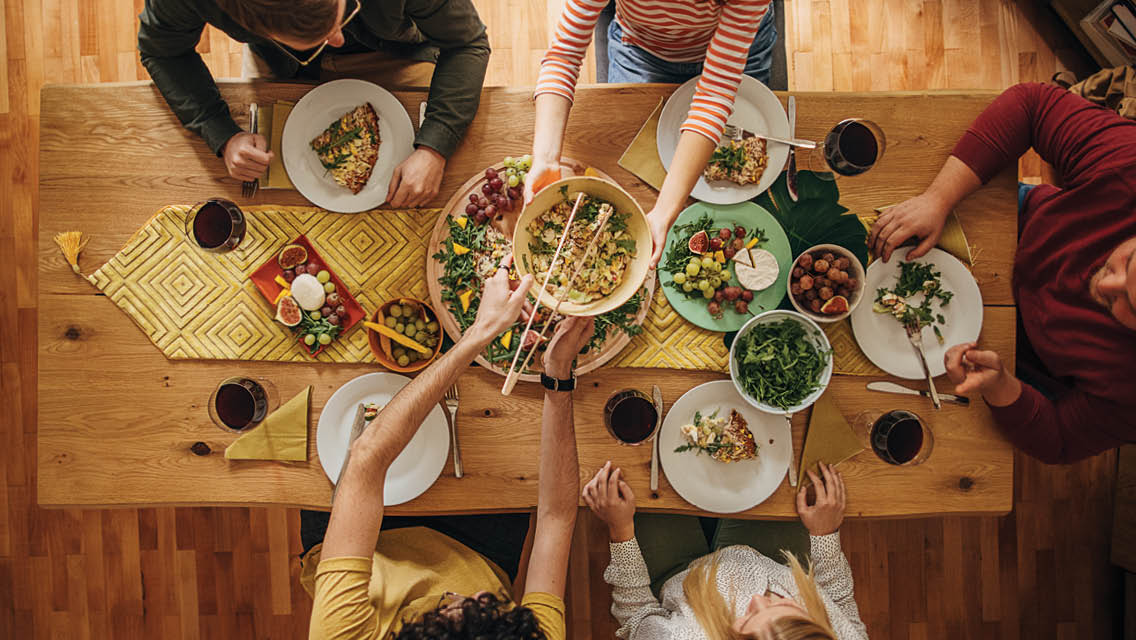
Joanna Wing left her city life in St. Paul, Minn., for a home in the suburbs. “People said, ‘Oh, it’s not cool there, you’ll never have any fun,’” she recalls. “We said, ‘No, we’re going to start the North Suburban Supper Club.’”
The club consisted of five couples who met monthly. They rotated the hosting and shared the cooking.
They’re still meeting today.
A supper club, it turns out, can be about much more than supper. “We’ve all been through stuff, and after 20 years we’re close friends,” says Wing, a food-marketing writer. “Happy things, hard things, our kids, our husbands, our wives — we get into it all.”
Gatherings like Wing’s are becoming a rarity. A 2023 survey found that 26 percent of U.S. adults ate all their meals alone the previous day — a 53 percent jump since 2003. And results from a YouGov survey conducted in 2019 suggest that just 29 percent of Americans sit down with their families every night.
“We live in a culture of speed,” says longevity researcher Dan Buettner, author of The Blue Zones: Lessons for Living Longer From the People Who’ve Lived the Longest. “Families are busier, workplaces blur into home life, and convenience often trumps ritual.”
In the Blue Zone communities he’s studied around the world, shared dinners are a routine cultural practice — even when life is full.
“In Sardinia, for example, people stop what they’re doing to sit down together, even if it’s just bread, beans, and vegetables on the table,” says Buettner. “Eating together isn’t seen as optional — it’s part of culture, identity, and belonging.”
Fortunately, it’s not all that hard to get into the habit of eating with friends and family. The rewards are many, and they extend far beyond the table. These are a few of them.

1) Eating in company can support digestion.
When you eat alone in a stressed state, hunched over your desk or ingesting the news cycle on your phone, you miss a natural opportunity to decompress.
Focusing on news or work during a meal can trigger stress hormones, says functional nutritionist Jesse Haas, MS, CNS, LN, even if you’re not in full fight-or-flight mode. These hormones shift energy away from the digestive organs to your muscles and brain, which can slow down gastric motility and decrease digestive juices. This may lead to indigestion, bloating, abdominal pain, heartburn, and other issues.
Conversely, a friendly, food-focused dinner with others is likely to be relaxing. Not only does it help stimulate your nervous system’s rest-and-digest response, which supports a full range of your body’s digestive functions, but enjoying a meal at a slower pace also makes it more likely you’ll chew your food thoroughly.
“Chewing is an important part of digestion,” says Haas. “It breaks food down into smaller pieces, so our digestive juices can be more effective.”
This slower pace is important for satiety, too, she adds. When you attend to the sensation of pleasure, you’re more likely to hear your body when it tells you it’s had enough.
Consider these digestive-supporting practices:
- Step away from the screen. Put your phone away during meals.
- Chew each bite thoroughly. Set your fork down between bites. Breathe.
- Save heavy topics for later. Unless a tough topic is time-sensitive and this is the only chance to bring it up, do your best to keep the dinner-table talk relaxed and peaceful so digestion-stalling stress hormones remain at bay.
2) Eating with others can diversify your diet.
Solitary eating can make it easy to fall into ruts and stick with what’s familiar.
“Our food preferences are modeled for us when we’re introduced to food as young people,” says Haas. “So that influences what we’re willing and interested in trying.”
But when you eat with others, especially people beyond your family circle, you’re more apt to branch out. Research suggests that eating with others promotes a more diverse, healthy, and balanced diet. Their food traditions and preferences offer opportunities to try new dishes — or test out a dietary flex, like going gluten-free.
Eating a more diverse diet supports the gut microbiome, which thrives on multiple types of fiber and phytonutrients. And that benefits your metabolic health, immune system, and mental well-being.
“Overall, if we just eat a variety of foods, we can relax about Am I getting enough X, Y, Z vitamins?” Haas says. “We can let go of the diet vibe and focus on our food culture as a way to care for ourselves.”
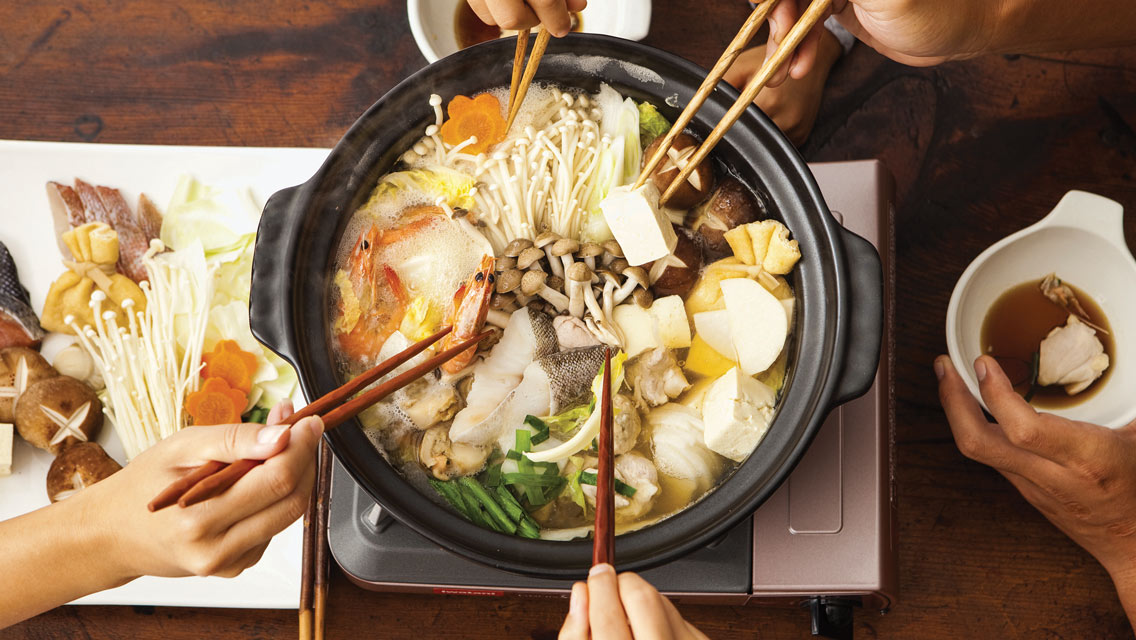
Try these fun ways to expand your dietary horizons:
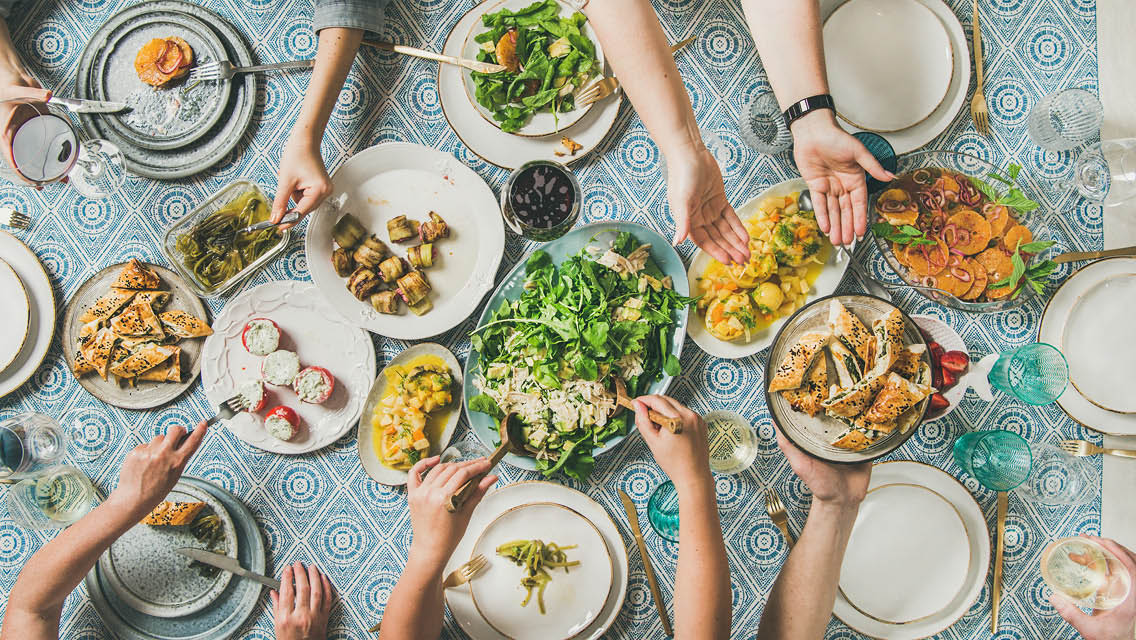
• Host a potluck. Offer to make the main dish and invite people to bring their favorite sides and desserts. And don’t worry about making sure the menu is harmonious.
As Buettner says, “The point isn’t perfection; it’s connection.”
• Split a CSA share. For adventurous eaters, a community-supported agriculture share is an excellent way to get a wider variety of produce — while supporting small local farms.
You pay a flat fee at the start of the growing season, and in exchange you receive a weekly share of fresh veggies all season long.
Splitting a share with a neighbor can be a great way to bond over food and find reasons to share recipes, dishes, and dinners.
• Don’t fear dietary restrictions. When one of your loved ones decides to be vegan or needs to go gluten-free, consider it an opportunity to experiment with new foods.
Likewise, if you have food restrictions and someone invites you over to dine, be honest about your needs.
Most hosts are happy to accommodate, and cooking without a familiar ingredient gives them an opportunity to try something new, too.
3) Breaking bread together can strengthen your relationships.
You don’t need an elaborate menu to host a dinner, especially when you know the guests well. And that trust can be part of the pleasure.
“The thing I’ve learned from my friends is that they don’t care what I make,” says Wing. “The supper club is about coming together over food, which is such a lovely thing. When you’re sitting down, eating something yummy, drinking something delicious — the music’s on, there’s great conversation — it’s just the best.”
Buettner says, “Simply sitting down with others, even over a humble meal, can make us feel more connected and less isolated.”
Dinner conversation can help kids feel closer to their parents and siblings. Some research has shown that children who regularly eat with their families perform better in school, and they’re less likely to experience symptoms of stress or depression. Another study suggests that routine family meals can boost kids’ vocabularies.
For adults, sharing a meal with family or friends not only eases the sense of isolation but is an opportunity to practice basic social skills.
“That’s what’s great about it,” says philosophy professor Emily Austin, PhD, author of Living for Pleasure: An Epicurean Guide to Life. “We have to practice self-regulation, put down our phones, share stories, and give others a chance to do the same.”
The following tips can help make social eating a part of your routine — and deepen your connections at the table:
- Make a standing date. This could be a weekly family dinner, a monthly potluck with neighbors, or a regular working lunch. “Keep it simple, repeatable, and something you look forward to,” says Buettner. “In Blue Zones, people don’t overthink meals; they just show up and share what they have. We can do the same.”
- Be flexible about the venue. Restaurant dining can be fun and celebratory. Home dining can be cozy and intimate — and there’s no time limit on the table. Still, any venue will do. “It can be a park bench, the office cafeteria, or a café,” says cookbook author Amy Riolo. The togetherness is the point.
- Prepare some stories and questions. This might sound corny, especially if you’re dining with family or other people you know well, but why not make the effort to learn a little more about them? Austin suggests making a list of questions you’d like to ask your fellow diners and then inviting them to share their thoughts and stories.
- Divide the labor. At Wing’s supper club, people bring dishes to pass around. Guests also take on jobs, like managing music playlists, prepping and serving the dish they brought, or clearing the table. People like to feel useful, and knowing the work will be shared can make it less daunting to propose a get-together.
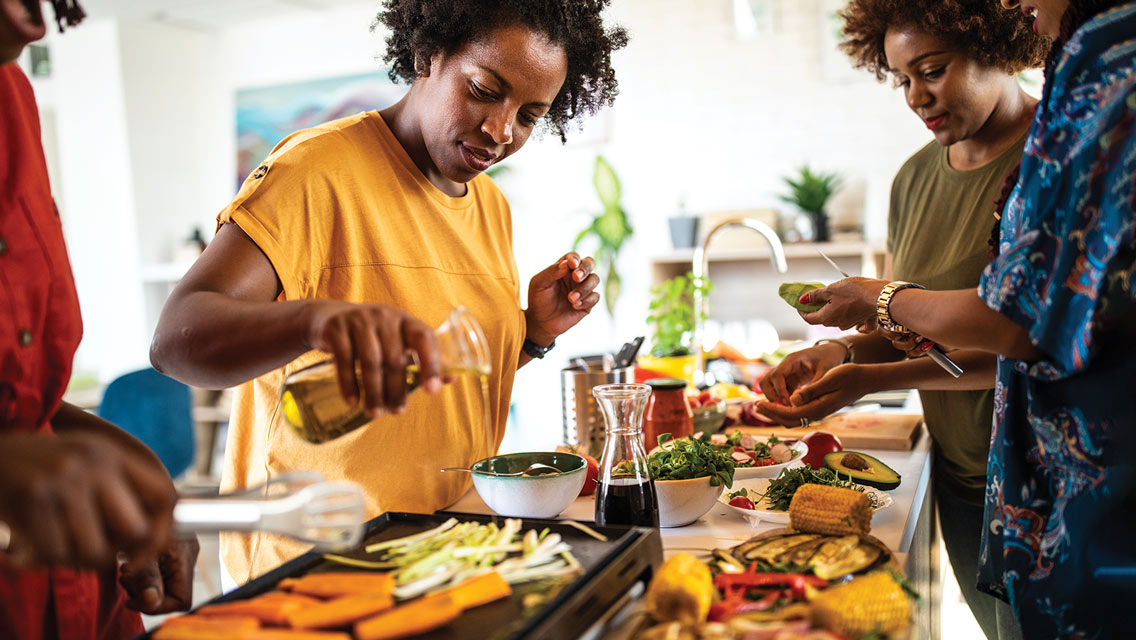
4) Communal eating can encourage you to cook more.
In addition to creating a convivial space to unwind, enjoy food, and bond with friends, Wing says her supper club has improved her kitchen skills. “It teaches you how to time the food, which turns out to be important as we get older, our kids go every which way, and we have 20 minutes to make dinner.”
Sharing a meal prepared in your own kitchen is often far less expensive than dining at a restaurant, and it’s a healthy habit to cultivate. A growing body of evidence links more frequent restaurant dining to an increased risk for heart disease, type 2 diabetes, and depression.
“We’re simply not going to stem the tide of increasing chronic disease . . . until Americans start eating at home,” says Buettner, whose latest book, The Blue Zones Kitchen One Pot Meals, aims to make it easier to do that.
Even if you aren’t inclined to cook for yourself, cooking for the people you care about can inspire you to get into the kitchen and try stuff.
“Cooking for others is an act of generosity,” Riolo explains. “It doesn’t even have to be elaborate, but when we do it, we enjoy cooking more and we tend to make more-nourishing food.”
These tips can help you increase your confidence in the kitchen:
- Have a realistic plan. If you lack experience, don’t try to make a soufflé before you’ve learned to scramble an egg. Get a few simple recipes under your belt and initially aim to make dinner a couple nights a week.
- Keep dinner simple. Don’t wait to become a better cook before you start sharing food (though sharing food may eventually help make you a better cook). If what you know how to make now is lentil soup, then invite friends over for lentil soup. Ask someone else to bring the salad.
- Take some risks. If you’re already a comfortable cook, let gatherings be a springboard to expand your repertoire. “My absolute favorite way to host a dinner party is to make a menu of recipes I’ve never cooked before,” says Haas. “Yes, it might be terrible, but we’ll have fun.”
5) Routinely sharing good food with good people will make your life better.
The legendary pleasure hound Epicurus regularly hosted dinner parties, Austin notes. The philosopher understood the pleasures of eating with dear friends as foundational to a good life.
This is both philosophically and physiologically true. Eating a meal with people whose company you enjoy may trigger the release of oxytocin and endorphins; these feel-good hormones help lower stress and boost feelings of connection, well-being, and joy, which can make it easier to be present.
In that state, you’re more likely to notice that the food is delicious, your friends are brilliant, and the playlist is spot-on — in other words, to savor the whole experience.
“These are times when you experience a pleasure that’s out of the ordinary,” Austin says. “It’s in a catalog of joyful moments in your life.”
Remembering your best meals in detail — reminiscent savoring — not only brings back all those pleasurable feelings but also helps train your brain to focus on the positives in your life and fully appreciate them. Which is to say, enjoying great meals with others helps you get better at loving your life.
And what could be more satisfying than that?
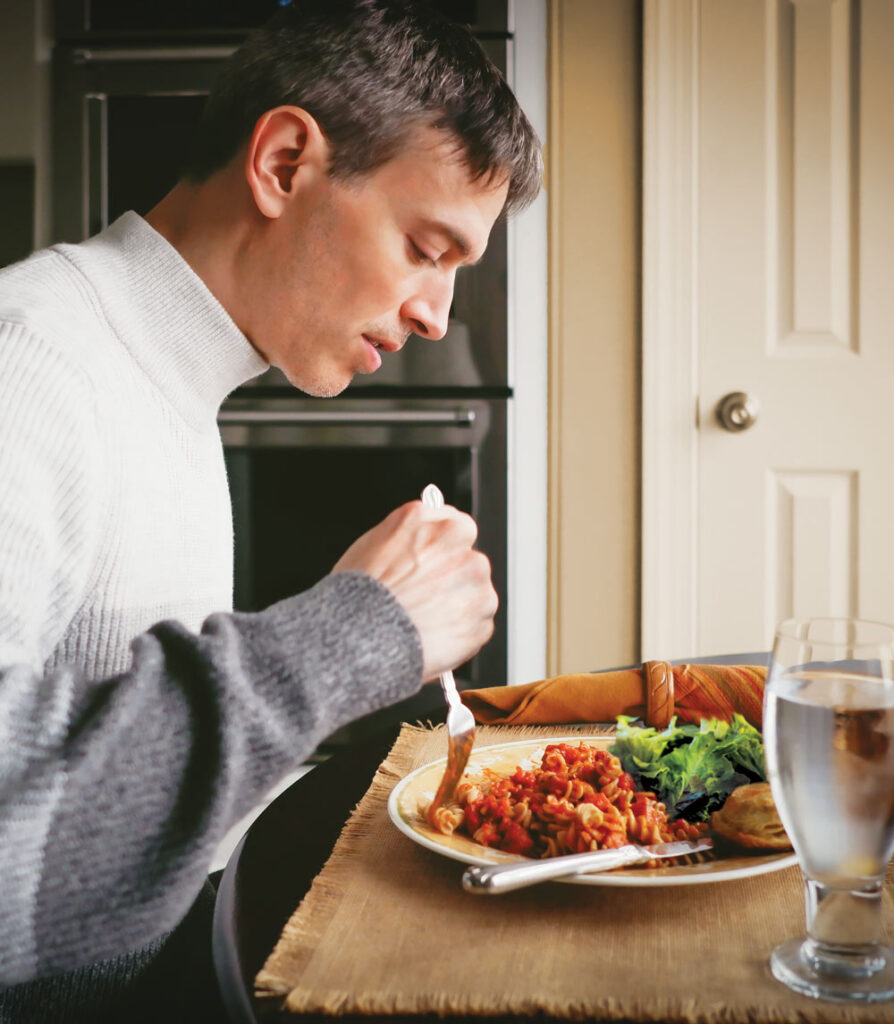
Make the Most of Eating Alone
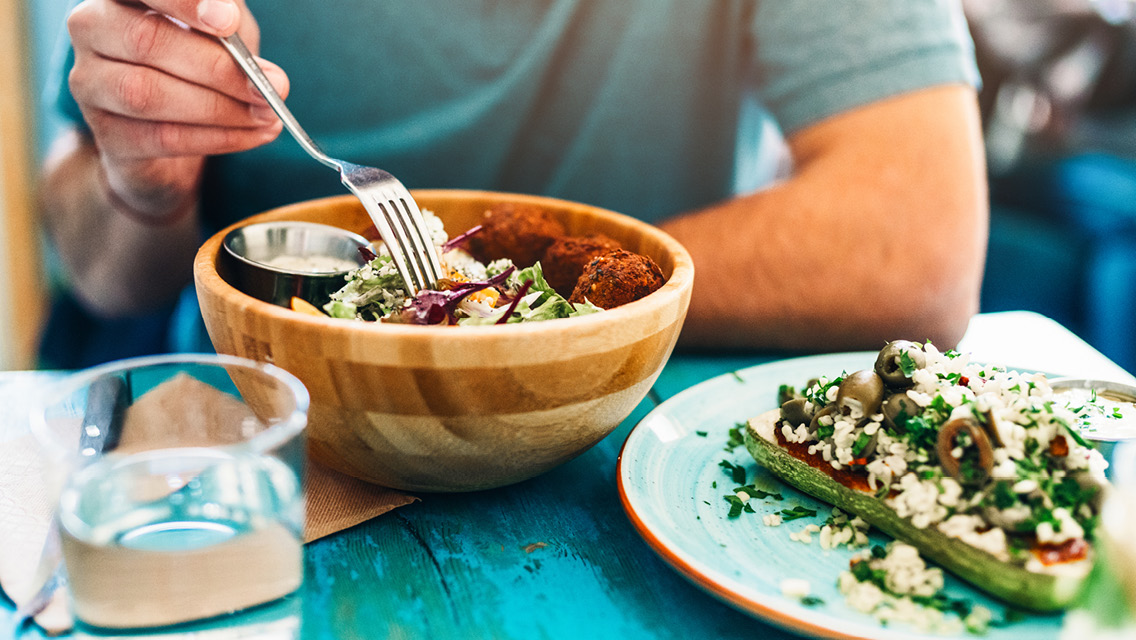
Dining with others may be the ideal, but sometimes it’s not possible — or even what you need. Done right, the solo meal can be one of life’s underrated joys. This is especially true when you set your own pace and savor the food, just as you would in the company of good friends.
1) Plan your experience around your mood. What would feel best? A plate of crunchy cucumbers and hummus with a side of popcorn? A big bowl of comforting pasta? Some spicy Thai curry from the café down the block? Take advantage of the fact that you have only yourself to please.
2) Enjoy the ritual. When you’re eating alone at home, don’t skimp. Set the table, put on your favorite playlist, and light a candle — even if your meal isn’t fancy, you can make it lovely.
3) Pay attention. Solo dining is ideal for savoring all the details — the meal, the ambience, the feelings. Use this as an opportunity to really taste your food and notice your experience.





Comments (0)