



You’ve seen it in nature documentaries: A herd of gazelles is grazing peacefully when a cheetah jumps from the brush and races toward them. They scatter in desperate flight, but the cheetah manages to catch a gazelle and bring it to the ground. The animal goes stiff. Then the cheetah, apparently uninterested in a stiffened corpse, simply walks off.x
To the surprise of anyone watching, the gazelle then gets to its feet and vigorously shakes its entire body before running back to the herd. Soon it’s grazing again, as if nothing had happened.
You might not often be chased by cheetahs, but a phone call with terrible news or a jarring fender-bender can be enough to trigger your own survival instincts. And, as happens with that gazelle, the moment you experience a serious threat, adrenaline pours into your bloodstream. Your mind is sharpened, your senses are heightened, and your heart races to move all available energy to your muscles. For a few moments, you are endowed with supernatural strength. It is fight-or-flight time.
Yet sometimes you can’t fight or flee, so you freeze. The gazelle survived because of its freeze response, tricking the predator, before it literally shook off the experience. It’s as if the gazelle rebooted its body’s computer after it had frozen up.
Humans are animals too and likewise built to recover swiftly from an acute stress response. The next time you’re facing acute stress, try one of these natural interventions to help reboot your own system.
Move
Whether danger is real or perceived, your body interprets it as a call to action. In nature, this usually means you fight or run. So, if you’re able, do something vigorous: Go for a run, take a spin class, or get in some interval training on a rowing machine.
Adrenaline can power us for only 30 to 45 minutes at the most, so it doesn’t take long to burn off that excess energy.
Breathe
When the gazelle froze, it briefly stopped breathing. In acute stress situations, many of us have a similar response — if slightly less extreme. Our breathing often becomes shallow, rapid, or restricted. Here’s a simple calming technique to help you return to baseline:
- Slowly breathe in through your nose to the count of four.
- Hold your breath for two seconds.
- Breathe out even more slowly through your mouth, to the count of seven. Try making an audible sigh with your outbreath to increase the calming effect.
Shake It Off
Just like the gazelle, you can shake your body to dissipate the lingering effects of an acute stress reaction. Shaking your body can also help you release underlying stress in the aftermath of traumatic events. Try this exercise on your own or in a group:
- If you can stand, do so and begin bouncing up and down, lifting your heels.
- Gradually increase the speed and intensity so that your shoulders and arms start to bounce and your whole body eventually gets into the act.
- Try this for a minute or two, or for up to five to six minutes at a time.
If this shaking exercise doesn’t appeal, just put on some great dance music and let your body move as it will. Or hop onto a whole-body vibration machine (such as a Power Plate) at the gym and let it do the shaking for you.
Use Plant Support
Acute stress is hard to manage, so the enduring popularity of prescription sedatives like Ativan and Klonopin makes sense, even with their considerable risks. Yet there are less-potent natural interventions that still work well — and with fewer side effects.
• Aromatherapy: There are two big advantages to using aromatherapy in acute stress situations. One is that your senses are already heightened, so its impact is more potent. The other is that by going through the respiratory system, aromatherapy can produce immediate effects.
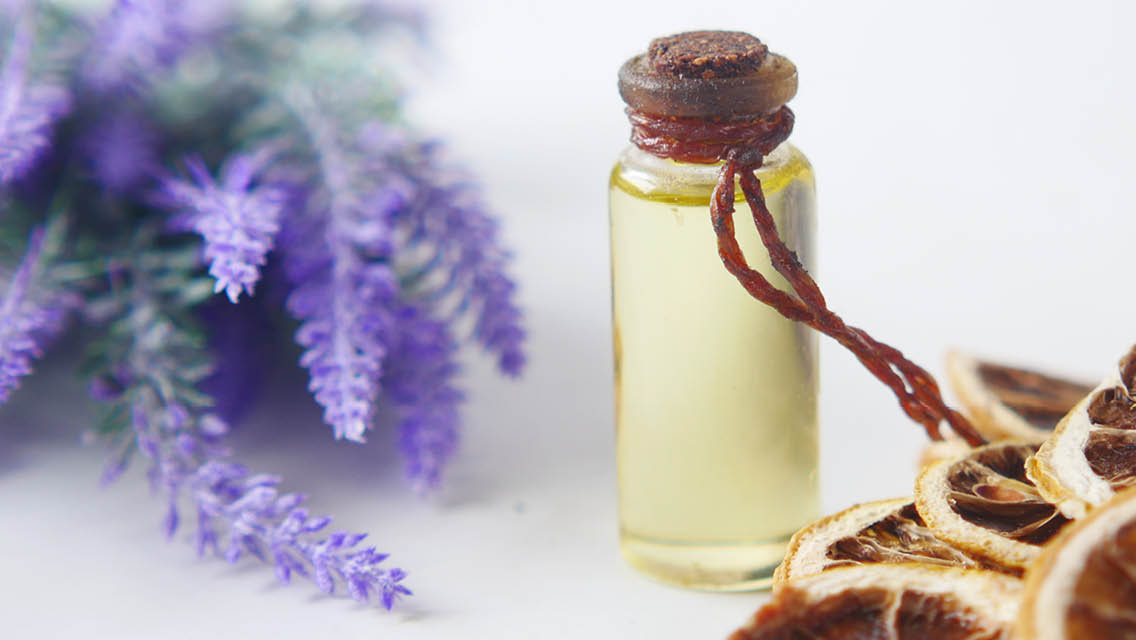
Lavender or sweet orange essential oils can be especially calming. Try diffusing them, or put a couple of drops on a cotton ball and hold it under your nose.
• GABA: The same brain chemical affected by anti-anxiety drugs is available as a nutritional supplement. It’s much milder than prescription drugs, but many people find it has an immediate impact. GABA is available in capsule form, but for quickest relief, use a liposomal mouth spray. A typical dose is 250 to 500 milligrams, three or four times a day.
• L-theanine: This amino acid has a mild medicinal effect that can help calm the entire nervous system, including the brain. Like GABA, with which it is often combined in liposomal sprays, it can be a fast-acting calming agent when taken by mouth. Many people report that L-theanine also supports their sleep. Try 100 to 200 mg once or twice a day.
Natural Mental Health
For more nonpharmaceutical solutions for common mental health challenges, visit our Natural Mental Health Department.





Comments (0)