




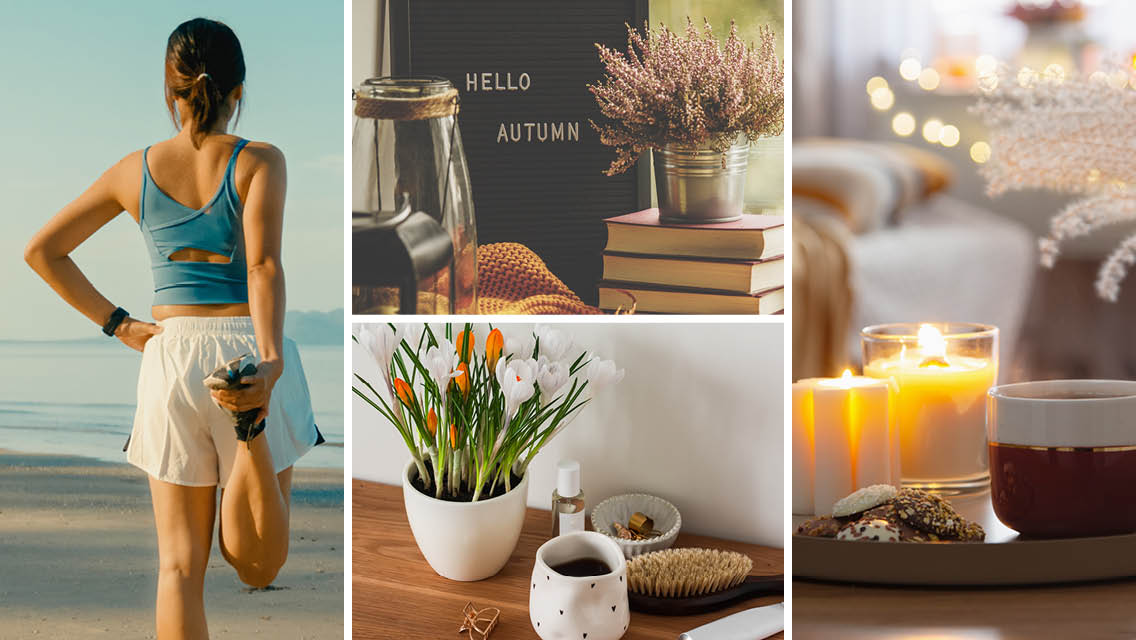
Explore the seasonal morning routine ideas:
Winter // Spring // Summer // Autumn
Many of our morning routines are constants throughout the year. You may, for instance, always drink water before ingesting anything else, engage in certain movements to wake the body, or journal to engage the mind. Perhaps you make it a point to avoid the news until you’ve had a cup of coffee.
Beyond these essentials, though, your specific morning needs may evolve and fluctuate with the seasons. “Each season brings its own unique shifts in light, temperature, moisture, food availability, phytochemical profiles, and environmental stressors,” says Deanna Minich, PhD, CNS, IFMCP, a functional-medicine nutritionist, educator, and author based in Port Orchard, Wash.
She notes that these changes, no matter how subtle, affect our physiology. “By syncing our daily habits — especially how we start the day — with the cues nature provides, we support greater vitality, mental clarity, and adaptability.”
Natasha Ivantsova, founder of Glow Yoga and Wellness in San Francisco, adds that one of the keys to long-term wellness is honoring how our energy shifts — and adjusting our workouts accordingly. Each season has its own rhythm, she says, both in how our bodies feel and how motivated we are to move. Honoring these rhythm changes allows you to show up with more ease, stay physically and mentally balanced, and build strength and resilience year-round — without burnout.
WINTER // Retreat
In winter, many of us must balance a busy time of year with a desire to hibernate. A morning routine can be the bridge between cozy and chaos, the retreat we need before facing holiday stress and the threat of illnesses making the rounds during the winter season.
“The body benefits from a slower start,” says Minich. She recommends practices that help maintain immune strength, hormonal balance, and emotional resilience as daylight wanes and serotonin levels dip.
Consider these ideas for a winter morning routine:
MEDITATION: Regular meditation can be a balm to the nervous system when winter busyness leaves you burnt out. Try to lengthen your practice as the season progresses. (Try these ten tips for making meditation a part of your life — starting now.)
INTROSPECTION: Winter is a time of inward retreat, but this doesn’t have to mean getting stuck in a cycle of self-examination. Use some of your internal attention to notice and extend your gratitude for the important people in your life.
ATMOSPHERE: Create hygge — the Danish concept of bringing a soothing sense of warmth, coziness, and safety into your life — by using your fireplace or lighting a candle. From there, focus on coziness and contentment: Wrap yourself in a sensory-pleasing blanket or robe and work on a jigsaw puzzle or word search.
NUTRITION: “Choose warm, nutrient-dense meals with more healthy fats, like nuts and seeds,” Minich says. Drink something warm, and pick a hot breakfast that appeals to you and fits with your personalized needs, like a veggie scramble or oatmeal with nut butter and chia seeds.
MOVEMENT: For Ivantsova, winter is a time to emphasize slower-paced strength training and longer warm-ups. “It’s about improving circulation and building heat when mornings feel cold and dark.”
ENERGY: Explore restorative and restful practices that will rejuvenate you for spring. For example, the Scottish phrase “hurkle-durkle” means to stay in bed longer than you might need to. There is nothing wrong with starting your morning routine under the covers.
SPRING // Renewal
With more daylight in the spring, you might feel refreshed and ready to expose yourself to more activity. You can think of your morning routine as a way to “spring forward” into your day. Perhaps spend some time visualizing your own renewal, or choose a mantra that focuses on an area of personal growth.
Kali Higgins, an integrative health and wellness practitioner in Stillwater, Minn., who offers astrology readings and Ayurvedic-lifestyle coaching, says spring is a time to move away from winter’s “stagnant energy.” She recommends finding ways to boost energy and build stamina.
Consider these ideas for a spring morning routine:
MEDITATION: Choose meditation practices (especially a moving or walking meditation) with breathwork to give your lungs some TLC during allergy season.
INTROSPECTION: Journal about your aspirations, or spend a few minutes practicing gratitude to break out of stuck patterns and shift away from dwelling in the past.
ATMOSPHERE: Minich advises seeking out bright morning light, which helps regulate cortisol and melatonin rhythms, lift mood, and restore circadian alignment.
NUTRITION: Hydrate with mineral-fortified water and consume chlorophyll-dense foods (think dark leafy greens) with quality protein. Minich notes that these nutrients support detoxification and provide energy during a time of year when the body is ready to release stagnation and lighten up after the weight of winter.
MOVEMENT: Focus on functional strength training to improve stability and balance; this can help you feel stronger, leaner, and ready to move forward. As energy levels rise, it may also be a good time to turn up the intensity of your workouts.
ENERGY: Now is the time to slip into feelings of aliveness. Play your favorite song — and dance like no one is watching; watch the sunrise while you sip your coffee or tea; or read books that promote adventure and self-improvement.
SUMMER // Center
“Summer is a time for celebration,” says Kali Higgins, an integrative health and wellness practitioner in Stillwater, Minn., who offers astrology readings and Ayurvedic-lifestyle coaching. Still, this vibrance should be counterbalanced with a grounding morning routine.
Minich warns that higher heat, longer days, and a faster pace can increase the body’s inflammatory load and nervous-system stress. She recommends developing a calm, cooling routine to support hydration, balance, and emotional regulation.
Consider these ideas for a summer morning routine:
MEDITATION: Balance the effort and energy of long summer days with morning meditation practices that are more fluid, passive, or unstructured, as well as breathwork that focuses on a longer exhale to help cool the body and mind. (Learn more about breathwork and methods to try.)
INTROSPECTION: “Summer is a good time for practices that help acknowledge your ambitions and work on your anger and irritability,” Higgins notes. Choose something to read in the morning that soothes and calms the mind, or try journal prompts that support letting go of perfectionism or encourage relaxation.
ATMOSPHERE: Dress for the heat with moisture-wicking and breathable fabrics. Balance your physical activities by giving your body time to cool down.
NUTRITION: Take advantage of local produce. Minich recommends sipping a polyphenol-rich smoothie with cocoa and berries.
MOVEMENT: Ivantsova suggests shifting toward a slower, more cooling approach. During a busier, hotter season, she says, this can calm the nervous system while keeping the body open and strong. To avoid overheating, consider swimming or going for a run or walk early in the day before it gets too hot. Layer in more yoga-inspired flows and qi gong.
ENERGY: The energy of summer is more outward, social, and active, says Higgins. Give yourself space to decompress from the busyness. Even if slowing down feels like a waste of time, “so long as it’s enjoyable, that’s probably what you should be doing. It’s important to take time to relax.”
AUTUMN // Consistency
Autumn is a time of transition and preparation, says Minich. “As daylight shortens and temperatures drop, the body and mind begin to turn inward.” She suggests adapting your morning routine to align with a back-to-school energy, since we’re conditioned for more structure after a busy summer.
Kali Higgins, an integrative health and wellness practitioner in Stillwater, Minn., who offers astrology readings and Ayurvedic-lifestyle coaching, says the wind is a prominent feature in the fall that can kick up anxiety. “Our energy is more scattered and vulnerable,” she says. Keep your morning routine simple and stick to it to provide consistency.
Consider these ideas for an autumn morning routine:
MEDITATION: Focus on connecting breath with movement. Build lung capacity by increasing your inhalation. Structured meditation with a mantra is helpful, too, Higgins says.
INTROSPECTION: The natural world is going dormant and preparing for winter’s rest. Take a few minutes in the morning to journal: Reckon with what you’ve accomplished during the year, take stock of what you have left, and lean into gratitude for the present moment. (Try one of these embodiment practices to get out of your head and into the present.)
ATMOSPHERE: Add gentle sensory inputs like a steam bath or self-massage. “Playing calming music in the background or applying essential oils like eucalyptus behind the ears and on the neck can promote immune support,” Minich says.
NUTRITION: “Work to reduce caffeine, sugar, drugs, alcohol, or any sort of stimulant in your life,” Higgins suggests. Start eating warmer foods, sipping herbal teas, and cooking with healing spices.
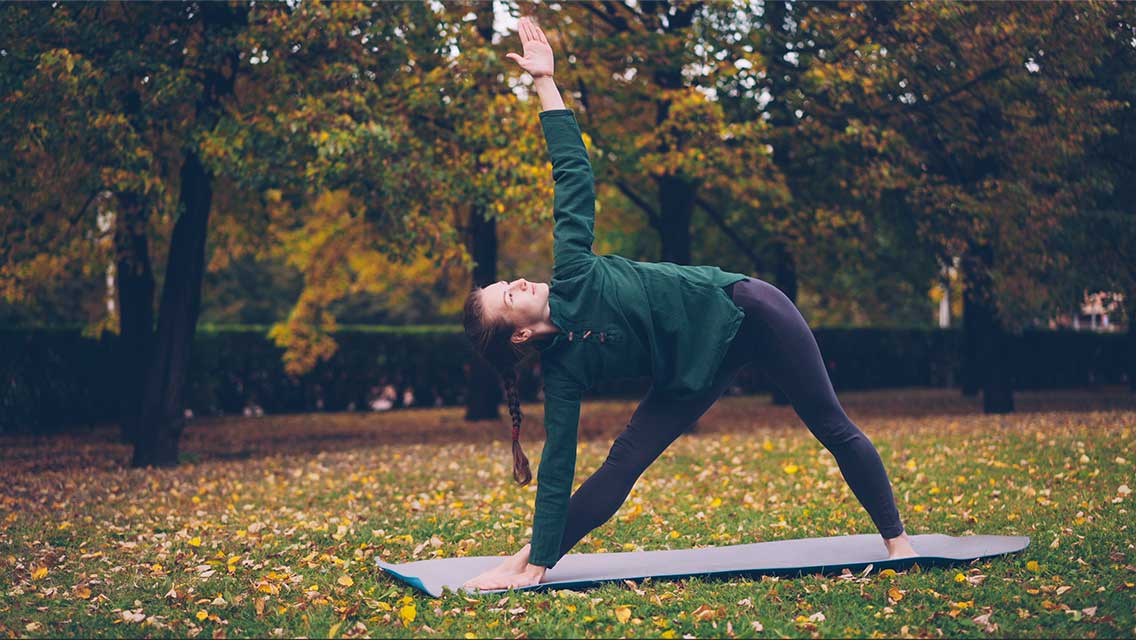
MOVEMENT: “Fall is when people tend to crave routine again,” says Ivantsova. “There’s a deeper need for growth and focus.” She recommends turning your attention to contemplative practices and finding ways to solidify your daily self-care schedule. Core and strength work may be particularly supportive.
ENERGY: “Because the wind element can trigger worry and nervous energy, give that windy energy something to do,” Higgins says. “Turn it into excitement and inspiration.” Practice overcoming fears, insecurities, and anxieties, or work on creative endeavors. Read books that foster creativity and imagination.



This Post Has 0 Comments