



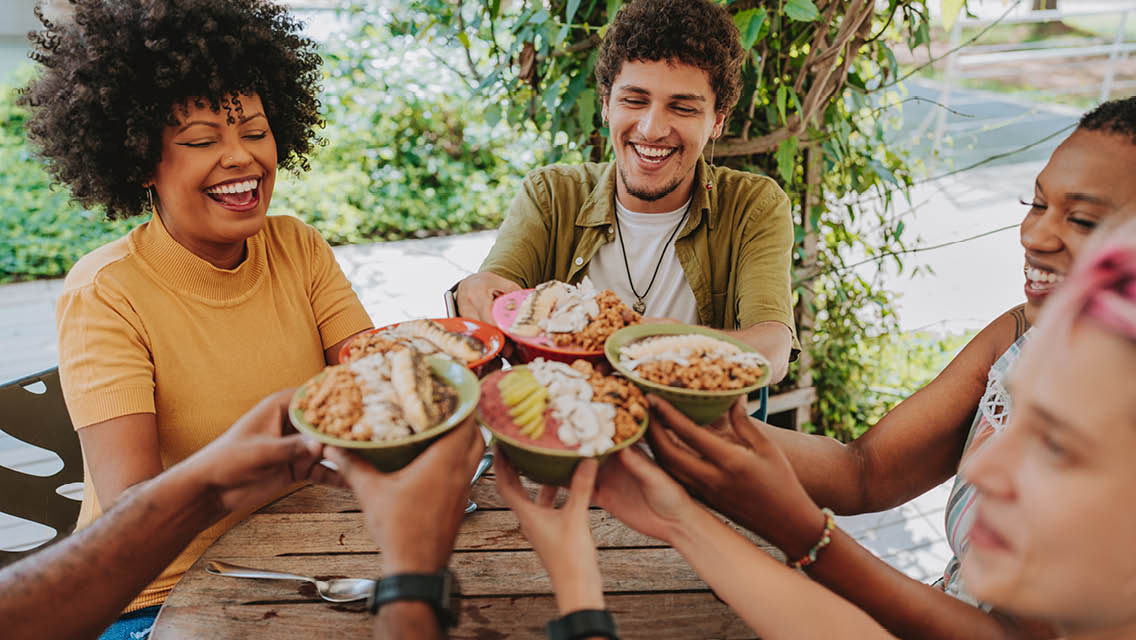
You don’t need an elaborate menu to host a dinner, especially when you know the guests well. And that trust can be part of the pleasure.
Joanna Wing left her city life in St. Paul, Minn., for a home in the suburbs. “People said, ‘Oh, it’s not cool there, you’ll never have any fun,’” she recalls. “We said, ‘No, we’re going to start the North Suburban Supper Club.’”
The club consisted of five couples who met monthly. They rotated the hosting and shared the cooking.
They’re still meeting today.
“The thing I’ve learned from my friends is that they don’t care what I make,” says Wing, a food-marketing writer. “The supper club is about coming together over food, which is such a lovely thing. When you’re sitting down, eating something yummy, drinking something delicious — the music’s on, there’s great conversation — it’s just the best.”
Longevity researcher Dan Buettner, author of The Blue Zones: Lessons for Living Longer From the People Who’ve Lived the Longest says, “Simply sitting down with others, even over a humble meal, can make us feel more connected and less isolated.”
Dinner conversation can help kids feel closer to their parents and siblings. Some research has shown that children who regularly eat with their families perform better in school, and they’re less likely to experience symptoms of stress or depression. Another study suggests that routine family meals can boost kids’ vocabularies.
For adults, sharing a meal with family or friends not only eases the sense of isolation but is an opportunity to practice basic social skills.
“That’s what’s great about it,” says philosophy professor Emily Austin, PhD, author of Living for Pleasure: An Epicurean Guide to Life. “We have to practice self-regulation, put down our phones, share stories, and give others a chance to do the same.”
The following tips can help make social eating a part of your routine — and deepen your connections at the table:
- Make a standing date. This could be a weekly family dinner, a monthly potluck with neighbors, or a regular working lunch. “Keep it simple, repeatable, and something you look forward to,” says Buettner. “In Blue Zones, people don’t overthink meals; they just show up and share what they have. We can do the same.”
- Be flexible about the venue. Restaurant dining can be fun and celebratory. Home dining can be cozy and intimate — and there’s no time limit on the table. Still, any venue will do. “It can be a park bench, the office cafeteria, or a café,” says cookbook author Amy Riolo. The togetherness is the point.
- Prepare some stories and questions. This might sound corny, especially if you’re dining with family or other people you know well, but why not make the effort to learn a little more about them? Austin suggests making a list of questions you’d like to ask your fellow diners and then inviting them to share their thoughts and stories.
- Divide the labor. At Wing’s supper club, people bring dishes to pass around. Guests also take on jobs, like managing music playlists, prepping and serving the dish they brought, or clearing the table. People like to feel useful, and knowing the work will be shared can make it less daunting to propose a get-together.
Let’s Eat Together!
The rewards of eating with family and friends extend far beyond the dinner table. Learn why it’s worth the effort to sit down and dine with others at “5 Surprising Reasons Why Eating With Others Is Good for Your Health,” from which this article was excerpted.





Comments (0)