



Each of us has a gut microbiome that’s as unique as our fingerprints. “The bacteria hanging out in your gut might be quite unlike those spending time in your best friend’s gut because of the differences in your backgrounds, lifestyle, genetics, and food consumption,” writes integrative eco-dietitian Mary Purdy, MS, RDN, in The Microbiome Diet Reset..
There’s no universal model for an ideal microbiome, but healthy gut communities typically have the following characteristics:
- Diversity, or a wide variety of microbial species
- Richness, or a high overall number of microbes
- Stability, or the ability to maintain balance over time, even after illness, stress, or antibiotics
- Beneficial function, including through strong production of SCFAs like butyrate, balanced immune signaling, and support for the gut lining
- Low levels of inflammation, signaled by fewer markers of gut irritation or immune overactivation
Daily habits go a long way in supporting these qualities. “We can see radical change in people’s microbiomes and how they’re feeling within a few weeks to months of focusing on the basics of optimizing gut health,” says Vivian Asamoah, MD, a Houston-based integrative gastroenterologist.
Help optimize your own gut with these behaviors.
1. Focus on fiber. Certain bacteria turn the indigestible fibers and starches in food into lactic acid, which supports digestion. These starches and fibers, called prebiotics, act as fuel for healthy gut bugs. Minneapolis-based naturopathic doctor Sara Jean Barrett, ND notes that cooking rice or potatoes and refrigerating them for at least 24 hours increases their resistant starch content. Reheating doesn’t destroy it, so enjoy them hot or cold.
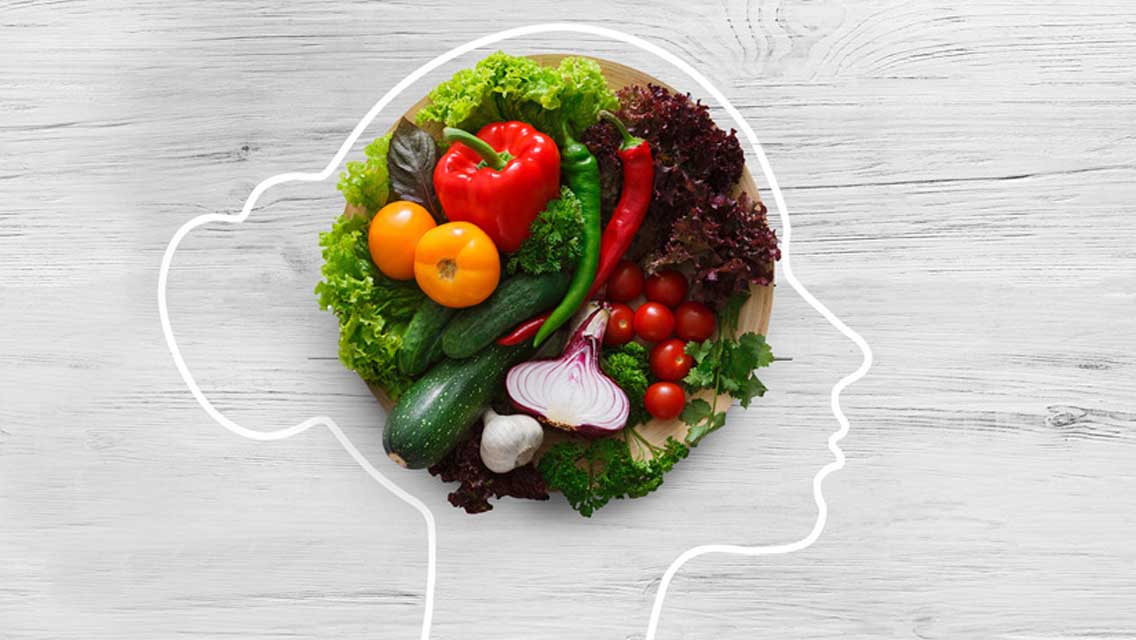
2. Eat the rainbow. Colorful plant foods are rich in compounds called polyphenols, which act like fertilizer for beneficial gut microbes. Berries, leafy greens, purple cabbage, turmeric, and other vividly colored produce and spices offer antioxidants and microbiome-friendly fuel.
Variety is key: The more types of plants you eat, the more diverse your microbiome becomes, because different bugs thrive on different polyphenols. For instance, a beneficial strain of Akkermansia, which protects the gut lining, loves to feast on the polyphenols in pomegranates and red apple skins.
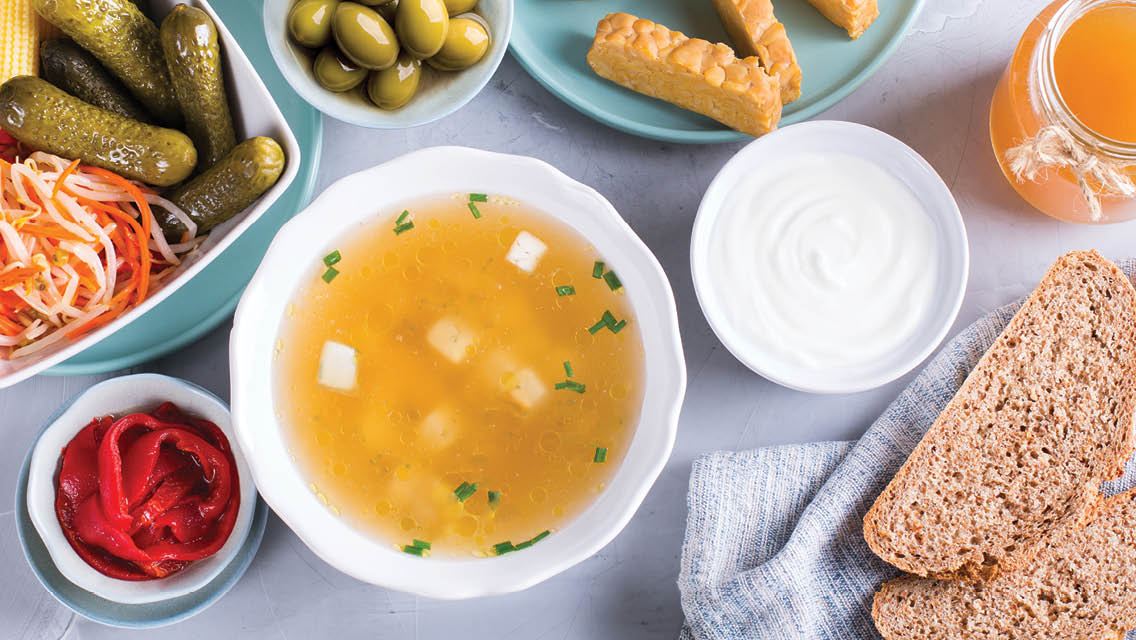
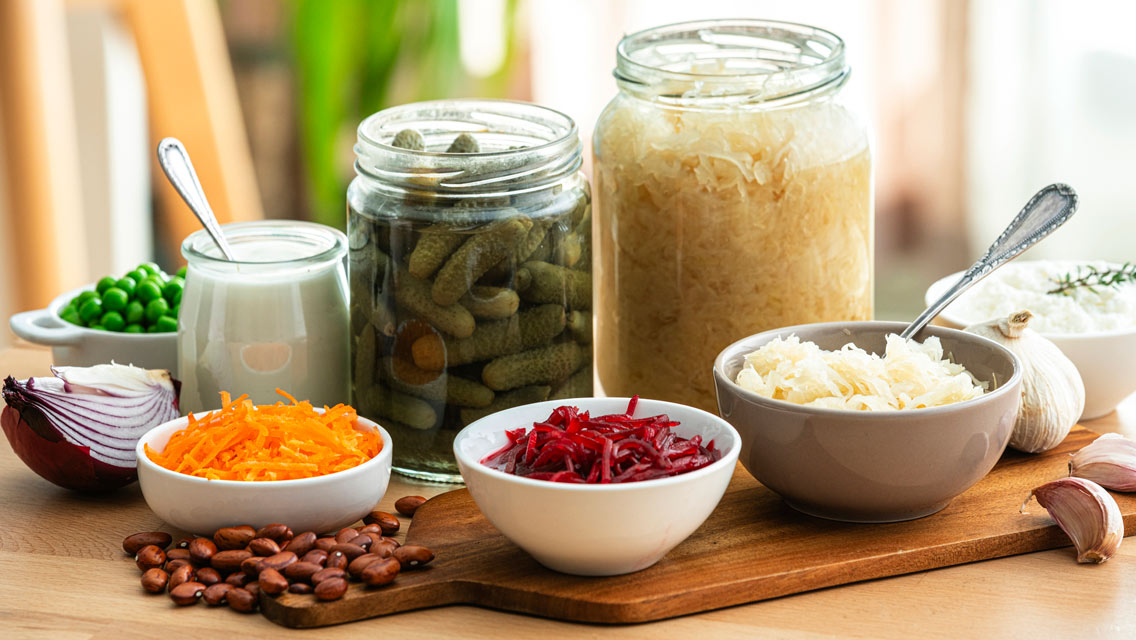
3. Enjoy fermented foods. You can feed good gut bugs only if they’re there in the first place, so why not add some to the mix? This is where fermented foods and drinks like yogurt, kefir, sauerkraut, kimchi, miso, and kombucha come in. They’re full of friendly microbes that help reinforce the gut barrier, counter inflammation, and bolster immunity. Daily intake of fermented foods has been shown to reduce inflammation and increase beneficial gut bacteria. (Check out “9 Benefits of Eating Fermented Foods” for more.)
4. Exercise. Studies show that people who exercise consistently tend to have more beneficial bacteria, including those that produce anti-inflammatory compounds like SCFAs. Even moderate movement, like brisk walking, yoga, or cycling, can support the microbiome.
5. Get outside. Being in nature increases your contact with a range of environmental microbes, which may help diversify your microbiome. Gardening, hiking in nature, and interacting with animals can all support this microbial cross-training. Even rubbing soil and plant material on your hands may increase microbial diversity in the gut and skin, at least temporarily.
6. Manage stress. The gut and brain are in constant communication through the gut-brain axis. Chronic stress can affect this communication, altering microbial balance, increasing inflammation, and impairing digestion.
Practices like breathing deeply, meditating, and improving sleep hygiene may help reduce stress and support a healthier gut. In turn, a well-balanced gut can improve mood, lower anxiety, and help regulate the body’s stress response.
7. Choose nontoxic cleaning products. Excessive use of antibacterial products can disrupt your body’s friendly bacteria. “I personally don’t like hand sanitizer, because [its] ingredients can disrupt the balance of the skin microbiome,” Barrett says. “They don’t discriminate and can end up killing off the beneficial organisms along with the harmful ones.” (Many popular household cleaners are dangerously toxic. Learn about the eight scariest substances at “8 Hidden Toxins Lurking in Your Cleaning Products,.“)
Opt for simpler, nontoxic cleaning products for your home and body when possible. Save stronger disinfectants for when you really need them. (Learn how to make your own at “Make Your Own Cleaning Products With These 4 Recipes.”)
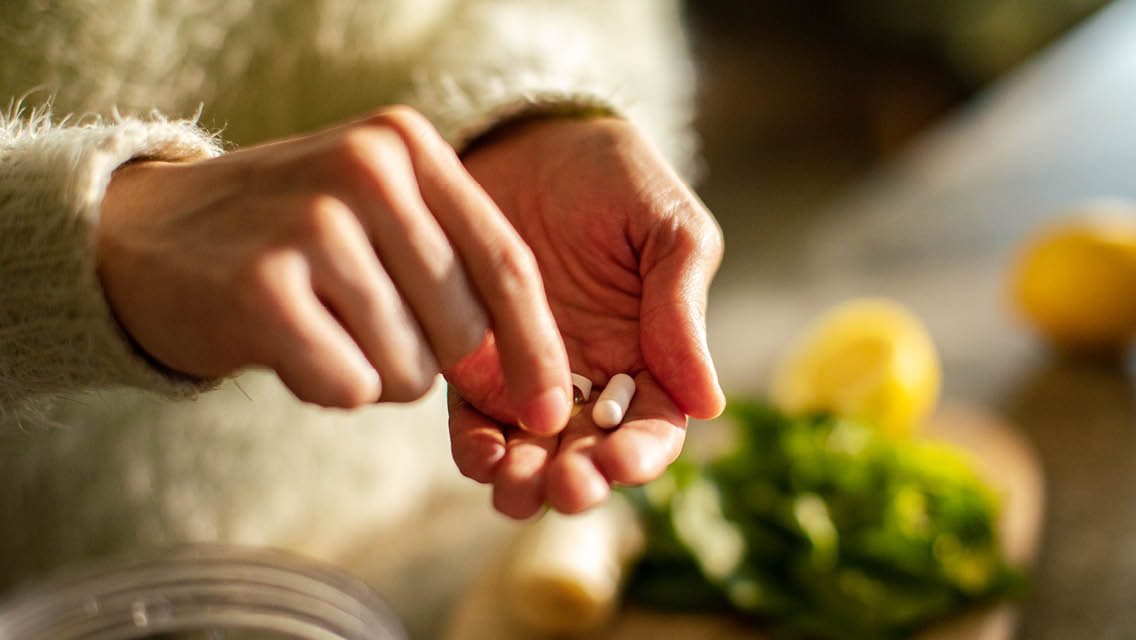
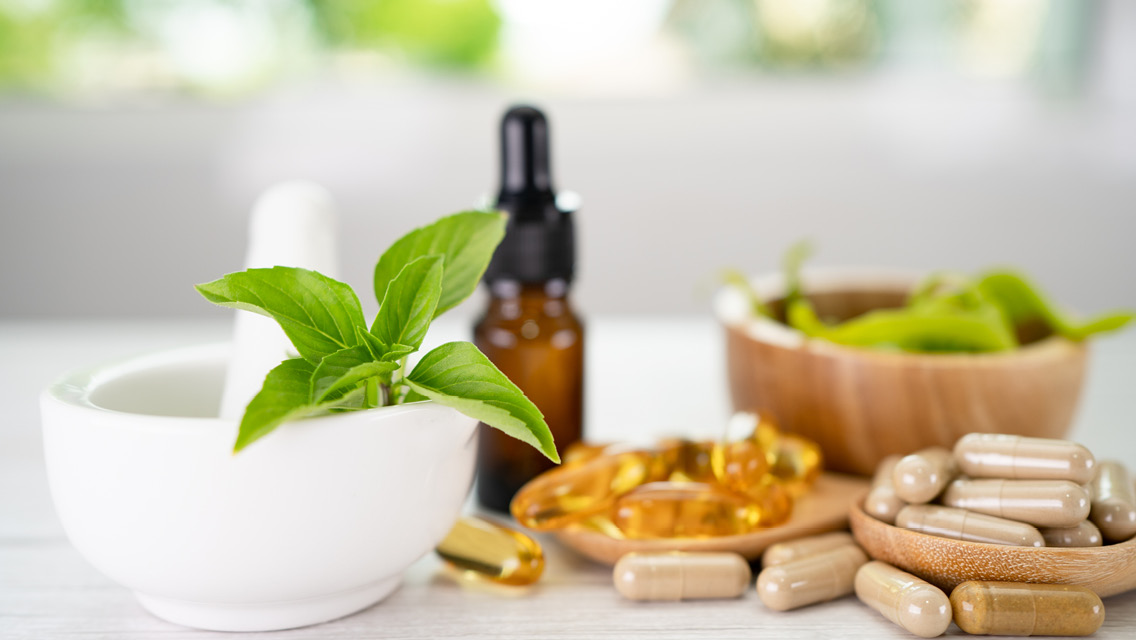
8. Use probiotics as needed. Probiotic supplements can be helpful in certain situations — particularly during or after a round of antibiotics or as part of a gut-healing program.
“Incorporating more fermented foods and prebiotics into your diet enriches the microbiome in a more natural way,” Asamoah says. “But I also prescribe probiotic supplements in specific cases, like chronic constipation or antibiotic-associated diarrhea. In most cases, I don’t recommend staying on a probiotic for longer than about three months without reevaluating your needs.”
Purdy agrees. “Which diseases, which effects, which probiotic species, how much, and for whom are still very much being explored,” she notes. “Probiotic supplements . . . can help digestive function but may offer very little benefit if diet and lifestyle habits aren’t also shifting in a more supportive direction.”
(Thinking about taking a probiotic? See “Everything You Need to Know About Probiotics” where health experts address 10 common questions.)
In short, aim for diversity in all things: A fiber-rich and colorful diet, time outdoors, stress management, and regular exercise all go a long way in creating a more resilient gut — and a healthier you. Focus on fiber. Certain bacteria turn the indigestible fibers and starches in food into lactic acid, which supports digestion. These starches and fibers, called prebiotics, act as fuel for healthy gut bugs. Barrett notes that cooking rice or potatoes and refrigerating them for at least 24 hours increases their resistant starch content. Reheating doesn’t destroy it, so enjoy them hot or cold.
The Mighty Microbiome
Your gut microbiome affects much more than digestion: It has an impact on your immune resilience, hormonal health, and more. Learn more at “9 Ways the Gut Microbiome Influences Health,” from which this article was excerpted.





Comments (0)