




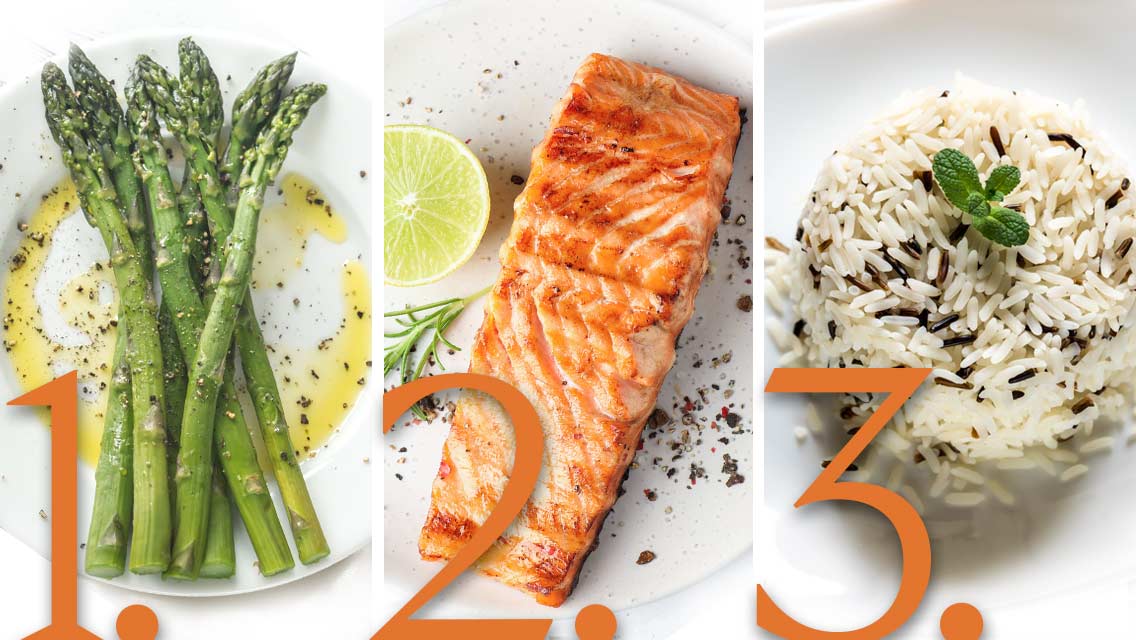
The siren song of the breadbasket is many a diner’s favorite tune. Yet as we slather butter on those pillowy-soft rolls, a voice in our head pipes up: Are you sure you want to front-load those carbs?
Maybe not, say proponents of meal sequencing. There may be benefits to eating fiber-filled, nonstarchy veggies first; then moving on to protein and fat; and then digging into your carbohydrates and starchy vegetables.
In fact, in one study, this approach lowered glucose peaks by more than 50 percent, suggesting that it could be a great tool for blood-sugar control.
“As we eat, carbs, proteins, fat, and fiber are digested and absorbed at different rates,” explains Jessica Hernandez, RD, LD, a registered dietitian at the Ohio State University Wexner Medical Center. “They each trigger various hormonal and metabolic responses. So the order in which you eat your macronutrients impacts your body’s response.”
Meal-sequencing advocates claim the method can flatten postmeal blood-sugar curves, support nutrient absorption, and increase satiety. Some even claim it can help you lose weight or skip that after-lunch nap.
That sounds fantastic, but can simply switching the order of your meal really make that much difference?
While the research suggests there are benefits, some dietitians say that meal sequencing isn’t right for everyone. We spoke with experts in metabolic health to get the answers.
1. Can meal sequencing help manage blood glucose?
Yes, possibly, says Barbara Eichorst, MS, RD, CDCES, vice president of healthcare programs at the American Diabetes Association. Eating protein, nonstarchy vegetables, and healthy fats before carbohydrates may help protect you from postmeal blood-glucose spikes.
That’s because fiber and protein slow gastric emptying, Eichorst explains. This means that food transfers more slowly from the stomach to the small intestine, where nutrients are absorbed into the bloodstream. The fiber and protein essentially create a buffer, so carbs don’t enter the bloodstream as quickly — which results in a lower and more gradual blood-glucose rise.
“Over time, minimizing these spikes lowers inflammation, supports heart health, and contributes to better blood-sugar control,” says Hernandez. Sequencing can also help improve insulin sensitivity — a major risk factor for prediabetes, type 2 diabetes, and polycystic ovary syndrome.
For people who already have prediabetes or diabetes, Eichorst says, bringing blood-sugar spikes down could potentially reduce the amount of insulin they need and improve hemoglobin A1c, a measure of average blood-glucose levels over three months.
2. Can meal sequencing make me feel less sluggish after meals?
Food coma, post-prandial somnolence, the after-dinner dip: Whatever you call it, we’ve all experienced the energy crash that can follow a meal.
One way to mitigate that effect is by helping your body manage blood-sugar fluctuations. “Meal sequencing could potentially improve how someone feels after eating, since you are slowing down digestion and reducing the sharp rise in blood sugar that often leads to fatigue,” Hernandez says.
“People often report having more steady energy, fewer cravings, and improved focus when using the approach,” she adds. “It’s a fairly easy adjustment that makes a difference in how your body responds to food.”
3. Can meal sequencing increase GLP-1 production, and might it help me lose weight?
Glucagon-like peptide-1 (GLP-1) is one of our body’s natural hunger and metabolic hormones. Everybody’s talking about it these days, thanks to a spate of type 2 diabetes and weight-loss medications, like Ozempic, that are designed to mimic it.
GLP-1 has a few important jobs. It slows down gastric emptying, so food stays in the stomach longer. It tells our brain we’re satisfied, so we can comfortably stop eating. And it stimulates the pancreas to release insulin, which helps lower blood sugar.
Starting your meal with fiber and protein helps trigger the release of GLP-1, and some studies show that its production is higher following meals during which diners eat carbs last. Hernandez says this can help you feel fuller for longer, which may naturally reduce overall caloric intake. And keeping blood-sugar levels down can encourage fat burning rather than fat storage.
“Unlike restrictive diets, meal sequencing doesn’t require eliminating foods,” says Hernandez. “It’s simply reshaping how you eat them, making it a sustainable tool for weight management.”
4. Who can benefit from meal sequencing?
Meal sequencing is safe for most people, Hernandez says, though she adds that the method is most helpful for those with prediabetes, type 2 diabetes, and polycystic ovary syndrome because of its effects on blood sugar.
For some people, it may be healthier to avoid meal sequencing. Strict rules around food may cause anxiety for people with a history of disordered eating. And children or growing adolescents probably don’t need to be focused on their macronutrients.
Eichorst warns against anyone with gastrointestinal issues trying meal sequencing without consulting their physician. Eating large amounts of fiber and fat can worsen common GI symptoms, like nausea and bloating. The same goes for conditions that require limited protein intake, like chronic kidney disease.
5. Can meal sequencing support nutrient absorption?
The research is still limited, and Hernandez says she doesn’t know of any human studies that link meal sequencing to increased nutrient absorption. Still, “there is physiological evidence that suggests it can support better digestion and nutrient uptake,” she says. “With the slow gastric emptying and improved hormonal and metabolic response, meal sequencing may enhance how well we absorb key nutrients, like fat-soluble vitamins, magnesium, calcium, and amino acids.”
There’s also evidence that meal sequencing can help people include more essential nutrients in their diets. In 2023, one group of researchers found that a carbohydrate-last food order (along with relevant nutritional counseling) significantly increased participants’ vegetable intake over the course of a 16-week study. That’s nothing to sniff at: Currently, only 10 percent of Americans get the recommended daily amount of vegetables.
6. Are there drawbacks to meal sequencing?
When managing blood sugar, there are considerations far more important than food order, says Jill Weisenberger, MS, RDN, CDCES, author of Prediabetes: A Complete Guide. “I’d rather see folks put their energy into food quality, balance, and portion size.”
Adhering to meal sequencing can be challenging. In one study, 44 percent of participants reported that it reduced their enjoyment of meals. The approach can be limiting, especially when it comes to sharing a meal with others. As Weisenberger says, “It’s hard to follow meal-sequencing guidelines if you’re offered a sandwich or a casserole.”
She stresses that many other lifestyle changes can positively affect blood-sugar levels, like exercising frequently and limiting ultraprocessed foods — habits that come with other health benefits too.
These changes can also help reduce persistent thoughts about food that can derail healthy habits. “I’ve often heard from clients that once they improve the quality of their food and balance their plates, they’re more satisfied, think less about the next meal or snack, and even have fewer cravings,” Weisenberger says.
7. Where should I focus if I want to give meal sequencing a try?
Food can be emotionally complex for a lot of us, and with dietary guidelines shifting all the time, it can also be confusing. “Enjoyment in meals is important,” says Hernandez, “and strict rules around eating can take that away.”
Her advice? Don’t overcomplicate it. If you’re trying meal sequencing for the first time, focus on being intentional about the order in which you eat rather than on changing what you eat.
“Dinner is often the easiest meal to start with,” she advises. “It tends to be more structured and eaten at home. Once you’re comfortable, you can apply it to another meal.”
The bottom line, Hernandez says, is that meal sequencing is a great tool if your goal is to help reduce blood-sugar spikes or your risk of insulin resistance. But it’s not the only worthy tool. You won’t be able to do it at every meal, and that’s OK. You don’t have to be perfect to be healthy.
This article originally appeared as “The Ins and Outs of Meal Sequencing” in the January/February 2026 issue of Experience Life.



This Post Has 0 Comments