




Blogs
LATEST STORIES
PUMPING IRONY: A Breathtaking Trend
As cigarettes continue to fall out of favor, lung cancer cases continue to decline — except among nonsmokers. Recent research highlights the diagnostic and treatment challenges they face.

PUMPING IRONY: At Nursing Homes, a Growing Reliance on Sedation
Despite government warnings, long-term care facilities increasingly use antipsychotic drugs rather than nonpharmacological techniques to handle unruly residents. For those suffering from dementia, the practice carries serious risks.

PUMPING IRONY: Out of Rhythm
Seasonal time shifts can disrupt our circadian rhythms and may make us more vulnerable to various illnesses — including cognitive dysfunction. Is establishing a permanent time system the answer?

PUMPING IRONY: Old Is OK: A Healthier Approach to Aging
While longevity gurus pursue immortality with exotic biohacks, mounting evidence suggests a simpler way to add healthy years to our lives: Quit worrying about growing old.
Easy to Digest
Experience Life’s editor in chief reflects on how the eighth annual Food Issue brings EL’s food and nutrition philosophy to life.

PUMPING IRONY: When the Grieving Goes On . . . and On
The loss of a friend or loved one can hit us harder as we grow old, sometimes leading to what’s become known as prolonged grief disorder. Recent research offers some insights on the condition.

The Power of Simplification
Life Time CEO and founder Bahram Akradi on cutting through the noise and focusing on what truly matters.

PUMPING IRONY: A Drug-Free Detour in Dementia Care?
Amid mounting evidence showing the effectiveness of a nondrug, collaborative-care approach to Alzheimer’s treatment, experts are becoming increasingly critical of Big Pharma’s longtime obsession with amyloid plaque.

PUMPING IRONY: Don’t Get Around Much Anymore
By some estimates, about one in three U.S. seniors suffer from loneliness and isolation. Recent research suggests that changes in the aging brain may keep us from reaching out.

PUMPING IRONY: The Gifts of Grandparenting
Caring for grandchildren can be challenging, but recent research suggests that time spent with them may offer surprising health benefits.

PUMPING IRONY: The Chatbot Blues
Seniors are showing some reluctance to engage with AI, and that may help us maintain our mental health.
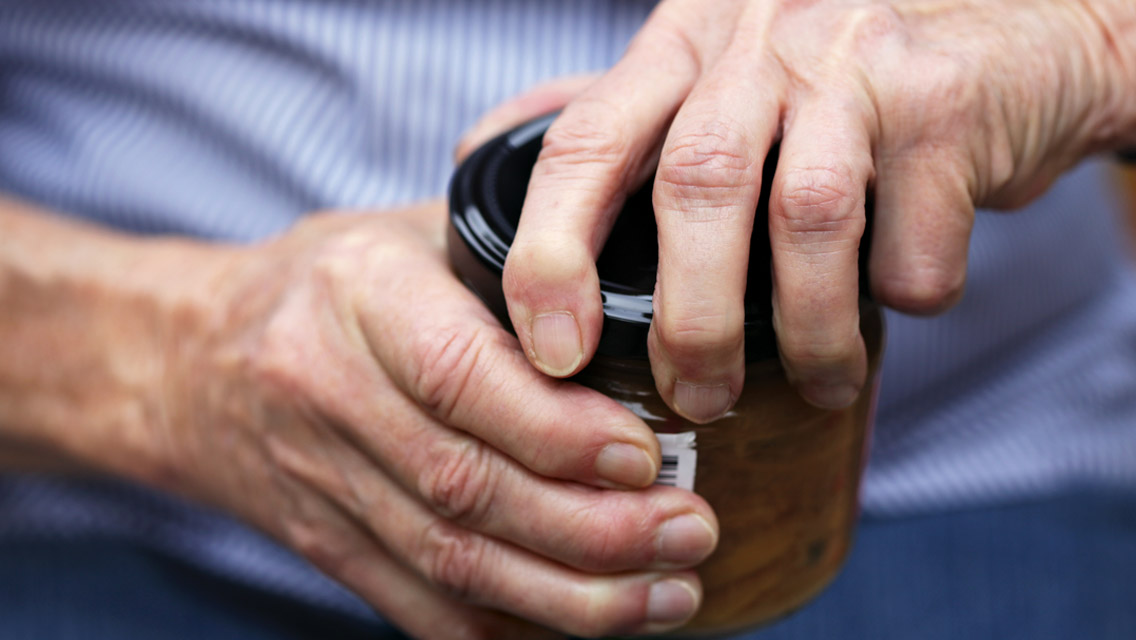
PUMPING IRONY: Losing Our Grip
Grip strength has long been a reliable marker of our susceptibility to chronic illnesses and frailty as we grow older. A new study suggests it may be governed less by the muscles than by the brain.
PUMPING IRONY: Ill-Fitting Genes?
Could we cure Alzheimer’s by tweaking a particular gene? A new study suggests a hopeful path forward, but our genetic makeup presents a few major obstacles.
Looking Back, Moving Forward
Experience Life’s editor in chief reflects on the magazine’s ongoing evolution — and the enduring pillars of a healthy life.

PUMPING IRONY: The Sleep Solution
Nearly seven in 10 U.S. seniors suffer from hypertension. A new study suggests a more regular sleep schedule could provide some relief.
With Gratitude
A message of gratitude to Life Time members and employees from Life Time’s founder and CEO.

PUMPING IRONY: Mitochondrial Magic?
Recent longevity research has featured ever more complex — and sometimes comical — approaches to cellular manipulation.

PUMPING IRONY: How’s My Driving?
A new approach to cognitive testing tracks driving patterns to identify signs of neurological impairment. It may also persuade seniors to begin planning for the day when they’ll need to give up their car keys.

PUMPING IRONY: Skin in the Game
Recent research offers hope that a visit to a dermatologist for skin cancer treatment may someday be less invasive than current procedures. That day can’t arrive too soon.
PUMPING IRONY: Balancing Act
Mounting evidence suggests that an unbalanced mix of microbes in our guts can damage our physical and mental health. New research argues that it can also affect how we age.

PUMPING IRONY: A Positive Sign for Older Couples
Recent research expands the once-novel theory of positive psychology by showing how positive emotions can support the health of this understudied cohort.