



Is happiness good for your health?
That’s the question an obscure psychology professor at the University of North Carolina set out to answer more than 20 years ago. What Barbara Fredrickson discovered was that positive emotions do tend to yield healthy benefits for those who experience them, and her ongoing research has been so influential that an entirely new discipline — positive psychology — has made its way into the psychological mainstream.
I don’t spend much energy seeking my next positive experience — and I may not necessarily notice when one occurs. Life’s offerings are often ephemeral. But Fredrickson’s work has always interested me in a sort of nonactionable way. So, I was struck by a study released last month that attempts to build on her theory in a manner that may have some relevance to an understudied cohort: older couples.
Fredrickson and other researchers have largely focused on individuals in isolation when measuring the effects of positive emotions on physiological health, despite the fact that the most powerful experiences often occur when interacting with another person. Tomiko Yoneda, PhD, an assistant professor of psychology at the University of California, Davis, and her colleagues hoped to expand that research into a more inclusive realm. “We wanted to understand how often older couples share positive emotional moments in their everyday lives, and whether these shared moments affect the body in meaningful ways,” she says.
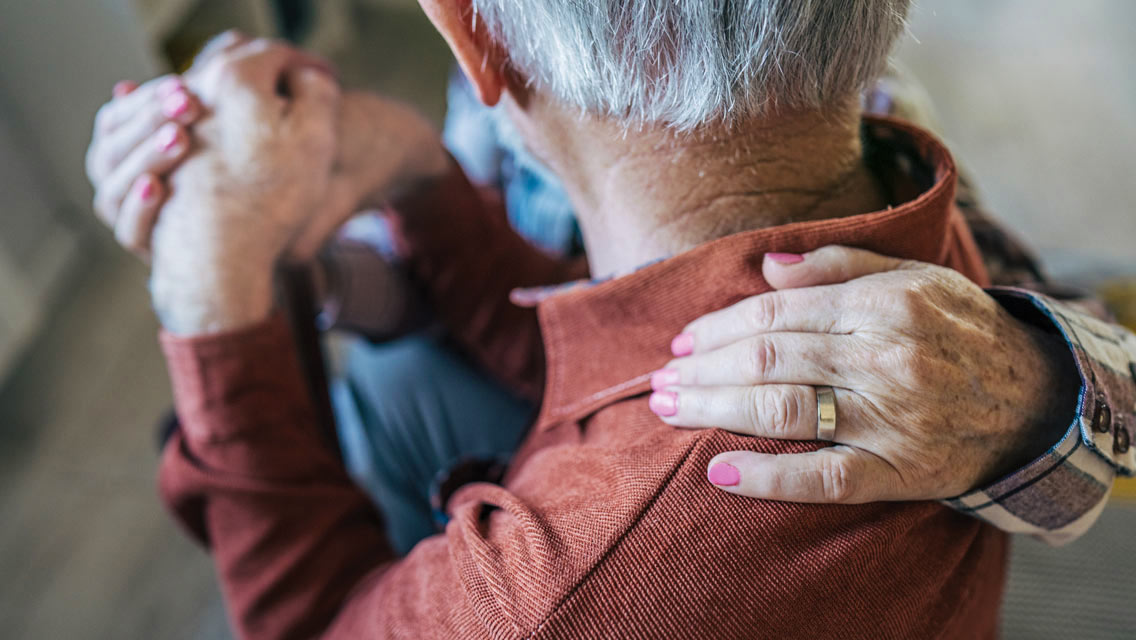
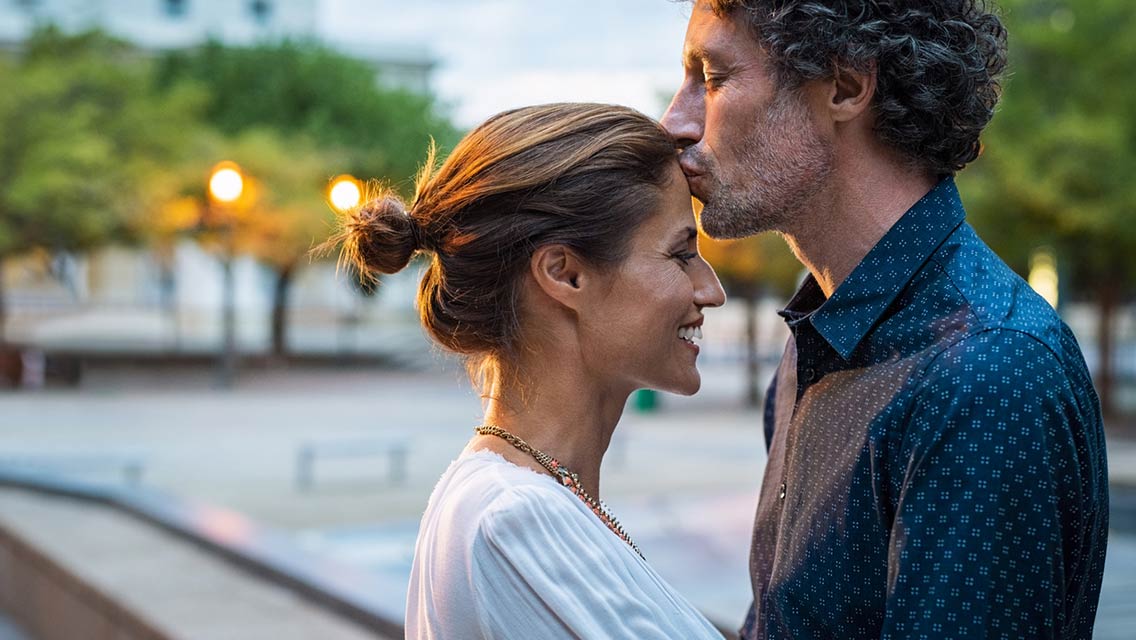
Their results, published in the Journal of Personality and Social Psychology, suggest that older couples experience positive emotions more frequently together than they do as individuals, and that those incidents produce specific health benefits that linger for hours afterward.
Yoneda’s team analyzed data from three separate studies involving a total of 321 cohabitating couples in Canada and Germany between 2012 and 2018. The participants, ranging in age from 56 to 89, described their emotional state (how happy, interested, or relaxed they were) on brief digital surveys conducted five to seven times a day for one week. After each survey, they collected a saliva sample on a test strip, which researchers used to measure levels of the stress hormone cortisol.
Not surprisingly, those samples displayed lower cortisol levels when participants were basking in various positive emotions. Perhaps more interesting, however, was the discovery that couples experienced those positive vibes more frequently when together than when apart — regardless of how they viewed their overall satisfaction with the relationship.
“There was something uniquely powerful about sharing those positive emotions together. Even more exciting, we found signs that these shared positive moments have lasting effects,” Yoneda explains. “When couples felt good together, their cortisol levels stayed lower later in the day. This suggests that coexperiencing positive emotions might actually help the body stay calmer over time.”
Yoneda’s findings boost the notion that the health benefits of positive emotions are amplified when those emotions are shared, a theory Fredrickson introduced in 2016 as positivity resonance. Her research showed how these emotions could influence physiological mechanisms, such as the HPA axis, in ways that could improve stress management and immune- and cardiovascular-system functioning.
“Consistent with the broaden-and-build theory of positive emotions, our findings suggest that one way in which coexperienced positive emotions may be physiologically soothing is by buffering the secretion of cortisol,” Yoneda writes.
All this may be of particular interest to older couples, who tend to spend more time together than with others and are less likely than younger folks to separate or divorce, she explains. These partners also tend to experience more positive emotions as they grow older, and those experiences may affect their health more directly than in their earlier years.
All this makes sense on a theoretical level, I guess, and if Yoneda’s research tells us anything, it’s that My Lovely Wife and I don’t have to chase after positive experiences. They’re just out there somewhere waiting for us. That said, I may have to try harder to notice them.




Comments (0)