



Skip to content

Get Experience Life delivered to your door

Experience Life
Delivered every two months

Real Health. No Hype.

More than 600,000 subscribers trust us to keep them informed, inspired, and authentically healthy. Join them.

Why Do I Have White Spots on My Fingernails?

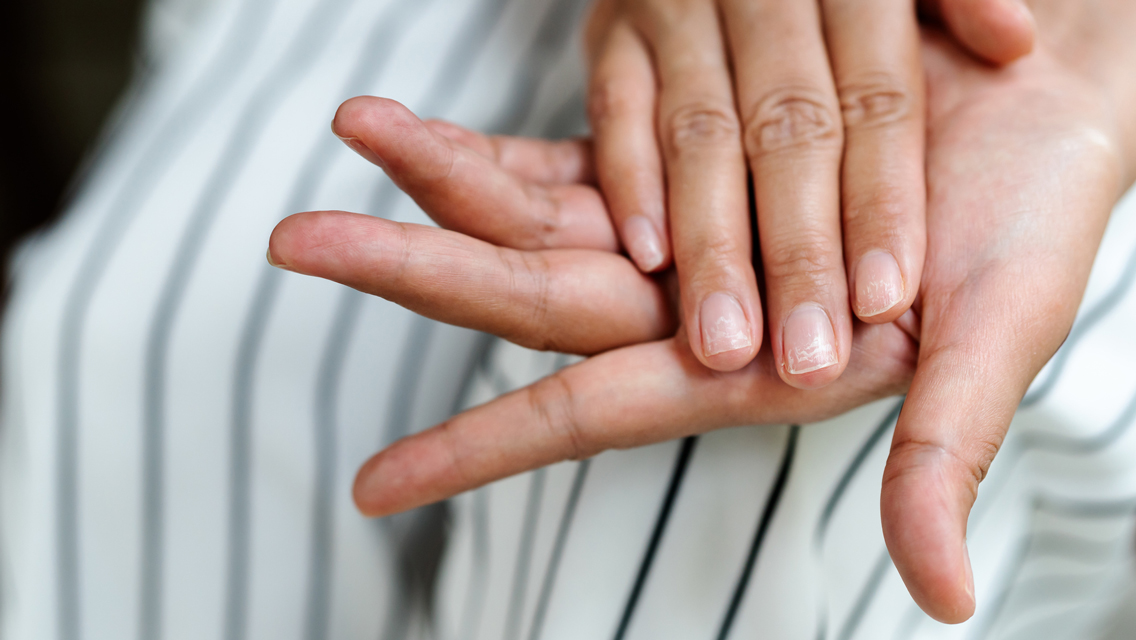
White dots on the nail beds (leukonychia) is a sign of zinc deficiency and low levels of selenium.

white spots on fingernails

Possible cause: Zinc or selenium deficiency

If you have white spots on only one fingernail, you may have injured the base of the nail weeks earlier. But a scattering of white dots on the nail beds (leukonychia) is another classic sign of zinc deficiency, says Stone, as well as low levels of selenium. “So, again, you have to put the symptom in the company it keeps,” he notes.

Zinc deficiency has been connected to poor wound healing, depression, and weak immunity, among other things. Selenium deficiency can make us more vulnerable to oxidative stress.

What you can do: If you have several spots on your fingernails or toenails and suspect a deficiency, P. Michael Stone, MD, MS, a family physician who practices functional medicine in Ashland, Ore., and is a faculty member at the Institute for Functional Medicine, suggests eating more zinc-rich foods (like eggs, grassfed beef, and oysters) and taking supplements.

Lentils are a good plant-based source of zinc, he notes, but be sure to add lemon or lime to increase the absorption of the mineral. “Without this, the zinc in lentils is only about 8 percent bioavailable,” he says.

Foods rich in selenium include Brazil nuts and oysters.

This was excerpted from “What Your Body Is Trying to Tell You, Part 2” which was published in the April 2016 issue of Experience Life.

Anjula Razdan is Experience Life‘s digital director.

Share

Discover more from Life Time

Possible cause: Zinc or selenium deficiency

If you have white spots on only one fingernail, you may have injured the base of the nail weeks earlier. But a scattering of white dots on the nail beds (leukonychia) is another classic sign of zinc deficiency, says Stone, as well as low levels of selenium. “So, again, you have to put the symptom in the company it keeps,” he notes.

Zinc deficiency has been connected to poor wound healing, depression, and weak immunity, among other things. Selenium deficiency can make us more vulnerable to oxidative stress.

What you can do: If you have several spots on your fingernails or toenails and suspect a deficiency, P. Michael Stone, MD, MS, a family physician who practices functional medicine in Ashland, Ore., and is a faculty member at the Institute for Functional Medicine, suggests eating more zinc-rich foods (like eggs, grassfed beef, and oysters) and taking supplements.

Lentils are a good plant-based source of zinc, he notes, but be sure to add lemon or lime to increase the absorption of the mineral. “Without this, the zinc in lentils is only about 8 percent bioavailable,” he says.

Foods rich in selenium include Brazil nuts and oysters.

This was excerpted from “What Your Body Is Trying to Tell You, Part 2” which was published in the April 2016 issue of Experience Life.

More like this

Why Are My Nails Brittle and Peeling?

Thin nails are relatively common but might indicate any number of nutrient deficiencies.
By Anjula Razdan

Nailed It: An Expert Q&A on At-Home Nailcare

Keep your fingers and toes looking great while you’re at home with these manicure and pedicure tips from a LifeSpa pro.
By Emily Ewen

Share a thought

0 Comments

Comments (0)

Leave a Reply

Your email address will not be published. Required fields are marked *

Keep the conversation going

Leave a comment, ask a question, or see what others are talking about in the Life Time Health Facebook group.

Facebook Group

Advertisement

Back To Top