



Explore this Article
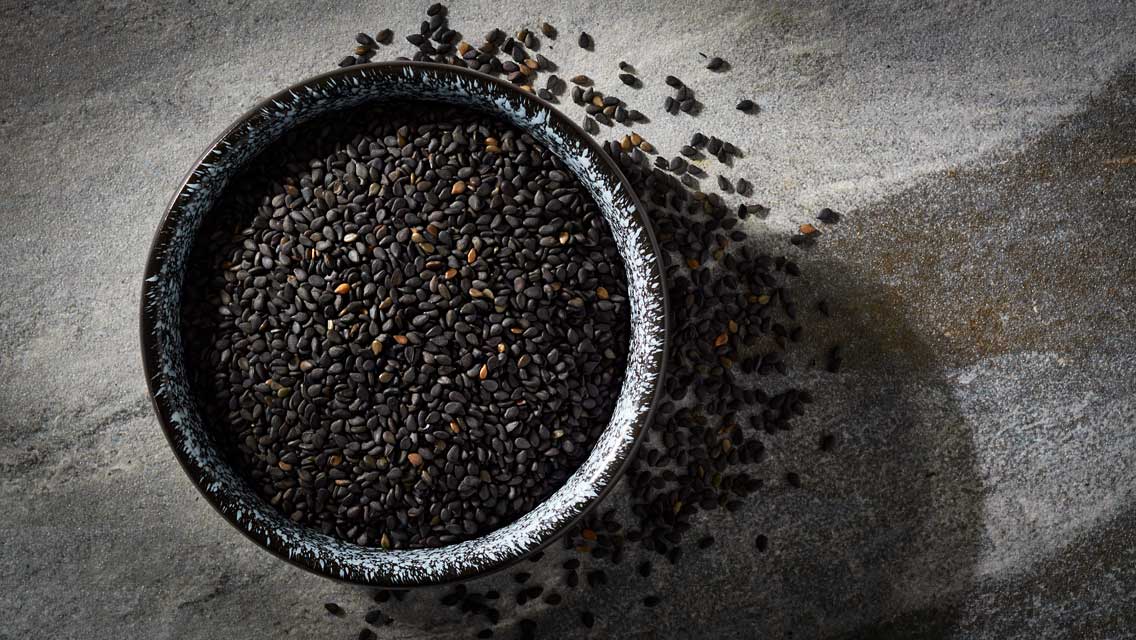
The black sesame seed’s reputation as a healing food goes back more than 2,000 years. In Traditional Chinese Medicine (TCM), black sesame is considered a nourishing tonic that benefits the liver and kidneys, two organ systems associated with vitality, bone health, and hair health, according to Jamie Sidor, DACM, LAc, a licensed acupuncturist and doctor of Chinese medicine. One of the earliest references to black sesame — or hei zhi ma, in Mandarin — appears in the Shennong Ben Cao Jing, a foundational text on medicinal plants compiled between 25 and 220 CE.
Black sesame is a “moistening” food in TCM, meaning that it helps restore fluids and lubrication. “Dryness is a pattern that can affect several systems in the body,” Sidor explains. “Moistening foods gently replenish fluids and oils that support healthy tissues and organ function.” TCM practitioners often recommend the seeds during autumn and winter, she says, when dryness is most common.
Elena Pekurovsky, DACM, LAc, an integrative-medicine practitioner at the Penny George Institute in Minneapolis, notes that black sesame is also traditionally used to help relieve constipation, blurry vision, and lower-back pain stemming from what TCM says is blood, or yin, deficiency. (She adds that people with sesame allergies should avoid it, and those with other preexisting conditions or who are taking prescription medications should consult their physician before incorporating black sesame.)
You might have heard that black sesame can slow down or even reverse graying hair. In TCM, graying early is seen as a sign that your body’s “vital essence” is low, Pekurovsky explains; strengthening the liver and kidneys with nourishing foods like black sesame has long been used as a nutritional support. While a recent animal study suggests that sesame seeds may affect hair growth, there isn’t firm proof from human studies yet, nor is there evidence related to sesame’s effect on hair pigment.
Nutritional Know-How
Sesame seeds come in a variety of colors, including black, white, and yellow, and the seeds’ oil and nutritional properties can vary depending on their color. For example, black sesame is slightly higher in protein, vitamin E, and lignans, notes Gabrielle Kishner, MS, RD, CDN, a registered dietitian and founder of Nutrition by Gabrielle in New York.
Lignans are a polyphenol, a plant compound with antioxidant properties that help protect cells from damage caused by free radicals. In general, darker seeds contain more polyphenols and show stronger antioxidant activity. And compared with other popular seeds like chia or flax, black sesame seeds provide slightly more calcium and iron, Kishner notes.
Black sesame seeds also deliver healthy fats, B vitamins, and minerals like magnesium, copper, zinc, and phosphorus. In fact, their mineral density is one reason that researchers have examined their role in supporting bone, heart, skin, and digestive health. Calcium, magnesium, zinc, and phosphorus all help maintain bone strength; that may be especially relevant for postmenopausal women looking to slow bone loss and support healthy hormone balance.
Healthy fats, polyphenols, and vitamin E also support heart health, Kishner explains, which could be why sesame has been shown to help keep blood pressure, blood sugar, and blood lipids steady.
Fiber is great for your digestion, too — and with about 1 gram per tablespoon, black sesame seeds can support gut health, she adds.
“Sesame seeds are highly nutritious, but too much can lead to digestive discomfort,” she notes. They also contain antinutrients, such as oxalic and phytic acids, which in excess can reduce the absorption of certain minerals. For this reason, Kishner suggests limiting your intake to about 1 to 2 tablespoons per day. Talk to your doctor first if you have any health issues or if you take medication. (Learn more at “All About Antinutrients.”)
Kitchen Tricks
If you’re looking to cook with black sesame, you can find it in three different forms for culinary use.
Whole seeds can be lightly toasted in the oven or on the stovetop; toasting makes them crispier and intensifies their nutty flavor. It may also make them easier to digest.
Sprinkle toasted seeds on top of roasted vegetables, grain bowls, or any kind of cooked protein for a pop of dark color and a nice crunch. You can also mix them into a spice blend to use as a finishing seasoning, or use them to make the Superfood Sesame Bars featured below.
Black sesame paste is a popular ingredient in many East Asian desserts. Similar products include black sesame butter and tahini, which can also be made from black sesame seeds only, although those versions differ slightly in their preparation and flavor profiles. You can buy premade paste, butter, or tahini or grind some yourself in a food processor or high-speed blender to unlock even more of the seeds’ nutritional power. “These methods break the tough outer shell, making it easier for your body to absorb the nutrients,” Kishner explains.
Pekurovsky suggests soaking the seeds overnight, lightly toasting them, and then grinding them. This helps break down the phytic and oxalic acids that can otherwise block your body from absorbing all the good minerals.
Try stirring a spoonful of black sesame paste into your favorite salad dressings, smoothies, or yogurt. Sidor suggests adding a tablespoon of tahini to a baked sweet potato for a quick, nutrient-dense snack.
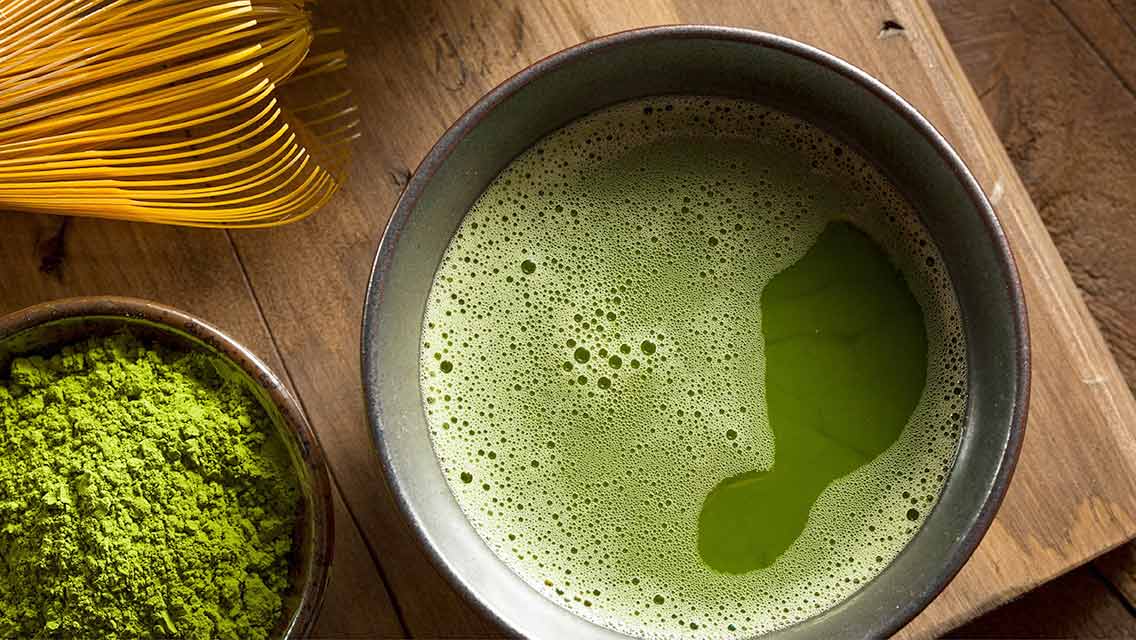
Black sesame powder is available online and at many Asian grocery stores. Its powdered form makes it easy to add to drinks like our Black Sesame Matcha Latte, as well as to smoothies and baked goods. Pekurovsky says black sesame tastes great with vanilla, chocolate, honey, ginger, and citrus, as well as with savory foods like mushrooms and tofu.
For Those Who Want More From Their Food.
Stay Connected.

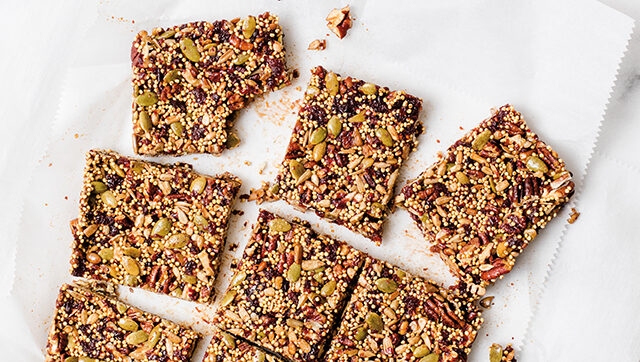
Superfood Sesame Bars
This simple recipe from Jamie Sidor, DACM, LAc, a licensed acupuncturist and doctor of Chinese medicine, draws on ingredients historically used in Traditional Chinese Medicine to support liver blood and kidney essence. The combination of black sesame seeds, walnuts, and goji berries makes it a portable, nutrient-dense snack.
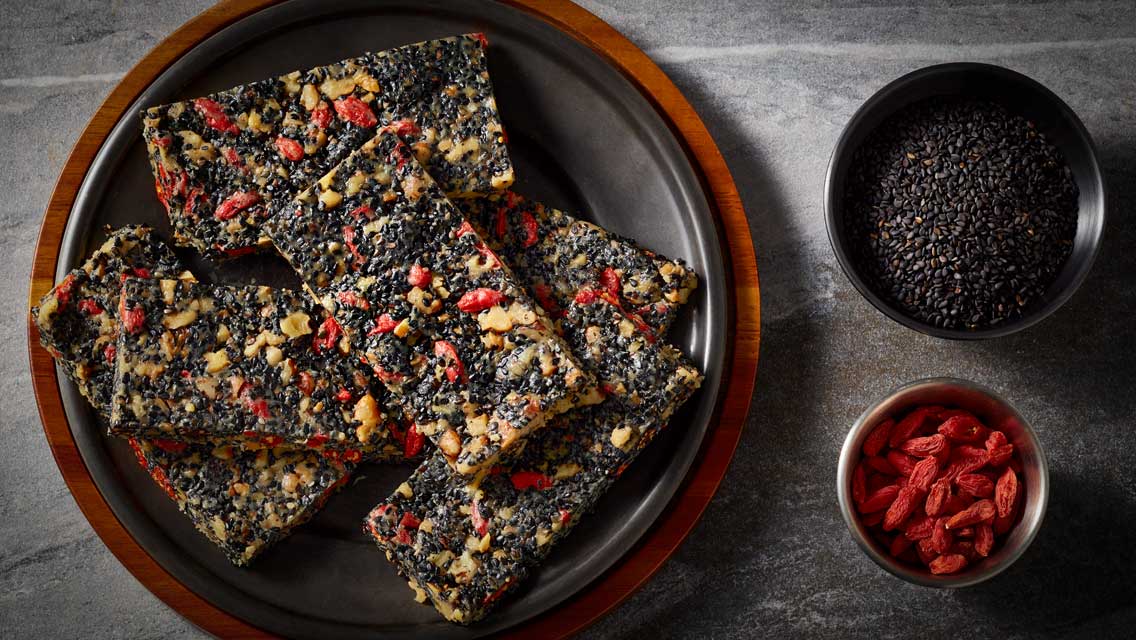
Makes 12 bars • Prep time 15 minutes • Cook time 5 to 10 minutes to toast the nuts and seeds
- 1 cup chopped walnuts
- 1 cup black sesame seeds
- ½ cup tahini (any variety)
- ½ cup dried goji berries
- ½ cup dried black mulberries
- 4 tbs. raw honey
- 2 tsp. sea salt
- Preheat the oven to 350 degrees F and spread the walnuts and sesame seeds in a single layer on a sheet pan.
- Toast the nuts and seeds for five to 10 minutes, until they’re fragrant and the walnuts are lightly browned.
- Add all the ingredients to a mixing bowl and stir until combined.
- Line a baking dish with parchment paper, then scrape the mixture into the dish and use a second sheet of parchment to press it firmly into an even layer.
- Cover and refrigerate for two to three hours, until firm. Slice into squares and enjoy.




Comments (0)