



Explore this Article
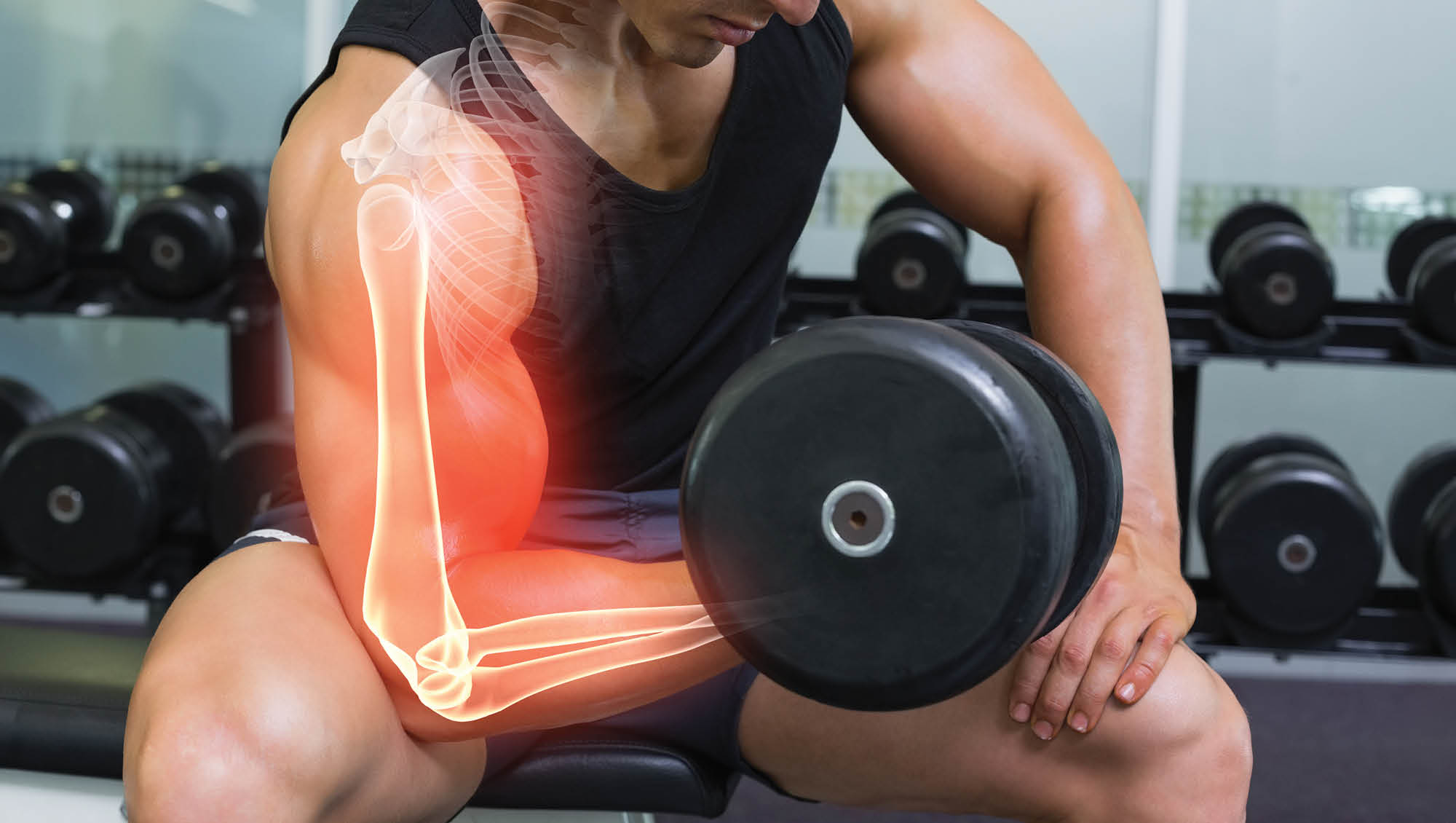
The skeletal system holds everything up — literally. Beneath the surface, your bones quietly do the work of keeping you upright, protecting your organs, and facilitating movement. When that foundation weakens, the consequences can be far-reaching.
“If we don’t have a strong base with our bones, the other systems in our bodies are not going to function as well,” says Joseph R. Hribick, DPT, a certified orthopedic manual therapist and clinical assistant professor of physical therapy at Lebanon Valley College in Annville, Pa.
Yet more than half of U.S. adults over 50 have either low bone mass or osteoporosis, and many don’t realize it until they have a fracture. “That’s the sneaky thing: Bone loss happens gradually, and then all of a sudden someone has an incident and it’s a dramatic change in their lifestyle,” Hribick says.
Research consistently shows that low bone density is associated with a higher mortality risk, even after accounting for other health factors. And while declines in bone density are commonly linked to menopause, men are also vulnerable to bone loss and its associated risks. (By some estimates, about 20 percent of men over 50 will sustain an osteoporotic fracture at some point in their later years.)
“As bone density declines, you start seeing issues with balance and stability, which not only leads to a higher chance of falling but … affects someone’s confidence, so they’re less likely to move in certain ways or go out and participate in certain activities,” Hribick says.
Over time, inactivity erodes muscle mass and accelerates bone loss, creating a vicious cycle that can be difficult to break.
But the good news is that the cycle can be broken, and exercise is one of the most effective ways to do it. Weight-bearing and resistance exercises stress the skeleton, signaling the body to build and maintain strong bones. It’s best to start early, but it’s never too late to make a difference.
A Framework in Flux
The human skeleton is made up of more than 200 bones — specialized connective tissues composed of protein, collagen, and minerals like calcium and phosphorus. Each bone has a hard outer shell that provides structure and strength and a spongy center that produces blood cells and absorbs the impact of external forces.
But bones do more than hold us together.
“The skeleton helps us stand upright, walk, and do everything we need to do on a daily basis, like getting down to tie our shoes or opening a door,” says Sandra Tadros Guirguis, a Life Time group fitness instructor and Menopause Society–certified practitioner based in Toronto. Movement happens when our muscles, which attach to bones, pull on the bones like levers.
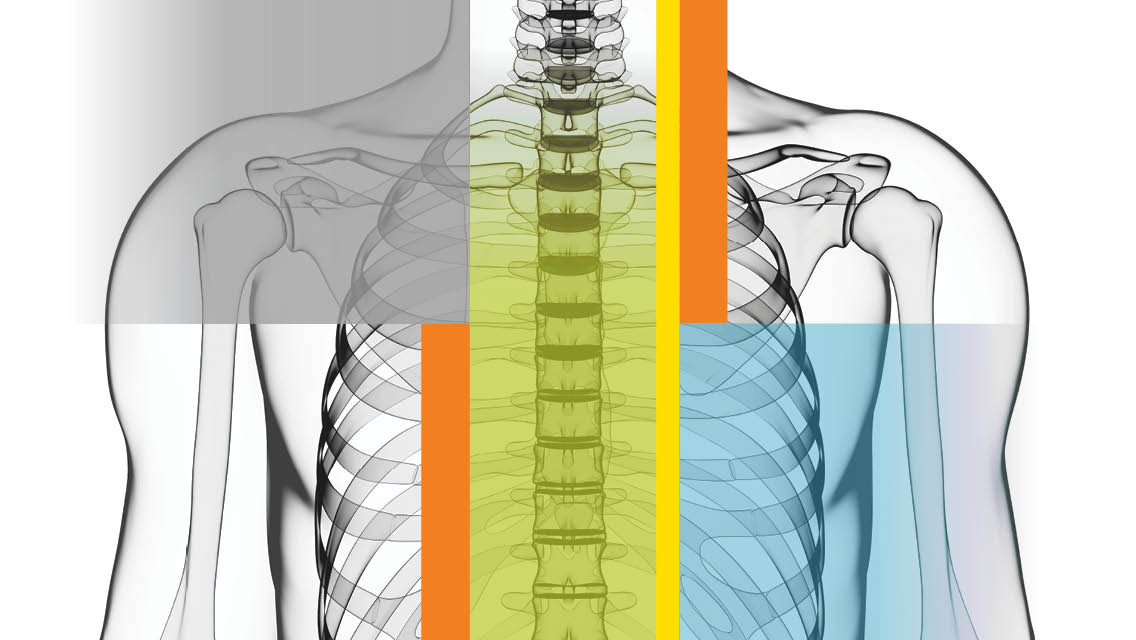
Bones also act as a protective shell for vital organs: The skull protects the brain, the rib cage protects the heart and lungs, and the spine protects the spinal cord.
And though they may seem like a rigid, static framework, our bones are in a constant state of renewal. “Bone is living tissue,” Hribick says. “It’s not something that we’re born with that’s then stagnant over the course of our life. It’s constantly degrading and rebuilding.”
Bone remodeling, or the continual process of bone formation and breakdown, is a tug of war between two types of cells: osteoblasts, which build new bone, and osteoclasts, which break down old or damaged bone.
“When things are going well, bone remodeling is a continuous, balanced process where osteoclasts remove old bone and osteoblasts replace it with new bone,” Guirguis says.
However, the bone-remodeling process doesn’t stay balanced forever. In our early years, our osteoblasts naturally outpace our osteoclasts, helping us build the skeletal framework we’ll carry into adulthood. By age 30, we’ve reached peak bone mass, and after that we have to work a bit harder to keep our bone-building cells ahead of the curve.
“You can still build bone density — it’s just harder as you age,” Hribick notes.
To complicate matters, certain risk factors favor bone breakdown over bone formation and increase the risk of osteoporosis.
Nonmodifiable risk factors include having a smaller skeleton, having a family history of osteoporosis, and being female, Hribick says.
Age is another nonmodifiable risk factor. Despite its associations with older women, osteoporosis is also common in older men. (Learn more at “PUMPING IRONY: No Bones About It.”)
Meanwhile, modifiable risk factors include physical inactivity, low calcium or vitamin D intake, smoking, alcohol consumption, and corticosteroid medications. (Learn more at “How to Strengthen Your Bones.”)
Of all the modifiable risk factors, says Hribick, physical inactivity may be the most damaging yet the easiest to address.
How Exercise Builds Your Bone Bank
Exercise is akin to investing in your bones’ retirement account. “Invest as much as you can early in life so that you reap the benefits of it later,” Hribick says, noting that the prime years for building bone are between ages 8 and about 20.
However, even if you’ve long since passed that window, it’s never too late to start. Consistent exercise can shore up weak bones and maintain healthy ones, keeping osteoporosis at bay.
Some types of exercise are more effective at improving bone density than others. These include high-impact weight-bearing activities that trigger bone formation by exposing your bones to repeated mechanical stress.
“Ground reaction forces come up through your legs and into your spine, and then the weight of your body comes down with gravity,” Hribick explains. “So you have mechanical stress from below and mechanical stress from above, and that helps to stimulate these cells to lay down more bone.”
And the more impact an exercise delivers, the stronger the stimulus. “High-impact weight-bearing exercise — things like jumping, running, skipping, basketball, and volleyball — generates stronger bone-building signals at the cellular level,” Guirguis says.
But if you’re prone to fractures or are battling joint issues, the benefits of high-impact exercise won’t necessarily outweigh the risks. “For older adults, especially those with arthritis, I would not recommend high-impact activity,” Hribick says.
Adults should aim to stay active most days, working toward about 150 minutes of moderate-intensity activity weekly.
Luckily, high-impact exercise isn’t the only way to stimulate bone growth. Resistance training is another powerful ally.
“When we contract the muscle, we actually pull on the bone, and that in itself promotes bone production,” Hribick says.
Research backs this up. A 2025 meta-analysis in the Journal of Orthopaedic Surgery and Research found that resistance training significantly improves bone-mineral density in the spine, femoral neck, and hips of postmenopausal women.
In general, adults should aim to stay active most days, working toward about 150 minutes of moderate-intensity activity weekly, Guirguis says.
It’s not just about the total time: Variety matters, too. At least two days per week, focus on resistance training and balance exercises to help maintain bone strength and reduce the risk of falls and fractures.
Your Bones’ Changing Needs
The optimal type and frequency of weight-bearing and resistance exercise for bone health vary depending on life stage.
Adolescents, Teens, and Young Adults
Adults
Older Adults
Where Research Meets Real Life.
Stay Connected.

6 Exercises for Strong Bones
No matter your age or fitness level, there are two important considerations when it comes to bone-building exercise, says Schneider. First, bone growth is localized. Bone breaks down and re-forms in response to external forces — but it doesn’t do so holistically throughout the body. A stimulus to the legs won’t automatically lead to bone growth in the spine or wrists; it doesn’t even necessarily guarantee bone densification in the hips.
This means that a walking routine, even one that incorporates a weighted vest and hills, isn’t enough to make meaningful changes to bone density higher up the kinetic chain. It’s a great start for many people, says Schneider, but ultimately won’t be enough to sufficiently challenge the upper body. That’s why a variety of full-body exercises is important.
Second, bone growth requires progressive stimulus. Bone, like muscle, doesn’t know how much weight you’re lifting, how high you’re jumping, or how fast you’re running, says Schneider. It responds to the stimulus — and once it gets accustomed to that stimulus, it no longer responds in the same way. Again, this points to the need for exercise variation and progressive overload in a movement plan.
Gradually varying or increasing the challenge by doing different activities or exercises or by increasing weights, or by a combination of the two approaches, can keep your bones responsive and strong over time.
Schneider designed this full-body strength workout, with variety and progressive overload in mind, to help you build and maintain bone density throughout your body.
Do this routine as a standalone workout once per week as part of an overall fitness plan that includes at least one other full-body strength workout and at least 150 minutes of moderate-intensity, higher-impact cardio per week. Perform all sets of each exercise before moving on to the next.
Alternatively, incorporate one, some, or all these moves into your existing training plan.
1) Box Jump-Downs
Perform five sets of three reps.
- Begin standing on an elevated surface: a box, bench, or step about 6 to 20 inches high (start with a shorter height and gradually increase as you feel able).
- Step or hop off the elevated surface and land heavily with feet hip width apart. Catch yourself midsquat.
- Straighten your legs and step back onto the box, bench, or step. Repeat.
2) Farmer’s Carry
Walk for one minute.
- Stand with your feet hip width apart and grip a heavy dumbbell or kettlebell in each hand.
- Begin walking, allowing your arms to relax.
- Reach the crown of your head to the ceiling and avoid leaning heavily to either side.
3) Assisted Eccentric Pull-Up
Perform three sets of five reps.
- Begin in the top position of a pull-up, feet supported by a box.
- Slowly lower yourself down until your arms are fully extended.
- Do three sets of five reps.
4) Broad Jump
Perform five sets of three reps.
- Find a stretch of floor that’s clear of obstacles and begin by standing with feet hip width apart.
- Bend your knees slightly and push explosively through your feet, swinging both arms forward to jump as far forward as you can.
- Land on both feet with control.
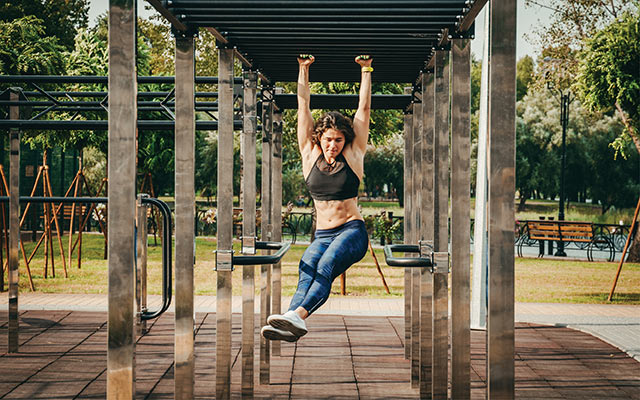
5) Dead Hang
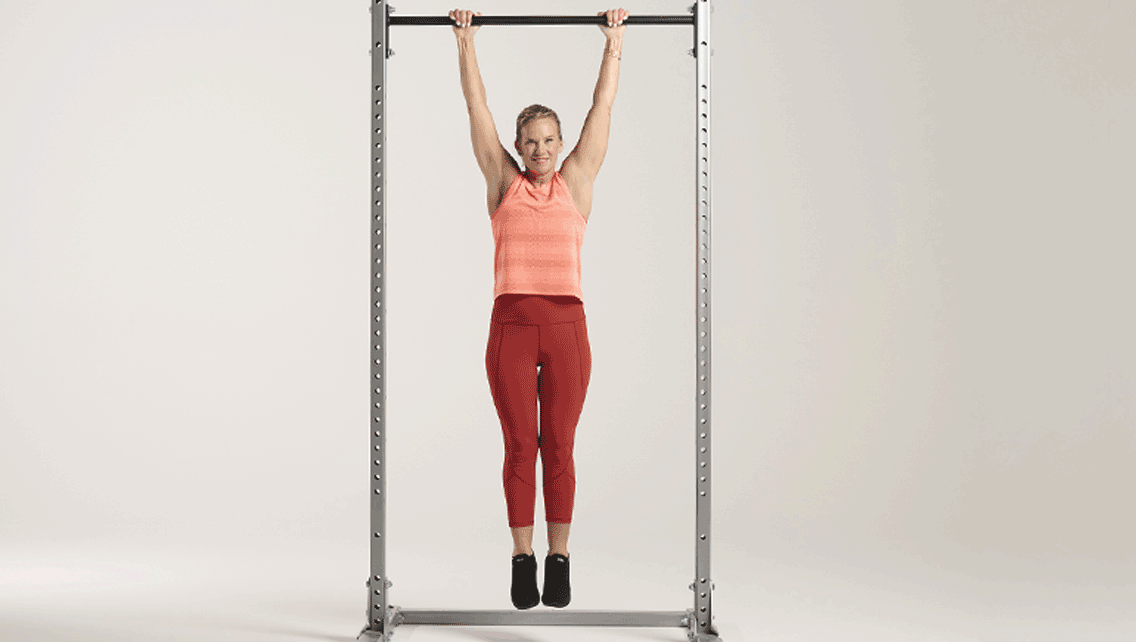
Hold for as long as possible. Do three sets.
- Grip a pull-up bar with palms facing forward.
- Without bending your elbows, draw your shoulder blades down and back to engage the scapulae. (Imagine drawing your armpits down toward your hips to ensure the engagement comes from your shoulders, not your arms.)
6) Plyo Pushup
Perform three sets of five reps.
- Get into a high-plank position on the floor: hands slightly wider than shoulder width, arms straight (but don’t lock your elbows), and body straight from heels to the top of your head.
- Bend your arms and pull your shoulder blades down to lower yourself until your arms form 90-degree angles, aiming elbows out about 45 degrees away from your body. Keep your core engaged and glutes squeezed the whole time.
- Without pausing at the bottom, push yourself back to the starting position explosively; your hands should leave the floor.
- Land softly and transition immediately into the next rep.
Tip: To make the exercise easier, perform it with your knees on the ground or elevate your hands on an incline.
Tips for Exercising With Osteoporosis
Exercise is vital for building muscle and bone density, improving balance, and preventing falls and fractures. But if you’ve been diagnosed with osteoporosis, you need to take precautions, because the wrong movement can sideline you for months or longer. To stay safe, physical therapist Kavita Patel, DPT, offers some recommendations.
Protect your spine during exercise. Activities that place stress on the spine can increase your risk of fracture. If you have bone loss in the spine, limit (or avoid) spine movements that involve rapid, repetitive, sustained, weighted, or end-range twisting or bending. These include crunches, sit-ups, Russian twists, and toe touches. This is particularly important for those with a history of previous spine fractures or very low bone density. (See “How to Strengthen Your Spine” for more.)
Ensure proper form from start to finish. It’s important to use proper movement technique not only during exercise but also before and after. “This is when a lot of people get themselves into trouble,” Patel says. “They’re so good at watching their form during the exercise, and once they’re done, they forget — they quickly drop or release the weights by rounding their spine, or twist themselves as they get on and off the equipment.”
Seek supervision. Ideally, you’d work under the supervision of an exercise specialist, physical therapist, or personal trainer familiar with osteoporosis. This person can assess your fracture risk, overall fitness, and other health issues (including fracture history, arthritis, pelvic-floor conditions, and balance impairments) to guide you through the appropriate type and dosage of exercise.
This article originally appeared as “Good Bones” in the September/October 2026 issue of Experience Life.




Comments (0)