



Since osteoporosis — the loss of bone mass — was defined as a disease in the 1990s, most clinical attention has focused on women, whose bone densities tend to decline with hormone loss at menopause.
While plenty of evidence now suggests that older men are also susceptible to the condition, recent research shows that few are diagnosed, leaving them vulnerable to life-changing fractures.
By some estimates, about 20 percent of men over 50 will sustain an osteoporotic fracture during their later years; among seniors, men account for about a quarter of all hip fractures — and the results can often be fatal.
“A 50-year-old man is more likely to die from the complications of a major osteoporotic fracture than from prostate cancer,” geriatrician Cathleen Colón-Emeric, MD, tells The New York Times.
By some estimates, about 20 percent of men
over 50 will sustain an osteoporotic fracture
during their later years.
Women routinely begin bone-density testing at age 65, yet most men are tested only after a fracture occurs.
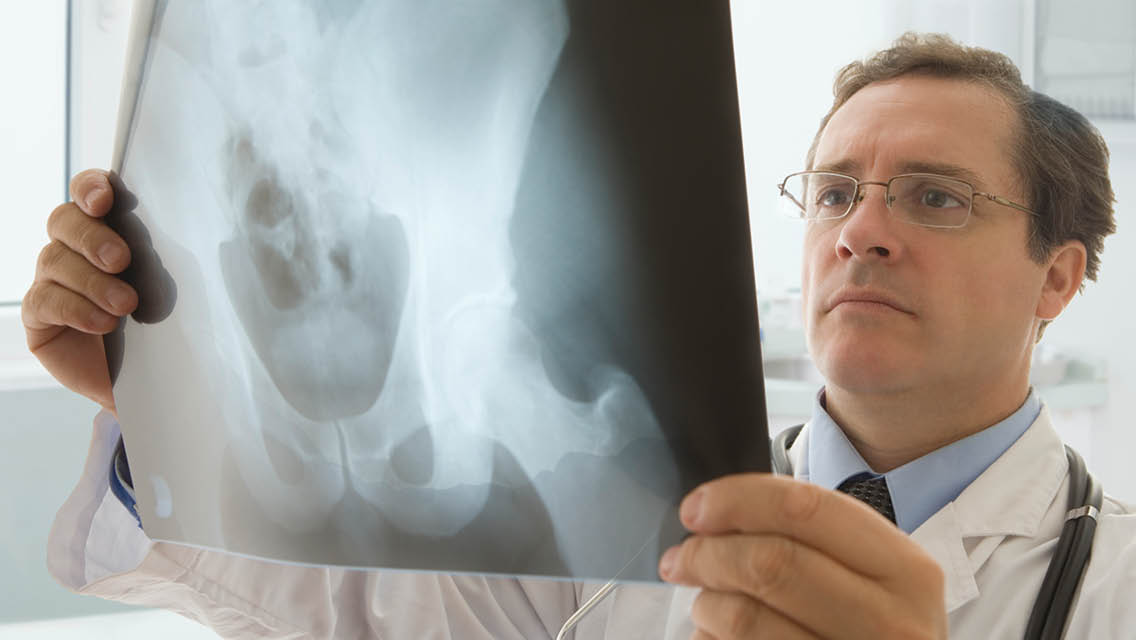
When Colón-Emeric screened 866 elderly male veterans with dual-energy x-ray absorptiometry (DEXA) scans, the results revealed signs of osteoporosis or osteopenia in 51 percent of them. The results were published in JAMA Internal Medicine.
Many osteoporosis risk factors apply to men as well as to women, according to the Bone Health and Osteoporosis Foundation. Those factors include family history, taking steroid medicines, lack of exercise, smoking, high alcohol consumption, and low testosterone levels.
But most physicians do not order DEXA screening for men because, as Colón-Emeric puts it, “clinical practice guidelines are all over the place.”
Some professional organizations recommend scans for men over 50 who have at least one risk factor, as well as for all men over 70, but the American College of Physicians and the United States Preventive Services Task Force have concluded that there isn’t enough evidence to recommend screening for men who have not yet had a fracture.
While those organizations await more persuasive research, it’s up to men to raise the issue with their doctors.
This article originally appeared as “Men Suffer from Brittle Bones Too” in the March/April 2026 issue of Experience Life.








Comments (0)