


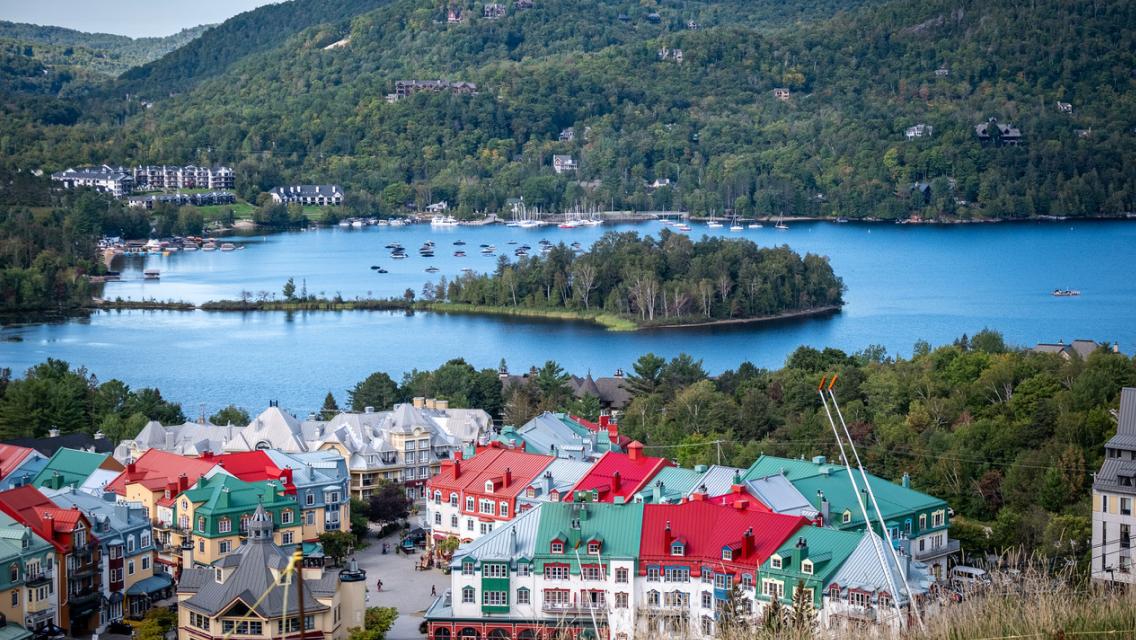
As we set foot on the plane and took our seats, our hearts raced. We weren’t flying to a beach or a wellness retreat. We were heading to climb Mont-Tremblant, in Québec, Canada, — 15 times in 36 hours — until we reached 29,029 feet, the height of Mount Everest.
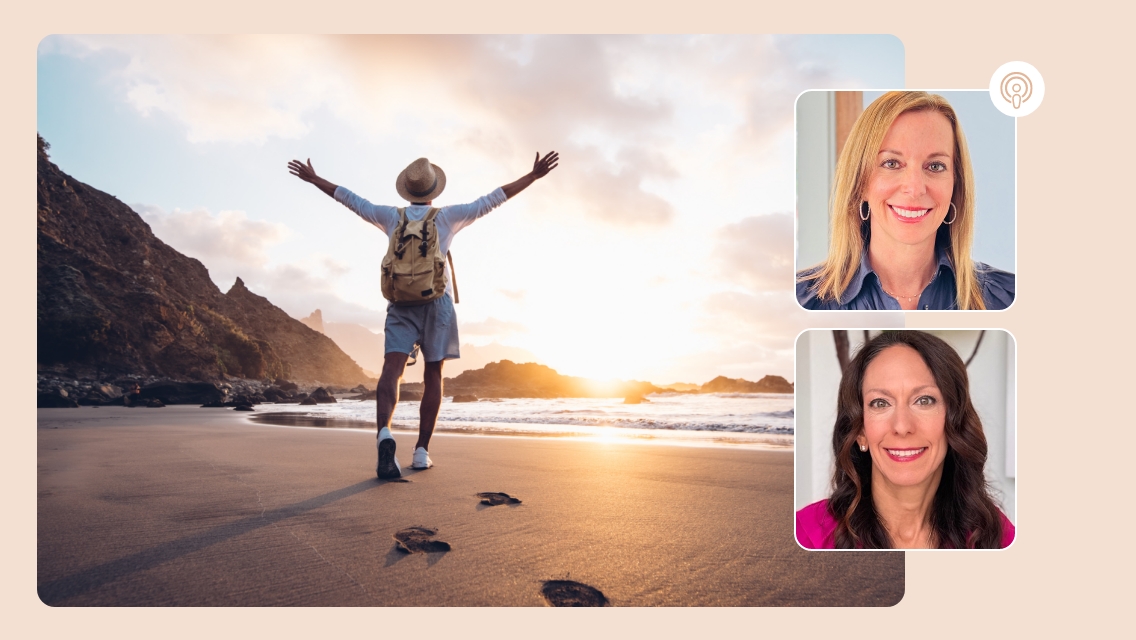
Months earlier, we interviewed Marc Hodulich, cofounder and CEO of 29029 Everesting, on our show, The Art of Living Well Podcast®. He described the event with contagious enthusiasm: Participants hike a mountain repeatedly until they’ve ascended the equivalent of Everest. It sounded insane — who would pay money to voluntarily do that?
When we ended the conversation, Marnie was shaking her head in disbelief. “There’s no way I could ever do something like that,” she said. Stephanie just smiled and shrugged, her version of never say never. She was already thinking that maybe this crazy endurance event was something we could do together with our oldest sons.
After the interview, we couldn’t stop thinking about 29029. The idea lodged itself deep in our minds, somewhere between curiosity and “could we really do this?” What was it about this challenge that called to us? Maybe it was the symbolism of a climb that mirrors life itself: steep, unpredictable, sometimes breathtaking, and sometimes brutal.
Still, the doubts came quickly. You’re not an endurance athlete. You’re too old to start this now. You don’t have time to train. What if you don’t finish?
But beneath the fear was a quieter voice whispering, What if you could?
Embracing the Challenge
We gave into that quieter voice, and just five months before the September 2024 event, we began training. Our 29029 coaches gave us weekly workouts, which included hours of treadmill walking at a 15-percent incline. They guided us on how to adjust our nutrition and hydration and to honor rest days. We tuned into weekly Zoom sessions on mindset training and tested our limits in small ways every day. The physical preparation was intense, but the mindset work was just as crucial.
And now here we were, two midlife women who have spent years talking about growth and wellness, about to put all that talk into action. We’ve both learned that fear isn’t something to overcome — it’s something to listen to.
We often talk on our podcast about how real growth happens outside your comfort zone. However, it’s one thing to say that, and another to live it. Facing a fear head-on requires surrender, humility, and a willingness to be uncomfortable.
Some people seem to embrace fear with ease, while others freeze in its grip. What makes the difference?
For us, it was community. The moment we decided to tackle this challenge together, the fear became less paralyzing. Having someone by your side who believes in you and who reminds you that you’re stronger than your self-doubt, changes everything.
Many nights leading up to the event, Stephanie experienced “dreams” in which she showed up to the mountain without the right gear or without completing the proper training. Marnie was always there to remind her that she already had everything she needed inside of her to earn her 29029 red hat.
Facing the Fear
By the time we arrived at the mountain, our nerves were intense. We met seasoned climbers and “red hat” veterans, people who had conquered 29029 before and proudly wore the red hats that signified completion. We also met alumni who didn’t conquer the Everest elevation the first time, but were back to try again. Their stories were inspiring and intimidating all at once.
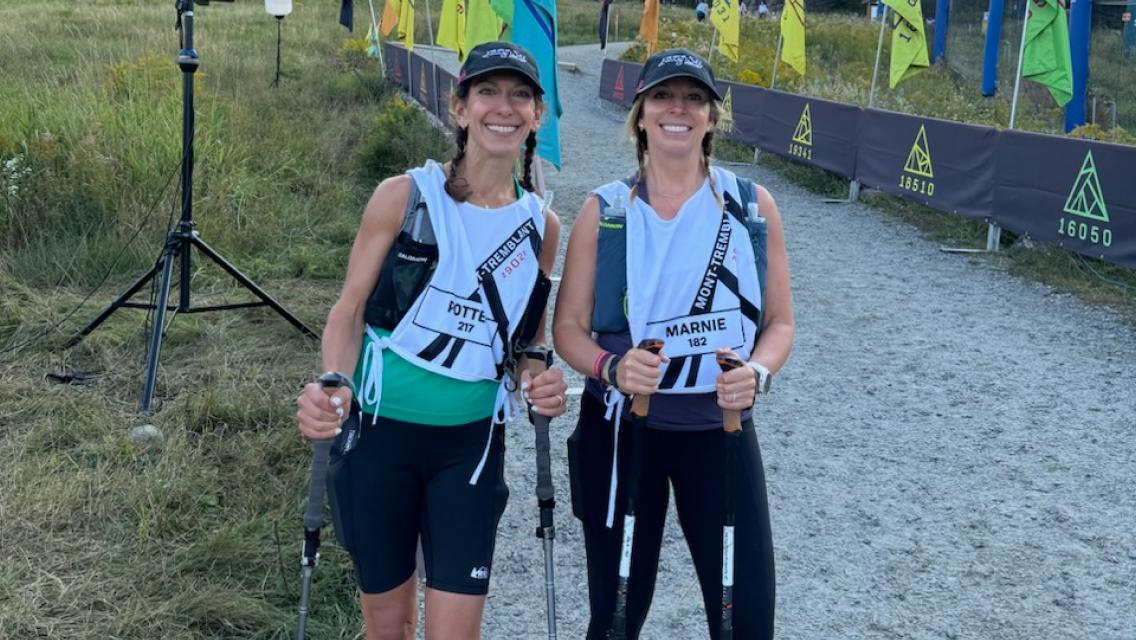
The night before, sleep was challenging. We lay awake, running through every “what if” our minds could conjure. Yet by morning, as the start-line countdown began, adrenaline replaced anxiety. Eminem’s “Lose Yourself” blasted through the speakers. “Ten, nine, eight . . .,” we heard the countdown before the horn. The air vibrated with energy.
When the horn sounded, we began our climb. Slow, steady, side by side.
The first few ascents felt doable, our legs fresh and our spirits high. But as the hours passed and day turned into night, fatigue set in. There were moments when we both wanted to stop for day one. When the physical pain and mental chatter became deafening, tears came easily. So did nausea.
At one low point, Stephanie remembered something one of our coaches had said to us. “Go get some rest, take a shower, and get yourself back on the mountain early in the morning,” Coach Derek advised. “That rest will do more for you than slogging through exhaustion all night long.”
It was the best advice ever. It reminded us that sometimes slowing down is the bravest thing you can do. It was time to rest. The fear of not finishing was still there, but we had done enough ascents and believed we could make it.
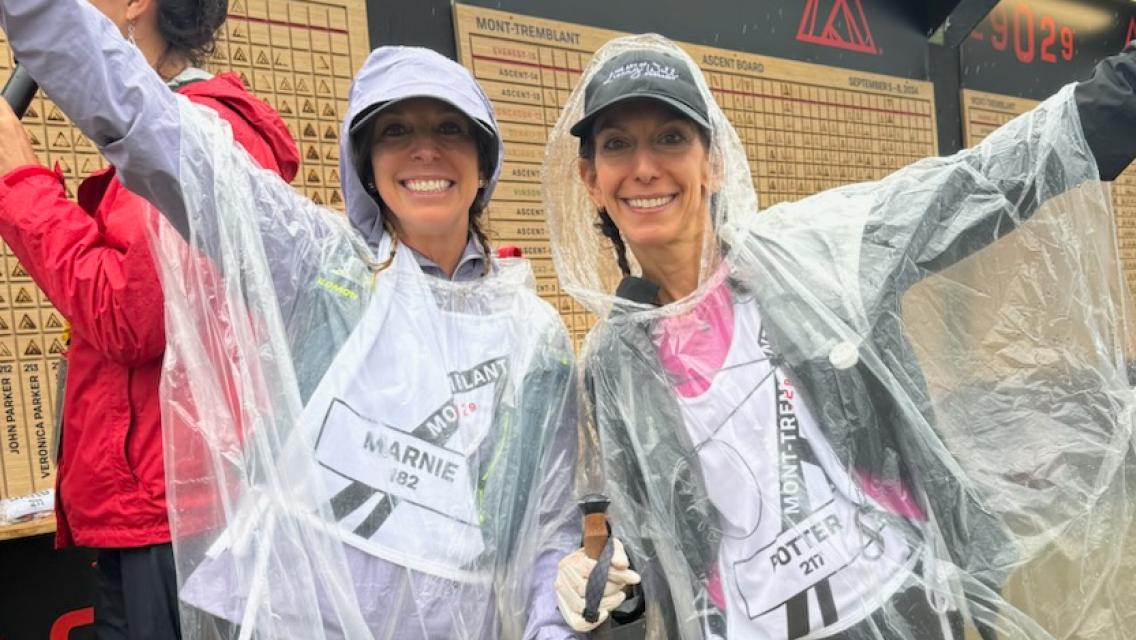
After a few hours of rest, a shower, and some food, we resumed climbing in the dark, early hours of the morning. The nausea was still there, and though it was raining and sleeting, we kept climbing.
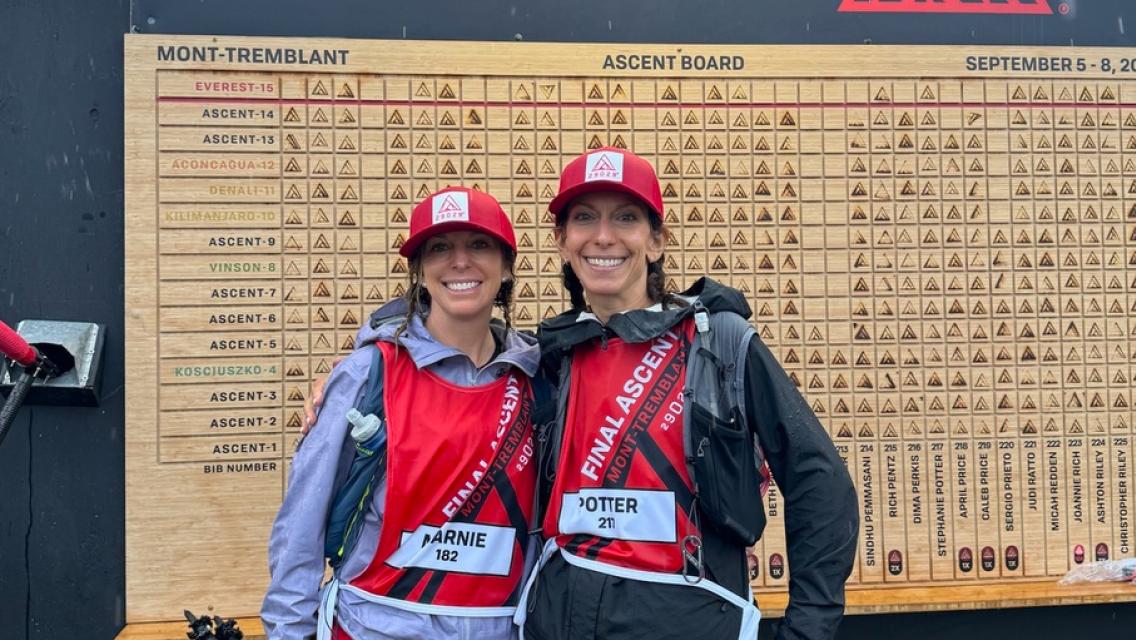
Every summit felt like a small miracle. Our resolve thickened. Each time we reached the top, we’d breathe in and know we were that much closer to our red hat. At the bottom, we’d mark another ascent by branding our wooden board with a hot iron before setting out on our next climb.
Somewhere in the exhaustion, Marnie stopped recognizing herself. The woman hiking on this mountain, pushing through tears and fear, wasn’t the same woman who once said, “I could never do this.” She was someone braver, steadier, and more alive.
By the final climb, something shifted inside both of us. In our red bibs and tutus, the finish line wasn’t just about earning a red hat. It was about everything that represented trust, commitment, resilience, and friendship.
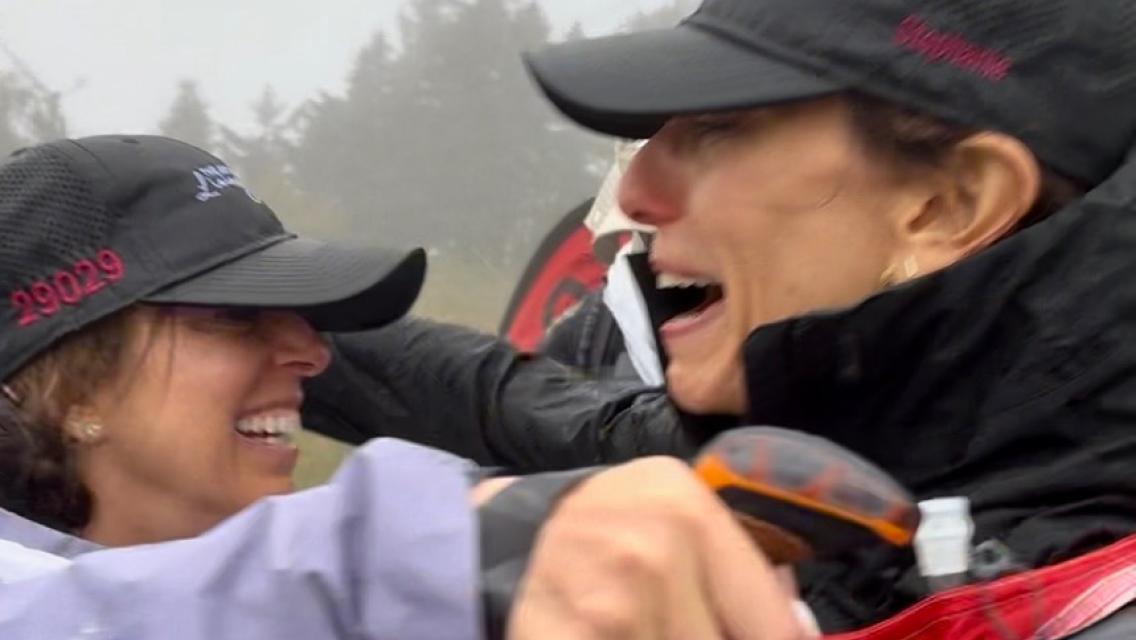
When it was over, we stood side by side at the summit, freezing as the sleet came down, hands shaking, as volunteers placed red hats on our heads and our husbands cheered. We were exhausted, emotional, and deeply changed.
Moving From Limitation to Transformation
Fear had always felt like something to conquer, but this experience reframed it completely. Fear wasn’t the enemy; it was the invitation. It showed us where to grow.
Stepping into fear doesn’t mean erasing it. It means letting it walk beside you and learning from what it reveals. For us, it revealed a truth we’ll carry far beyond the mountain: that courage expands when shared.
Not everyone needs to climb a mountain to discover that truth. Sometimes stepping into fear looks like posting that first video, walking into a room of strangers, or having a hard conversation. What matters isn’t the size of the mountain, it’s the willingness to take the first step.
As we look back, we often laugh about how impossible 29029 once sounded. But that’s the beauty of fear: It disguises transformation as limitation.
We came home with sore muscles, a deep sense of accomplishment, and hearts that felt a little wider. We learned that when you lean into fear, especially alongside someone who believes in you, you don’t just climb a mountain. You rise together.

The Case for Epic Adventures
With Marnie Dachis Marmet and Stephanie Potter