

The Case for Epic Adventures
Our guests talk about one of their recent epic adventures, what this type of experience has taught them, and why they encourage others to do big things that scare them.


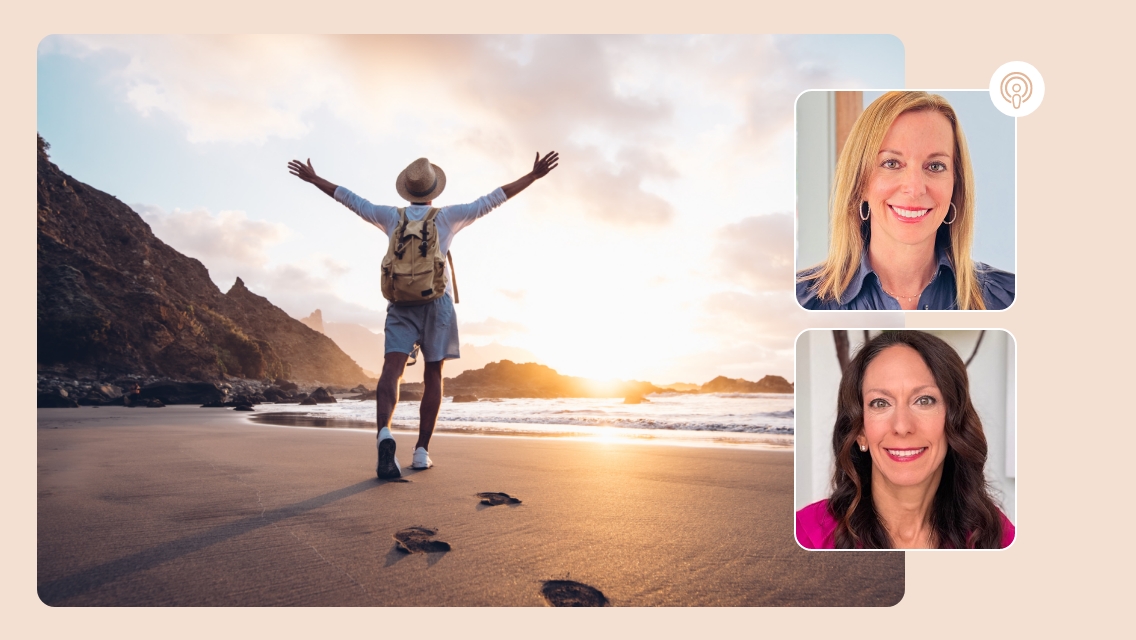
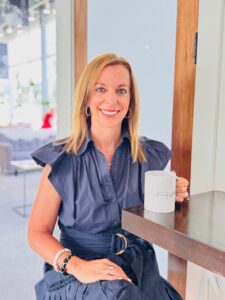
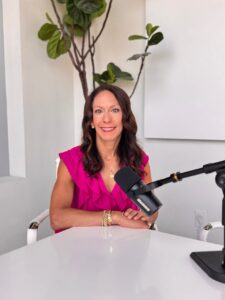
Going outside our comfort zones is incredibly uncomfortable for many of us — yet it’s one of the best ways to discover what we’re capable of, both physically and mentally. In this episode, we’re talking with Marnie Dachis Marmet and Stephanie Potter about one of their recent epic adventures, what this type of experience has taught them about themselves, and why they encourage the clients they work with to do big things that scare them.
Marnie Dachis Marmet and Stephanie Potter are board-certified integrative health practitioners and holistic health and wellness coaches on a mission to empower women to live their happiest, healthiest, and most authentic lives. As the creators and hosts of The Art of Living Well Podcast®, they share expert insights, inspiring stories, and trusted wellness strategies with a growing community each week.
Outside the podcast, Stephanie and Marnie support midlife women in identifying what’s holding them back so they can reclaim their energy, confidence, and joy. Through their group programs like the quarterly Vitality Reboot, functional-medicine lab testing, and personalized one-on-one coaching, they guide women to create lasting lifestyle shifts.
With powerful conversations on longevity, mindset, nutrition, movement, healing, and adventure, they offer practical tools and expert guidance to help you bridge the gap between where you are and where you want to be.
In this episode, Marmet and Potter share the benefits of epic adventures and how they can foster personal growth:
- Engaging in “epic adventures” — however that’s defined for you — can help you discover your physical and emotional capabilities by pushing you beyond their comfort zones.
- Adventures can empower individuals by fostering a sense of self-sufficiency and resilience.
- A strong mindset is crucial for overcoming the challenges presented by epic adventures. A coach can be helpful for support.
- A supportive community can be vital for providing the encouragement that’s necessary to prepare for adventures. It also brings additional benefits when you do these things as shared experiences.
- Adventures can help individuals connect with what brings them joy, purpose, and personal fulfillment. Participating in challenging events can also help individuals overcome limiting beliefs and realize their potential.
- Setting clear objectives and understanding your personal why are important for maintaining the commitment to your challenges.
- Intentional reflection following an adventure, such as through journaling, can be a helpful practice for processing the experience and recognizing your areas of growth.
- The qualities developed by facing and overcoming challenges translate to other areas of your life.
- Adventures can serve as catalysts for continuous personal growth, opening doors to new possibilities and experiences.
- Theartoflivingwell.us
- The Art of Living Well Podcast®
- @theartofliving_well on Instagram
- The Art of Living Well on Facebook
Transcript: The Case for Epic Adventures
[MUSIC PLAYING]
Welcome to another episode of Life Time Talks. I’m David Freeman.
And I’m Jamie Martin.
And today’s topic is going to be the case for epic adventures. So going outside our comfort zones is an incredibly uncomfortable for many of us, yet it’s one of the best ways to discover what we’re capable of, physically and emotionally. So in this episode, we’re talking with some fellow podcasters about their most recent epic adventure, what this type of experience has taught them about themselves, and why they encouraged their clients they work with to do one big thing that scares them. Who do we got today, Jamie?
Oh my gosh, I’m super excited. We have with us we have Marni Dachis Marmet and Stephanie Potter with us. They are the co-hosts of The Art Of Living Well Podcast, where they share expert insights, inspiring stories, and trusted wellness strategies with a growing community each week. They are also both board certified integrative health practitioners and holistic health and wellness coaches who are on a mission to empower women to live their healthiest, happiest, and most authentic lives.
Outside of the podcast, Stephanie and Marnie support midlife women in identifying what’s holding them back so they can reclaim their energy, confidence, and joy through their group programs, like the quarterly vitality reboot, functional medicine lab testing, and personalized one on one coaching. They guide women to create lasting lifestyle shifts. Welcome both of you. We’re excited to have you on the podcast.
Well, thank you. We’re excited to be here.
Thank you so much.
Talking about all things big adventures. Before we dive into that, if we can, I know just got a little bit of a bio about you both, but let’s just give our audience a little bit more of a background on the both of you and what has inspired y’all to do big adventures.
Yeah. Well, I guess I’ll dive in. So this is kind of my second rodeo, my second career, if you will. I always say I’m a recovering CPA and sugar addict. And somewhere, I don’t know, 10, 13 years ago, I took a little pivot. And so now, kind of like the bio said, I coach women and really guide them to help them uncover what’s holding them back and create a life of energy and vitality, ditch any limiting beliefs and the diet culture and all the things that really are preventing them from getting unstuck and uncovering what it is they want out of life, just to experience more joy, more calm, and have more balance in their life, whatever that is for them.
And so my approach is similar to Marnie’s and that we’re trying to get to the root cause of what’s holding you back. And that’s what I’m doing now. And that’s why Marnie and I — how we met. And we met at Modern Well, which is a women’s co-working facility in the Twin Cities, and we were both fairly new health coaches at the time. And we started partnering together, doing group coaching programs, and workshops.
And then one day Marnie asked, what do you think about starting a podcast? And that was almost six — gosh, it’s probably been about six years ago right now because the podcast is now 5 and 1/2 years old, and the rest is history. I don’t know if that answered your question about the big adventures, or I’ll let Marnie chime in and share her story.
Yeah. That’s great. We’ll get to that for sure.
Well, I’ll say that I got into the health and wellness space because I was, personally, coming from a place of burnout and feeling disconnected. I have another business, a promotional products business that I still have, but at the time, which was probably close to 15 years ago, I was doing that feeling burned out, was looking for a change and came across the health and wellness industry because I’ve always been very interested in health and wellness. And then I started, went back to school, and got all the certifications, and whatever.
And that’s how my journey began. And I think, for me, seeing other women feel that disconnect, and, sometimes, that loss of joy has really sparked in me this desire to help people. I feel really passionate about helping people get back to who they are, and there’s a number of ways to do that. And I think Stephanie and I both do that. And just we want people to feel good. We want them to live well. We want them to be their best self, whatever that is to them.
And I think finding adventure has really taken me a step further into doing that for myself. And it’s like I get so excited about it that I just I want to inspire other people to do the same, whatever their adventure is. It doesn’t necessarily have to be what I find exciting and adventurous, if that makes sense.
Oh, yeah.
Yeah, absolutely. So talk a little bit about, as you’re working, I mean, I know you both practice separately from each other. You do the podcast together, but as you’re thinking about what your philosophy or approach is for helping women reconnect with themselves, what does that look like? And why do you think that’s so important for them? I mean, we all — I mean, kind of getting to this, I’m just going to say, we want to know our purpose, but getting to that can be really difficult. So how do you help them?
Yeah, I think a big way is you’re, honestly, asking some provocative questions and asking them to think about what brings them joy. I know that question sounds so simple. It’s really hard for a lot of women to ask, especially caretakers and moms and people that are always giving of themselves to others and not really prioritizing their own needs. That could be finding out what brought them joy when they were a little girl.
And a lot of times, they’ll be, like, I used to love playing outside, or being on the beach and running around and dancing and singing, and then they’re like, I’m going to start singing and dancing again. And it’s taking them back to who they really are at their core. Marnie kind of touched on this, but really who they are, how they show up for themselves and others. And a lot of times, the stories that we’ve been told and the experiences that we’ve had by friends, family, people that were only doing the best that they could, but those words really resonate and can have a very profound impact.
I know for me, that’s part of my personal story and journey, and starting to recreate, I don’t want to say — I mean, rewrite those stories so that you are able to do what you really know is, one, what you need, because we’re all unique beings and what brings you joy and how you can create more fulfillment in your life, and more purpose. And I just think all the external noise, some of it’s good, some of it not so good, has kind of clogged that and is really prevented a lot of people from being able to experience it.
And so it’s through a lot of questioning and reflection that helps to unpack that for women in particular.
And Marnie, I’ll lead the next one for you. When it comes to these experiences that you both have gone through and then understanding now how you start to extrapolate that from those individuals that you’re connecting with. And now you put it in this environmental setting that they probably are doing something that they’re afraid to do. But you go, let’s use the example as far as the Grand Canyon adventure, and taking that experience, and what you discovered about yourself, but also what you’re able to do in that setting to make it so magical.
So I think adventures are just deeply transformational, whatever the adventure is. And I think that the Grand Canyon, we trained for three months, and we did 20 plus miles in a day. It was 5,000 plus feet on the ascent, and just completing that in one day. We carried our own supplies. We packed our first aid. We had to know what gear we needed.
This was not a curated event. This was something we decided to do on our own. We had a coach who was not with us but guided us ahead of time. And I think being able to do that felt very empowering and you feel self-sufficient. When you’re out in nature, that you’re away from distractions and things get gritty at times. You have to dig deep into the mindset to get through something.
I think that on this adventure, and we did a 2929, which we can also talk about, a different kind of experience. I think that you get stripped down and you — I didn’t think about anything else when I was out there on the trail, I was just in the very much in the present moment. I joke around about how I was thinking my feet and thinking my back and my legs, and I would say, oh, I will take care of you when we finish.
Let’s get to the top. Let’s do this together and just very in tune with my own self and body. And I think that is so key. And when we talk about coaching other women and people, in general, I feel like a lot of people are very disconnected to themselves and their bodies. And Stephanie mentioned, asking the right questions and getting to the core, or helping people peel back those layers so that you can get to what’s going on and connect with self.
This topic was really inspired by a conversation the three of us had a few, probably, weeks — no, it’s been a couple of months now, probably, that we all connected. And I think when you were sharing about your 29029 and then now about the Grand Canyon, what was so interesting to me, it was like it felt like this really — your people are making change all the time, but there’s this big thing then. Why do you think those big things are important in the grand — in the midst of all of that?
Yes, you’re making change. And a lot of times, it’s little things that we’re working on. We talk about small habits a lot. Why do those bigger moments make such a difference for people sometimes?
I think it kind of goes back to what Marnie was saying, this huge sense of accomplishment. I think it’s figuring out what’s your why? Like, why do you want to do that big event? For me, it kind of took — I had a lot of limiting beliefs about myself and wanting to be an athlete, like my entire life. I mean, literally, and I have very distinct memories of people, coaches, teachers telling me you’re not good enough for these teams.
But it was like looking — when you look at someone else and you’re like, oh gosh, they can do the marathon, or they can do the triathlon. I can’t do that. I’m not an athlete. I couldn’t dedicate the time, or I just couldn’t do it. But you have this tinge of jealousy. It’s like that person is showing you what you are capable of doing and what you want to do. And I felt that my whole life, and so doing this big event for me shifted my mindset.
And this inner athlete in me came out, that was 2909. That was the first endurance event I ever did, and it just spoke to me. And it was also like being part of this community of people that was really, really profound. So I just think you can, like you said, the little small habits, the things you do every day are really, really important, but it can just have a bigger shift for you, I think more at a subconscious or at a conscious level, and it’s the mindset that really holds people back from doing a lot.
And so whether you finish the race or not, just knowing that you went through months of preparation, I think that daily — that plan, that training plan and sticking to something, for me, I think everyone’s different. It just really opened up the floodgates for me. Marnie and I joke that for us 29029 was a gateway drug to doing other things, and that’s why we ended up doing the Grand Canyon hike less than a year later. It’s just really fulfilling on so many Levels.
And I just want to add to that. I don’t know if you guys have heard the concept of misogi, but Jesse Itzler introduced that to us, our friend Jesse Itzler. We talk about a lot on our podcast, and that’s a Japanese concept of doing one big uncomfortable thing each year. And so, initially, 29029 was our misogi. And then in my head after doing that, I was like, OK, what’s my next one?
And so that’s kind of where rim to river to rim came up, and that was something I had never heard of two years ago. None of this stuff was on my radar two years ago. The way we even learned about 29029 was from one of our podcast guests. So random. So like Stephanie said, kind of a gateway into this whole new world that we found that we love so much and the community has been so warm and welcoming and just a great community.
But I do think that when you do something hard and there’s a chance of failure, whether or not you succeed, the fact that you’re attempting to do something hard and facing your fears, even if it’s a challenge, a physical challenge, when you have other challenges in life, in your personal life, it seems like they’re easier to tackle because you’re like, oh, I did this, or I can do this. Like I did something super hard and I succeeded or I didn’t succeed, but I attempted to step into my fears and I think then when you’re scared of other things, if you’re scared of public speaking or whatever it is, when you go out there and you do it, you feel a little more empowered and a little more confident.
Yeah.
Yeah. So just for our listeners, I’m going to go to you first, Steph, to describe one, and then Marnie I’ll come to you, just for them to know what 29029 is, and then the rim to rim so they can understand what exactly those adventures were.
Yeah. So 29029 is — so that’s the vertical feet of Mount Everest, which a lot of people, that’s very challenging in a lot of ways for people to go and do that. So a couple of guys got together, I don’t eight or nine years ago now and created this epic event that more sort of, I don’t want to say average people could do, taking this extraordinary experience of Everest and creating an ordinary experience for a lot of people.
So what you do, they have different locations around the country, and the goal is to ascend 29,000 vertical feet over a period of ascents. So depending on the height of the mountain, ours we did it in Canada, outside of Montreal, at Mont Blanc, and it was 15 ascents. So you hike up 15 times and you take the Gondola down and you have 36 hours to complete the event.
Yeah. And there’s about a five month training program that kind of goes along with it. And there’s a big community of people. And it was just, yeah, it was epic.
All right, I’m coming back to that. I want to unpack epic. OK. Did Marnie with Grand Canyon, was it rim to rim you said?
So no, we actually did rim to river to rim. And there’s so many different kinds of routes you can do in the Grand Canyon. So we chose — the one we chose was mostly from a logistics standpoint, but I would say equally difficult. So we started on the South Rim on a trail called South Kaibab. We went down about 7 and 1/2 miles to phantom ranch, if you’ve heard of Phantom Ranch. We crossed the Colorado River.
We backtracked a little bit because there’s some detours on the trail right now due to construction. We crossed — we traversed the Canyon sideways on a trail called Tonto Trail, and then we went back up on Bright Angel, back up to the South Rim. So it was almost like a little bit of a U shape. And that was about 21 miles and 7 and 1/2 miles down. It’s when do you ever hike 7 and 1/2 miles down, straight down?
It’s crazy. And then when you’re at the bottom and you’ve got to get back up, you’re like, oh my word. How do you get to the top of this Canyon. It’s crazy. I remember being at the bottom and being like, how am I going to get up there? And you just do it. And it was like Stephanie said, epic.
Yeah. Yeah, I said, full circle. We’re coming back to that word, epic. So the feeling, the things that you learned about yourself in that journey, and, obviously, now that can apply beyond that journey in everyday life. So what did you learn about, I’ll start with you again, Steph, on this one. What did you learn about yourself in the 29029, and then Marnie I’ll come back to you with the rim to river to rim.
I mean, I think one big message is that we can do hard things. And even in the face of adversity, if you’re having pain, like Marnie and I both during training, we had some injuries we had to stop and rest and recover, but we didn’t give up and we kept going and we just made tweaks and changes, and we believed that we were still going to be able to complete the race. And I think the other big thing for me, and I kind of touched on this earlier, is just this — finally being able to say I am an athlete, and that’s something that I’ve wanted for a very long time.
And I think also being a role model for my kids. I’m 51. I did this — my first endurance event at the age of 50. So anyone out there, regardless of what your age is, you can do hard things and you can, because a lot of it is mindset. A lot of it is mindset. And so just showing, whether it’s kids or family or whoever, and they may be doubting themselves and their ability and just proving that you can try new things, get outside your comfort zone because the reward on the other side, in my mind, is well worth the training and the preparation and the ups and downs that go along with it.
Yeah.
Marnie.
I would say that, for me, big adventures are the number one thing is stepping outside of my comfort zone. I feel just, I said this earlier, so empowered and so proud of myself. I never imagined that I would be in this kind of space where I would be doing these kinds of things. And I feel like the sky is the limit. I feel OK. I did this, what else can I do? And how is this going to translate into the rest of my life.
And I really like the idea of just stepping into something that I don’t know everything about. And Stephanie teases me because I do like to get a lot of information and research and find out everything I can about something, but you never can find out everything. There’s always an unknown, especially if you haven’t done it before. So I just I really like that feeling. And I know that I’m going to be doing more and more of these kinds of things.
And, hopefully, Stephanie and I have started this Minneapolis hiking collective that we literally just started this week, and we’re trying to get other people to come hike with us locally. And it’s just — I feel like it’s a catalyst into so many other things in life.
I think what you’re tapping, and actually it’s so funny, we’ve been recording podcasts for a couple days now and we start to see threads of things, and we have — the potential. We’re hearing a lot about what’s my potential. And I think these kind of adventures, once you realize like, oh, I can do this hard thing, the doors just open to what that next possibility is, and you realize, like as you keep going, the possibilities are really endless, what we can potentially do and what we are capable of.
So often those limiting thoughts that you’ve talked about can just keep us from doing the thing until we know. And you’re never going to know it all. So you got to just go and trust and believe in that potential, I think.
Yeah. 100%.
Oh, anyway, I was just thinking, so going to share a little story real quick.
Yeah, please. So my husband is starting to think about his next phase of life. He’s in this role where he’ll get to retire earlier than me and what’s he going to do next. And he’s really considering becoming a pilot. Like he’s going to start small, learning to fly, all these things. And I was very hesitant. I’m like, I don’t — I’ve never been in these smaller planes. I don’t want to do these things.
I just I’m like, I don’t know. And he’s like, well — he booked us a discovery flight. He’s like, you’re not going to know unless we go. And that’s what we did this past weekend. Like we went on this discovery flight that was — it was joy. That’s how I will describe it. I didn’t know what to expect, but it ended up being this really amazing experience, and I’m so excited.
I wasn’t as hesitant as I thought I was going to be because I was — because I’m a planner like you, Marnie. I want to know. I don’t like to do things unless I have most of the details down. And I didn’t know a lot of things. He knew a lot, but it was just this really joyful experience. I’m like, OK. This is like what could come next from this if he goes that route, but it also opened doors for me too.
So anyway, that’s just my recent, very recent example of something that I didn’t know a lot about but was really excited in the end to have done.
Yeah.
Well, and it’s so cool because it sounds like it’s something that wasn’t even really on your radar.
No, not at all.
So that’s even cooler.
And I’m like, oh, we could do that together. What does that look like down the road? Who knows? So anyway, side note there. You’ve both talked — mentioned community already. Just the importance of community, not just in these epic adventures, but in just day to day life. So let’s talk about community and what role that plays in helping women find their potential, or their purpose.
I think community is so important, and at different points in your life, your community will ebb and flow and change. But there’s that saying that I think it’s the five people you surround yourself with is who you become? And I use that a lot even with my kids because I do believe that to be so true. That’s not something I even knew about or followed when I was younger. I think a lot of women struggle with finding their people or their tribe to support them and lift them up.
They know what they maybe should or want to do, but it’s really hard when you don’t have that supportive environment. So I think finding like-minded people who are on the same page with you a little bit, who are going to push you and support you in everyday life, and then when you’re doing these big events, that was one of the things Marnie and I really noticed, when we got to the mountain, when we did 29029 was the community there was amazing.
I mean, people from all walks of life, all across the country, different ages. It didn’t matter. You were there to hold each other’s hand, to support each other. If someone was stopped on the mountain, you stopped and checked in on them and to see how they were. And so I think it can be hard, depending on where you are, but finding those people, taking it and finding a group that has similar interests to you, that’s what kind of gets you going and helps you through those times when you don’t want to do the one thing, but you should — so it could be like a community for a physical challenge, but also just community so you have someone to talk to, as simple as just people to share your ups and downs with.
I think that has a lot to do with overall well-being and health.
Yeah. Can you share, I think this would be great to know, too, is now that you’ve done the hard thing. You did something that was hard, that challenged you mentally. Now you’re like, I am — I think you said that earlier, I am — you can fill in the blank. I am strong. I am resilient, whatever it may be, how you can take this big adventure and now apply it to everyday life. If that is now I’m going to start that book, or I’m going to start that business, or I’m going to do that thing that I was afraid of doing, if you can break that down for us too.
I mean, I think that — we can talk about our podcast, right? So Stephanie and I have been talking about — we’ve had the podcast for five years, and we’ve been talking about, OK, if we really want to maybe take it to the next level, what are the steps we need to do to do that? Whereas I think in the past, we’ve been like, OK, this is awesome. We love it. It’s a great passion.
But maybe both a little bit fearful of taking it to the next level. And I think that doing some of these adventures has just opened up our minds in new ways and given us new confidence. So that would be one way. I think, even just for me, I love meeting people. Personally, I love hearing people’s stories. I mean, that kind of goes with podcasting.
But naturally, I’m just that kind of person. I feel like I have just felt more confident in my own personal life to go out of my way to meet people that I maybe would have — I’m from Minneapolis. I have my girlfriends. I’m kind of one of those people. But I would say in the last two years, I’ve really made an effort to — there’s a lot of people out in the world, and I love meeting all different kinds of people and hearing about their lives and hearing about their stories.
So I would say, building a bigger community. And like Stephanie mentioned, surrounding myself with people that lift me up and that I can lift up, and sharing experiences with people that aren’t always these empowering adventures. But, sometimes, maybe it’s a shared struggle and being vulnerable, and trying to understand somebody else’s perspective, even.
Absolutely.
I love that.
When you’re in the hard moments, right, you, sometimes, just have to be present in the hard moments, Stephanie or Marnie, you mentioned this. Like I just had to thank my feet. I had to thank my body. That’s true in day to day life too. That’s not just on the trail, but how do you process your experiences. I know you’ve mentioned journaling, but why do you think journaling reflection is so important as you’re going through a life changing shift?
It doesn’t have to be an epic adventure necessarily, but any shift, what are why does journaling matter so much there? Or are there other practices you would also suggest?
I think reflection is huge. I think, sometimes, when you’re in the moment, you’re either — if it’s a hard moment, then you’re just like, oh, my gosh, I want to get myself out of here. You’re just thinking to the next phase or when you’re complete. Marnie and I talked about this, once we got through this Tonto Trail, OK, we’re done.
But in order to step back and fully appreciate what you went through, what your body went through, what your mind went through, the ups and downs, I do think you need some quiet time. So I think journaling is amazing. And Marnie and I both journaled a lot after this. We were doing that on the airplane ride back, but if it’s not journaling, it’s just being quiet with just your own thoughts and really reflecting and being kind to yourself, whatever that situation was that you went through.
And I think it’s nice to go back in other moments, later on, maybe weeks or months later and have something to look at and reflect and see how far you’ve come, or just remember that experience and maybe you’re remembering it through a different lens.
Yeah. Marnie, anything to add or we can keep moving on?
I mean, we can keep moving on. I would just say, sometimes, when you journal, you see growth and you see lessons that maybe you couldn’t appreciate in the moment. And I think — I have a memoir that I wrote and I took a course over the course of a year, and I wasn’t trying to write a memoir, I was just taking a writing course. And other people saw all these threads through my writing that I couldn’t even appreciate because I was the writer.
So I think when you write and then you go back and read what you wrote, you’re like, oh, wow, I said that, or I see the lesson in that now. But in the moment, I don’t think we always can appreciate that.
Well, we’re going to go into your coaching now. And I got three words I’m going to throw at you. I’m going to go back and forth. So you both are shared responsibility here. We’re good with it. All right. So when it comes down to coaching, you know I love speaking about mindset. So I’m going to start first with mindset as far as the grounding force there, right? How important is mindset in this space? Oh, Marnie. Oh, Steph, you said —
Go ahead.
You sure? OK. I got the next one for you.
I think mindset is everything. I think that if your mindset is not in line with what you’re doing, it’s going to be really hard to do what you’re trying to do. When we were training for 29029, we actually had mindset coaching. I think every other week maybe. And I focused so much on the mindset and I was — every day I said to myself, I will climb this mountain. I will finish.
And I literally was training my mind, and I’m trying to do that in lots of different parts of my life now, because I believe that your body is listening to you, your cells are listening to you. And so it sounds silly, but I’m trying to talk to myself more often, and I’m trying to tell my kids that. I’m like my son will say he wants to do x, y, and z in his career. I’m like, well, tell yourself you’re going to do it and you’ll do it. So I think mindset is 100% everything.
So the mindset, we’re planting the seed there. All right. Steph I’m coming to you now. This is going to be making sure you have the clear objective of what it is that you want to accomplish. So you mentally visualizing what it is that you have there. Now the objective that you set out to do, how important is that?
I think it’s really important, but I think you need to get back to your why and your internal motivation. So a lot of times women have, or people, in general, have a goal, or I want to lose weight, or I want to have more energy, or I want to clean up my diet, or move more, whatever the goal is. And goals are very important. And Marnie and I both work with our clients to create, help them create goals, brainstorm, et cetera.
But if you don’t know your why and you don’t have a vision, it kind of gets back to how are you going to keep doing that hard thing every day when you’re first starting a new habit if you can’t fully articulate why you’re doing it? So if you’re doing it from an external motivation, it’s not sustainable. It’s just not. I’ve worked with enough women to see they can do anything for three, four or five weeks and then they fall off.
And if they don’t have that vision in their head of how I want to show up for myself and for others, whether it’s six months down the road, even 1, 2, 3, 10 years, so now it’s like, well, how do you want to show up for your kids and your grandkids in 10 years? Oh, well, I want to have — my healthspan to be really long. I want to be active. I to be able to run around and play with my grandchildren.
- Then that becomes your why. That’s your internal, intrinsic motivation. Until you nail that, you can slap on a bunch of habits that’ll work in the short term, probably, but what I’ve seen is they’re just it’s not sustainable to create that life that you want that’s just more less worried about the food on your plate, or some of these things that people get really fixated on and just being able to live with more joy.
So we got the mindset as far as planting the seed, and I repurpose it to what you just said as far as why instead of the objective, I like that. And then the follow up, you just said if you’re not able to stay consistent with it, then you’re going back to the commitment. Now, the thing with commitment, before I jump in, now you both can share this one. When it comes to the commitment, you might fall off, even knowing your why, even having the strong mindset, you might fall off, and I think y’all talked about community and surrounding yourself with the right people to make sure you get back on that horse.
So let’s talk a little bit about commitment and how important that is. I think that making a commitment to yourself is really important, whether that’s doing a small thing every day, or you get to decide what that commitment is. But if you want to see change, I think you do need to make a commitment. And like I said, my commitment might be different than Stephanie’s commitment.
So it’s very individual what that commitment looks like, but it is very important to have that commitment.
Steph.
I mean, I would agree. And it’s figuring out though what works for you. So you two people can have the same end goal, but if it doesn’t — if that new habit doesn’t bring you some joy, and again, it’s not going to necessarily bring you joy right away, but when I’m working with a client, I’m not telling them, oh, do this new habit. No. Like here’s your end goal.
What do you think you could do? What is something that you used to enjoy doing? What are foods that you used to like to eat that maybe you’re not eating? So it really there needs to be — some habits are just like brushing your teeth. It may not bring you joy, but you’re going to do it every day because you don’t want the end result going to the dentist and having cavities, or whatever it is.
But other habits, ideally, you’re doing some things every day that may not be good for you, but they’re also satisfying you personally. They’re also bringing you joy. They’re helping you feel really good. And so until you have some sort of positive feeling by doing them, then I don’t know if just the commitment is going to get you there all the way there.
Yeah. That makes sense.
Yeah.
A couple other words that you shared with us as we were prepping for this show were the words grit and resilience. We’ve mentioned them a little bit, I think, Marnie, you mentioned getting gritty sometimes. We face, as we’ve all talked about, the adversity we face through life, it comes in many forms. There are physical challenges and adversities. There’s emotional life things that are going to happen that are going to test us to our limits.
So when you think of grit and resilience, well, what do those words bring up for you?
I mean, I love both of those words because I feel like the challenges that I’ve done or we’ve done in the last few years have — grit is like you are getting down into it and you are digging deep and just through the trenches. And resilience, to me is like, are you staying with it? Are you continuing on through the hard. I mean, they’re similar, but when I think about doing something hard on purpose, you’re choosing this.
Everything else feels more possible. And so when you’re deep in the grit, you might be swearing and saying things that just be — getting frustrated, whatever. But then the mindset kind of comes in and is it’s like, I can do this. I’m strong. I’m brave. I train for this. I can do this, or I can talk to that person.
There’s so many different things. It could be someone nervous to talk to their boss about something, or I mean this can translate into any area in life, but it does feel to me when you take on a physical challenge that’s hard or scary, it really can translate and become kind of like the training and how you show up in other areas of your life. Even training can be hard and you make that commitment. You talked about commitment.
Well, you have to make that commitment to showing up every day and showing yourself, I might have a slight injury, so I have to tweak some things. Or maybe it’s stepping back and taking a recovery day or a recovery week, which is really hard for people, athletes that are used to moving their bodies regularly, sometimes recovery is very difficult. So really tuning into yourself and staying resilient.
What I hear in there is something we talk about often on the podcast is it’s the reps that you get. We talk — we do put it in the fitness context a lot, but when we have some of these reps already down, the one the next hard thing — we get there, we have some reps and we kind of know we can tap into those various tools that we’ve developed within ourselves to get through that next thing, that next hard thing, so anyway.
All right. So we hit on quite a few things. I want to make sure that for our listeners, we didn’t miss anything as it relates to Epic Adventures as a whole, is there anything that you want to leave them with that we might have not touched on yet?
I would just encourage everyone, if there’s an idea you have, if there’s something you’ve always wanted to do, if there’s this noise that just keeps ruminating inside of you, but you’ve said no to it, or I can’t, or I shouldn’t, or I need to do something else instead. If you’re a busy parent, or whatever out there, do one thing today to get you closer to that. It could just be — it could be journaling about it. It could be reaching out to someone, reaching out to one of us, You can come on our podcast. We do a health transformation audit.
You can do anything. We can do hard things. You can do, whether it’s an endurance event. Doesn’t matter what your age is. I would encourage you to maybe you write it down, but if there’s something that’s been nagging at you that you’ve wanted to do, tell someone. Do one thing to help you get a little closer. Don’t ignore it, I guess, is what I would say.
Don’t ignore it because it’s something — there’s a reason why it keeps coming back up for you.
Yeah.
Love that.
And I would just add to that think about what brings you joy. Maybe just make a list. I think there are many people, like Stephanie mentioned earlier, that don’t really know what brings them joy. So try and journal and write down. It could just be chicken scratch, but just write down a few things that bring you joy. It could be as simple as walking down the street and this feeling, the sunshine on my face, like the littlest things.
But just think about that and maybe think about choosing yourself sometimes, because I know a lot of people are doing so many things for so many other people all the time. It is OK to do things for yourself too, and remember that.
Yeah.
I love that. OK. Before David gets to his mic drop moment, I have one last — I have one last question. Now that you have done the 29029. You just did the river to rim — rim to river to rim, what is next? Do you have your next epic adventure planned yet? Are you thinking about it?
I’m thinking about it. My answer for a while was I’m cherishing the memories from the one we just finished. It wasn’t even that long ago, but, of course, it’s already on my brain. So I’m actually volunteering at a 29029 event in July. It’s called Trail, which is another event they put on, which is like three marathons in three days in the mountains. So that’s going to feel really good to give back to the community that lifted us up while we were during our 29029.
So I guess, that’s not really my own event, but I’m looking forward to cheering others on and helping them.
Awesome. All right. You ready, David?
Oh, let me make, Steph, same or? I saw you —
Well, like Marnie, because a lot of people have been asking me the same question, I don’t have anything yet on the radar because I am just trying — it’s a busy season of life for me and I’m just trying to enjoy the time with my kids and not being on this training schedule, but I know at some point, yes, I will find another adventure or just travel and having some sort of physical activity along with it. For 2026, will be definitely on the radar, but haven’t found that, but that will be just yet.
All right. Here we go. We got the mic drop moment. You ready?
We’re ready.
Yes. OK. I want you to create an acronym with Epic, so each letter, and y’all can get two letters apiece, E. Who wants to start?
Exciting.
Exciting. OK. We’re going to go with the P. Steph, what you got?
Maybe. It’s perseverance.
Perseverance. OK. I.
Interesting.
All right, take us on with the C.
Community.
Boom. Exciting, perseverance, interesting, community, I love it.
Awesome.
I think you’ve just given us a goal, David. But we’re going to create EPIC events based on all four of these words came up with.
That is the next big thing. Who knows?
What were you saying, Marnie?
I was just going to say, and we — like I said earlier, we just started this Minneapolis hiking collective and you can find all the information on our socials. And we’re going to continue doing this. So we’d love to have people join us and hike together as a community.
Oh, that’s awesome. Well, that actually leads me — people can follow you. They can listen to and subscribe to The Art Of Living Well Podcast, where they can join your community. They can find you on your website, theartoflivingwell.us. On Instagram, @theartofliving_well, and then on Facebook and YouTube at The Art of Living Well Podcast. So you have lots of other ways for people to stay connected. We’ll be sure to link to all of those in our show notes.
But thank you both so much for coming on and talking, these kind of personal development topics are those things that, sometimes, they get you going there in the back of your mind, sometimes, it’s like we got to put them front and center and really think about What’s next for us. So I love that. Thank you both so much.
Thank you.
Well, thank you for having us on.
Yeah. Thank you so much. This was very fun.
Talk to you soon.
Bye-bye.
Bye.
[MUSIC PLAYING]
More like this



We’d Love to Hear From You
Have thoughts you’d like to share or topic ideas for future episodes? Email us at lttalks@lt.life.
The information in this podcast is intended to provide broad understanding and knowledge of healthcare topics. This information is for educational purposes only and should not be considered complete and should not be used in place of advice from your physician or healthcare provider. We recommend you consult your physician or healthcare professional before beginning or altering your personal exercise, diet or supplementation program.
Life Time provides administrative, non-clinical support to MIORA as well as services and amenities related to general wellness and fitness; Life Time does not provide medical advice, diagnosis, treatment or care.
Advertisement