




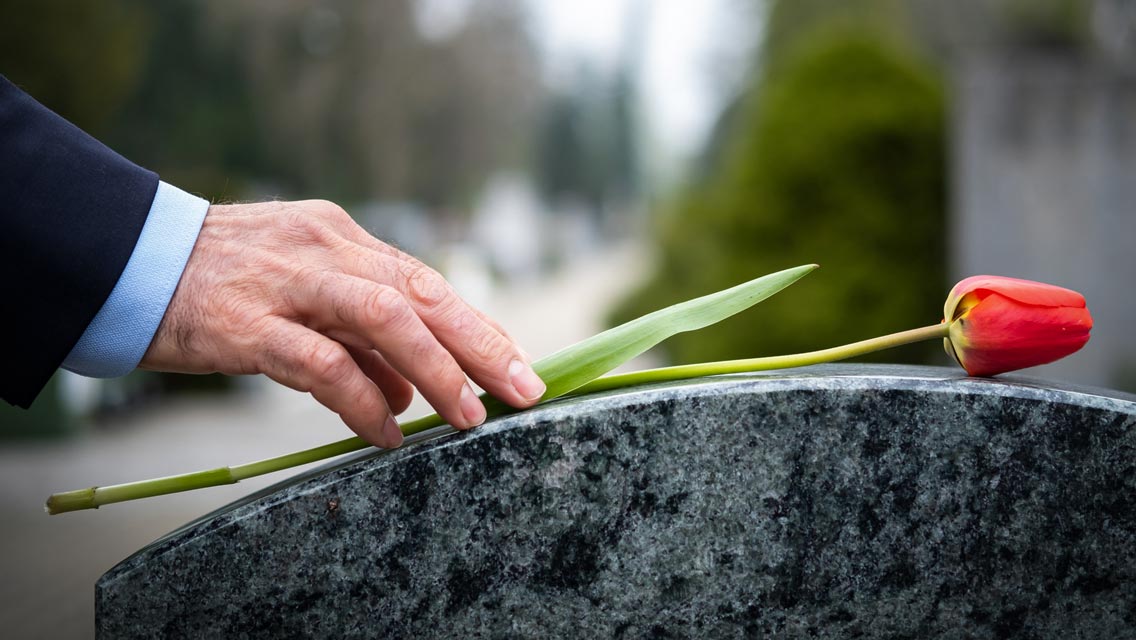
A few weeks before my brother died back in the waning days of 2020, my other three siblings and I, along with his best friend, gathered around him in his living room one afternoon to trade some stories and maybe prepare ourselves for his imminent passing. It was a livelier gathering than I had expected, featuring plenty of lighthearted ribbing among the four elders who had spent so much time together on the golf course.
“So you’re thinking you might not be ready to play next spring?” I ventured at one point.
My brother smiled and shrugged, half apologetically. We fist-bumped.
A few months after his death, our now threesome gathered at the golf course with a batch of my brother’s family members to commemorate his love for the game with a bench bearing his name that we planted on the 14th tee. It’s a place where I’ve come to pause during every round to remember him and all he contributed to those pleasant afternoons on the links.
It’s a kind of grieving, I suppose, because I often wish on those occasions that he was teeing up his ball and preparing to drive it (not very far) down the middle of the fairway, as usual. Then, I can almost imagine him picking up his tee and proclaiming to no one in particular, “Could be worse.”
I’m at an age when funerals come calling far more frequently than weddings and the loss of family and friends can become more emotionally challenging. Indeed, recent studies suggest that older adults may struggle to manage the grieving process and are more likely than their younger counterparts to develop a condition known as prolonged grief disorder (PGD).
The illness, which was added to the Diagnostic and Statistical Manual of Mental Disorders in 2022, is characterized by an intense longing for the person who has died, often combined with a lingering preoccupation with their death. People diagnosed with the disorder may also carry feelings of shock or disbelief about the death and lose their sense of place in the world.
And though the symptoms may indicate more-common mental health issues, such as depression or PTSD, what sets PGD apart, according to the American Psychiatric Association, is the specific trigger, the duration of the grieving (a year or more after the death), and the nearly daily presence of three or more of these eight specific symptoms for at least a month prior to a diagnosis:
- Identity disruption
- A marked sense of disbelief about the death
- Avoidance of reminders that the person has died
- Intense emotional pain related to the death
- Difficulty with reintegration after the death
- Emotional numbness
- Feeling that life is meaningless without the deceased person
- Intense loneliness
We all go through periods of grief after the loss of a loved one, of course, but for about one in 20 people that process becomes severe enough and lingers long enough to indicate a PGD diagnosis. To explain why that may occur and how the illness differs from other mental health conditions, researchers at the University of New South Wales have focused on changes in the brains of the bereaved.
Richard Bryant, PhD, and his team reviewed several neuroimaging studies involving bereaved participants recalling reminders of a recently deceased loved one while undergoing brain scans. They found a strong association between PGD and changes in reward-related brain circuits such as the nucleus accumbens and orbitofrontal cortex, which govern desire and motivation, as well as the amygdala and insula, both key to emotion processing. Their findings were published last week in the journal Trends in Neurosciences.
“Compared with PTSD and anxiety disorders that involve avoidance of feared stimuli, PGD is particularly marked by disrupted appetitive and reward processes, with sufferers yearning for the deceased and showing approach rather than avoidance behaviors,” Bryant writes. “Loss of a primary reward source leads to pervasive pleasure deficits, reflected in emotional numbing in PGD criteria.”
The disorder was identified only in 2018, he notes, so more research will be needed before scientists can reach a consensus on its causes and possible cures. But PGD sufferers do have some treatment options. One 2024 randomized clinical trial found that cognitive behavioral therapy reduced symptoms among 100 participants for six months after treatment. And a 2021 study concluded that an approach known as complicated grief therapy has shown some promise. Bereavement support groups may also prove helpful.
As much as I miss my brother during the golfing season, I’m happy to report that I’ve never felt the need to seek any treatment. Whatever grief I’ve experienced has been more occasional than prolonged, and it’s been largely shared within the remaining threesome. I suppose you could call that a support group, but the vibe on the links with those guys is more delightful than downcast. As he would put it, “Could be worse.”




This Post Has 0 Comments