




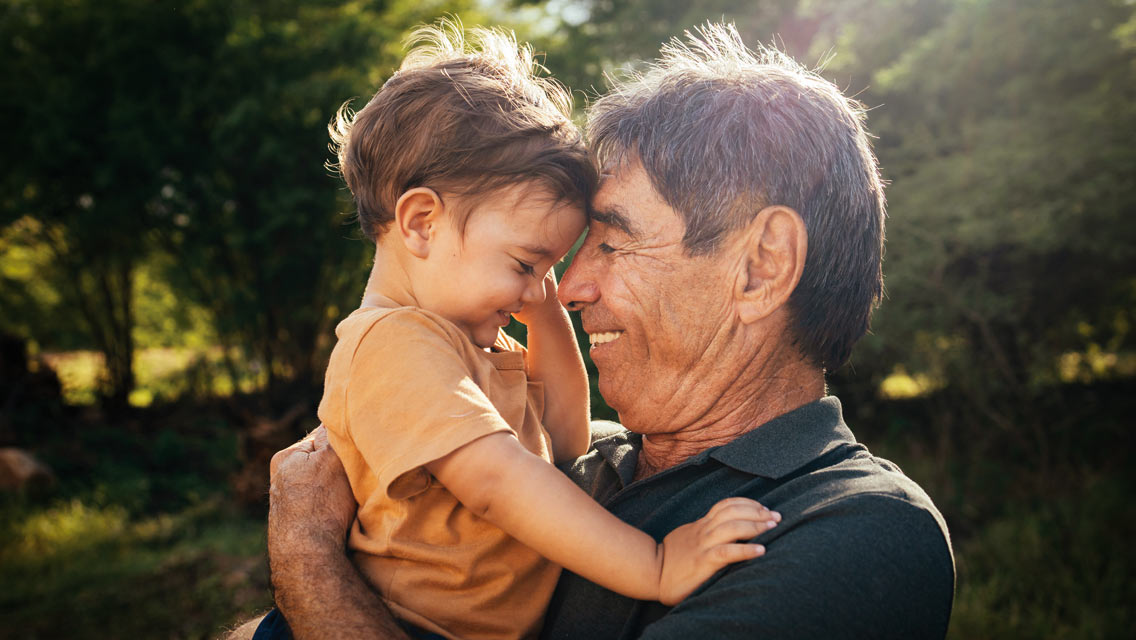
My Lovely Wife and I have hosted a weekly visit from our grandson for the better part of the past eight years. We’ve watched The Little Guy grow from a diaper-clad toddler playing with building blocks to a lanky second grader schooling us on Greek mythology and the strategic nuances of Minecraft battles.
This weekly transfusion of youthful energy tends to roust us from our quiet routines and nudge us (sometimes not so gently) out of our comfort zones. It involves some physical challenges — sitting on the playroom floor can take a toll on my knees — and tense moments occasionally arise when we try to divert his attention from his iPad. But, on the whole, these visits leave us in a state of pleasant exhaustion.
They may also deliver some surprising health benefits. Volumes of research in recent years have shown that spending time with grandchildren may improve your physical — and cognitive — fitness.
As Bob Brody reports in The Washington Post, the results of a 2018 American Academy of Pediatrics study — reaffirmed in January — found that playing with young grandchildren can help grandparents “reexperience or reawaken the joy of their own childhood and rejuvenate themselves.” He cited a 2024 survey of Flemish grandparents that suggests time spent with their grandkids translated to higher levels of physical activity.
“Getting physical also promotes advantages well beyond the merely physical,” Brody writes. “Through one-on-one physical play together, grandparents and grandchildren can get to better know, understand, and appreciate each other. It’s inherently social, mentally stimulating, lends your life an extra sense of purpose and meaning, and can establish a wholesome lifetime relationship.”
Caring for your grandkids may also keep cognitive decline at bay, according to the results of a study published last week in the journal Psychology and Aging. Flavia Cherecheș, MS, and her research team at Tilburg University in the Netherlands analyzed data from nearly 3,000 grandparents who participated in the English Longitudinal Study of Ageing. The researchers understood the broader family and social benefits of these caring relationships, but they wanted to dig deeper into their effect on grandparents’ brain health.
Study participants reported the frequency and levels of care they provided their grandkids during the previous year, activities that ranged from playdates and homework help to overnight visits and transportation services. Researchers then compared those levels of interaction to the results of three cognitive tests participants took between 2016 and 2022.
After adjusting for various demographic and health factors, they concluded that — regardless of the frequency and type of care provided — caregiving grandparents scored higher on memory and verbal fluency tests than their counterparts who didn’t provide care for their grandkids. Cherecheș and her team didn’t identify any direct links between specific caregiving activities and cognitive health, only that a greater variety of interactions seemed to make a difference.
“What stood out most to us was that being a caregiving grandparent seemed to matter more for cognitive functioning than how often grandparents provided care or what exactly they did with their grandchildren,” she explains. “More research is needed to replicate these findings, yet if there are benefits associated with caregiving for grandparents, they might not depend on how often care is provided, or on the specific activities done with grandchildren, but rather on the broader experience of being involved with caregiving.”
Why such activities should improve our brain health is probably due to its stimulation of “multiple cognitive domains, as different tasks can involve unique cognitive processes, such as planning or problem-solving,” she notes.
My grasp of the mechanisms governing basic neurological stimulation is fairly limited, so I’m in no position to question Cherecheș’ conclusions or her rationale. Perhaps my weekly visits with The Little Guy are helping me maintain some useful level of cognitive agility, but there are clearly limits to the effectiveness of these interactions. I’m pretty sure I’ll never figure out how to play Minecraft.



This Post Has One Comment
I’ve been blessed with active engagement opportunities with all 6 of my grandkids. As they’ve grown older I get to listen and learn more than ever before. We share “Poppy” (me) and individual grand child memories and experiences. In some cases each grand child and I have our own special language and verbal and visual cues. Thanks for interesting and affirming report!