




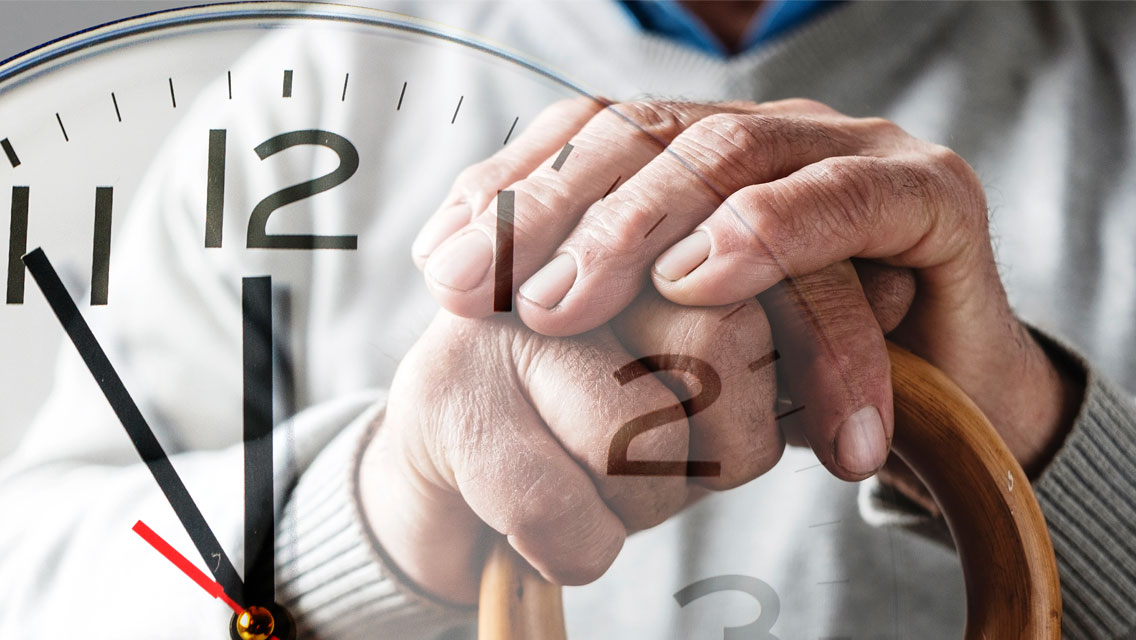
That hour of sleep daylight saving time (DST) just stole from us will no doubt reawaken the perennial debate over the benefits and liabilities of seasonal time changes. Proponents of permanent DST will argue for the extra leisure time we would all enjoy with more evening light, while supporters of permanent standard time will promote the salutary effects of additional morning light.
Pardon me while I stifle a yawn.
A permanent time system — whatever that may be — would certainly allow us to forgo the twice-annual resetting of the clocks and the accompanying disruption of sleep patterns. But, especially for seniors, neither approach would negate the importance of establishing and maintaining a healthy circadian cycle throughout the year.
As we grow older, we may find ourselves nodding off earlier in the evening than we did in middle age and rising earlier in the morning. That’s one of the more obvious ways our circadian rhythm influences our aging bodies. But its activity at the cellular level can trigger myriad other changes. Located in a part of the brain known as the hypothalamic suprachiasmatic nucleus, this central circadian clock sends signals to the peripheral circadian clocks that regulate various biological systems throughout the body.
The endocrine system, for instance, depends on a harmonious circadian rhythm to reliably produce insulin, ghrelin, adiponectin, and cortisol in the morning and afternoon. When evening comes, it’s time for melatonin and a host of other hormones to take over. When those cycles are disrupted — by a lack of daylight or an earlier than normal sunset — the system may malfunction and illness can result.
Studies have shown that even short-term changes in circadian rhythm can cause hormonal shifts, poor digestion, energy depletion, and temperature fluctuations. And according to the results of recent research published in the journal Neurology, a malfunctioning body clock could even raise the risk of developing dementia.
Studies have shown that even short-term changes in circadian rhythm can cause hormonal shifts, poor digestion, energy depletion, and temperature fluctuations.
“Changes in circadian rhythms happen with aging, and evidence suggests that circadian rhythm disturbances may be a risk factor of neurodegenerative diseases like dementia,” notes lead study author Wendy Wang, MPH, PhD, an assistant professor of epidemiology and internal medicine at the University of Texas Southwestern Medical Center. “Our study measured these rest-activity rhythms and found people with weaker and more fragmented rhythms, and people with activity levels that peaked later in the day, had an elevated risk of dementia.”
Wang and her team recruited 2,183 people with an average age of 79 who had not been diagnosed with dementia at the beginning of the study. Analyzing data from heart monitors participants wore during an average period of 12 days, researchers tracked the strengths and patterns of their circadian rhythms.
During the three years that followed, 176 participants were diagnosed with dementia. After accounting for various health factors, including age, blood pressure, and heart disease, researchers found that those with the weakest circadian rhythms were almost 2.5 times more likely than those with the strongest rhythms to develop the disease.
And tracking participants’ activity patterns, Wang’s team also concluded that those who were most active later in the day, when darkness may disrupt their body clocks, were about 45 percent more likely to receive a dementia diagnosis than those whose activity levels peaked earlier in the day.
“Disruptions in circadian rhythms may alter body processes like inflammation, and may interfere with sleep, possibly increasing amyloid plaques linked to dementia, or reducing amyloid clearance from the brain,” explains Wang. “Future studies should examine the potential role of circadian rhythm interventions, such as light therapy or lifestyle changes, to determine if they may help lower a person’s risk of dementia.”
Especially during the transition from standard time to DST, experts emphasize the importance of getting out into the morning sunlight and avoiding bright lights or late meals after the sun goes down. “Daylight, exercise, social activity, meal timing, and a regular sleep-wake schedule allow us to keep a normal rhythm,” notes Yale University geriatrician Brienne Miner, MD, MHS. “So any changes to these behaviors or lack of these cues from the environment can disrupt the circadian rhythm.”
Simply getting out of the house on a regular basis can check most of those boxes, Miner says. “It gets you exposed to light, and social and physical activity.”
Still, for those who believe the only solution is an end to seasonal time changes, recent research from Stanford University offers some validation: “We found that staying in standard time or staying in daylight saving time is definitely better than switching twice a year,” says senior study author Jamie Zeitzer, PhD.
Calculating the amount of “circadian burden” people around the country would experience under each of the seasonal time changes and then comparing those results with county-level data on the prevalence of various chronic conditions, Zeitzer’s team concluded that permanently sticking with standard time would result in 300,000 fewer strokes nationwide during the course of a year, while a permanent DST would reduce the number of cases by 220,000.
Case closed, right?
Not so much, says Zeitzer. “People’s light habits are probably much worse than what we assume in the models,” he notes. “Even in California, where the weather is great, people spend less than 5 percent of their day outside.”
And, he adds, no change in time policy is going to meaningfully extend the amount of daylight we get to enjoy in the dead of winter. “That’s the sun and the position of Earth. We can’t do anything about that.”




This Post Has 0 Comments