



I came of age in the late sixties and spent a good deal of my teenage and early adult years pining for a future in which I could successfully avoid a haircut. Like most high schools of that era, mine enforced a strict dress code designed to keep boys’ hair above the ears and off the collar — an edict my parents fully supported. I can still recall my mother’s lamentations when too much time had passed between trips to the barber: “It’s curling up in the back!”
A four-year hitch in the military following graduation further postponed my dream of joining the rest of my happily hirsute generation, but I was eventually discharged and freed to let it grow. There’s a photo of my civilian self, hair down to my shoulders, sharing the couch with my clean-cut dad, who is doing little to hide his displeasure.
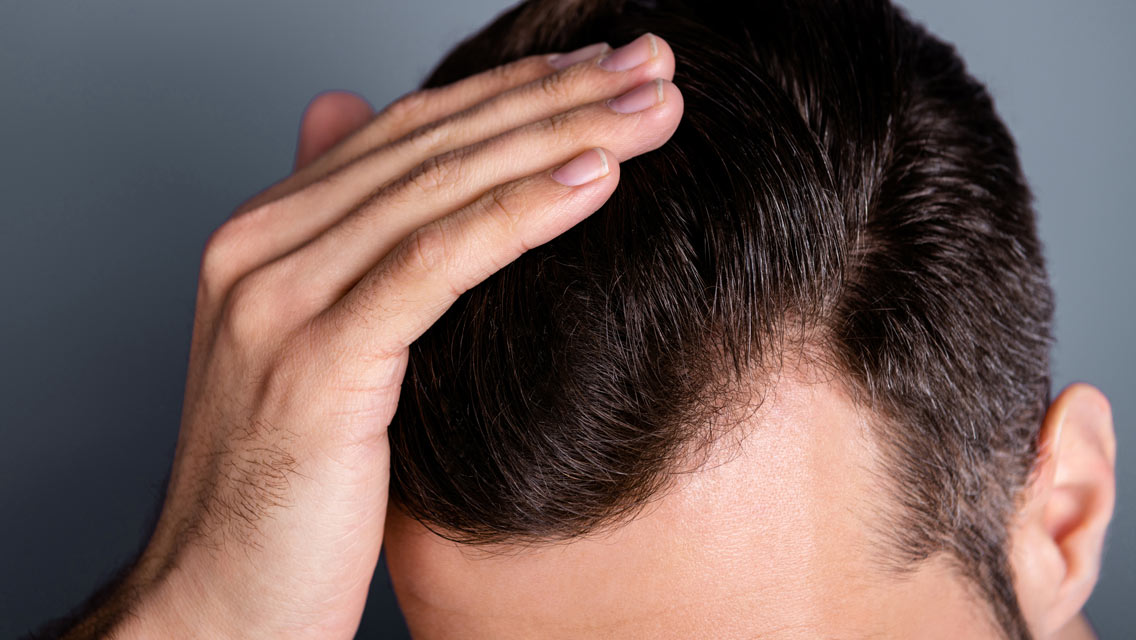
I tend to think of my boomer counterparts as a bit obsessed with hair during that era (there was even a popular Broadway musical celebrating our shared fixation), but I’ve recently encountered evidence that suggests a similar — and perhaps more feverish — compulsion among young men today. While they can grow their locks as long as they wish, they simply cannot abide signs of a receding hairline or a thinning scalp.
As Susan Dominus reports in The New York Times, a drug originally developed to treat prostate issues has become a favorite of young men battling the faintest hint of hair loss. Owing to its surprising effectiveness — and a massive social media marketing campaign — annual U.S. sales of finasteride have exploded since 2017, reaching $106 million in 2025.
“A typical male in his 20s or 30s is likely to receive a flood of ads and shout-outs on Instagram, TikTok, YouTube, and the livestreaming platform Twitch for hair-growth products that appeal to men their age: not just the usual tablets but chewable pills and sleek black bottles of ‘Mane Spray,’” Dominus writes.
That marketing onslaught, she notes, is “teaching men the same brutal self-scrutiny that women have long been trained to perform.” In chat groups, in Reddit threads, and on other social media platforms, guys are talking about their hair — or lack of it — and encouraging each other to do something about it or risk a certain degree of social ostracism.
Dominus examines the case of Elliot Connors, who heard about finasteride after joining a group of friends from graduate school on a group chat. Some of them were using the drug to fend off a dreaded receding hairline and — tracking their progress weekly — hailed its ability to reclaim what once seemed lost.
Connors soon became obsessed with monitoring the retreat on his own scalp, even comparing his hairline with how it appeared in old photos of himself. He understood there were side effects — low libido and depression, among others — but he felt he needed to keep up with his pals, so he began taking the drug.
“We could all just not be on any of this stuff, and then our relative appearances would be the same,” he tells Dominus. “But now we all have to be on it just to keep up with everyone else who’s on it. It’s like a nuclear arms race.”
It’s also a lifelong commitment, Dominus notes. Drop the drug and your hairline will resume its retreat a few months later.
I’m thankful that my own hairline has receded at about the same rate as my vanity. Those once-flowing locks have thinned considerably in recent years and no longer cover my ears, though they’ve been known to curl up in the back between haircuts. And I’m going gray, another common reality of aging that I suspect Connors and his crew will beginning fretting about in the next few years.
They really should calm down a bit. Losing some hair doesn’t change who you are or what you’re capable of accomplishing in your life. And those gray flecks may, in fact, be a sign that your body is poised to fight off cancer cells.
A recent study out of the University of Tokyo suggests that the melanocyte stem cells (McSCs) that turn your hair gray when they die off actually leave the body better able to suppress cancerous tumors. As lead study author Yasuaki Mohri, PhD, explains it in Newsweek, “Hair graying may be a sign that McSCs exceeding a certain threshold have been eliminated, protecting the skin from cancer risk.”
It won’t prevent cancer, of course, but it may improve your odds against an invading tumor. And that is something to worry about, no matter the state of your pate.





Comments (0)