




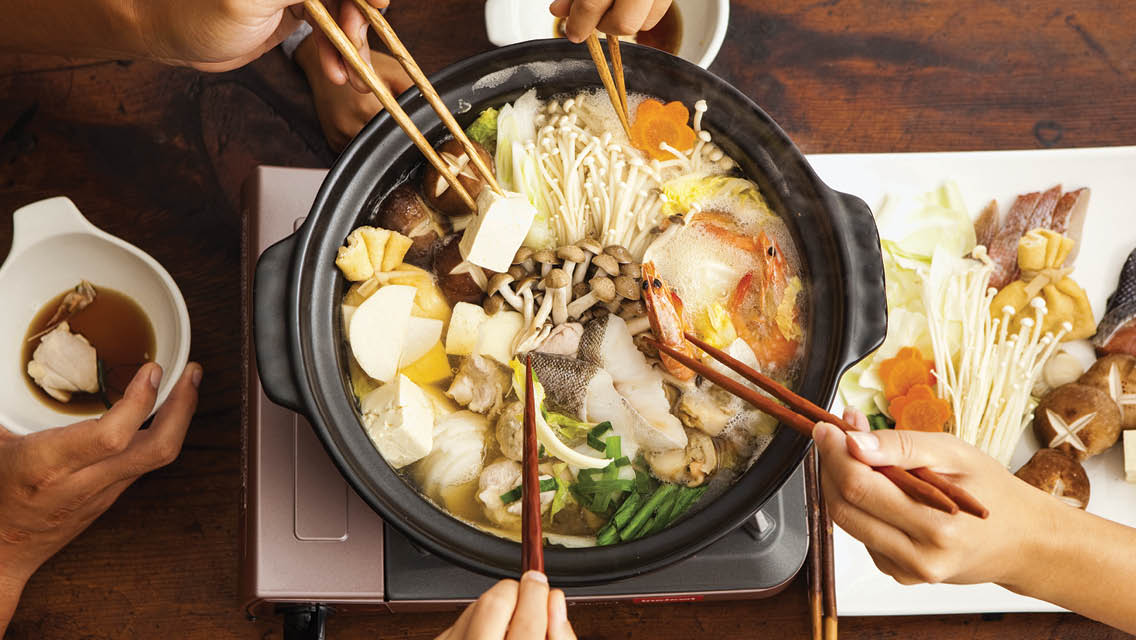
Solitary eating can make it easy to fall into ruts and stick with what’s familiar.
“Our food preferences are modeled for us when we’re introduced to food as young people,” says functional nutritionist Jesse Haas, MS, CNS, LN. “So that influences what we’re willing and interested in trying.”
But when you eat with others, especially people beyond your family circle, you’re more apt to branch out. Research suggests that eating with others promotes a more diverse, healthy, and balanced diet. Their food traditions and preferences offer opportunities to try new dishes — or test out a dietary flex, like going gluten-free.
Eating a more diverse diet supports the gut microbiome, which thrives on multiple types of fiber and phytonutrients. And that benefits your metabolic health, immune system, and mental well-being.
“Overall, if we just eat a variety of foods, we can relax about Am I getting enough X, Y, Z vitamins?” Haas says. “We can let go of the diet vibe and focus on our food culture as a way to care for ourselves.”
Try these fun ways to expand your dietary horizons:
• Host a potluck. Offer to make the main dish and invite people to bring their favorite sides and desserts. And don’t worry about making sure the menu is harmonious.
As longevity researcher Dan Buettner, author of The Blue Zones: Lessons for Living Longer From the People Who’ve Lived the Longest, says, “The point isn’t perfection; it’s connection.”
• Split a CSA share. For adventurous eaters, a community-supported agriculture share is an excellent way to get a wider variety of produce — while supporting small local farms.
You pay a flat fee at the start of the growing season, and in exchange you receive a weekly share of fresh veggies all season long.
Splitting a share with a neighbor can be a great way to bond over food and find reasons to share recipes, dishes, and dinners. (Learn more about the benefits of a CSA at “5 Reasons to Opt for a CSA This Summer.”)
• Don’t fear dietary restrictions. When one of your loved ones decides to be vegan or needs to go gluten-free, consider it an opportunity to experiment with new foods.
Likewise, if you have food restrictions and someone invites you over to dine, be honest about your needs.
Most hosts are happy to accommodate, and cooking without a familiar ingredient gives them an opportunity to try something new, too.
Let’s Eat Together!
The rewards of eating with family and friends extend far beyond the dinner table. Learn why it’s worth the effort to sit down and dine with others at “5 Surprising Reasons Why Eating With Others Is Good for Your Health,” from which this article was excerpted.



This Post Has 0 Comments