




Common Barbell Back Squat Set Up Mistakes
J-hooks too high or too low.
One of the first mistakes people make when setting up for the back squat is setting the J-hooks, which hold the barbell on the squat rack, too high or too low. If you set them too high, you’ll have to rise onto your tiptoes to unrack the bar. Too low and you’ll have to do a half-squat to get the bar out of the rack for your first rep, Gaudreau says.


Feet too close together.
Placing the feet hip width apart tends to be too narrow for most people. A too-narrow stance can inhibit the ability to squat through a full range of motion (lowering the hips until the thighs are at least parallel to the ground) and potentially cause people to lift their heels rather than pressing through their full feet.


Barbell on the neck.
Positioning the barbell at the base of the neck can put pressure on the delicate bones of the cervical spine, causing neck discomfort and pain, says Gaudreau.


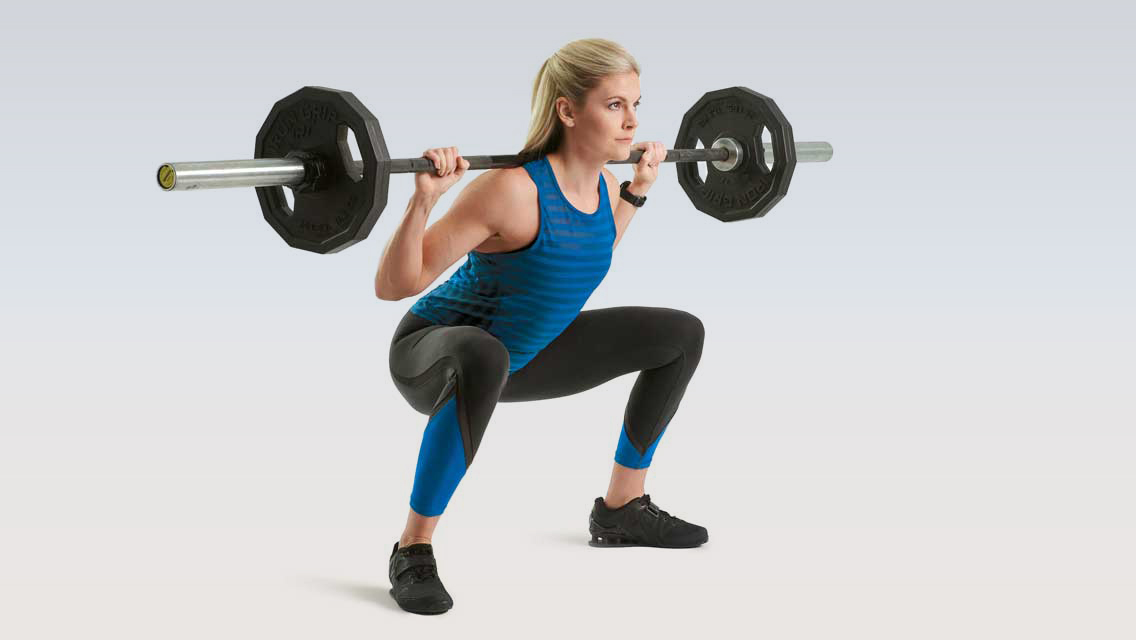
How to Set Up for the Barbell Back Squat
Position J-hooks at armpit-height.
For most people, this is the height that allows them to unrack the bar without rising onto their tiptoes or wasting energy by doing a half-squat, Gaudreau notes.
Play with your foot position.
Start with your feet shoulder width apart and your toes turned out about 10 to 15 degrees. This tends to be the most comfortable squat stance for most people because “it starts to naturally open the hips up, making it easier for people to sit deeper into the squat,” says Fleming. From this position, experiment with micro changes to your stance — slightly wider or narrower; toes turned out slightly more — to find what works best for you.


Make a shelf for the barbell.
Instead of letting the bar rest on the bony part of the neck, Gaudreau suggests, use your upper-back muscles. “Think about pulling your shoulder blades together a little, and that’s going to give a meaty shelf for the bar to sit [on].”
(See “How to Mix Up the Barbell Back Squat” for additional variations of this move.)


Strong Starts
Are you setting up correctly while lifting? Get expert guidance on perfecting your setup for several common strength moves at “9 Strength Moves You May Be Setting Up Wrong (and How to Fix Them),” from which this article was excerpted.



Comments (0)