




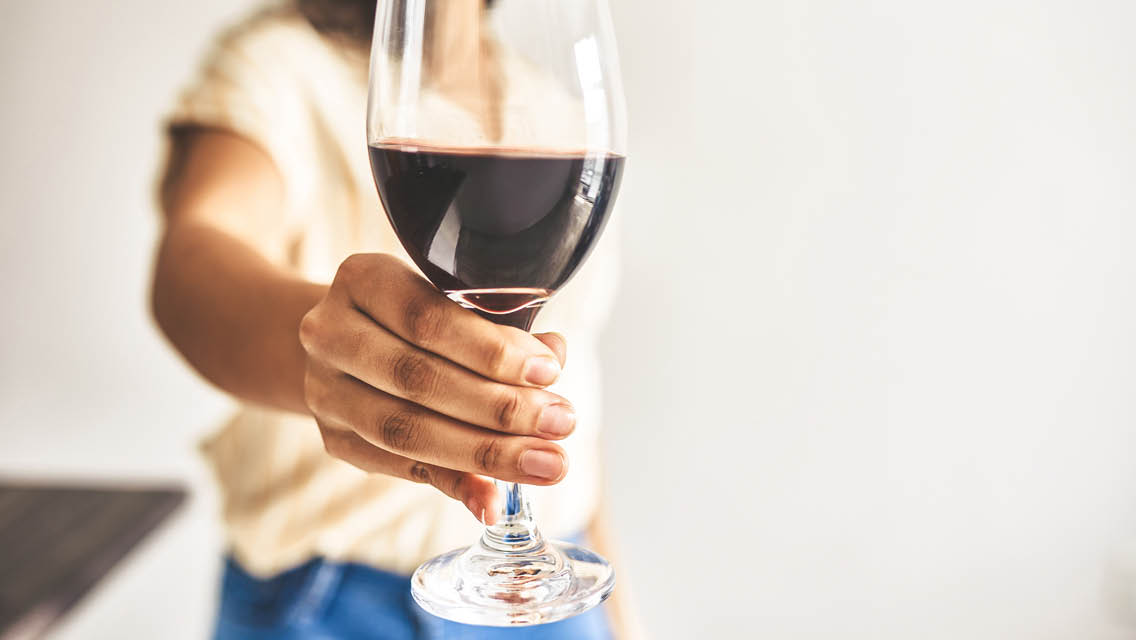
Here’s what happens under the hood after that cold beer or celebratory margarita. First, the alcohol is absorbed through the walls of the stomach and small intestine. The bloodstream carries it to the liver, where an enzyme called alcohol dehydrogenase starts to break it down, producing a byproduct called acetaldehyde. (An excess of this chemical compound is the culprit behind hangovers.)
The alcohol and acetaldehyde mixture travels from the liver to the heart and crosses the blood-brain barrier to enter the brain. This gives you a buzz, usually within 10 or 15 minutes of your first sip. Your blood vessels start to expand, possibly making you feel warmer and a little flushed.
Alcohol then activates the calming GABA (gamma aminobutyric acid) system in the brain, which relaxes you and lowers your inhibitions; it also stimulates the release of the feel-good neurotransmitters serotonin and dopamine as well as endorphins, your body’s natural opioids. These chemical rewards all contribute to alcohol’s de-stressing effects — as well as to its addictive allure.
A Toast to Moderation
Alcohol seems to affect us all differently — and even affect our own bodies differently over time. See “What Are the Health Effects of Moderate Alcohol Consumption?” (from which this article was excerpt) for answers to some of your questions about alcohol and the body.



This Post Has 0 Comments