



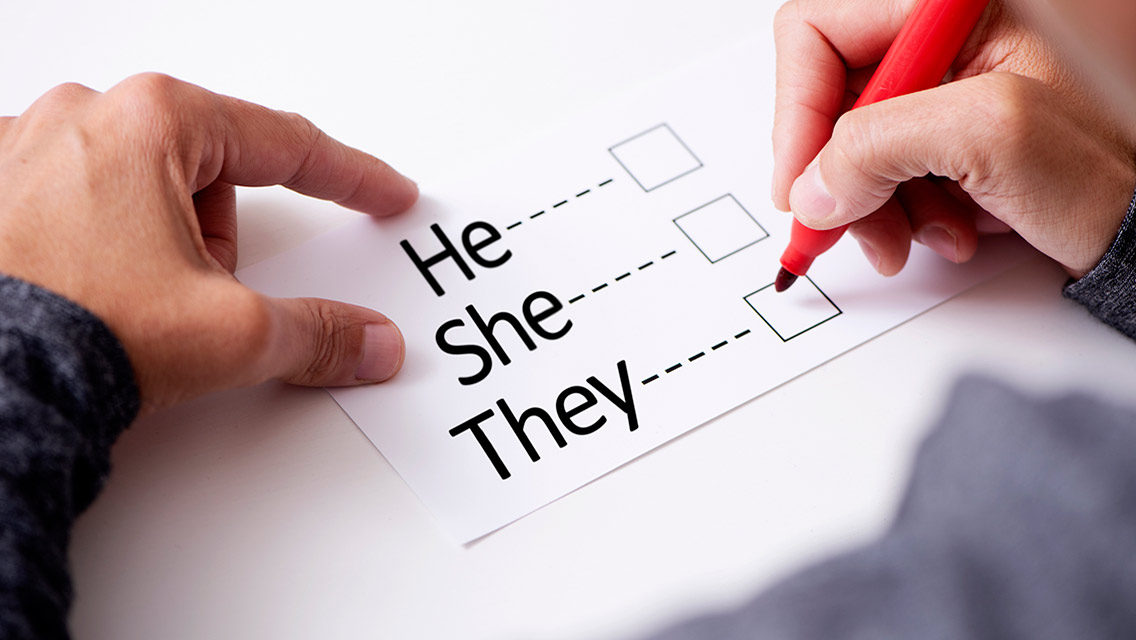
While there are a number of nonbinary alternatives to he, she, him, her, his, and hers, you don’t need to be confused or put off by these options when dealing respectfully with someone who identifies as nonbinary, explains the LGBTQ-advocacy organization GLAAD. Rather than worry about whether you ought to say they and their or ze and zir, GLAAD suggests starting here:
Listening: “If you’re unsure which pronoun a person prefers, listen first to the pronoun other people use when referring to them. Someone who knows the person well will probably use the correct pronoun.”
Asking: “If you must ask which pronoun the person uses, start by sharing your own. For example, ‘Hi, I’m Alex and I use the pronouns he and him. What about you?’”
And if you make a mistake: “Apologize quickly and sincerely, and move on.” The point is to express acceptance of the person, so “the bigger deal you make out of the [pronoun] situation, the more uncomfortable it is for everyone.”
This originally appeared as “My daughter is getting married to a person who uses nonbinary pronouns. How can I adapt to using them?” in the July/August 2019 print issue of Experience Life.







Comments (0)