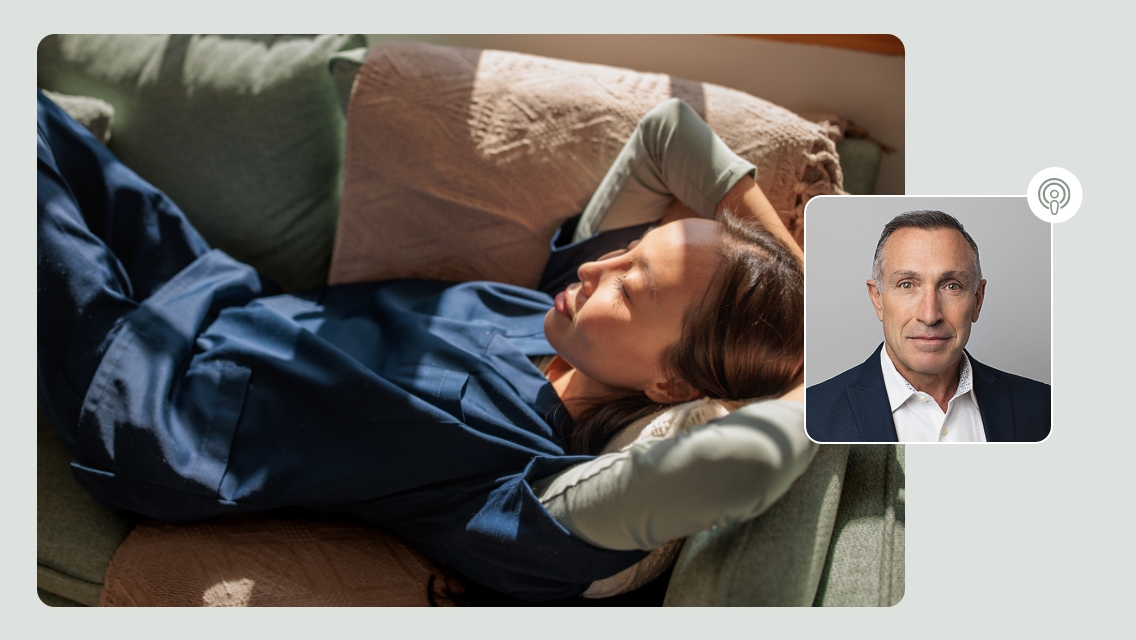



We often think of stress with a negative connotation: The more of it we have, the worse we’ll feel. But the explanation isn’t always that simple. In a healthy lifestyle, exercise is actually a “good stressor,” necessary for reaching our fitness goals. It’s chronic stress — from overtraining (exercising too much or too intensely), not recovering properly, or other factors — that can impede our fitness progress.
“Stress itself is not harmful, but unresolved stress can lead to issues,” says Jim LaValle, RPh, CCN, chief science officer for Life Time. “Exercise as a stressor is one of the most powerful biological signals for longevity — but only when paired with recovery.”
Exercise Stress vs. Chronic Stress
So, what are the differences between stress from training and chronic stress?
“Exercise as a stressor benefits our health by stimulating multiple metabolic pathways to help the body function optimally,” says LaValle. “We also achieve muscle growth and maintenance with stress load. The key, however, is to make this stressor predictable by working out regularly and recoverable by making sure to rest your body properly.” (Learn more: “How Does Exercise Influence Your Cortisol Levels?”)
Chronic stress, on the other hand, is unpredictable and unresolving, according to LaValle. “The body interprets chronic stress — from external factors like sleep loss, work stress, poor diet, alcohol consumption, and more — very differently than stress from regular exercise,” he says. “Chronic stress leads to what is called allostatic load: The process where stress changes the body’s ability to respond through changing signals from the brain to all other systems. Everything from changes in immune function, hormone production, glucose regulation, and even gut health can be affected once the body enters the chronic stress mode.”
Overtraining, however, is an instance when exercise can lead to the same negative effects as chronic stress: You’re causing wear and tear on your body instead of adaptation and growth.
“Both can rewire how your body releases hormones and other compounds that create patterns of metabolic dysfunction known as chronic inflammation or ‘metaflammation,’” says LaValle.
How Chronic Stress Affects Workouts
When the total load of your cumulative stress (from overtraining or other chronic stress factors) exceeds your repair mechanisms, your body systems can begin to downregulate, affecting your ability to properly recover from exercise, according to LaValle.
“The body can stop adapting to stress when energy allocation needs to shift toward survival to preserve resources and energy,” he says. “Early signs of stress overloading your recovery capacity can be disrupted sleep, an elevated morning heart rate, decreased heart-rate variability, and a loss of drive to exercise. This can eventually lead to plateaus in gaining muscle, increased abdominal fat, frequent minor illness, or mood instability, all of which can also affect your workouts.”
Even if you continue to train hard or do tough workouts, your nervous system is not restoring its firing capacity in this state, which can affect your strength gains. “Strength is neurological before it’s muscular, and chronic stress interferes with both,” Lavalle says. “When cortisol release loses its circadian pattern, the nervous system becomes sympathetic dominant, which over time lowers heart rate variability and decreases efficiency of the nervous system. Then, neuromuscular signaling is disrupted, affecting the efficiency of movement and contraction force.”
Chronic stress can also affect your fat loss abilities, even if you’re eating in a caloric deficit (which is also a stressor on the body). “Chronic stress elevates cortisol, which promotes visceral fat deposition,” he adds. “Even in a calorie deficit, metabolic efficiency shifts because the body prioritizes energy conservation.”
When to Prioritize Recovery
Intentional recovery is necessary for fitness progress; without it, you simply accumulate fatigue, Lavalle stresses. “Without adequate recovery, you accumulate microdamage. And without recovering enough to compensate for that microdamage (a concept called ‘supercompensation’), you won’t get stronger.”
The amount and types of recovery you need depend on your workout routine and the amount of additional stress your body is carrying from other sources. However, in general, it’s advised to include active recovery one to three days per week based on your training volume, leaning toward the more frequent end the more often you train. (Learn more: “Fitness Recovery, Defined.”)
Your body also gives you feedback when you need to prioritize recovery. Some subjective indicators are irritability, low motivation, poor libido, frequent soreness, and brain fog. “One of the most powerful markers is morning energy,” he notes. “If you wake up wired but tired, stress is accumulating.
“The goal is to maintain your workout capacity without overwhelming your body’s ability to repair and recover,” Lavalle adds. “Sometimes progress means preserving resilience — not pushing harder.”
7 Tools for Intentional Recovery
Here, Lindsay Ogden, a Dynamic Personal Trainer at Life Time in Eden Prairie, Minn., shares tools and activities that can help your body recover between workouts.
1. Stretching
Stretching can help reduce tension in the body. “Stress often shows up as tight shoulders, hips, jaw, and low back,” Ogden says. “Stretching releases muscular tension, which sends a signal to your nervous system that you’re safe — helping to lower stress hormones.” (Learn more: “6 Unique Stretches to Add to Your Recovery Routine.”)
2. Breathwork
Breathwork helps activate the parasympathetic (rest-and-digest) nervous system, which creates a calming effect, notes Ogden. “Intentional breathwork slows the rate and can lower cortisol by shifting you out of the fight-or-flight sympathetic nervous system,” she says.
3. Meditation
Meditation can help reduce mental stress and is also a practice you can do no matter where you are. “Meditation improves emotional regulation and typically follows a breathwork practice as well,” Ogden says. (The Life Time app has guided meditations to help you with your practice.)
4. LT Recovery Zone
Life Time members have access to the LT Recovery zone area of the workout floor, which houses tools that help promote physical relaxation with minimal effort. “These tools help enhance circulation and can reduce muscle soreness, which decreases overall physical stress load — helpful for people who struggle to ‘slow down’ on their own,” Ogden says.
She recommends trying out the Normatec compression sleeves, which use patented compression technology to enhance circulation, speed up recovery, and reduce soreness. She also likes the HydroMassage lounge chair, which uses high-pressure jets of hot water that move up and down the body to massage muscles, increase circulation, and promote overall well-being. (Learn more: “How to Use 3 Popular Recovery Tools at Life Time.”)
5. Sauna, Steam Room, or Whirlpool
Heat therapy, as in the sauna, steam room, or whirlpool, is a well-known technique for relaxation and recovery.
“The heat of the sauna can help increase circulation and support endorphin release,” says Ogden. “The steam room is a warm, humid environment that can help reduce muscle tightness, and the whirlpool — with the gentle movement of warm water — can help lessen muscle tightness and lower overall physical stress.”
If you’d like, you can also alternate between hot and cold therapy by integrating the cold plunge to help boost recovery. (Learn more: “Expert Answers: How Do I Perform Contrast Therapy for Improved Recovery?”)
6. Massage
Getting a professional massage can decrease muscle tension and lower cortisol. “Massage therapy reduces stress while increasing serotonin and dopamine,” Ogden says. “It’s easier to get into the parasympathetic nervous system when you’re able to fully relax.”
7. Yoga
Yoga integrates movement, breath, and mindfulness, notes Ogden. “Depending on which format you do, most yoga offerings can reduce muscular tension, regulate breathing, and improve mental clarity — making it a great all-around stress-reduction tool.”
Ogden recommends SURRENDER YIN or ROOT HATHA classes at Life Time for more recovery-forward benefits.