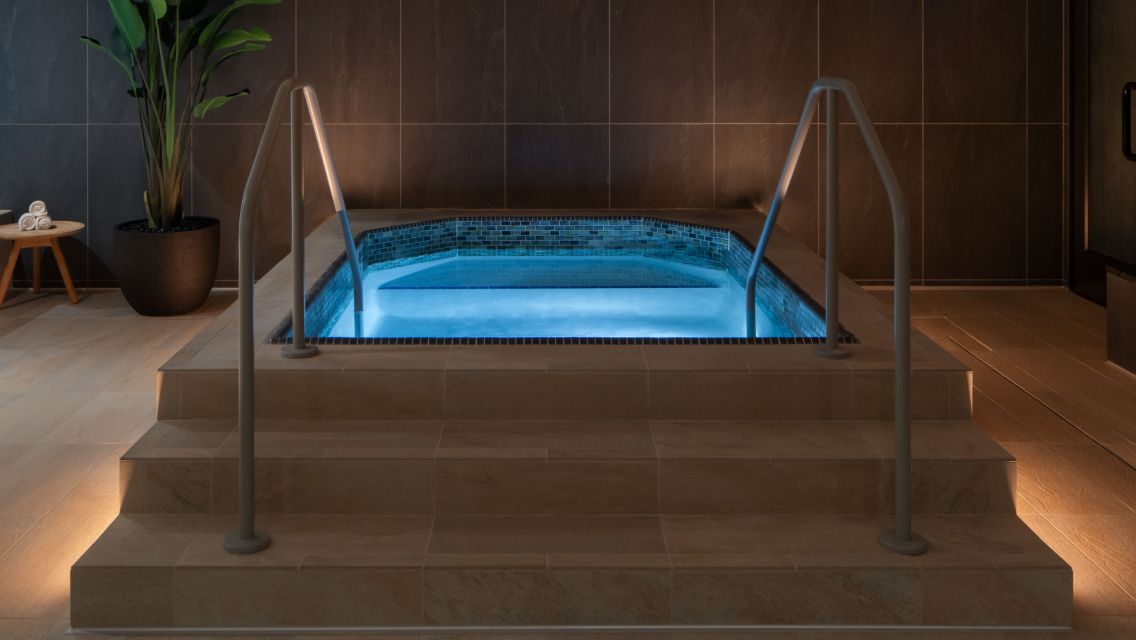



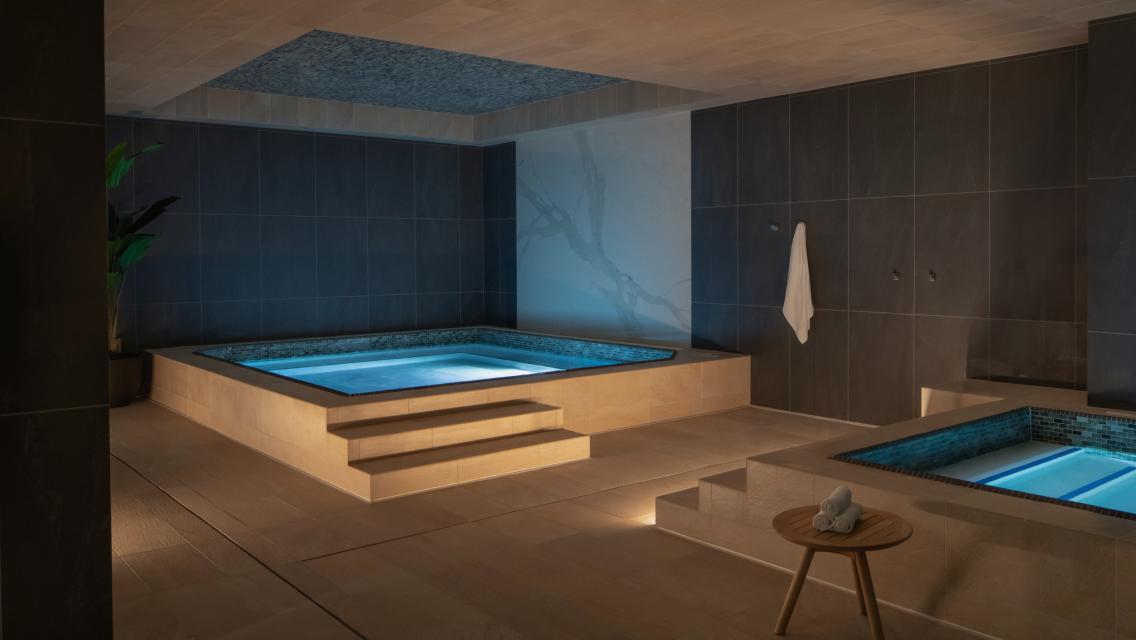
Contrast therapy is an increasingly popular practice among health and fitness enthusiasts. Also known as hot and cold therapy, the experience involves exposing the body to alternating hot and cold temperatures (in a sauna and cold plunge, for example), which comes with benefits for both fitness and recovery.
“Alternating between the two extremes of hot and cold can help increase blood flow, which aids in muscle rejuvenation,” says Danny King, Master Trainer and director of performance and recovery at Life Time. “Heat helps open blood cells while cold causes them to constrict — that process of increasing the movement of blood helps bring more nutrients to our body.”
This circulatory effect can result in several benefits for those who have an active fitness routine, including the following:
- Muscle recovery: “The increased blood flow that happens not only helps bring new nutrients to the muscle, but it also helps pull metabolic waste out, both of which can lead to faster muscle recovery after workouts,” explains King.
- Reduced soreness: “The amplified circulation can help reduce inflammation and mitigate sore muscles after a tough workout,” says King.
- Injury healing: “The nutrients being brought to the muscle can accelerate the process of rebuilding tissue and aid in quicker healing from an injury,” says King.
- A feeling of rejuvenation: “Most people are putting their body through some form of strain on a regular basis, whether that’s due to a fitness routine or sitting for much of the day,” shares King. “The alternating experiences of hot and cold therapy can help your body feel refreshed and ready to keep moving through the day.”
How to Perform Contrast Therapy
If you’re interested in incorporating contrast therapy into your regimen, King offers the following step-by-step guidance for how to do it.
1. Start with heat.
Begin with the heat therapy of your choosing: sauna, steam room, or whirlpool. “The goal is to get your body tissue temperature up, which generally takes about 10 minutes,” says King.
2. Exit and take a short rest.
After about 10 minutes, exit the heat therapy and give yourself a minute or two to catch your breath and let your body briefly regroup. “A fast transition between extreme temperatures can make people feel lightheaded or dizzy,” King explains, “so it’s important to give your body a pause to reorient itself.”
3. Transition to cold.
After your rest, do a quick rinse in the shower to wash off any sweat and then enter the cold plunge. “Submerge your body for two to three minutes,” advises King. “The goal is to undergo a major temperature change of the tissue to really reap the benefits.”
4. Exit and take a short rest.
Give yourself a one- or two-minute break again to help normalize your body temperature before moving on. “There’s no need to move fast between the cycles,” King notes.
5. Repeat this cycle two to three more times.
Go through each flow again, completing three to four rounds total. Each round’s time can vary some based on how you’re feeling, according to King. “The length of time spent in each therapy can fluctuate, but I recommend spending between five to 20 minutes in hot therapy and then one to three minutes in cold therapy,” says King.
6. Complete your final flow.
End on whichever temperature you prefer. “There are sometimes slightly better inflammation-reducing benefits when ending on cold,” King says. “But if you want to walk out feeling more relaxed, you may prefer to end on hot. It’s really up to you.”
7. Slowly adjust back to a stable temperature.
With the rapid temperature changes, it’s important to give your body two or three minutes of rest to stabilize before continuing on with your day, according to King. “And as with any heat exposure, it’s also important to hydrate after.”
A Few Helpful Safety Reminders
Keep these tips in mind before jumping into contrast therapy.
- Consult your doctor if necessary. While contrast therapy is generally safe, it’s important to check with your healthcare provider before you try it, especially if you are pregnant or have high blood pressure or a heart condition.
- Don’t overdo it. King advises starting by adding contrast therapy to your routine just once per week on your designated recovery day. “This helps ensure you’re not interfering with muscle growth, which can occur when exposing your muscles to cold temperatures immediately after an intense strength training session,” King says. “It’s important to keep in mind that therapies like this still impact your body and nervous system similarly to a workout, so use it sparingly.”
- If you’re feeling extra sore, consider ramping it up. If you’re experiencing more soreness or stiffness than usual, increasing contrast therapy to two to three days per week on either rest or cardio days (post-workout due to the impact on your body) can help, but King advises not going beyond that. (If you become more experienced at contrast therapy, he shares that it’s also OK to increase to this amount even in the absence of extra soreness.)