



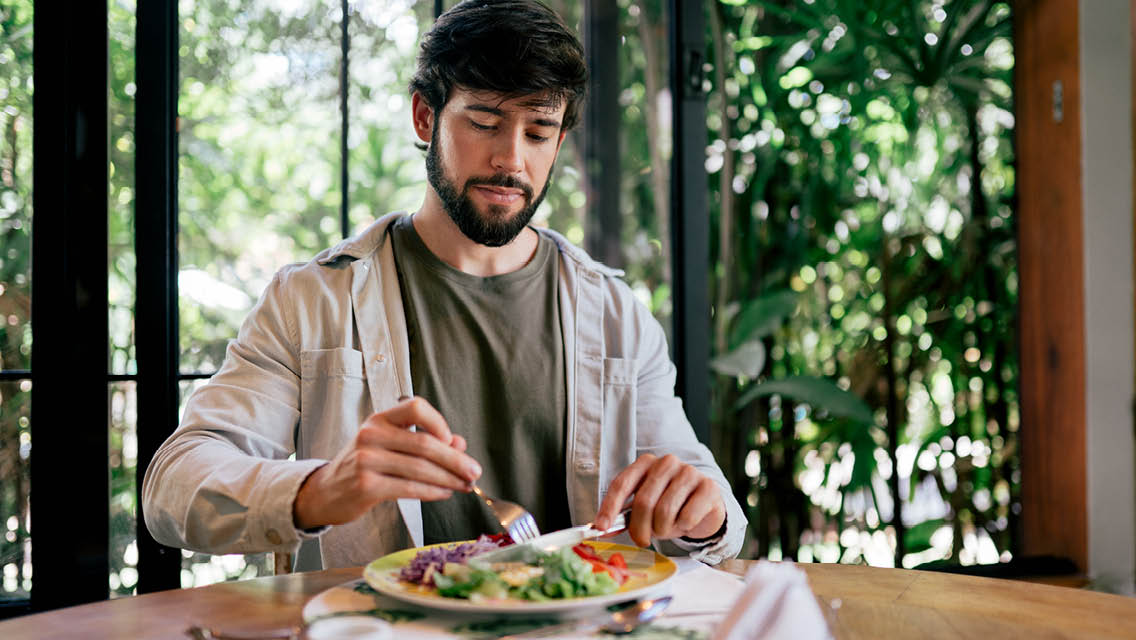
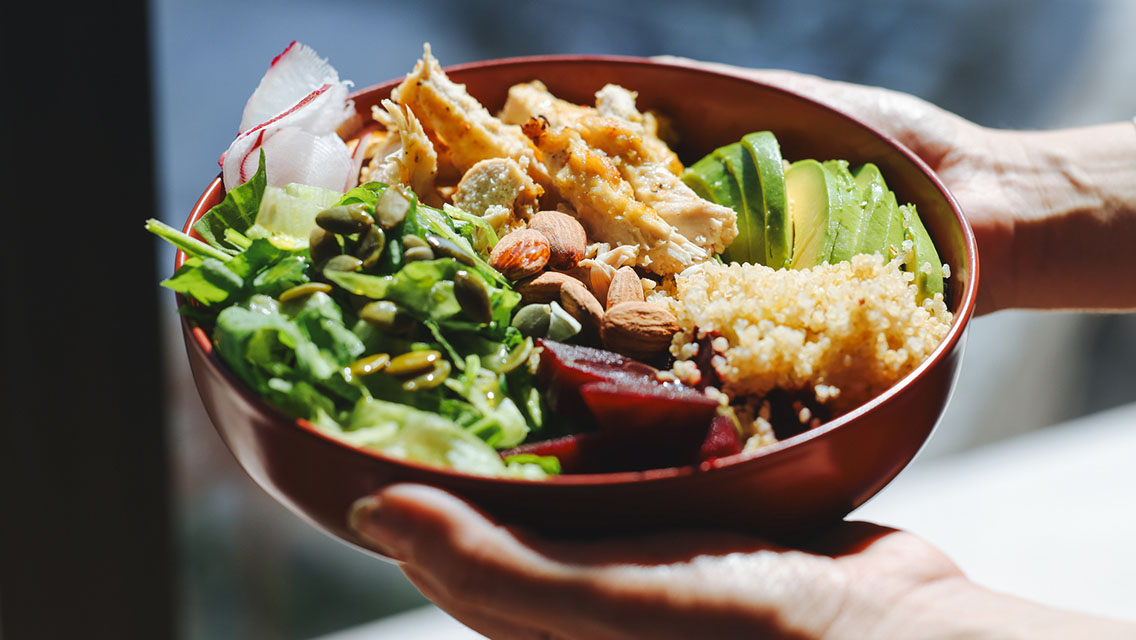
Yes, possibly, says Barbara Eichorst, MS, RD, CDCES, vice president of healthcare programs at the American Diabetes Association. Eating protein, nonstarchy vegetables, and healthy fats before carbohydrates may help protect you from postmeal blood-glucose spikes.
That’s because fiber and protein slow gastric emptying, Eichorst explains. This means that food transfers more slowly from the stomach to the small intestine, where nutrients are absorbed into the bloodstream. The fiber and protein essentially create a buffer, so carbs don’t enter the bloodstream as quickly — which results in a lower and more gradual blood-glucose rise.
“Over time, minimizing these spikes lowers inflammation, supports heart health, and contributes to better blood-sugar control,” says Hernandez. Sequencing can also help improve insulin sensitivity — a major risk factor for prediabetes, type 2 diabetes, and polycystic ovary syndrome.
For people who already have prediabetes or diabetes, Eichorst says, bringing blood-sugar spikes down could potentially reduce the amount of insulin they need and improve hemoglobin A1c, a measure of average blood-glucose levels over three months.
The Ins and Outs of Meal Sequencing
Is it possible to improve your health simply by changing the order in which you eat your food? Learn more at “7 Common Questions about Meal Sequencing — Answered,” from which this article was excerpted.


Comments (0)