


How to Care for Our Skin as We Age (Performance & Longevity Series)
Learn about the natural effects of aging on the skin, along with various strategies for caring for your skin health and maintaining a youthful appearance.





Skin changes are inevitable as we age — yet with today’s advanced skincare practices and strategies, we have more tools than ever to help prevent and treat unwanted signs of aging. With so many options and so much noise around them, it’s often hard to know what techniques will actually make a difference for you.
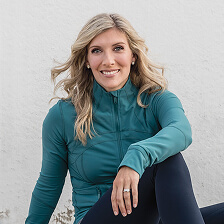
In this episode, Carrie Lucio, APRN, CNP, helps us understand the natural effects of aging on the skin, offering tips around lifestyle strategies and skincare products and services that are proven to help protect and care for aging skin, as well as combat some of the visible signs of aging. Lucio also offers her take on several trending topics, including collagen, peptides, red-light therapy, and alternatives to Botox and fillers.
This episode of Life Time Talks is part of our series on Performance and Longevity with MIORA.
Carrie Lucio, APRN, CNP, is a board-certified nurse practitioner and aesthetic nurse for LifeSpa in St. Paul, Minn., with more than a decade of experience focusing on skin health and antiaging treatments.
In this episode, Lucio discusses what happens to our skin as we age and how various lifestyle factors and treatments can help keep skin healthy and reduce signs of aging. Insights include the following:
- The natural aging process often starts to become noticeable in our 30s and 40s. Around this time, we experience decreased sebaceous gland production, which leads to reduced oil and sweat, affecting skin hydration. Dry skin can lead to wrinkling, especially around the mouth and eyes.
- SPF is a crucial product in skincare regimens (even in the winter) to protect the skin from UVA and UVB rays, as well as the radiation that can break down the skin and accelerate aging. Physical barrier sunscreens with zinc oxide and titanium dioxide are recommended for longer-lasting protection.
- Skin health has a strong connection to our overall health, as all of our body systems are interconnected.
- Several lifestyle factors contribute to skin health, including nutrition, movement, sleep, and stress management. The health of your habits can also contribute to the efficacy of certain MediSpa services. For nutrition in particular, sufficient hydration and intake of vitamins C and E, which support the building blocks of skin tissue, are necessary.
- As it relates to cosmetic use, Botox is a neuromodulator that only works on muscle. Appearances that look unnatural aren’t usually the result of Botox, Lucio explains, but rather fillers that have been placed in the wrong plane of the tissue or with too much volume.
- Platelet-Rich Fibrinogen (PRF) is a treatment that uses growth factors from your own blood to stimulate skin rejuvenation.
- Collagen provides tensile strength, helping the skin maintain its integrity against friction that could otherwise cause damage as we go through our daily lives. For example, think about the friction that happens from rubbing against a pillowcase or using makeup brushes.
- Peptides have many jobs when it comes to our skin and are becoming increasingly popular in skincare products. One of their primary jobs is to help carry active ingredients to the dermal-epidermal junction layer of the skin so you actually see results.
- Red-light therapy can stimulate the mitochondria in cells for increased collagen and elastin production. Lucio recommends using red-light therapy tools with wavelengths of 630 to 660 nanometers at least three to four times per week for optimal effectiveness.
- Microneedling, laser therapy, and chemical peels work similarly by disrupting the dermal layer; the healing process stimulates increased collagen production.
- For at-home antiaging skincare, Lucio recommends starting with the baseline of a cleanser, moisturizer, and SPF. From there, you can add hyaluronic acid, growth factor, and retinol, if tolerated. For full-face rejuvenation services, Lucio recommends microneedling with added PRF.
Transcript: How to Care for Our Skin as We Age (Performance & Longevity Series)
Jamie Martin
Welcome to this episode of Life Time Talks. I’m Jamie Martin, and I’m here for another episode in our series on performance and longevity with MIORA. Today I’m really excited for everyone to meet Carrie Lucio. She is a board certified nurse practitioner and aesthetic nurse specialist who’s been practicing for 10 years in the Twin Cities and recently joined the Life Time LifeSpa team. Carrie, how are you?
Carrie Lucio
Great, thank you so much for having me today. I’m so excited to be here and talk all things skin.
Jamie Martin
I am thrilled to have you here. This is one of those topics that as I’ve in my 30s and 40s like started, you know, in this age where like, what can I do to really take care of my skin health? It’s a conversation that I’m having with people all the time. Like, what can we be doing? And so really that’s what we want to focus on today is like, how can we support our skin as we age?
And so with that in mind, we know that there’s a ton of interest in this, lots of conversations, tons of stuff on social media about the various things we can do to take care of our skin. But before we even get into that, what is happening to our skin as we age? Like what is just part of the natural process of aging when it comes to skin health?
Carrie Lucio
Yeah, and it’s interesting that you talked about in your 30s and 40s, right? Because that’s usually when I’m meeting the majority of my clients for the first time, because they’re noticing those changes showing up in their skin. And some of the things that are happening as we age is we actually have decreased sebaceous gland production. And what that does for our skin is it kind of slows down some sweating and it slows down oil production. And for some people who maybe struggle with acne, they might be saying, this is great.
My acne is improving a little bit. However, it does contribute to your skin being more dry. And when the skin is dry and we’re losing some of that nice healthy oil in the skin, we’ll start to notice some crinkling and wrinkling, especially in areas where the skin is thinner, like around the mouth or around the eyes. We’ll be noticing that right away. Your dermis, which is actually the larger part of the layer of the skin than we were looking at it, is actually starting to thin out as well.
So we kind of going, we go from having more of a comforter consistency or a quilt consistency to our skin that’s covering our muscle and our fat in our face to having more of a bed sheet. So if you think about when we fold a comforter, we might notice a crease in there, but if we go to folding a bed sheet, it gets a lot deeper and it’s a little bit more noticeable.
Jamie Martin
That’s such a great analogy, I think everyone can relate to what that feels like and looks like as well. that’s one of the things I love about these conversations, how do we make it super relatable for everybody? So that’s huge. What are some of the lifestyle factors that can either accelerate that aging process or even maybe slow it down?
Carrie Lucio
Sure. Well, we know that some of the more common things that get talked about are UVA, UVB exposure. And some of that we can do something about because if you were born in the 90s or later, I think we knew it was good to start putting sunscreen even on our babies, right? if you were born before that time, sunscreen wasn’t always looked at as a necessity. It might have been looked at as something that was a little bit of a luxury.
And if you were born even before the 70s and 80s, you might not even had access to sunscreen. So UVA, UVB is radiation. It’s radiating our skin and deflating a lot of the good healthy tissue that’s even underneath the skin that’s giving it that kind of buoyancy and healthy elastin collagen that bounce. So whatever you can do to start applying now, it’s never too late.
But I really prefer that people use a physical barrier sunscreen. And what that means is that I want it to contain high amounts of zinc oxide and titanium dioxide because those are going to take longer to break down and give you lasting coverage for longer.
Jamie Martin
Right, are those the ones that I’m just trying to, like the ones that sometimes like they leave you with kind of a little bit of a white glow or I know that I have a little perhaps.
Carrie Lucio
That’s right. So I usually am choosing my favorite is one that we carry at Life Spa that is made by a product line called Revision and it’s called IntelliShade. And it does have a little tint to it. So even if you’re not somebody who wears makeup all the time, it does help with that little white casting because of those physical minerals that are the key ingredients in there.
Jamie Martin
What about other lifestyle factors? I’m thinking, you we talk all the time on the podcast about the role of nutrition in our health and other, like stress on our health. Like, so what about those factors and others that you might notice have an impact on our skin?
Carrie Lucio
Well, I notice hydration is a huge thing. Again, our skin, the layer of skin that holds onto the water content is also fitting out as we age. So we’re losing our own hydration and we’re losing that oil production I talked about. So keeping as hydrated as possible throughout the day is a really good way to see it show up in your skin. We, again, have great products like Hydrate that can also give you a little boost if you’re not someone who’s really good at drinking just plain water.
That’s amazing. And then really making sure you’re good on your vitamin C, E’s are great. Those are really good nourishing vitamins that are going to help with the building blocks in our tissue.
Jamie Martin
Yep, that makes a ton of sense. So let’s talk a little bit about some trends in the skincare industry. There’s a lot going on. I already alluded to social media. But can you speak to where you’re seeing the industry moving? One of the things that I’ve come across is there’s been kind of this shift towards alternatives to Botox and other fillers. What is that all about, for instance?
Carrie Lucio
Yeah, well, I think it’s important to first separate what does Botox do and what does filler do. Botox is a neuromodulator. It falls underneath that drug class. And there’s so many on the market now. But Botox is our kind of home brand name, right? It’s the one that’s been around the longest, and people know it the most. It only works on muscle as it relates to cosmetic. And we have multiple layers of tissue, as I mentioned before.
People notice their skin when it moves and that muscle contracts, they notice that folding of the tissue. Now, most people think that Botox goes everywhere on their face. And if they see somebody who’s very, what I would call, plastic forward, or people will notice that whatever is happening with your face and your skin and your movement, it’s not natural. They think it’s all Botox. And most of the time, it’s actually filler that really is the giveaway that someone has, quote, had work done.
And it’s been usually placed either in the wrong plane of the tissue or too much volume. And that’s what people are noticing is unnatural. We’ve all seen celebrities that I feel like a lot of time probably just came out of the house too soon before some of that swelling went down. And once it settled, it probably looked really nice and natural.
However, I think that educating people on the right products in the right place of their face is a really good way to help them understand that you can get these injectables without everybody knowing that you had them. There’s a way to do that.
That being said, I do have a bucket of patients that will probably never want to do a neuromodulator injection or a filler injection. It’s just not in their wheelhouse for them. So then we’re looking at what are our other tools. A really popular one right now is protein-rich fibrinogen, or PRF. And that entails a procedure where you would come to see me in the office, I would perform a blood draw, and I would take that and put it into a centrifuge that would separate your whole blood from that protein-rich fibrinogen. The first protein-rich fibrinogen is what’s going to work in your tissue to stimulate growth factors so that you can start to gain back some of that cellular function that’s been lost as you’ve aged.
Jamie Martin
Got it. So it’s kind of it’s truly is rejuvenating. Correct. you potentially could have lost over the years.
Carrie Lucio
Right, exactly. And what makes somebody a good candidate for that would be somebody who’s living a predominantly healthy lifestyle. They’re getting enough protein in their diet every day. They are not smoking. They’re drinking very seldom. That’s what helps to make their fibrinogen in that plasma really healthy. So sometimes that can be a little bit of a conversation I’m having with a patient about whether or not this is going to be a great treatment for them because it really is dependent on that patient’s own physiology and what’s happening in their body if we’re gonna get a good product.
Jamie Martin
Right. It’s so interesting because it almost always on this podcast comes back to some of those healthy living behaviors that we just have as foundation for what we do. And what you’re saying is, you are moving regularly, eating well, staying hydrated, managing stress probably, but then sleeping well, all these factors kind of play into whether somebody may or may not. Maybe you’re limiting how much you’re drinking to your point. All of those things do become factors in how you would then make recommendations.
Carrie Lucio
And just going back to that, it’s all interconnected, right? You can’t ignore one body system and expect that it’s going to perform at its top, at its peak, without being connected to everything else.
Jamie Martin
You’re speaking my language, I love that. It’s never anything in isolation.
Carrie Lucio
Correct.
Jamie Martin
We hear all the time about collagen. So let’s talk more specifically about what role that plays in our skin health.
Carrie Lucio
Yeah, collagen is a part of the skin that I always think about. It gives skin what we call tensile strength. And that would be helping against friction and shear forces. So I know you were talking a little bit before we were recording about the silky pillowcases and silky hair bonnets that are out now. And what those are essentially doing is reducing that friction and shear.
Collagen helps so that when we have fabrics, have makeup brushes, have anything that we’re putting against our skin, when that’s gliding back and forth, creating that friction, what it’s doing is it’s helping so that the skin is remaining its strength. It’s not just tearing, right? So as we lose collagen, that skin thins out and it makes it more susceptible for damage, for being sort of folded again and seeing those folds getting etched into the skin.
Jamie Martin
Okay, so while we’re, just gonna kind of go down a little trend that I’ve been hearing a lot about that talks a little bit about those brushes, like the lymph brushes are all over the place right now. media, what, mean, are those, do those actually work? What are your thoughts on those kinds of things?
Carrie Lucio
They do help with lymphatic drainage. And we do have little reservoirs, I’ll call them, throughout our face and channels that we can get a buildup of lymphatic drainage. it is a good thing in general. However, you have to be very consistent for it to work. Also, make sure that you’re going on a credible site, YouTube. You can find some credible people on there that are talking about the lymphatic pathways.
I would usually refer to, if you’re looking online for someone to follow to show you those instructions, I would recommend making sure you’re finding someone who’s certified in lymphatic massage because they’ll be giving you the correct info.
Jamie Martin
Yeah, okay. That was just one of those little social media rabbit holes. Skin health, again, I feel like that’s one of the most popular things that comes up all the time there. Are there different types of collagen that support skin health, you know, from our diets, from topical treatments? I mean, what might collagen be used or how might it be used as part of our skincare regimen?
Carrie Lucio
You can use it both. As we said before, everything is interconnected. And there’s been a number of studies about whether or not taking collagen supplements orally are really helping or not. Again, if you are consistent with it, we can see the benefits show up. there was a study that actually showed that when they did a biopsy of the skin afterwards, from someone who was using collagen products for 90 days, it did increase the thickness of their skin and the health and the connectivity of the skin. So I would say yes, I just need people to be taking it every day for them to see that turnaround, for them to say yes, I can tell this is changing. Primarily, I like to recommend a lot of times marine collagen versus bovine. Bovine is very, very popular and is sold frequently ⁓ver the counter at Target and CVS, et cetera.
We do sell our own within LT Shop and it’s a great collagen, it’s liquid. It is primarily bovine, but sometimes I might change my stance on whether marine is better than bovine because bovine gives you the added benefit of bone health. Bovine collagen is better for that connective tissue. So if I feel like I can get some help with skin, but also we can support bone health, I think it’s a great product.
Jamie Martin
Got it. What about topically with college?
Carrie Lucio
Yeah. All products like collagen, like retinol, like some of these hot things. Hyaluronic acid is another one that’s really popular right now. They’re all great for skin and you can use them. They are bioavailable to use on a cellular level. The main problem is, are you using a brand that can bring it to the level of the skin where it’s actually usable, where it’s not just sitting on the skin?
So a lot of times we need peptides. There’s lots of jobs peptides have in our skin. But one of the big ones is, is that they help to carry those active products to the correct layer of skin called the dermal-epidermal junction so that we’re actually seeing those results.
Jamie Martin
Well, actually, you took, literally wrote down as you were saying levels, like, is it about the levels of these products or these ingredients in these products? And then my next question literally was, what about peptides? Yeah. So.
Carrie Lucio
Again, peptides are helpers. when you asked before, too, about will we see people using other… We talked about injectables with PRF, but alternatives, right, to Botox. There are some peptides that they know can actually help block the release of something called acetylcholine that tells the muscle to contract. You can apply it topically. I find that it actually works best in conjunction with the injections, not in lieu of them.
But we do see some really cool things that are in development with topicals to help with the same things that injectables are aiming to correct as well.
Jamie Martin
Well, okay, so you’re saying it can be a mix of you can combine them, right? The topical a cream with potentially the injectable and in this case, it would be an injectable peptide as an alternative?
Carrie Lucio (14:45)
It’d be a topical peptide. Topical peptide mixed with a Botox injection.
Jamie Martin
Got it. OK. There’s so many things I’m learning. I love this. Are there different types of peptides that you would use in skincare?
Carrie Lucio
There are, you know, I, again, I’m typically looking at what peptide is attached to the active ingredient that I want. So I’m not always looking for a specific name of a peptide. I would just be looking at a brand that, again, would be using a combination. So for example, I love TNS Advanced Plus Serum from SkinMedica. That’s a growth factor treatment that can be applied topically twice a day. And it has peptides in it. So that we’re not just putting that growth factor on top of our skin, that peptide is going to actually help to carry it where it needs to do its job.
Jamie Martin
Get it to that dermal layer that you referenced earlier. Okay. And just to even just like be really direct about it, what are your thoughts on peptides as a replacement for Botox potentially?
Carrie Lucio
I personally don’t think that they’re ever gonna replace it completely. I think it’ll be a compliment, not a takeover. But there’s new and cool things happening all the time, so never say never, right?
Jamie Martin
Yep, who knows what we’re going to learn, know, the latest research, the next thing. Okay, red light therapy is another thing we’ve been hearing a ton about. What are some of the benefits that are being found around skin health with that therapy?
Carrie Lucio
Yeah, we know that skin health in general, we have these cells that are helping to create, right, the collagen and the elastin and help that within the tissue. And they’re really, back to ninth grade biology, is the mitochondria. It’s producing ATP that helps with the energy in the cells, and then we can get more of the production of that good stuff that we want to come back.
So we know that red light can stimulate those mitochondria to be more active in the tissue, which is amazing. You’ll see a lot of times looking at different red light choices. How do I know which wavelength to choose? People are like, how do I know if my mask at home is gonna deliver what I want? 630 to 660 nanometers, which is just a measurement of how deep that light is going into the skin.
That narrow range is where we want the mitochondria to be stimulated in the skin to get that good collagen production. If you go deeper, you can work on bone and muscle recovery health, which is where you see more of the infrared saunas, like we have at MIORA here. That can really help with that recovery. And those are going much deeper into the tissue than we need for the collagen production at home.
Jamie Martin
Got it. So and when you’re incorporating that into a routine, I mean, we know you’ve said it a couple times already, consistency is really key here. So I’m sure that’s true also with red light therapy. It’s not a one and done type of thing. You really do need to make this part of a routine.
Carrie Lucio
Absolutely, and I always sort of reference it again, being within Life Time, it’s an easy reference to go to. You wouldn’t expect to show up at the gym for a treatment and, you know, think that that’s gonna give you six pack abs and everything that you’re going for with your fitness goals. It does take consistency. It takes consistency at home, whatever you feel your body with for the gym, you’re feeling your body with for your skin, you’re doing your consistent light therapy, you’re taking your collagen. It’s all pieces to the puzzle.
Jamie Martin
Yep. How does that fit in? Like how often do you recommend if somebody, for instance, has a red light mask at home? I have one. I actually purchased the one that Life Time has. Is that something that you’re doing every other day as part of a routine? What is the general general recommendation? I know it depends per person.
Carrie Lucio
I would say at least three to four days a week.
Jamie Martin
And what about, we’ve talked about collagen too, what about combining that with red light there?
Carrie Lucio
Absolutely. I mean, I don’t have any research that would report that the red light is going to push the collagen topically any deeper, but as long as you’re using a quality collagen that has some of those helper cells, those helper peptides, to bring it into the level that it can be used, you’ll be fine. And combining them again is just, it’s gonna help with the production of that collagen even more. Right.
Jamie Martin
You mentioned the word quality. I want to delve into that a little bit. Like, what do you mean by quality collagen? What does that, what’s that definition in your book?
Carrie Lucio
Quality collagen to me would be when it’s being partnered with another product to help it get to where it needs to go again.. So I really love SkinMedica’s HA5. It’s five different types of hyaluronic acid with collagen involved with it. two molecules really love each other and they love water. So they’re going to connect to the layer of the skin where water is and that’s really close to that dermal-epidermal junction where the collagen is produced.
Combo products are my thing. think everybody else loves them too because not everybody has time for a 12 step program in the morning and at night.
Jamie Martin
Yep, exactly. And that is, I think that’s one of the things that can be intimidating with, you know, focusing on skincare is like, how do I actually do this? And what are the critical steps? And that actually gets me to my next thing. Like, what are, what is your view on what a good at home routine looks like when it comes to taking care of skin?
Carrie Lucio
Yeah, well, my aesthetician cohorts will probably roll their eyes when I say this, but I’m not terribly worried about your cleanser. As long as it’s removing dirt and oil, do I love some ones that we carry that are medical grade that are really going to do a good job and not strip it of its natural biome? Yes. But if we’re looking to sort of make investments in some key pieces and maybe not throw out everything we have in our cabinet at home, I always say get your cleanser of choice.
Then I want you to use a good moisturizer. That’s not gonna be too heavy. And we have so many great choices. Moisturizers are your lipid barrier ⁓ that are gonna help replace with that sebaceous gland production slowdown. I love Dermal Repair Cream from SkinMedica, again, is one of my favorites, or DEJ Moisturizer from Revision. Those are two of my favorite moisturizers. And then after that, we can add in lots of bells and whistles to address specific concerns.
But my non-negotiable would again be the IntelliShade True Physical with that good SPF to protect us from going outside. And even in the winter, and even if you’re not going outdoors, I still say to put it on every day. And then at night, I’m going to say I want people to either be doing a growth factor or a retinol. Both of those are going to help with collagen production and cell turnover because it slows down as we’re aging.
Some people just won’t ever be able to tolerate a retinol. I mean, I have pulse-dosed people where we’ve tried, you know, let’s just do this one or two nights a week. And some people’s skin is just too reactive for it. They’re never going to be able to take that. And some people want to know, what else can I do besides retinol? So they’ll do both the growth factor and the retinol together at night.
Jamie Martin
Yeah, and again that goes back to each of us individually has a very different skin type, right? And yeah are some that may be more sensitive to others. When you’re working with somebody they come in, how do you can engage what their skin type is right away? What are you looking for and helping to identify that?
Carrie Lucio
Yeah, well, when I’m first meeting someone in consultation, we do photos together on an iPad because that way we can look together. And instead of just looking in a mirror, which sometimes people will maybe hold their chin a little higher, or they’ll kind of look for the right lighting to sort of hit their infraorbital hollow, their under eye. And maybe it makes a wrinkle or a shadow. Maybe it looks better than it does at home. Maybe it looks worse than it does at home. But let’s use consistent lighting, consistent background and look at our faces together, right? So when we’re looking at that, I’m looking for areas of dehydration, any areas that are like fine scale that we might not notice again if we’re looking at a mirror. But if we’re noticing on the iPad, I can get really close for better or for worse, right? Yeah. And then we’re looking for pigmentation. So do we need something to help with pigmentation? Is it red? Is it brown? What kind of, is it melasma that’s being deposited into the skin? A lot of this can look, like I said, better or worse depending on the lighting. So we try to keep it consistent.
Jamie Martin
I think that’s so important for people to understand like why, I mean you’re looking so closely because that’s what’s gonna help you determine the treatment plan or protocol for them. Absolutely. Right. Okay, so that’s kind of in the setting. What are the other things that you can do in a medispa setting, for instance, that you might not be able to do at home for skin health?
Carrie Lucio
Yeah, well I know that you can, but I don’t think you should use microneedling devices at home. The chances are you’re not getting to the correct level of depth. You’re either causing way more damage to the skin than necessary, or you’re not getting deep enough to that dermal-epidermal junction to get any result. And that’s why I recommend that you always see an advanced practice esthetician who’s going to use a FDA approved microneedling device. We use SkinPen. It’s wonderful. It’s been around for a long time and they’re always making new developments and changes to it to make sure that it remains the best in the market. And when you come in, those micro channels that the needles are making in the skin, it’s tricking your skin to thinking that if there’s an injury. So it’s sending all of these helper cells to that area and the result of those helper cells is more collagen.
Jamie Martin
That’s awesome. Anything else? I mean, obviously I know there’s other treatments. I mean, you hear a lot about lasers or other things as well.
Carrie Lucio
And no matter what we choose, whether it’s micro-needling, lasers or energy devices, I kind of call them, or chemical peel, they’re all trying to do the same thing. They are trying to disrupt that layer of the skin by causing these little controlled injuries to trick the skin to saying, hey, we need to send those cells in. And I don’t think that there’s one modality or vehicle to give everybody. It’s kind of looking at, well, could we also treat some of this pigmentation we don’t love and give you collagen production? Then I might lean more towards a laser or a chemical peel to do that. Like let’s try to get the most bang for our buck in these treatments that we’re choosing, right? So if something can do more than one thing, let’s go towards that. Or if you’re someone who can only tolerate a really short amount of downtime for work or kids or whatever we have going on, maybe we’ll kind of curtail our treatment plan to make sure that we’re paying some respect to that downtime.
Jamie Martin
Okay, so a lot of what we’re talking about always with MIORA is longevity and performance. When we think about healthy aging, let’s say somebody is just coming to start their skincare program. Sure. And they really want to focus on aging and like, whether it’s reversing the signs of aging or just aging better. What would you suggest as their routine? Is it the same? Is it kind of the cleanser, moisturizer and a certain treatment or is there a different protocol you would recommend?
Carrie Lucio
If we’re primarily focusing on anti-aging, I would definitely add in a hyaluronic acid because of that water loss. I would add in a growth factor with the TNS. And then I would definitely steer them to, if we’re looking for full face rejuvenation, I would steer them towards the microneedle and then I would add PRF in there. So that’s another fun thing you can do with PRF is I can prepare that from your own body and then we can actually micro needle it into the skin as opposed to a concentrated area of just injecting it into the skin. And this is a great anti-aging for anybody at any stage and it’s safe for all skin types, which is really important too.
Jamie Martin
Yep, well, and again, that’s why it’s important to work with somebody who is experienced in this. They know how to work with you and understand your unique circumstances as well.
Carrie Lucio
Absolutely.
Jamie Martin
Okay, Carrie, we covered a lot pretty quickly here. there anything that we missed, anything you want to make sure that we touch on before we end this episode today?
Carrie Lucio
I don’t think so. We did cover a lot. think we got everything on our list that we wanted to make sure we were able to tell all of our members about and help support them to have their healthiest skin. Yeah.
Jamie Martin
Well, thank you so much for joining me. This is happening, you know, it’s so fun to always like bring in a new expert and to be able to kind of get your perspective on these things. And if people want to learn more about skin health, can learn there’s lots of articles at ExperienceLife.LifeTime.life and if people want to learn more about MIORA you can visit MIORA.LifeTime.Life. Thanks, Carrie.
More like this





We’d Love to Hear From You
Have thoughts you’d like to share or topic ideas for future episodes? Email us at lttalks@lt.life.
The information in this podcast is intended to provide broad understanding and knowledge of healthcare topics. This information is for educational purposes only and should not be considered complete and should not be used in place of advice from your physician or healthcare provider. We recommend you consult your physician or healthcare professional before beginning or altering your personal exercise, diet or supplementation program.
Life Time provides administrative, non-clinical support to MIORA as well as services and amenities related to general wellness and fitness; Life Time does not provide medical advice, diagnosis, treatment or care.
Advertisement