


A Deep Dive into Peptides (Performance & Longevity Series)
Learn about the signaling molecules that help regulate bodily functions and how they can be used to optimize various aspects of our health.


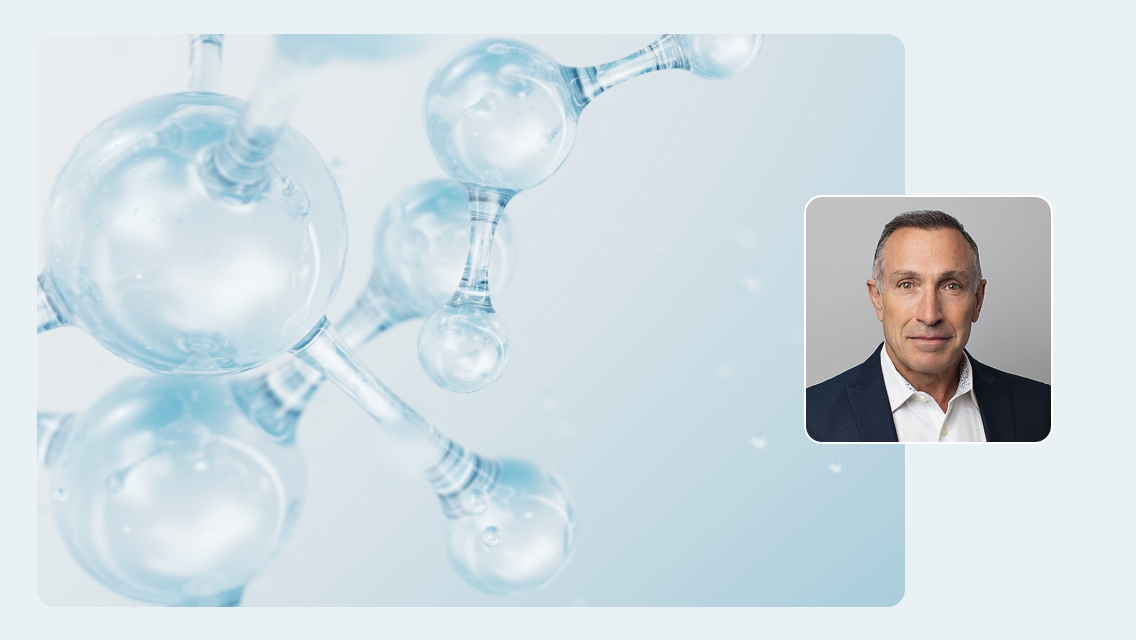



Peptides continue to gain popularity for their health benefits — particularly for the role they can play in longevity and performance health. As signaling molecules that help regulate bodily functions, they can be used to manage weight, support recovery and skin aging, and optimize various aspects of our health.
In this episode, Jim LaValle, RPh, CCN, explains how peptides affect the aging process specifically, and he digs into some of the top peptide options for the skin, muscles, energy, gut health, and more.
This episode of Life Time Talks is part of our series on Performance and Longevity with MIORA.
Jim LaValle, RPh, CCN, is a clinical pharmacist, the cochair of the American Academy of Anti-Aging Medicine, the chair of the International Peptide Society, and the Chief Science Officer for Life Time.
In this episode, LaValle explains what peptides are and their many potential benefits for health. Insights include the following:
- Peptides are small chains of amino acids (shorter than proteins) that are crucial for signaling in the body. They help regulate various aspects of body chemistry, helping to maintain homeostasis.
- Peptides can play a role in gene expression: They are influenced by epigenetic factors such as lifestyle choices. They can help protect against negative environmental influences by maintaining gene integrity and preventing harmful gene expression.
- As we age, there is a natural decline in peptide production in the body. Depending on the issues you’re experiencing, you may need more peptides than what is naturally produced to restore health.
- GLP-1 is the most well-known peptide and it’s becoming increasingly widespread in use, particularly for those with type 2 diabetes and weight loss goals.
- Peptides can also be used for a wide array of health issues: They aid in the recovery and healing of acute conditions like muscle tears and bone breaks, for instance, and they can be added to skincare products to improve skin health and appearance. They are also used to support immune health.
- There’s growing interest in and research about peptides for various medical applications. The FDA has approved peptides for mitochondrial health.
- Peptides can be administered in oral, topical, and injectable forms.
- Professional guidance on peptide use is crucial and self-selection is not advised.
- Rigorous research is important so there’s high-quality evidence to support peptide use. There has been notable research done in the field to date: The International Peptide Society, for example, has compiled over a hundred monographs on different peptides. Universities and companies are continuing to actively research peptides for potential applications, exploring their efficacy and safety.
Transcript: A Deep Dive into Peptides (Performance & Longevity Series)
Jamie Martin
Welcome to this episode of Life Time Talks and our series on performance and longevity with MIORA I’m Jamie Martin, and I’m here with Jim LaValle. He is a long time clinical pharmacist, has been practicing for over 40 years. He’s also the chief science officer for Life Time. And today we are talking about peptides, what they are and what they can do for our health. And Jim, always so good to have you. Thanks for being with me.
Jim LaValle
It’s a blast. Can’t wait.
Jamie Martin
I know, right? We’re just gonna keep going here. We got lots to cover.
So when we hear about peptides, often right now people have been hearing a lot about GLP-1. Like that’s the peptide that’s become really commonplace, or you think about the peptides that are maybe in some skincare lines or things like that. But let’s just start very fundamental. What are peptides and what do they do for our health and wellbeing?
Jim LaValle
Sure. So peptides are small chains of individual amino acids that aren’t as big as a protein. OK. So a peptide is a string of amino acids that’s shorter than a protein. And our body makes thousands of peptides that help us to regulate every aspect of our chemistry. mean, peptides literally are the signaling compounds that keep our body in homeostasis or keep our body in balance. And you know, it’s interesting. mean, know as chair of the International Peptide Society, we’ve written over 100 monographs with all the scientific research on a variety of different peptides. And I think we’re just at the threshold of where peptides are going to take us in the next decade or so.
Jamie Martin
Got it. So are there categories of peptides that do certain things for us? For instance, like the skin, the things that help with skin, for instance, or maybe there’s some peptides like that do help us manage type 2 diabetes or whatever that might be. Can you talk us through what those categories might be?
Jim LaValle
Yeah, I literally, basically for any function in your body, you got peptides that can be a benefit. So for example, insulin was really the first peptide to come to the market in the United States a hundred years ago. So peptides aren’t new. They’re new from the standpoint of how many of them are in the market, how many people are utilizing them, how many practitioners are using them. So everything from immune function to cognitive health to gut health, blood sugar regulation, weight loss, longevity. So helping our body to preserve growth hormone release as we’re aging, to preserve our lean mass, for example. A lot of categories that actually peptides are great for. And the other thing that’s really interesting, you mentioned skin. So GHKCU are known as copper peptide, very popular for the skin, but it also acts as a gene modulator, so it helps your genes to stay intact and not switch on or off based on how much stress you’re under. So sometimes peptides do a variety of things. So it’s just important to keep that in mind.
Jamie Martin
So you said they can help with like the turning on and off. So that means that they’re influenced by epigenetics, right? The lifestyle factors that happen, right? Is that what I’m interpreting?
Jim LaValle
Well, epigenetics influences your genes. And something like a peptide would help the negative influences keep you from expressing the negative effect of maybe the foods you’re eating, the exposures that you have, the stress you’re under, you know, all those kind of things.
Jamie Martin
So they can have a protective factor.
Jim LaValle
That’s right.
Jamie Martin
OK, great. So if our bodies can naturally produce peptides and they are doing that, why all of sudden is there more of these that are becoming more available to kind of complement our health with and to use from a medical standpoint?
Jim LaValle
Yeah, well, mean, you know, so when you think of once again, what are peptides? Peptides are signaling molecules. So depending on what problems you’re having with your body, you may need more of that signaling molecule to restore health. So if you get a muscle tear or a bone break, or maybe you’re getting symptoms from your gut for some reason, you you’re eating certain foods, you’re becoming sensitive to them, you’ve got a permeable gut now.
And a peptide could help with that. So you keep in mind that peptides are, in my opinion, they’re meant to restore balance and meant to really help heal conditions. I think the older you get, the more you may need to use certain peptides in order to kind of maintain that balance, because we lose our capacity as we’re aging a little bit to be able to make these things.
And depending on what our epigenetics are, as you mentioned before, if you’re making a lot of bad decisions and pushing your body in the wrong direction, or your body just doesn’t naturally overcome that by making more peptides, it’s moving in a direction where you need a higher production in order to get things back on the right track.
Jamie Martin
That makes total sense. Does there tend to be, with time, a natural decline in peptide production with age?
Jim LaValle
Yeah, think growth hormone release is a good, interesting one. Your body makes plenty of growth hormone as you’re aging, but it just gets stored in your pituitary and you don’t listen to the signal. It’s called growth hormone releasing hormone. So your body’s making a compound, a peptide, to tell the body to release growth hormone. Got it. Right? So as you’re aging, you may make less of that.
Same thing with your immune system. mean, you know, as you age your natural killer cells, the cells that get out there and fight the good fight against infection, tend to decline in your ability to make those. And so for example, one of the interesting peptides that I think, you know, has human data on it, know, thymus and alpha one helps your thymus gland to make immune compounds that keep you resilient to being sick. So as you’re getting older, you know, it’s important, I think, to think about, well, if you think of aging as a disease, why wouldn’t you want to create the countermeasures, which are peptides, to help age gracefully without illness? Aging without errors is the way I like to put
Jamie Martin
Aging without errors. I like that as like a little catchphrase or something. That’s interesting. You mentioned in acute situations, so let’s say you have the muscle tear or the bone break. Is that a form of kind of treatment for healing that is becoming more common that you’re starting to see? Or is this still something that’s a little bit on the fringe and starting to make its way into the mainstream?
Jim LaValle
Well, know, chairing the International Peptide Society and co-chairing the American Academy of Anti-Aging Medicine, right, there’s thousands of doctors that come to learn about the use of peptides and small molecules and other innovative therapies, bioidentical hormones, the things that we’re really looking at, you know, with MIORA at Life Time, right? So I think it’s becoming more commonplace, more healthcare providers are looking at it and wanting to do research on it. Universities are willing to do research on it. So I think that, as I said, over the next decade, when we first started our conversation, it’s like, I think over the next decade, we’re gonna see a big movement into peptides and small molecules, which, quite honestly, pharma, drug companies, already have a significant pipeline of peptides for specific reasons.
They just approved another one about three weeks ago for mitochondrial health called peptide SS31. So I think it’s all on the way.
Jamie Martin
It’s all coming. So I mean, to that point, that’s starting to be more of these being approved by the FDA or wherever it is. What is the research that’s been done on a lot of these? I who’s conducting it and how are they kind of then getting it out there?
Jim LaValle
Big question. big question. Well, I mean, in general, research gets done on compounds that have a potential application. And when they get to certain phases where it can show human safety, many times peptides will begin to get manufactured in compounding pharmacy for human use. Safety data is there. But it’s not a fully approved FDA drug yet. But it can be utilized if it’s made for human use. so universities do the research, companies pay to have research done, and then gets published. And then what we like to do is rank, well, how good is the research? Is it three gerbils? I think we want to go more than that.
Yeah, but honestly, is it animal studies? Is it lab studies? Is it in vitro, in vivo? Is it a human case report? Is it a randomized trial? Those are all the things that we look at for level of evidence for a peptide, right? So, you know, I think that amazing amount of research is starting to percolate through, you know, universities right now.
Jamie Martin
Yeah. it’s super interesting to see just like all the different potential applications that it can have to influence human health and wellbeing, right? On that note, you know, when you think about it, what are some of the most common medical types or uses of peptides that you’re seeing right now? And are there any like risks or what do people use them for?
Jim LaValle
Sure. you know, big ones got, one’s got health. I mean, very big because people more and more because of antibiotic use, proton pump inhibitors, acid blocking medications, maybe their diet, their history of maybe other medications or stress that they’re under for one reason or another, they get gut permeability problems, meaning that peptides from your food get through the gut lining and then your immune system reacts to that. And so you wanna seal off that permeability problem. And there are peptides that work for that.
Body composition, obviously everybody’s heard of GLP-1s. GLP-1s and GIP medications are peptides and that’s for body composition for one, lose fat mass, maintain lean mass. And then in addition to that, it would be for people with type 2 diabetes, insulin resistance, so all the way into conditions. And then there’s compounds for immune function. So that helps you to just become more resilient, know, so when you get where you’re under a lot of stress or you’re getting older and you lose your capacity on your immune system. Then there are, you know, metabolic peptides that work on the mitochondria.
So, you know, everybody’s at mitochondrial health now, it’s the big buzzword, you know, everybody’s talking about the mitochondria. Well, there are peptides that actually help to rejuvenate and protect the mitochondria inside your cells. And then there’s things like anti-aging peptides that help us to reprogram our superchiasmatic nucleus, which is a big word.
Jamie Martin
That’s referring to your ultradian rhythms, your circadian rhythms.
Jim LaValle
Right, it helps to balance out your circadian rhythms and helps you to continue to release growth hormone as you’re aging. And I’m just touching the surface.
Jamie Martin
I know, I’m like, there’s so much here.
Jim LaValle
Hormone regulation, I mean there’s so much that peptides are, they’re just an exciting new tool in the toolkit for healthcare providers and for the people who utilize them to help them move their health forward.
Jamie Martin
So let’s say that somebody is listening to this episode and they’re intrigued and they have some health issue that they’ve been dealing with for a while. How do you recommend that they start the conversation with their health care provider around peptides?
Jim LaValle
Well, I think they probably need to provide a book to their provider. Yeah. Read up on this if you could. Right. I wrote a book, handbook on peptides with some of my colleagues. I was the lead author on it. And we did that for a reason. We did that to kind of get healthcare providers and consumers on the same page about it is what a peptide is. This is where it’s good for you. But you know what? It also may be where you should have caution. So for example, secretagogues are the ones that help you release growth hormones. So everybody’s talking about seromerelin, ipomerelin, CJC-1295. When I’m saying these terms, everybody out there listening, they’re already dialed in on it. I can tell you right now. So the point being is there are some things that if you had a history of cancer, for example, you should know that maybe those aren’t a good selection for you or that you may develop a rash or an allergic reaction. That could be something you’d wanna know.
So I think you need to search someone out who’s experienced dip peptides, but I’d also encourage people if they’re gonna utilize peptides that they don’t take them on on their own and try to go out and buy them off the internet through research only facilities. I think that creates one, an area of risk, and two, people are kinda looking at these as if they’re supplements.
These are very powerful compounds that somebody should be having some oversight with you as to, how’s it working for you? Is it going in the right direction? Are we seeing some benefit? Is there anything that has a concern? know, GLP-1s, for example, could raise your amylase and lipase, which would mean you could get pancreatitis. It’s rare, but it is reported. So you got to, I think, be responsible about these and not just think, ⁓ hey, this is like taking Ginkgo.
It’s way different. a whole different level.
Jamie Martin
Well, and even to that point, you you hear about like the therapeutic uses of peptides. And then there’s also like the cosmetic side. So like, I think we should differentiate between those two so people understand what the differences are.
Jim LaValle
Sure, I mean, I think on cosmetics, know, because we teach at A4M, we have a master class in the peptide society on, know, derm and cosmetics and the use of peptides. And so, I mean, literally you can micro needle peptides. And the nice thing about that is it’ll build collagen scaffolding and you’ll create nice youthful skin. But that’s different than injecting something into your body on a regular basis for a therapeutic target. I’m trying to lose weight or I’m struggling with being able to absorb food. It’s just a little bit different. Cosmetic peptides, they’re still incredibly effective. It’s just that you’re losing a little bit of that risk. Copper peptide, for example, is one of the ones everybody’s putting into their solutions and serums now. Oso1, which is a small molecule, it’s not a, it’s not a peptide, but it’s considered a small molecule. So a family, family related. Well, that’s probably the most popular thing out there right now for like skin crepiness as you’re aging. So you hear of like one cream, it’s os01, right? And that compound is really interesting for skin.
But it’s different if you’re doing that for skin versus taking it to help with lean mass because you have to be on that six weeks off four weeks if you’re doing it orally versus topically. Interesting. So that’s where it kind of varies based on what your goal is. And then also, where are you applying this? Is it on the skin or are you putting it in your body?
Jamie Martin
Right. And when you say that, you mentioned like it can be injected, I’m assuming, but then also there are the oral, like in pill form that you can take many of these.
Jim LaValle
Yeah, no, I mean, look, I think there’s an incredible evolution on peptides that are taking place right now with delivery systems, right? So you can do oral ⁓ liposomal tablets now that really deliver peptides at a very equivocal injection amount, right? So it actually works. So I think that was kind of a big — at the early days, they were just kind of popping them into capsules. And now we know that, okay, we have to deliver, we got to get these small molecules to get absorbed into your body. And so there’s some really interesting technologies where it could be a topical, it could be a tablet, obviously injection. And then there’s topicals that go deep all the way into your tissues and can get distributed into everywhere. So there’s some really interesting stuff going on.
Jamie Martin
We’re just on the cusp in like the very beginning stages in many cases.
Jim LaValle
I know. I’m excited. That’s the pharmacist in me versus the clinical nutritionist versus the other areas of studies I’ve been in,
Jamie Martin
Yeah. Well, what’s interesting to me is even you saying like, okay, if I’m going to talk to my doctor, like you recommend them reading a book. I mean, probably similar to what you often hear about, you know, medical school, there’s not a lot talked about regarding nutrition. There’s probably not a lot talked about regarding peptides. So like there is additional education that I’m assuming now that’s coming out for medical providers to learn more beyond the books. Is there hopefully?
Jim LaValle
Well, I mean, I have two to 300 docs at a time in the room that we’re educating, and I bring in doctors who are clinicians that utilize it in order to teach. So I think that’s happening. don’t think it’s, if you ask somebody about semiglutide, a healthcare provider, and you said, tell me what category of compound that is, I’m not sure they would all go, that’s a peptide. Interesting.
Jamie Martin
What would they say? Like, what do you think the response would be?
Jim LaValle
It’s a drug.
Jamie Martin
Mm. OK.
Jim LaValle
Right? Yeah, so I think there’s a little bit of that education that’s going on now where so now they know because everybody’s talked about peptides peptides and GLP-1s they’re familiar with insulin and so on the peptide — I think that’s breaking through the you know that that glass ceiling and then there’s that you know understanding and look, social media drives a lot of this information. So more and more docs have to stay up on what are people listening to? Is it legitimate or not? I can tell you right now, there’s a lot of, I would say, bad information being given out by people who don’t have any kind of training, don’t understand that peptides are different than a supplement. And that’s where I think it’s good that doctors play a conservative role, just to give you a voice of reason.
Jamie Martin
Yep. So kind of finding that balance, but also for yourself being informed, reading up on it, understanding what these pieces are. That’s why we’re doing this topic, honestly, so people understand what the differences are and absolutely these places. you already mentioned like do’s and don’ts of peptides, anything you would want to add there, kind of making sure that you’re talking to your healthcare provider, working with somebody, being conservative.
Jim LaValle
The biggest don’t is do not read about a peptide online or listen to an influencer who may or may not have had experience at it because it’s one of the hottest areas, right? And then go and order it online from a research because the difference between research only versus for human use, research only doesn’t have to go through the rigor of testing. All of the stages in documenting the product so that the finished product is safe for a human to inject into their body. Now, I’m not going to comment on what research peptide companies, maybe they do things right. I no idea. I just know that they’re not required to.
Jamie Martin
Yeah, so you know that there’s standards elsewhere that you have to follow.
Jim LaValle
Exactly. So I’d really discourage people from, you know, doing research peptides, go and get them from healthcare providers that are writing scripts to compounding pharmacies that make things for human use.
Jamie Martin
Okay, any final thoughts or good to know tips regarding peptides that you want to share before we wrap this up? Really, this is meant to be our primer on peptides.
Jim LaValle
Well, I I think for me personally, over the last 10 years, maybe a little more than that now, peptides absolutely revolutionized the way the clinics that I work with are able to get results. We can get higher impact results more quickly. know, patients are happier just because of the ability to create these very focused signals that help the body to get back.
Don’t be afraid of them. They’re compounds that your body should be making, but they’re not making them anymore for the most part. But then also make sure that they’re not just a peptide that’s been recently researched and has no science behind them because there’s a lot of that out there too.
Jamie Martin
Yep, so being that informed consumer as always.
Jim LaValle
Absolutely.
Jamie Martin
And working with your healthcare provider. Well, Jim, this is a good starting point for us. If people want to learn more, they can visit miora.lifetime.life. You have lots of other podcasts and other content that we’ve worked to create with you on this topic. Thank you for joining me as always.
Jim LaValle
Great to be here.
More like this




We’d Love to Hear From You
Have thoughts you’d like to share or topic ideas for future episodes? Email us at lttalks@lt.life.
The information in this podcast is intended to provide broad understanding and knowledge of healthcare topics. This information is for educational purposes only and should not be considered complete and should not be used in place of advice from your physician or healthcare provider. We recommend you consult your physician or healthcare professional before beginning or altering your personal exercise, diet or supplementation program.
Life Time provides administrative, non-clinical support to MIORA as well as services and amenities related to general wellness and fitness; Life Time does not provide medical advice, diagnosis, treatment or care.
Advertisement