




Your Goals:
• Primary goal: Mobility
• Secondary goals: Strength and Endurance
Mobility is the capacity to move through your full range of motion without pain — to raise your arms comfortably overhead, touch your toes easily, and extend, bend, and flex your spine in all directions. It’s also the capacity to coordinate your movements efficiently, creating flowing, balanced, and integrated movement.
Without regular practice, mobility can erode over time, says personal trainer and movement coach Jolie Kobrinsky, CPT, RKC. “If you don’t mobilize your joints a little bit most days, you’ll get creaky.”
As with muscle loss, joint stiffness can creep up over time, gradually reducing your ability — and motivation — to perform all types of movement, including lifting, cardio exercises, and activities of daily living.
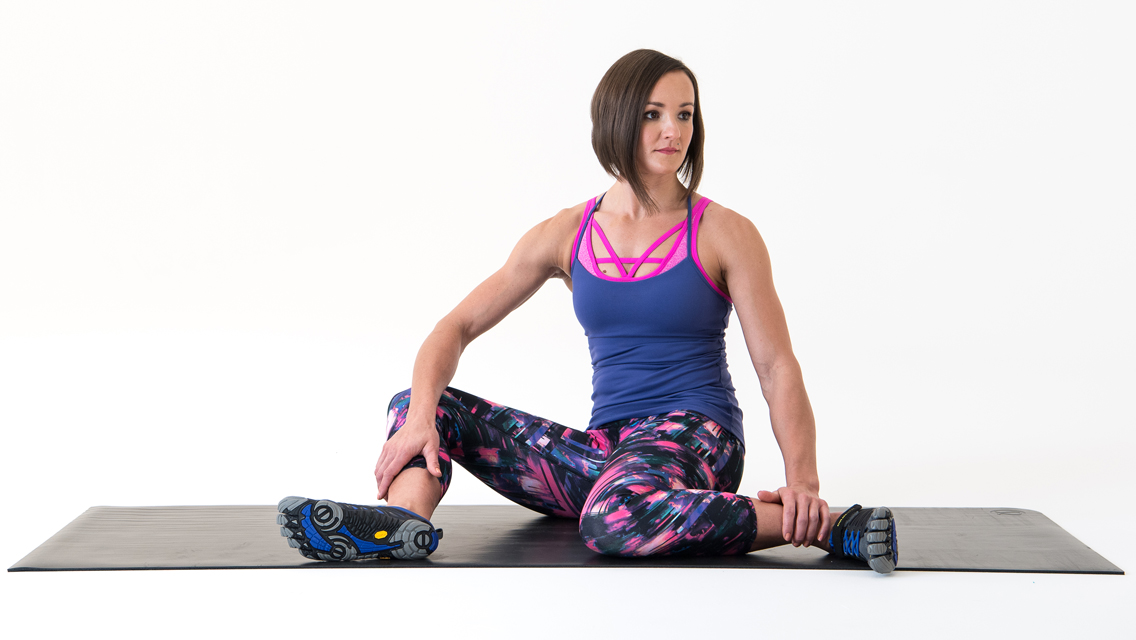
Mobility training can take many forms: simple and traditional, like with an overhead reach or a toe touch; meditative and slow, as with restorative yoga; or sweaty and dynamic, like during a high-knee jog or improvised dance. The only constraints are that the movement is low intensity (relative to your current level of fitness) and that it takes at least one of your joints through a significant range of motion.
Mobility work may be easiest to incorporate prior to or directly after a strength or cardio session.
Before a workout, Kobrinsky says, “I’ll use dynamic mobility drills to prime my body for the movements I’m going to do.” If you plan to jog, for example, you might perform high-knee marches, high leg kicks, calf stretches, and a few arm swings beforehand.
Extended, deep stretches are best saved for after a workout, when meditative movement and long, deep breaths can activate the parasympathetic nervous system.
If you’re looking for a mobility activity, yoga is the most popular. And don’t worry if you aren’t very flexible — start where you are. “There are a lot of hardcore ideas about yoga, but it’s really just stretching, moving, bending — moving your body around,” Kobrinsky says. “Yoga is the OG mobility practice.”
In yoga class, you’ll hold stretched positions, sometimes for longer periods, shifting attention to different areas and developing new levels of appreciation for the intricacies of movement.
A simple way to emphasize mobility in your workout program is to extend the duration of your pre- and postworkout stretch sessions and reduce the time you spend on cardio and strength. So instead of stretching for 10 minutes at the beginning of your workout and five at the end, double it to 20 at the beginning and 10 at the end, reducing the duration of the session in between accordingly. And consider attending a yoga class one or two days a week.
| Sample Mobility Schedule | ||||||
|---|---|---|---|---|---|---|
| Sunday | Monday | Tuesday | Wednesday | Thursday | Friday | Saturday |
| Rest | 20 minutes dynamic mobilityFull-body strength10 minutes stretch | 20 minutes dynamic mobilityCardio10 minutes stretch | Rest or yoga | 20 minutes dynamic mobilityFull-body strength10 minutes stretch | 20 minutes dynamic mobilityCardio10 minutes stretch | Yoga |
Try These Workouts:
- For a full-body stretching and mobility routine, visit “The Stretching and Mobility Workout.”
- For a 10-minute restorative-yoga routine, visit “The Restorative-Yoga Workout.”
- For more on dynamic mobility, visit “The Perfect Warm-Up.”
Find Your Fitness Routine
Find five more training templates that can help match your routine to your goals, whether you’re embarking on a new exercise journey or building onto your existing practice, at “How to Make a Fitness Plan Based on Your Goals,” from which this article was excerpted.



This Post Has 0 Comments