



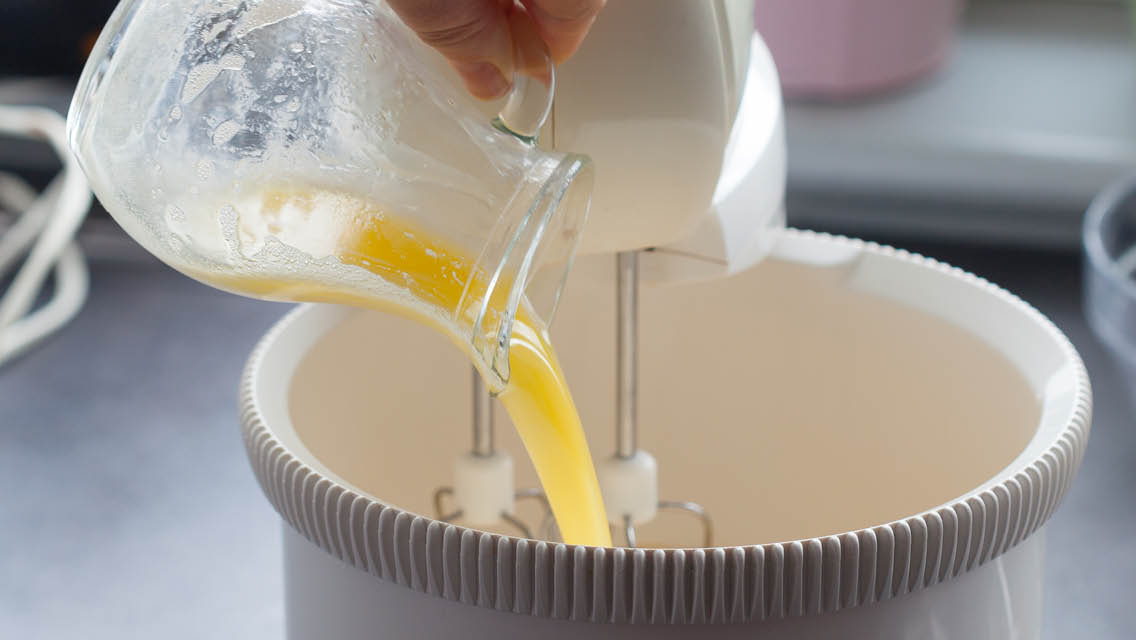
Commercial egg replacers function much like eggs in baking to give structure, moisture, and some lift. There are several types, so it’s worth reading labels to find the best one for your recipe.
Some egg replacers are just liquid egg whites; many plant-based replacers are made from mung beans or other legumes. Most egg substitutes include added stabilizers like guar and xanthan gum. Some are pourable and ready to use; others come as dry mixes that require rehydration.
Powdered egg replacer is often made from starches like tapioca or arrowroot flour, along with leavening agents such as baking soda and, occasionally, binding agents like psyllium husk. Whatever product you choose, check the ingredients list carefully to ensure you know what you’re getting.
“If you’re using a commercial egg replacer, I recommend matching the product to your use — generally opting for powder mixes, which are designed to closely mimic the culinary features of eggs in baking applications,” says plant-based chef and culinary instructor Jackie Newgent, RDN, CDN. She also recommends avoiding versions with excess sodium.
Egg replacers are convenient and consistent, especially in recipes where a one-to-one substitution is helpful. But even though they are made to act like eggs, they might not be usable in some highly technical recipes. “A soufflé will likely be really challenging to make using a substitute for eggs, unless you’re a pastry chef,” notes Newgent.




Comments (0)