



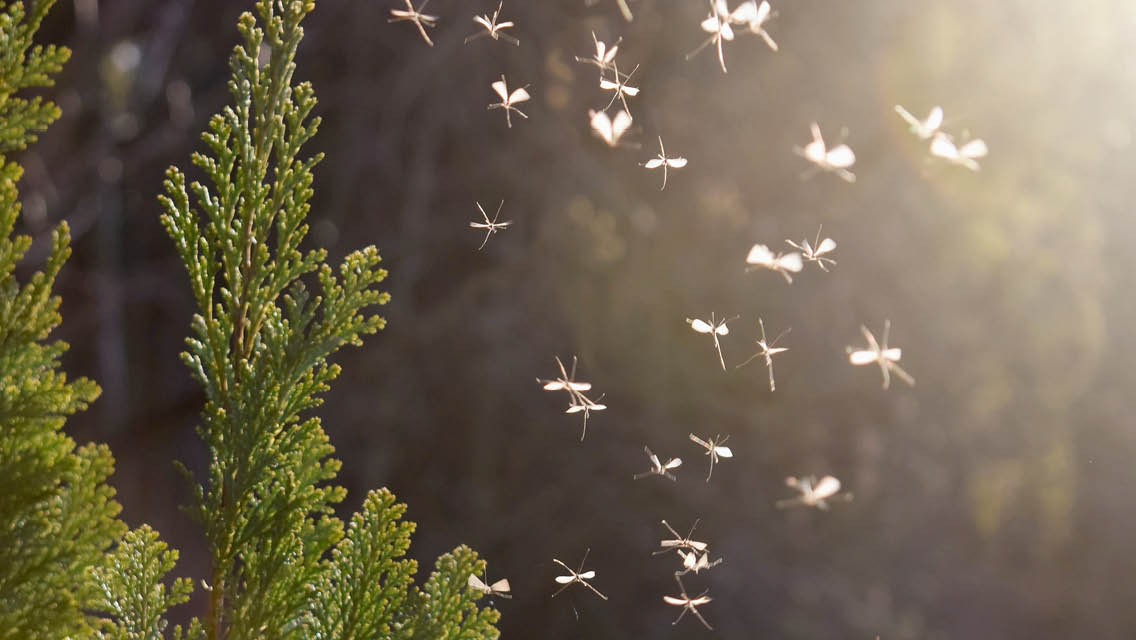
The most dangerous animals to humans are not sharks or tigers or crocodiles — or even pufferfish. They’re mosquitoes, which can transmit one or more of myriad deadly diseases with a single bite you may not even notice.
Each year, snakes — No. 2 on the deadly list — kill some 100,000 people. Pesky mosquitoes have caused, on average, an estimated 830,000 human deaths each year since 2010. In years past, they’ve killed 2 million or more annually.
“There are estimates that almost half of the 108 billion humans who have ever lived succumbed to a mosquito-borne disease,” explains historian Timothy Winegard, PhD, author of The Mosquito: A Human History of Our Deadliest Predator.
Pesky mosquitoes have caused, on average, an estimated 830,000 human deaths each year since 2010. In years past, they’ve killed 2 million or more annually.
In recent years, the climate crisis has begun pushing species of mosquitoes into new, wider territories, and the bugs are bringing what were once considered tropical diseases to North America and other parts of the world. (See “How Climate Change is Contributing to the Spread of Vector-Borne Illnesses — and How to Protect Yourself” for more.)
Malaria is the most notorious among these diseases, followed by viruses including West Nile, Zika, chikungunya, dengue, and yellow fever. Chikungunya, dengue, and yellow fever have vaccines.
While cases of malaria worldwide dropped to a historic low in 2015, they’re now rising again. The last U.S. domestic case of malaria had been in 2003; in 2023, malaria reappeared in Texas, Florida, and as far north as Maryland, according to the Centers for Disease Control and Prevention. Dengue — once confined to the tropics — is now being transmitted in the United States as well.
Insecticides have been hailed for halting the spread of mosquitoes, but in recent years we seem to be falling behind in the bug war, the New York Times reports.
“Mosquitoes adapt and evolve quickly, which is why our frontline weapons of extermination fail miserably,” Winegard explains.
“If not for all of the disease, death, and suffering that this creature bestows on humanity — and has since the dawn of human beings and our hominid ancestors and tons of other animals — we might actually marvel at the sophistication and evolutionary adaptation of this amazing creature,” he says.
This article originally appeared as “Tiny Bug, Big Threat” in the July/August 2024 issue of Experience Life.







Comments (0)