



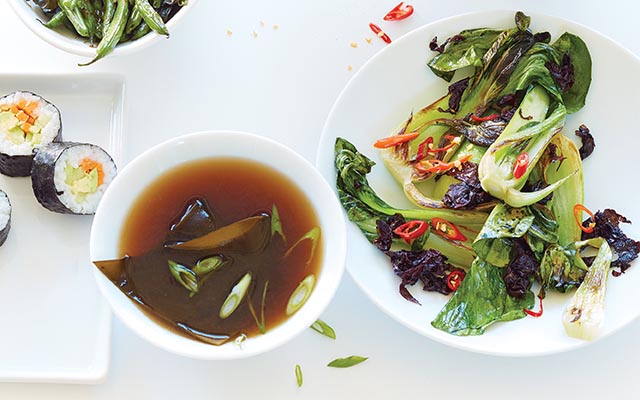
Seaweed plays a vital role in marine habitats, filtering the oceans by absorbing heavy metals, carbon dioxide, and even radiation. A variety called hijiki is particularly good at sopping up arsenic, and many food-safety agencies around the world advise against consuming more than small amounts of it.
So how can you know you’re getting all of seaweed’s myriad benefits without the risk?
“You want your seaweed to come from a really clean body of water,” says Jane Teas, PhD, of the University of South Carolina’s Cancer Center. To feel confident about the purity of your seaweed, read packaging and websites, or even call seaweed farmers and harvesters and ask where they source their product and whether they test for pollutants.
Harvester Cole Meeker says he keeps close track of the state of the water in which his seaweed grows; he even tests for radioactive isotopes. Teas recommends avoiding seaweed imported from China, since the government does not consistently enforce food-safety regulations.
This article originally appeared in “Eat Your Sea Vegetables.”


Comments (0)