




The overhead squat is a full-body move that recruits many muscles and joints, requiring mobility in the shoulders, hips, and ankles, and stability through the upper back, core, glutes, and adductors.
It is useful for assessing weakness, immobility, and muscular imbalance — and for improving overall mobility.
This squat also trains one of the most difficult aspects of the barbell snatch: the ability to “catch” the bar in an overhead squat position and stand up fully with the bar overhead.
The move shares some pitfalls with other squat variations, such as leaning too far forward or letting the knees cave in. A unique problem arises in balancing the barbell overhead: Splaying out the arms and allowing the weight to track behind the body, as a counterbalance, is common.
To make the most of this functional move, focus on form by beginning with light weight (a dowel rod, PVC pipe, or empty barbell) and progress from there.
- Stand with feet at shoulder width, toes pointed slightly out, and take a wide, shoulder-width-and-a-half grip on a barbell.
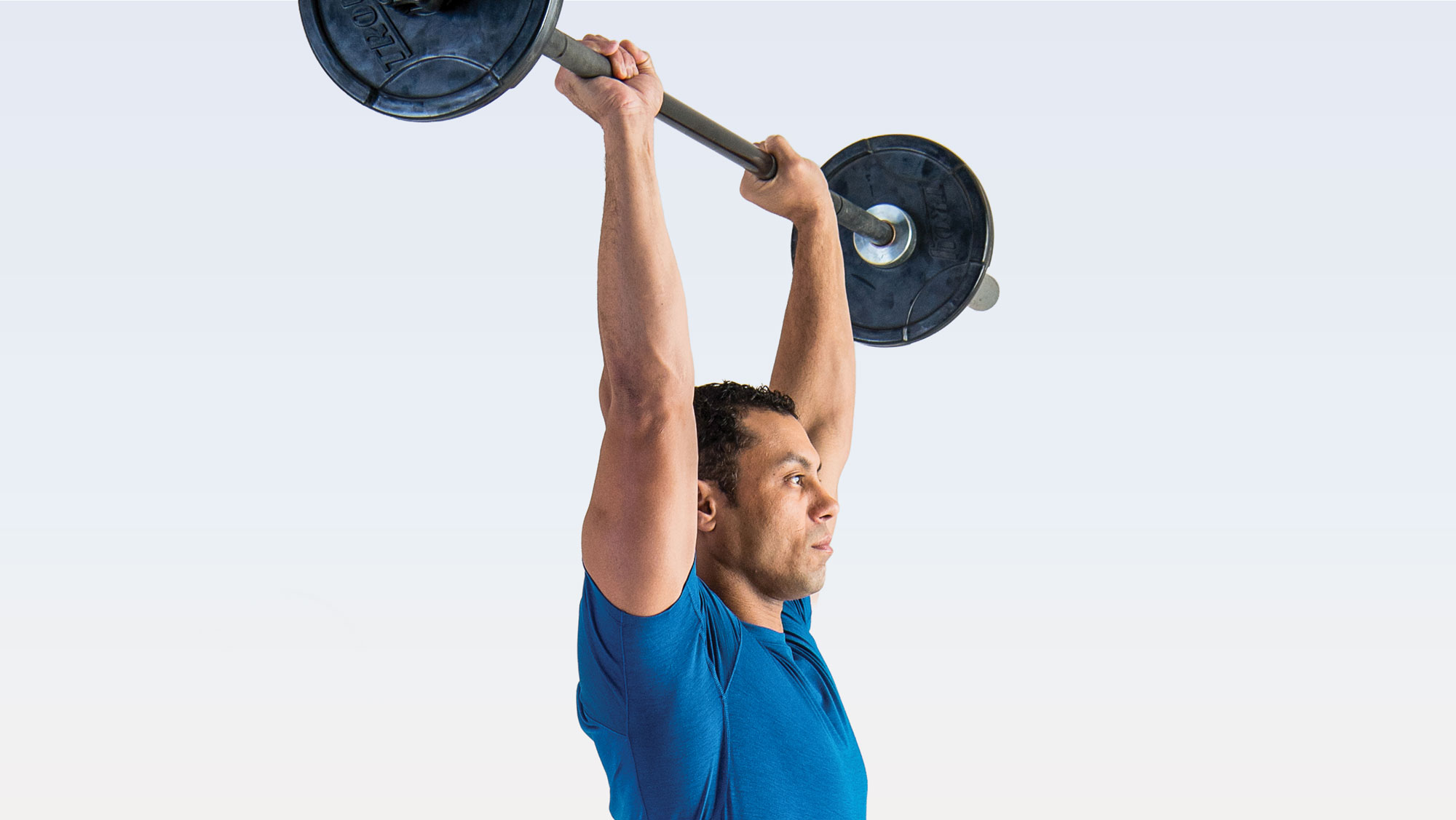
- Press or snatch the weight overhead with chest proud, arms locked out, and shoulders engaged. Brace your core; don’t arch your back.
- Squat down as far as you can. If your heels pop up or the bar shifts behind your body, don’t squat as deeply; decrease the weight as needed.
- Continue to engage your core, glutes, and shoulders as you return to standing.
Overhead Squat Variation
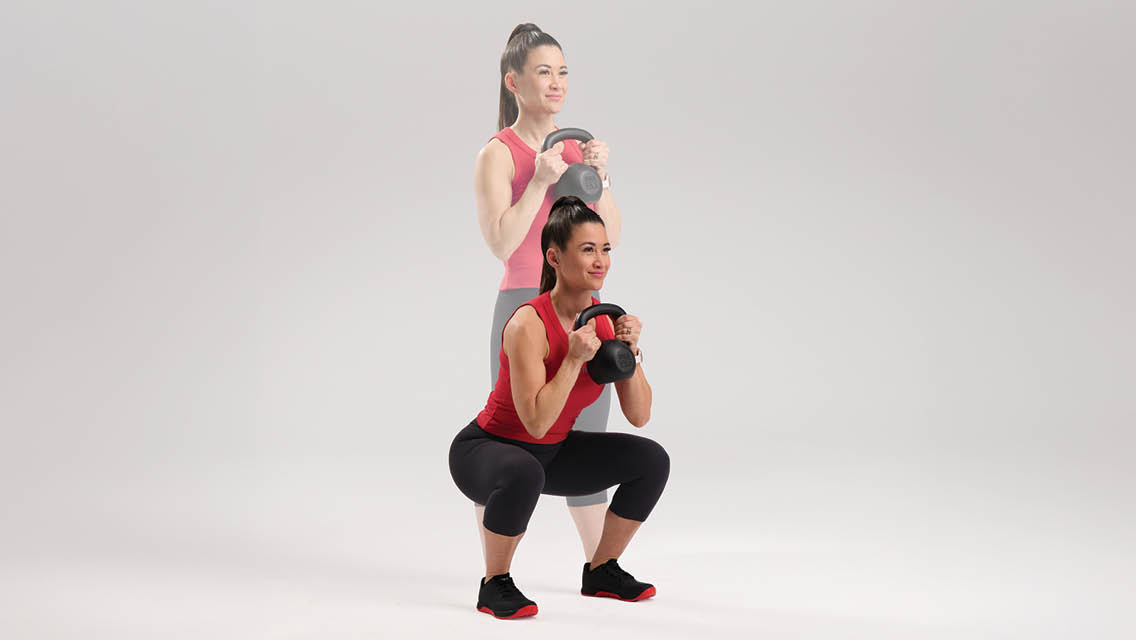
In addition to using a barbell or other tool that calls for the hands to stay in a fixed relative position, you can perform the overhead squat with hands unlinked. Try holding two dumbbells or kettlebells overhead as you squat. Or, drop down to only one free weight overhead for a single-arm overhead squat (shown above). Mixing up the variations can help groove great form and shore up imbalances in strength and mobility.
Assess Your Mobility
Good form is crucial to executing the overhead squat, and an inability to maintain it can indicate areas of improvement:
- If your chest drops, it may signal a weak core. (For core-strengthening moves, visit “How to Create a Strong Core.”)
- If you can’t keep your arms overhead and in line with your torso, it could mean limited shoulder mobility. (For shoulder savers, visit “A 5-Minute Workout to Protect Your Shoulders.”)
- If your heels lift, ankle mobility may be the culprit. (Learn how to tend to your ankles at “Fitness Fixes: Building Better Ankle Mobility.”)
- If your knees collapse, hip strength is a likely issue. (For dealing with a weak side-butt, visit “Fitness Fixes: Weak Side Butt.”)

Comments (0)