



Shop and Sprinkle
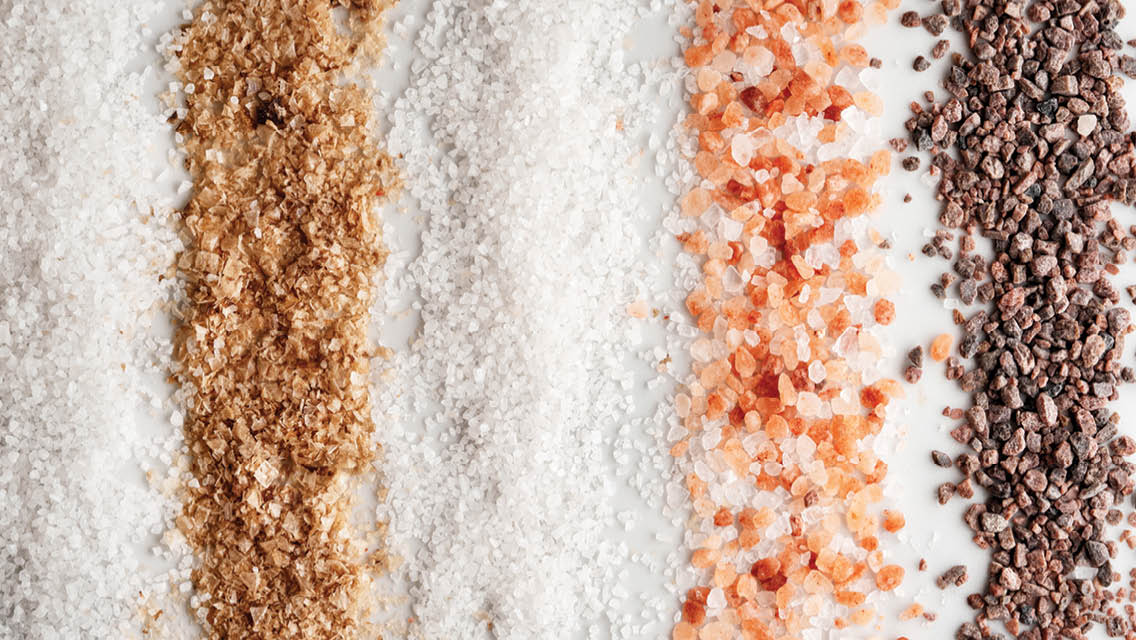
There are dozens of whole, unrefined salts to choose from, and nearly all of them can be healthy and flavorful additions to your spice rack. Sea salt (made from evaporated sea water) and kosher salt (named for its large grain size, which is useful for the Jewish koshering process) are both widely available and good for all-purpose use in cooking and baking.
Try a dash of black salt, Himalayan pink salt, or fleur de sel over a dish right before serving — they’re all coarse, crunchy, and visually appealing, making them ideal finishing salts.
Skip the Standard
Ordinary table salt may be the one variety to avoid in deference to your health. That’s because it is highly refined, stripped of its trace minerals, and often contains anticaking additives to keep it from clumping together.
Add a Pinch
Nearly everything you make in your kitchen will benefit from a dash of salt. Sometimes it’s to balance sweet or acidic ingredients (as with our Energy Bars at “How to Make Energy Bars“). Often, salt can enhance muted flavors in a dish (as with our Classic Roast Chicken). And it’s a vital ingredient in fermented recipes, such as sauerkraut (learn how to make your own).
Focus on Homemade
You may hesitate before adding salt to your meal because you’ve heard that high-sodium diets have been linked to high blood pressure and heart disease. It’s true that Americans consume too much sodium — an average of 3,400 milligrams per day, more than double the 1,500 milligrams or less recommended by the American Heart Association. But our high salt intake isn’t due to home cooking: Some 70 percent comes from processed foods or restaurant meals.
This article originally appeared as “Salt” in the May 2021 issue of Experience Life.




Comments (0)