



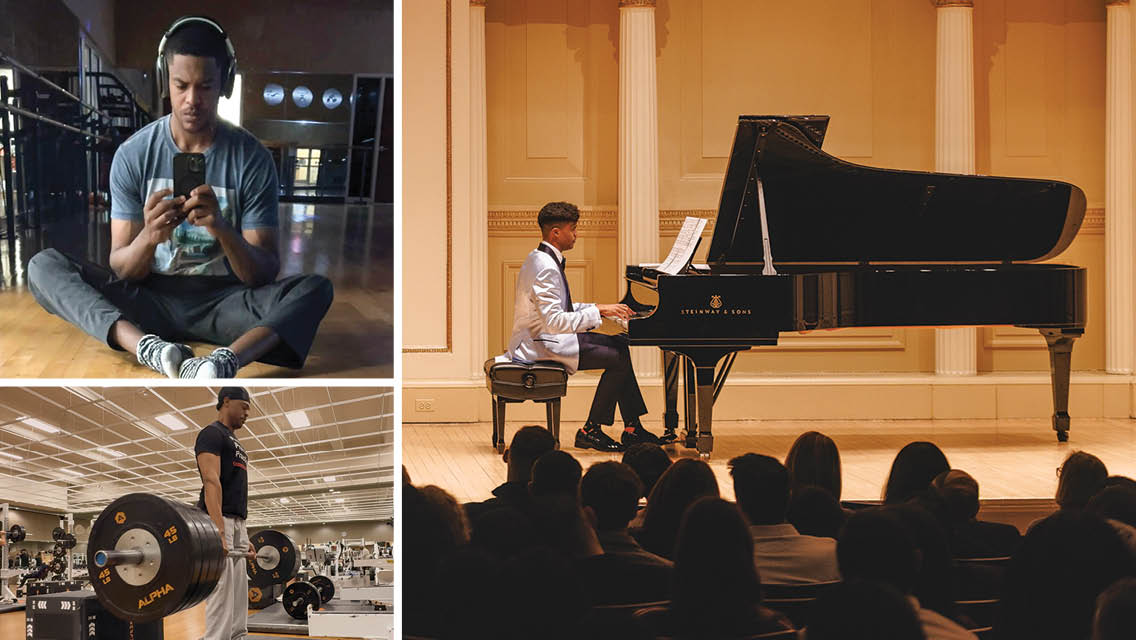
In the midst of performing a classical piano concert in 2022 — one that was bombastic and required a great deal of showmanship — I physically struggled to keep up with the music. I was gasping for breath. Sweat poured off my face, and not in a glamorous way. When I took my bows, I felt like I was receiving a pity applause.
“Hey, man, you gotta slow down,” a friend told me afterward. It was a kind way to tell me that my delivery was underwhelming.
For a concert pianist, elite performance requires extreme stamina and total physical control, neither of which I possessed. I was only 27, and I was faced with a choice: retire, or do a hard reset on my life.
A Musical History
I had a mostly typical childhood on Long Island, going to the park with my friends and playing intramural sports. But music was a constant. There are photographs of me at the piano as a 3-year-old. My father was my first teacher, but I began studying with another instructor when I was 7.
At 15, I was invited to study at a conservatory in Toronto. I chose to stay home, though, when my mom was diagnosed with breast cancer. I graduated from high school in 2013 and enrolled at Stony Brook University, double majoring in biology and music performance.
That year, at the age of 18, I performed at Carnegie Hall. Then, just as the trajectory of my career was rising, my mom passed away.
I began to wonder about my purpose. I knew musical performance was a risky career — and that if I wanted to pursue it, I had to go all in.
I also knew piano was my calling. So in 2018, I committed to studying full-time under a retired grandmaster pianist. It meant practicing 12 to 15 hours a day, until every note was part of me and I could make a one-hour program seem effortless.
Six months later, I had a manager who negotiated a contract for me with an event-promotions company. I spent the next year creating a performance and planning a concert tour scheduled to kick off in 2020.
Dreams Deflated
When the COVID-19 pandemic hit and everything shut down, live performances were canceled. Despite the uncertainty — or perhaps because of it — I’d wake up at 5 a.m. and practice all day. I poured all my energy into the music. I’d maybe get four to five hours of sleep, or I’d pull an all nighter. Meanwhile, I was on a first-name basis with the delivery drivers bringing me food from Taco Bell and McDonald’s.
Then, in December 2021, my grandmaster and my manager both died from COVID, leaving me distraught and alone. I was juggling loss, fear, and a lack of self-worth, and my weight ballooned from 180 to 250 pounds.
In early 2022, I focused on preparing for my first postpandemic concert, which was set for May in my hometown. When only 75 people showed up to the 800-seat venue, I was distressed.
My new manager offered plenty of promises: Carnegie Hall, a Grammy nomination, connections. “Buckle up,” he said. “I have big plans for you!” Yet when it came time to meet, he always canceled.
One time, in early 2023, he said, “I don’t know what time I’m going to be free today, so be ready.” I left my house and parked at a Porsche dealership — nose to nose with my dream car — in an attempt to manifest my success. When he called, I would be able to quickly hop on the expressway to meet him.
An hour went by. Then two. Finally, I got a text: “Sorry, I can’t make it today.”
He repeated this pattern all year. I felt my performance career slipping away.
It didn’t help that I couldn’t play to my standards. I specialize in Romantic-era classical music, primarily the dramatic and virtuosic works of Franz Liszt. (Many people know Liszt’s music thanks to vintage Tom and Jerry and Bugs Bunny cartoons.) Performing his work requires a level of physicality and stamina I could no longer reach.
Turning the Page
By January 2023, my weight had increased to 275 pounds. My knees hurt when going down stairs, and my mood was low. I needed to increase my physical capability and confidence.
So, at the end of the month, I joined a nearby Life Time club. Although I didn’t know anything about exercising, I do know how the brain works — and how to practice.
I started by riding a stationary bike for 40 minutes at a casual pace, three or four days a week. A month later, I began walking on the treadmill and using the stair stepper, beginning with three minutes and adding a minute every day. After eight months of measured, methodical workouts, I lost 75 pounds. This improved my mobility and motivated me to keep going.
Next, I incorporated body-weight exercises. A dead hang for 30 seconds led to one pull-up. I was intentional, as I am with practicing music, and I progressed slowly; this helped prevent injury. I hired a trainer who specializes in calisthenics and body-weight control. I wanted to learn proper technique and improve my coordination.
I applied the same intentionality to my diet. I knew I couldn’t eat crap and expect to offset the result with a workout. I cut out junk food and focused on protein.
I committed to recovery too. The sauna became a daily ritual. Interestingly, the Finnish tradition is also where I found community. I connected with Jefry, who invited me to join his gardening club; with Lee, who teaches music to autistic children; and with Grant, a fellow I admired for watching all of Gladiator while on the stair stepper.
Gardening became a huge part of my mental health routine. It started with trimming my own plants. Then Jefry and his partner, Liz, gave me tomato plants. That ignited my interest in growing and harvesting my own food (or at least trying to).
Putting my body first helped everything get better. My mood improved. I was more creative. The workouts gave me time to reflect. I no longer needed midday naps, and I could perform full piano programs at concert pace without feeling gassed. I started to sleep a full eight hours. I was ready to play to my potential.
Dreams Actualized
In early 2024, I was preparing for a May concert, working out twice a day in addition to maintaining my full practice schedule. My routine included traditional weightlifting, calisthenics, cardio, and core work. I felt genuinely athletic: I could deadlift 405 pounds, do controlled pull-ups and muscle-ups, and complete my cardio sessions without having to breathe through my mouth.
As my hard reset renewed my physical capacity, I arranged a new concert program. In my previous program, I’d played only one or two showstoppers. Now I delivered one showstopper after another.
I performed the program at Carnegie Hall two days before Christmas in 2025. And thanks to my Life Time community, the seats were filled with new friends.
The experience was the validation I needed. I was born for this. But I also practiced for it and built a body that can pull it off onstage — and now I can do what I was meant to be doing.
Ludovic’s Top 3 Takeaways
1. It’s never too late to do a hard reset. “You’re never beyond healing,” Ludovic says. “Believe that your health is worth prioritizing.”
2. Build resilience with patience. “Once you take that first step, keep going with another and then another — but only when you’re ready,” he advises.
3. “Save those 90 to 100 percent efforts for the big moments … like a solo performance at Carnegie Hall.”
My Turnaround
For more real-life success stories of people who have embraced healthy behaviors and changed their lives, visit our My Turnaround department.
Tell Us Your Story!
Have a transformational healthy-living tale of your own? Share it with us!
This article originally appeared as “All the Right Notes.”


Comments (0)