



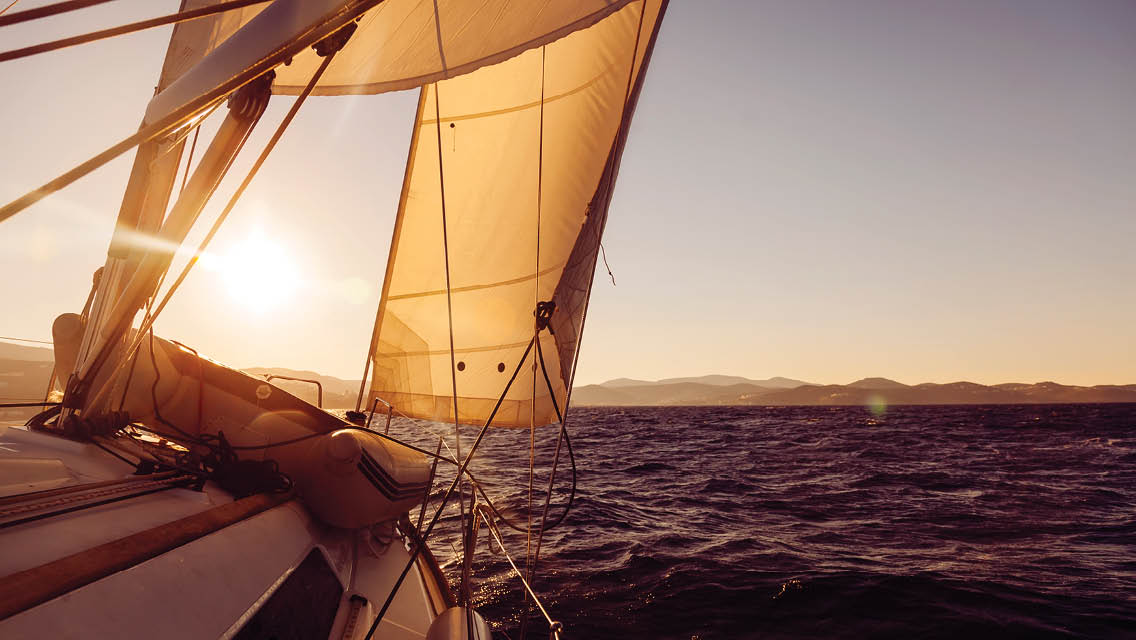
For as long as humans have been sailing, people have been buried at sea. Today, this ancient practice is legal and available in the United States. While it is most often associated with naval branches of the military, anyone can be “buried” in federally approved waters if they follow the guidelines set out by the EPA under the Marine Protection, Research and Sanctuaries Act (MPRSA) general permit.
Water burials of noncremated remains must take place at least three nautical miles from shore, in water that is at least 600 feet deep. The body is either placed in a weighted metal casket or shrouded in natural, biodegradable fabric weighted with stones, and then released from a boat to sink to the ocean floor. Cremated remains can be scattered with or without a biodegradable vessel in waters of any depth, as long as they’re taken three nautical miles from shore.
The MPRSA does not permit burial in rivers, lakes, or bays; if you want to legally scatter ashes in any of these bodies of water, check with your local officials. Additionally, the act does not permit floating pyres, so do not set a boat or other craft carrying a body on fire.
Burial at sea is considered an eco-friendly option if you don’t have to travel far to reach federally approved waters and you forgo embalming. It can also cost less than a conventional burial, especially if you have access to your own boat.
A Greener Disposition
Discover greener burial and cremation options that honor your values — and your final environmental impact — at “Your Guide to Eco-Friendly Burial and Cremation Options,” from which this article was excerpted.










Comments (0)