

I can’t say for certain where I first heard about the Life Time Leadville Trail 100 Run. As a high school and college runner, I had a faint idea that there was a subculture of runners who’d go for long, unbelievable-at-the-time distances. For someone who was training for the 5K on trails and the 800 meters on the track by running about 30 miles per week, I couldn’t fathom 100 miles in a week — let alone over the course of 24 hours. I’m sure I flipped my hand at the notion, claimed it was “crazy,” and moved on.
The year 2020 changed my thoughts on it all, though. I was cooped up during lockdown, watching more Netflix than anyone could ever need. I was antsy and looking for a dream to dream. I fell into YouTube rabbit holes and went for long walks listening to podcasts, new music, and audiobooks.
And in that throb of seeking — and with too much time on my hands — I discovered the ultrarunning universe.
Sally McRae. Harvey Lewis. Ann Trason. Courtney Dauwalter. Hellah Sidibe. Rich Roll. Dylan Bowman. Kílian Jornet. Jim Walmsley. Camille Herron. Devon Yanko. Andy Glaze. Tommy Rivers Puzey. I was unearthing name after name, extraordinary human after extraordinary human. And so many women among them, gritty and determined. I was smitten.
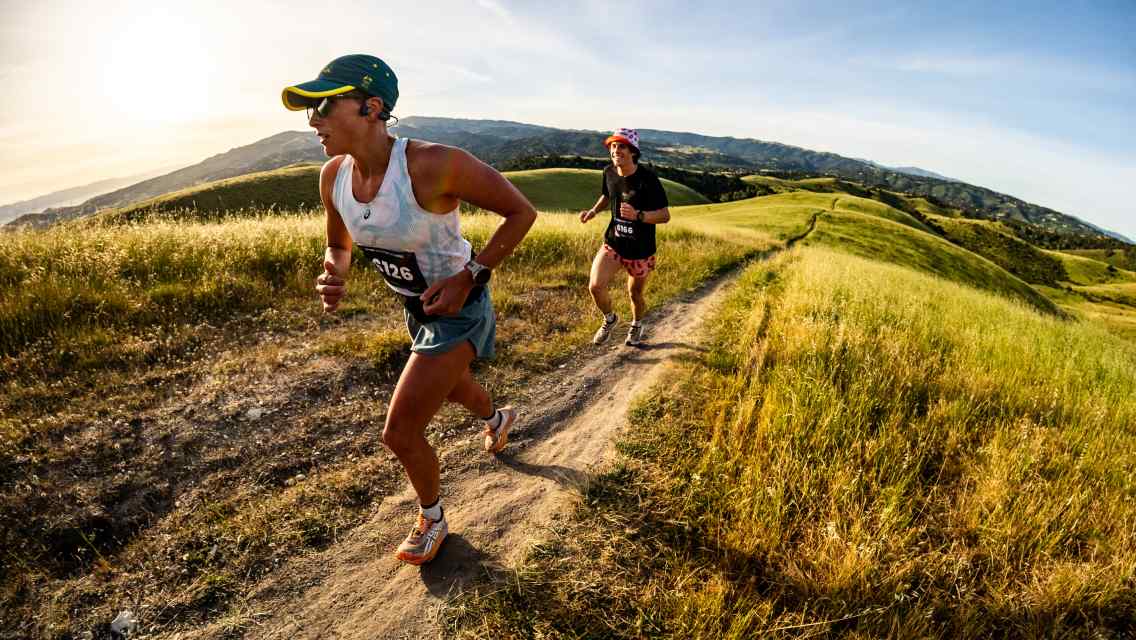
I made a conscious decision: I was going to become an ultrarunner. I started running again — but differently. Not to prove anything, not to punish or perfect, just to feel. Without races or pace goals, running slowly began to feel like a quiet return to myself. And I wanted to see how far I could go.
Shedding the Past
Running has a way of opening doors for me. As a teen and young adult, I developed a combined sense of belonging and autonomy on my high school and college cross-country and track teams. It was a place I could feel important, special — outside the walls of my home. In my 20s, I trained for marathons in places like New York City, Austin, and Chicago. Running was an essential part of me.
But it was also a protective armor.
Back then, my favorite kind of run was the kind that kept me alone, on fire, and plugged in to my headphones as I welcomed the grind. My Strava and other social media pages were a shallow refuge of connection. Little likes from fellow runners were temporary balms — my brain mistaking the dopamine surge for community — but my body was not safely communing. My body did not quite feel like mine.
The thing we love can become tangled and misshapen, misused and abused, because we actually need something greater — a deeper form of healing. I didn’t need running to love me. It couldn’t, because I needed something more — something vast and deep and rich and visceral. I didn’t have the words for it at the time, but I felt it. There was a rock in the deepest part of my belly after every run that I got good at ignoring.
But that rock was a message. My solar plexus, that ganglia of nerves in the pit of my stomach, was alerting my nervous system to “Please, pay attention.”
That message became part of how I felt on the daily, became my normal. And so it became easy to ignore. It became easy to run: run hard, run fast, run without rest, run myself into the ground.
Years earlier, in the fifth grade, we were given an assignment to draw our biggest dream for our Big Person Self. I had just watched an older sister finish the Boston Marathon. I also trekked out a few times for run-walks with my dad, and I loved playing games like Red Light, Green Light, Red Rover, and Capture the Flag. I loved being in motion. So, I drew myself at the finish line of the Boston Marathon, arms in air, victorious.
More than a decade later, I qualified for Boston with my finishing time at the New York City Marathon, and then again after Chicago. I was as fast as ever, and fit. Every day during the Minnesota winter, I slammed out workouts on the treadmill. But I was slamming workouts with a traumatized body and neglecting to balance that work with true, good rest.
By the time I toed the line for Boston, I was exhausted. The training burned me out, and I was fatigued by the disconnect I felt from the body I had built over the months. Acne spread across my face. Insomnia bloomed. My arms and legs flared with red splotches of tinea, a skin fungus worsened by stress. When I was intimate with a partner, all I felt was a hollow sadness. Food barely interested me, and I shut myself off from friendships, easily ignoring texts and calls. I ran a tough race clocking a personal-best time by a minute, but truthfully, I didn’t enjoy almost every step of that marathon.
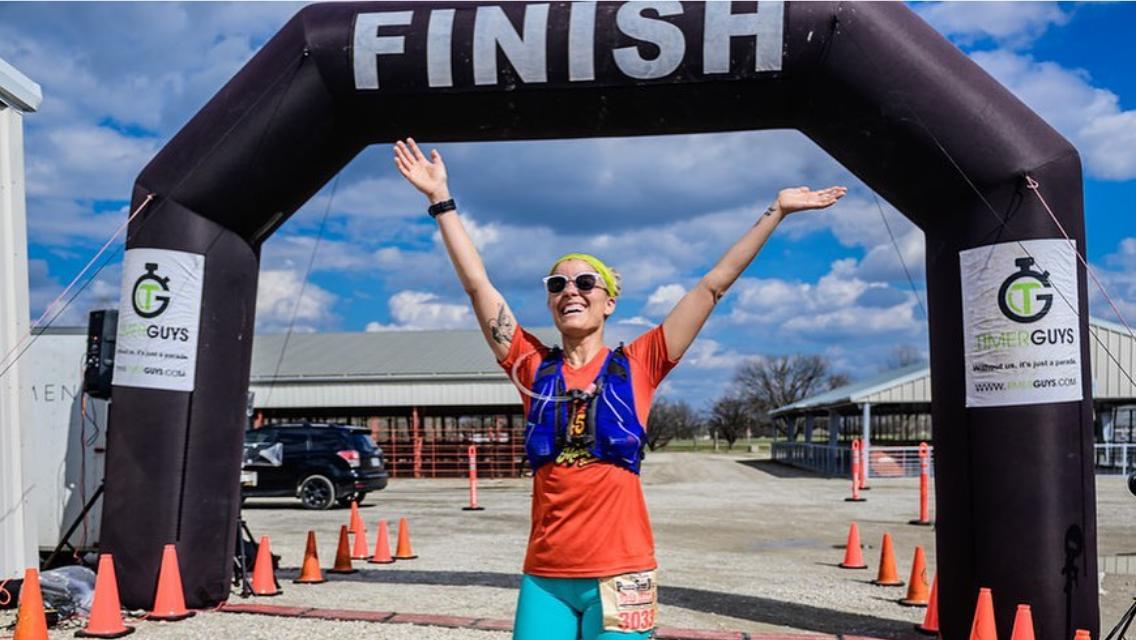
However, as I crossed the finish line, I managed to tap my heart for the little-kid dreamer inside of me and whispered, “We did it.” Even in the midst of deep exhaustion, I found an ounce of love toward myself.
Finding Leadville
When the ultrarunning community began knocking at my door during lockdown, I was in a much different headspace with my running. I was ready to shape-shift from my once-intense approach into a more fluid, supportive one. I was hopeful for a remedy for my soul that somehow included running in a way that could work for me instead of against me.
When the mind is primed with curiosity, it’s a lot easier to recognize an open door for what it is.
So, when I joined a virtual meeting in 2021 and heard a Life Time Foundation talk about the Leadville 100 and the athletes who raised money as they trained for it, I was ready. This was my way in. A nudge from the universe. A door to walk through. In my most recent history, I had survived a bad relationship and the whole of 2020; I’d broken patterns of choosing the wrong men; I had reclaimed my relationship with running as a more balanced one. Yes, I had overcome a lot — but I had surpassed, healed, embodied the fullness of strength I knew I possessed. I returned home to myself just in time to recognize the opportunity of Leadville and follow the trail she laid out for me.
I immediately sent the speaker from the foundation an email, and within a few days we had a call set up to get me started as a foundation athlete.
A plan developed. I would volunteer at the 2022 Leadville 100 with the Life Time Foundation and set my sights on running the race the following year.
I could feel it right then and there: Leadville was different. It wasn’t just an ultra — it was a high-altitude proving ground. A town with a mythos, a race with real grit. Something about it felt sacred, like it demanded something primal and powerful from every runner who showed up. I didn’t just want to run far — I wanted to run up and into something that had the possible formula to change me.
I found Leadville. Or, more appropriately — Leadville found me.
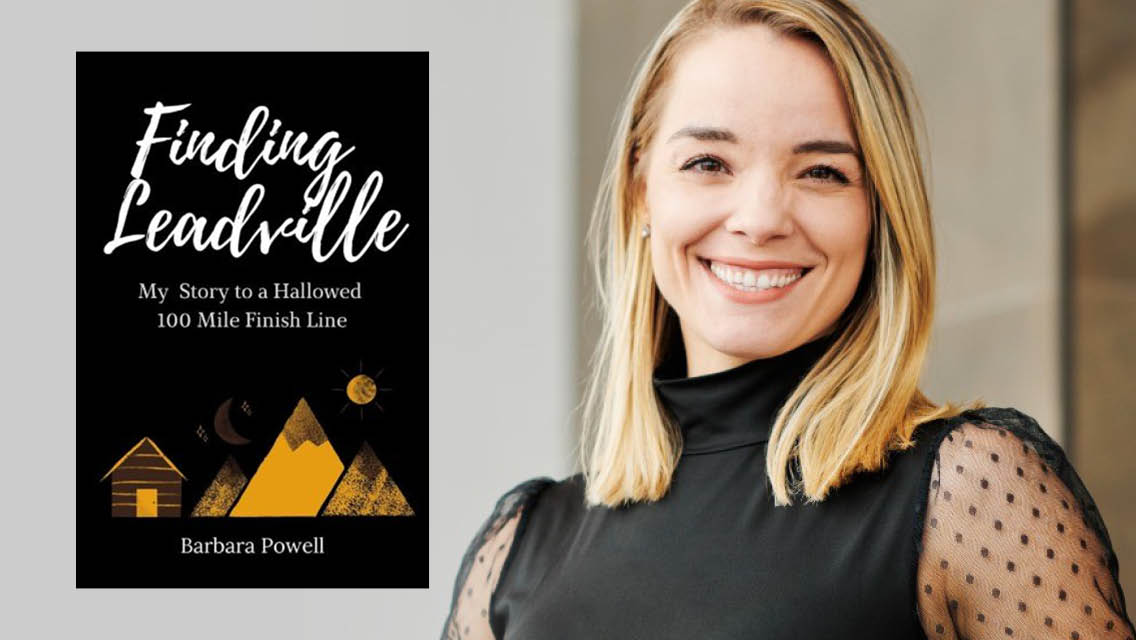
Learn about the rest of Barbara Powell’s journey in her book, Finding Leadville: My Story to a Hallowed 100 Mile Finish Line, from which this excerpt is adapted. Copyright © 2025 by Barbara Powell.
Comments (0)