



Though it may be in vogue now, tinned fish has been popular for ages. In the early 19th century, Englishman Peter Durand revolutionized food preservation when he patented a method for packing fish in a tin-coated can, which was then heated and sterilized.
It changed the way the world eats, making it possible for seafood that would otherwise rapidly spoil to be stored for a long time and travel great distances. During the two world wars, tinned fish provided vital sustenance for troops in Europe; as a result, it became a specialty in places like Portugal and Spain.
Over time, we’ve come to view tinned fish as we do other canned foods: as a humble, often overlooked pantry staple. But perhaps its current moment in the spotlight is long overdue. After all, canned seafood is a fairly low-cost and convenient way to add a huge boost of protein and flavor to your plate. Most tinned fish also offer omega-3 fatty acids and vitamins D and B12.
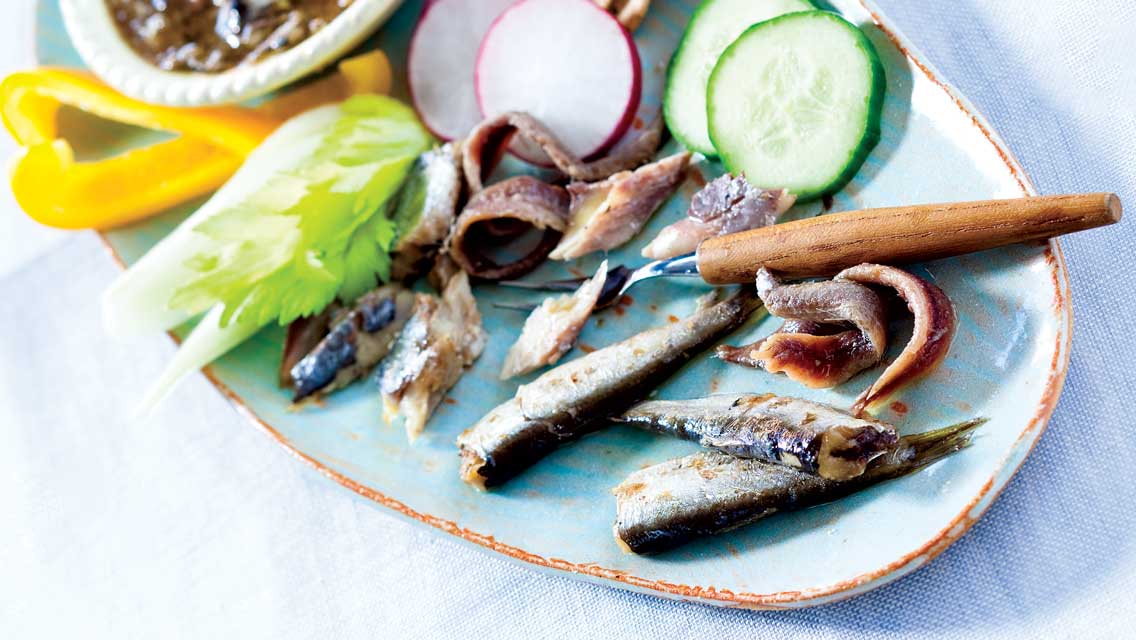
Plus, it’s good for you and the planet, in part because products with a long shelf life can help reduce food waste. Opt for smaller, wild-caught fish, like sardines, anchovies, and herring, or for mollusks, like clams and oysters. They’re lower on the food chain, so they tend to contain less mercury than larger predatory species, like swordfish or tuna.
Because small fish have faster reproductive cycles, they’re also more resilient to overfishing. When choosing a tin, look for labels that say “pole and line caught” or a certification from the Marine Stewardship Council to ensure you’re supporting a sustainable fishery.
Ultimately, tinned fish’s popularity may boil down to one simple factor: It’s a relatively affordable luxury. These recipes can help you elevate a simple can into something special.
Anchovy Butter Crispy Rice

Makes 2 servings • Prep time 10 minutes • Cook time 25 minutes
- 5 anchovy fillets packed in olive oil
- 6 tbs. butter, softened
- 2 green onions, sliced, white and green parts separated
- 1 large egg
- ½ tsp. extra-virgin olive oil
- 1 clove garlic, minced
- ½ tsp. fresh ginger, minced
- ½ yellow onion, diced
- 2 cups cooked white rice
- 1½ cups thinly sliced savoy cabbage
- ¼ tsp. sea salt
- ¼ cup fresh basil leaves, roughly chopped
- Mix the anchovy fillets, softened butter, and white parts of the green onions in a bowl.
- In a separate bowl, lightly beat the egg.
- Heat a cast-iron skillet or other heavy-bottomed pan over medium heat. Add the olive oil, then pour in the egg. Scramble until the egg is just cooked through, about two minutes. Remove the egg from the pan and set aside.
- Add the butter-and-anchovy mixture to the pan to melt.
- Add the garlic, ginger, and onion, and stir until fragrant, about one minute.
- Add the rice, cabbage, and salt, and stir to coat with the anchovy butter.
- Turn the heat down to medium-low and use the back of a spoon to press the rice down into the pan. Let cook undisturbed until the bottom and edges are beginning to brown and crisp, about 10 minutes.
- Scrape the crispy bits from the pan and incorporate them into the rice, then continue cooking until all the rice is crispy, another five to 10 minutes.
- Turn off the heat and gently fold in the egg, green parts of the onions, and basil, and serve warm.
Smoked Oyster Skillet Pizza

Makes 2 servings • Prep time 1 hour 30 minutes • Cook time 35 minutes
Pizza Dough
- 1½ cups all-purpose gluten-free baking flour
- 2 tsp. xanthan gum
- 1 tsp. baking powder
- ¾ tsp. sea salt
- 1 tbs. honey
- 1 cup warm water
- 1 tbs. active dry yeast
- 1 tbs. milk
- 2½ tbs. extra-virgin olive oil, divided
Pizza Sauce
- 1 14-oz. can crushed tomatoes
- 1 garlic clove, grated
- 1 tbs. olive oil
- ½ tsp. salt
- ¼ tsp. dried oregano
Toppings
- 8 oz. fresh mozzarella, sliced
- 2 tbs. crumbled feta
- 1 tbs. thinly sliced red onion
- 1 3-oz. tin smoked oysters, drained and chopped
- 1½ tbs. grated Romano cheese
- ¼ tsp. sea salt, plus more to taste
- ⅛ tsp. freshly ground black pepper, plus more to taste
- ½ cup loosely packed fresh arugula
Make the dough (alternatively, use your favorite store-bought pizza dough):
- In a large bowl, mix the flour, xanthan gum, baking powder, and salt.
- In a separate bowl, stir the honey into the warm water until it dissolves. Add the yeast and stir. Allow the mixture to sit until it’s foamy, about 10 minutes.
- Pour the yeast mixture into the dry ingredients, then add the milk and 1 tablespoon of the oil.
- Mix well to make a thick, sticky dough. Cover and rest for at least one hour, until the dough looks puffy and has roughly doubled in size.
- While the dough rests, make the sauce: Combine all the sauce ingredients in a large bowl and stir together. For a smoother texture, use an immersion blender.
Make the pizza:
- Preheat the oven to 425 degrees F.
- Use the remaining olive oil to coat a cast-iron skillet. Turn the dough out into the skillet, then use wet fingers to gently press the dough to the edges of the skillet. Let rest for another 15 minutes.
- Bake the dough for eight to 10 minutes, until the crust is firm, then remove the skillet from the oven and turn the oven down to 375 degrees F.
- Spread ¼ cup of the pizza sauce over the crust, then spread the mozzarella, feta, onion, and oysters evenly across the pizza. Sprinkle with the Romano cheese, salt, and pepper.
- Bake the pizza until the cheese begins to bubble and brown, approximately 25 minutes.
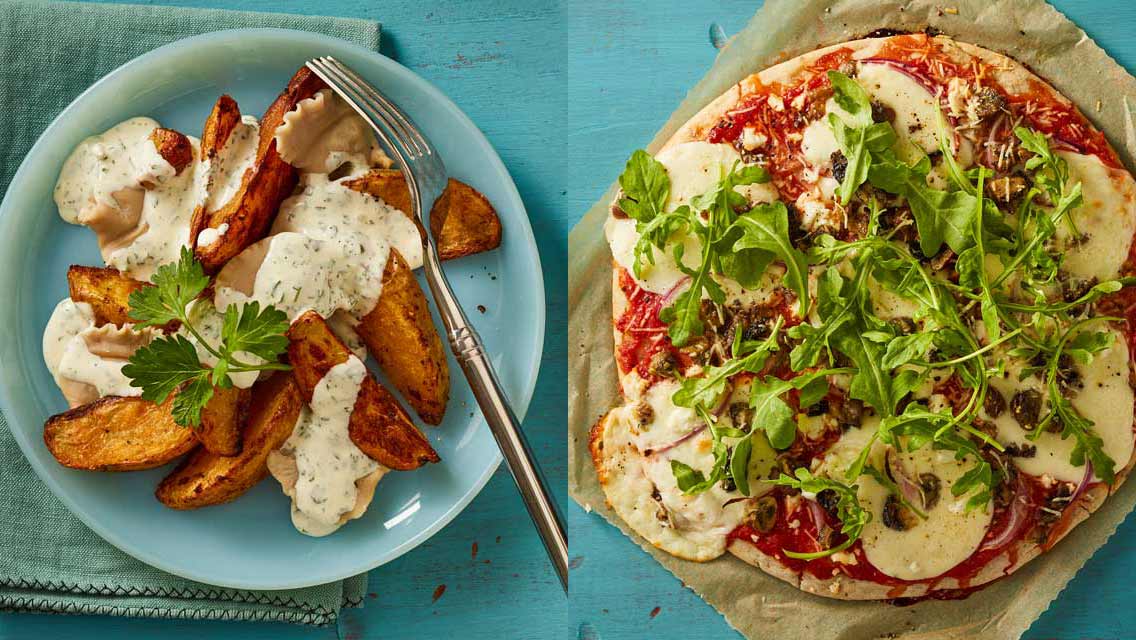
- Allow the pizza to cool slightly, then top with fresh arugula. Slice and serve.
Clams and Oven-Baked Patatas Bravas

Makes 2 servings • Prep time 15 minutes • Cook time 1 hour
Clams and potatoes
- 3 medium gold potatoes (about 2 lb.), cut into ½-inch wedges
- 3 cloves garlic, peeled
- 1½ tbs. extra-virgin olive oil
- ½ tsp. dried oregano
- ½ tsp. smoked paprika
- ¼ tsp. sea salt
- ¼ tsp. freshly ground black pepper
- ⅛ tsp. chili powder, plus more to taste
- 1 7-oz. tin whole clams packed in brine
Aioli
- 2 cloves garlic, grated
- 2 tbs. fresh lemon juice (about half a lemon)
- ¼ cup mayonnaise
- ⅓ cup Italian parsley, minced
Make the potatoes:
- Preheat the oven to 400 degrees F.
- In a medium bowl, toss the potatoes and garlic cloves with the olive oil, oregano, paprika, salt, pepper, and chili powder until well-coated.
- Pour the mixture onto a sheet pan and roast until the potatoes are brown and crispy, 45 to 50 minutes, tossing halfway through.
While the potatoes cook, make the aioli:
- Mix the garlic and lemon juice, and allow the mixture to infuse for about 15 minutes before whisking in the mayo and parsley.
To finish:
- Allow the potatoes to cool slightly while you heat the clams. Add the clams (along with the brine from the can) to a pan over medium heat, and sauté until the clams are just heated through, about three minutes.
- To serve, mix the clams with the potatoes and top with the aioli.
Greens, Beans, and Sardines Salad

Makes 4 servings • Prep time 20 minutes • Cook time 45 minutes
Salad
- 1½ cups water
- ½ tsp. sea salt, divided
- ¾ cup quinoa, rinsed
- 3 tbs. extra-virgin olive oil
- 1 tsp. ground sumac
- 2 cups loosely packed fresh baby spinach
- 1 cup loosely packed sweet pea or other microgreens
- 1 can butter beans, drained and rinsed
- 1 cucumber, seeded and diced
- 3 sunchokes, peeled and diced (or ½ cup diced jicama)
- ½ cup grape tomatoes, quartered
- ¼ cup red onion, thinly sliced
- 1 4-oz. tin sardines packed in olive oil, flaked
Dressing
- 1 tsp. Dijon mustard
- 1 garlic clove, grated
- 2 tbs. red wine vinegar
- 2 tbs. fresh lemon juice (about half a lemon)
- ⅓ cup extra-virgin olive oil
- 1 tsp. dried oregano
- Sea salt, to taste
- Freshly ground black pepper, to taste
- In a saucepan, bring the water and ¼ teaspoon of the salt to a boil, then add the rinsed quinoa and cover.
- Turn the heat to low and simmer for 15 to 20 minutes, or until the quinoa is tender. Remove from the heat and allow to rest for 10 minutes.
- Place a medium skillet over a medium flame and heat the olive oil, then add the cooked quinoa. Cook, stirring frequently, until the quinoa browns and crisps, about 10 to 12 minutes. It’s ready when it begins to pop. Remove from the heat, stir in the sumac and remaining ¼ teaspoon of salt, and set aside to cool for a few minutes.
- While the quinoa cools, make the dressing: Add all the dressing ingredients to a jar and shake well to combine.
- In a large bowl, mix the crispy quinoa with the spinach, microgreens, beans, cucumber, sunchokes or jicama, tomatoes, and onion.
- Fold the flaked sardines into the salad. Dress the salad and serve.
Breakfast Kipper Cake With Steam-Poached Eggs
Makes 4 servings • Prep time 10 minutes • Cook time 20 minutes
Cakes
- 2 medium gold potatoes
- ½ medium yellow onion, diced
- 1 7-oz. tin smoked wild kippers, flaked
- ¼ tsp. sea salt
- ¼ tsp. freshly ground black pepper
- 3 tbs. ghee, divided
- ½ cup arugula
- 4 eggs
Yogurt Sauce
- ½ cup plain, full-fat Greek yogurt
- 1½ tsp. fresh lemon juice
- 1 tsp. chopped fresh dill
- 1 tsp. capers, roughly chopped
- Shred the potatoes using a grater or food processor, then wrap the grated potatoes in a tea towel (you should have about 2 cups). Over the sink, squeeze tightly to wring as much water as possible from the potatoes.
- In a bowl, mix the grated potatoes with the onion, kippers, salt, pepper, and 1½ tablespoons of the ghee.
- Heat a skillet or heavy-bottomed pan over medium heat, and coat with the remaining ghee.
- Add the potato mixture and spread into an even, flat layer.
- Allow to cook without stirring until the potatoes are browning on the bottom, about seven to 10 minutes.
- While the potatoes cook, make the sauce: Mix the yogurt, lemon juice, dill, and capers in a small bowl until combined. Thin with water, half a teaspoon at a time, until the sauce is thin enough to drizzle.
- Flip the potatoes over (it’s OK if they break apart) and press back into a single layer.
- Adjust the heat to low and spread the arugula over the potatoes. Carefully crack four eggs over the top, taking care not to break the yolks.
- Cover the pan with a tight-fitting lid and cook, covered, for another five to seven minutes, or until the egg whites are cooked through and the yolks are set to your satisfaction.
- Slice and serve topped with the yogurt sauce.

Comments (0)