




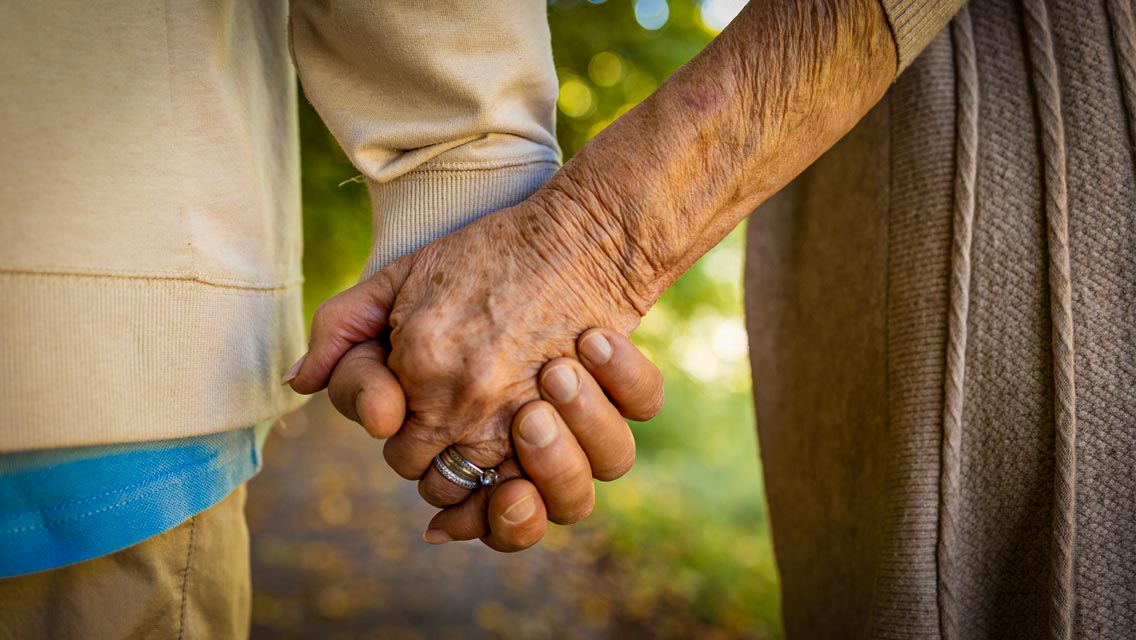
My Lovely Wife and I celebrated our 46th wedding anniversary last week over dinner at a local bistro. It’s not a particularly noteworthy milestone on our marital journey, but I mention it because, for some reason, it reminded me that our wedding anniversary does not align with the date of our marriage.
Among the bohemians, anarchists, feminists, and gays who comprised the bulk of our social set in the late ’70s, marriage was seen as slightly counterrevolutionary — or at least a bit gauche. Our years of cohabitation were seen as the normal confluence of commitment and freedom; codifying the relationship in the eyes of the state was not widely encouraged.
Still, there were other influences. MLW’s father, for instance, steadfastly refused to enter our sinful lodgings and regularly inquired as to our marital intentions. At one point, MLW became so weary of his entreats that she replied, “We’ll get married one year after the last time you ask me about it.”
He never raised the question again, and about a year later we gathered on a sunny Saturday morning with a couple dozen well-wishers to do the deed. A piano-playing friend of ours entertained the sparse crowd with some jazz riffs of his own creation, my “best woman” arrived 30 minutes late (“You weren’t really going to get started at 8 a.m., were you?” she asked upon her arrival), and the ceremony proceeded in a way that seemed marginally appropriate.
Afterward, when the preacher asked us to produce the marriage license, he was greeted with a couple of blank stares. We hemmed and hawed for a minute, muttering something about the $15 fee, while he gradually realized that we had completely overlooked it. “I respect the separation of church and state,” he said finally.
Months passed, during which I learned of the reward that awaited me from the federal government if I returned to college for a final quarter to finish my degree. As a married military veteran, the monthly GI bill check I’d receive during those three months would far surpass my former pay as a “single” student — and, more importantly, it would easily cover our rent. So we invited the pastor and a two-woman wedding party to our apartment on Oct. 6 to officially celebrate our nuptials by finally signing the license.
Recalling that occasion — and the decision leading to it — I can’t help but think that tying the knot had perhaps helped me mature ever so slightly. And, indeed, there’s plenty of research extolling the physical and psychological benefits of a married life.
Writing last week in The Washington Post, Danielle Zicki cites the results of a 2026 study involving more than 103 million people in 12 states that suggest those who had been married at some point in their life were less likely than their never-married counterparts to be diagnosed with cancer. Married people have also been shown to enjoy a lower incidence of cardiovascular disease than unmarried individuals.
“Married people do tend to live longer and spend more years healthy on average,” Shannon Markus, MD, MPH, an emergency physician at the University of Texas’s Dell Seton Medical Center, tells the Post.
A 2022 study suggests marriage may also benefit your mental health. Researchers polled some 60,000 people across the United States and found that nearly 60 percent of married respondents reported “excellent” or “very good” mental health, compared with fewer than 40 percent of unmarried participants.
And a 2024 Canadian study involving more than 7,600 older adults found that marriage may help us grow old more gracefully. Those who were married were more likely than their never-married counterparts to report no activity-limiting pain; no mental illness or memory issues; and no lack of social support — qualities associated with successful aging.
Researchers didn’t offer any data to explain their results other than pointing to earlier studies showing the salutary effects of the social connections, diet, sleep, mood, and financial security often enjoyed by married couples. “Additional research is needed to help understand the reasons behind the observed associations and how social workers can support older adults who never married or who have experienced widowhood, separation, or divorce in later life,” they note.
What’s fairly clear from various studies, Markus says, is the fact that wives in heterosexual marriages don’t typically benefit to the same degree as their husbands. (There is scant research on same-sex marriages.) Guys tend to moderate their risky behaviors once they’ve wed, and it’s the women who often assume the emotional burden in the relationship while also playing a more active role in health monitoring — not to mention child-rearing.
That’s not particularly surprising, nor should we be shocked to learn that the quality of the marriage is key in any calculation of its benefits. A stressful marital life can take its toll on your physical and mental health, Markus warns. “Long-term, stable marriages are associated with lower mortality risk,” she explains, “but simply staying married for decades does not automatically improve health — especially if the relationship is chronically stressful or emotionally disconnected.”
So, did MLW and I do the right thing when we opted to buck the countercultural trends and get hitched? We seem to be doing pretty well after 46 years, so I’d say we made the right move. But you never know about such things; multiple forces are at play that defy prediction. One thing is certain, though: It sure made her dad happy.


This Post Has 0 Comments