






Can’t ignore the ping of your phone alerts? Do you have more conversations via text than via voice?
Americans send some 227 million text messages an hour; that’s 6 billion a day. And then there’s all the other time we spend on our phones — talking, surfing the Web, and using apps.
All that fiddling with our phones can have negative effects on our bodies, including the following.
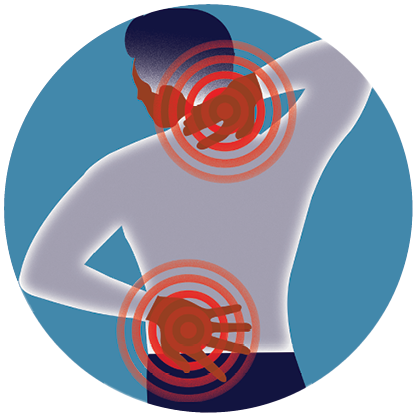
Aching Neck and Sore Back
Texting’s habitual head-down posture can put substantial pressure on the spine, according to orthopedic surgeon Kenneth Hansraj, MD. An adult head weighs 10 to 12 pounds (about the same as a midweight bowling ball), and as we tilt it forward, it exerts pressure — up to 60 pounds at a 60-degree angle. That can result in a sore back or neck.
What You Can Do: Raise your phone and keep your head upright with your ears directly above your shoulders.
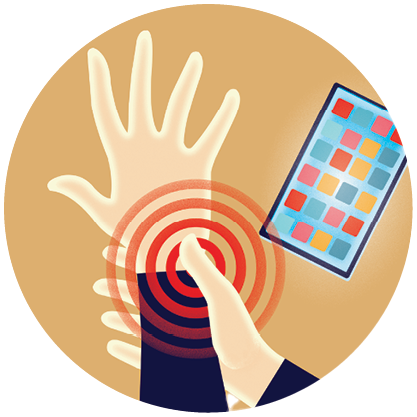
Text Claw
Because texting requires fine motor activity, it may lead to “text claw” — a habitual clenching that can lead to inflammation and repetitive stress injuries, such as tendinitis or carpal tunnel syndrome.
What You Can Do: Regularly stretch and move your hands and wrists through their full range of motion.
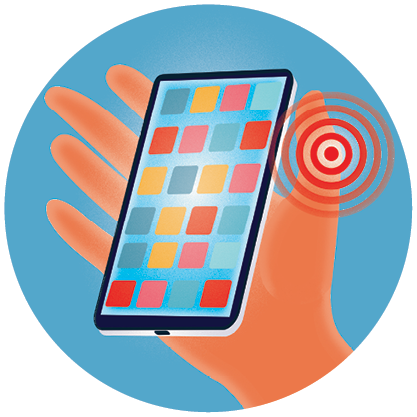
Text Thumb
Gripping cellphones can constrict our flexor tendons. Because our thumbs do not have the dexterity of our other fingers, excess texting can result in pain on the outside of the thumb and down toward the wrist or even a decrease in grip strength or range of motion.
What You Can Do: Use your phone’s voice-recognition feature rather than texting manually. Or try incorporating other fingers into your texting method.
Breathing Issues
Our forward-leaning posture can impede breathing. Dropping the head and rounding the shoulders makes it harder to take full, deep breaths.
Moreover, our ribs cannot move properly in this position, and that decreases the ability of our heart and lungs to function effectively. Finally, researchers have found that we often hold our breath or breathe shallowly while computing or texting — a habit they term “screen apnea.” The result is increased stress and heart-rate levels.
What You Can Do: Take a break now and then to breathe slowly and deeply. Get up and stretch every hour or so. Set a timer on your phone to remind yourself.
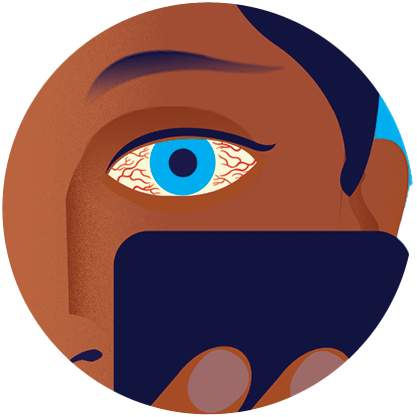
Eye Strain
The bright light — especially the blue light — from screens can boost our mood and alertness but also tire our eyes. In addition, it can disrupt our circadian rhythms and make it more difficult to get a good night’s sleep.
What You Can Do: Set your phone to dark or night mode, particularly during evening hours. This softens screen brightness, and the warmer colors are less likely to confuse your body into thinking it’s daytime. And avoid using screens one to two hours before bedtime.




This Post Has 0 Comments