

Why “Retreating” Is Essential for Our Physical and Mental Health
Learn why “retreating,” or stepping back from our usual routines and distractions, can be a profound way to reconnect with ourselves.


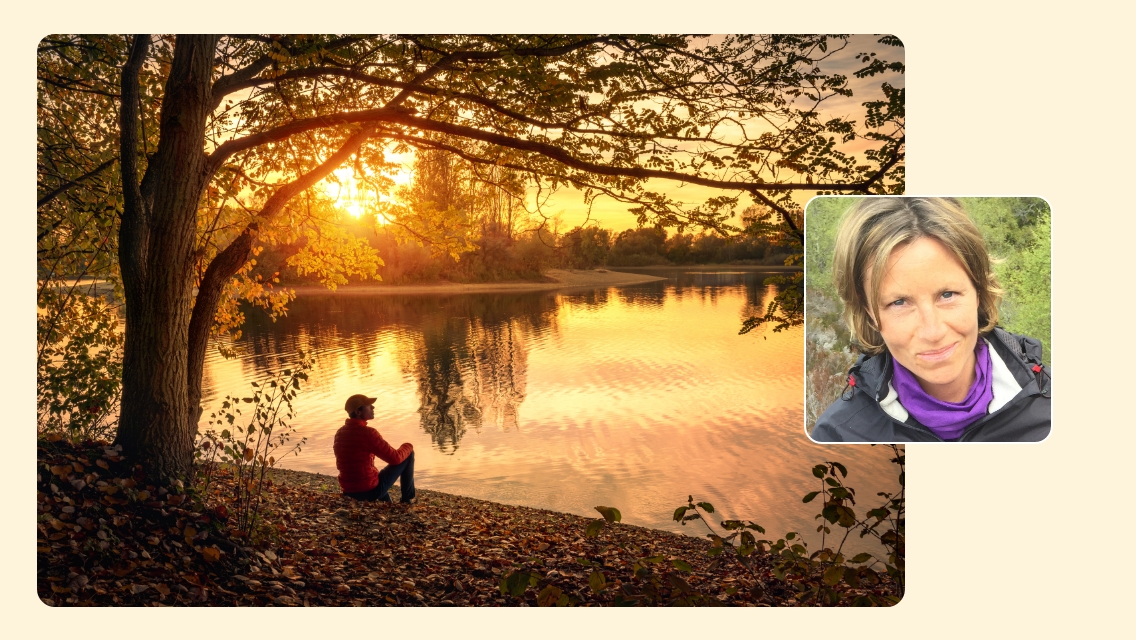

Many of us feel overwhelmed by what’s going on in the world around us, yet we’re disconnected from what’s going on inside us. In this episode, we’re speaking with author Caroline Sylge, who makes the case for “retreating” or stepping back from our usual routines and distractions to reconnect with ourselves and find and sustain a happier version of our lives. She walks us through insights from her new book, How to Retreat, offering guidance for stepping away — even briefly — from the everyday to rest, reset, and renew.
Caroline Sylge is a poet, author, and journalist, and the founder of Queen of Retreats, powered by The Global Retreat Company. She is the author of How to Retreat, which published in March 2026. She lives in Devon, England, with her husband and daughter.
In this episode, Sylge shares insights around the concept of “retreating” and its benefits, including the following:
- Retreating is distinct from taking a vacation: It is about going inward to reconnect with yourself, while vacations are often outward explorations focused on new experiences.
- Quieting the mind through retreating can unlock creativity.
- Retreat practices can help reshape neural pathways, enhancing mental and emotional well-being.
- Turning off or refraining from using digital devices, even for short periods, can enhance your presence in the moment.
- While initially daunting, embracing silence is ultimately rewarding, offering a powerful way to listen to your inner thoughts and needs.
- Learning to say no is crucial for preserving your energy and focusing on what truly matters to you.
- Engaging in activities that completely absorb your attention can lead to a state of flow.
- Retreating is an opportunity to take responsibility for your own happiness and well-being rather than relying on external factors.
- Taking time to retreat can create more time and energy, allowing you to return to daily tasks with renewed focus and efficiency.
- Becoming unstuck and unrestricted offers a path to greater personal fulfillment.
- Retreating is accessible to all of us and can be tailored to our individual needs and circumstances.
- Aligning retreat practices with the seasons can be helpful for establishing a regular rhythm.
Transcript: Why “Retreating” Is Essential for Our Physical and Mental Health
Jamie Martin
Welcome to Life Time Talks. I’m Jamie Martin.
David Freeman
And I’m David Freeman.
Jamie Martin
And in today’s episode, we are talking about how to retreat and why it’s really important for our physical and mental health. In our modern, overwhelmed, digitally connected world, many of us are just feeling the stress and the impact of always being on, but then feeling disconnected from ourselves, from the kind of that internal world of who we are, of being aware of what we really want. So in this episode, we are speaking with a longtime writer who makes the case for what she calls retreating or stepping back even briefly from our usual routines and distractions so we can reconnect with ourselves. With that, I’m gonna hand it over to you, David.
David Freeman
Yes, we have Miss Caroline Sylge. She’s a poet, she’s an author, she’s a journalist, she’s the founder of Queen of Retreats and the co-founder of the Global Retreat Company. She lives in Devon, England and she’s with her husband and daughter there. We’re excited to have you on. Caroline, how you feeling?
Caroline Sylge
Thank you, I feel good. Thank you very much. Yeah, I feel good. The sun’s out down in Devon and it’s lovely to speak to you.
David Freeman
Yes. All right. Let’s start with you telling us what retreat means to you and how you came to devote so much of your work to it.
Caroline Sylge
Sure. So I discovered a treating, think, through traveling. I was originally a travel writer. I’ve been obsessed with travel since a young age. My father used to be in travel, used to watch him go off on these amazing trips. So I took a backpack on my back early on and just went exploring. And through those journeys, I discovered health and well-being. I kind of depleted myself.
And then I found people on my travels who were replenishing themselves on a beach in Thailand, I saw people waving their arms in the air and this was yoga. I actually met an American woman who was doing her cleanse and I was very interested in what the cleanse was so I did my first cleanse and so on. So with each trip I would discover something exciting and new to do with replenishing myself. So it came from there really in my 20s.
And slowly, over time, rather than going on outward explorations, I started to go inward. And that’s how I discovered retreating.
David Freeman
And breaking that down even more because even as a listener and the listeners that are tuning in right now, how would you differentiate retreat from vacation?
Caroline Sylge
Sure, think again, so I think a holiday or vacation is an outward exploration. It’s going somewhere to see new things, to experience new things. I think with a retreat, it’s going somewhere to rest and replenish like you want to do on a holiday, but it’s going inward. The journey goes inward more and you start to reconnect with yourself, what’s really important. Perhaps if you’re with someone, you’re reconnecting with them on a much, much deeper level than you might be if you were on holiday having a drink in a bar, for example. So it’s a different intention and it’s a different direction, inward rather than outward.
Jamie Martin
Yeah, I really like that kind of that kind of that introspection versus the exploration kind of thing. It’s a different kind of exploration. But yes, you I mean, and when you say it like that, this is not new. mean, humans have been retreating for for ages, right? You have examples in your book of, you know, the Buddhists going back or just people and indigenous peoples going in and doing their vision quest and different things. Why do you think even now, like knowing that this is something people have been doing this for so long, why do think this practice is even more essential now in the world that we’re living in, in this modern world?
Caroline Sylge
The world’s always been in chaos. Yeah, there’s always been chaos in the world. Right now, of course, we’re getting to hear a hell of a lot more about it because we’re connected all the time 24 seven and we can see everything that perhaps, know, centuries ago we didn’t see. So we’ve always been in that chaotic world, but it’s been easier to rest and replenish. It’d been easier to kind of turn away or step aside.
Right now, I feel like we are in a particularly red and angry world. We’re in a particularly angry era where everything’s kind of on fire in all senses of the word. So I feel like it’s very, very timely and we all, more humanity needs to step away, calm down, step aside and go inside and internally kind of channel that blue, the calm color to counteract that red so that we can calm down, we can reconnect and then on those terms we can strengthen and go back out into our lives to live a better life and also perhaps to even transform what we see outside ourselves but from a position of strength rather than a position of weakness.
Jamie Martin
I really love that. And I will just note right now, like, you know, I’m in Minnesota in the U.S. it’s a really challenging time here right now. And in the U.S. in general, in many cases, for different circumstances, for different people and everybody can have, has their own views of things. But I do, I hear you so much and I’m almost a little bit emotional hearing you say that because I feel that I feel that need for like us all to like step back and like reconnect with like what we truly value and what matters to us. So thank you for that. I think it matters so much.
Caroline Sylge
That’s okay. And I just want to say from the UK, like we are there with you. Like we are obviously receiving all of this that’s going on. And what I find interesting is that if you, retreating also lets you look at the positive. So we are connected 24/7, which can be extremely exhausting and stressful, but also actually it does connect us in the good ways. So we feel your pain. We know what’s going on. We’re witnessing it alongside you. And I believe that retreating, although it’s a solitary act, it can also bring humanity together for the right reasons.
Jamie Martin
Absolutely.
David Freeman
Yeah, I love how you conveyed the contrast of the red and the blue just now. And then what we both what you both were just talking about, if you can now walk us through a little bit of a retreat practice that you speak to as far as digital detox, so knowing how to be able to switch off devices and use more analog type alternatives. So yes, this is a place that we can get connected through. But also it can also put us in this dark place, if you will, kind like what you were saying with the red and getting us back to the blue. Can you share with us digital detox and how to bring that to life?
Caroline Sylge
Yeah, you know, this is one of my favorite parts of the book and it’s something that’s really close to my heart. I have a teenage daughter and the whole social media debate and everything. look, I mean, one of the main things you can do right now instantly to retreat is just turn your phone off. Just turn it off, put it in a drawer and leave it off for as long as you can, as long as you want to. Just even that act is a conscious, joyful act to say, I want to be here present in my life without this other stuff going on. And you’d be surprised, I mean, more and more people are getting into analog alternatives now. Like my daughter’s just got a record player for Christmas. We can buy clocks, you know, we can use pen and paper. We can go and see people rather than WhatsApping or texting them. We can do this for a short period of time. Yeah, I know we have to also live in the world and be realistic.
But we can structure, we can structure, put into places things, okay, I want a digital detox for an hour, for an afternoon, for a day, for a weekend. All you need to do is plan a little bit ahead. That’s all it takes is just some simple planning and preparation and having the buy-in of the people that are closest to you and just knowing when to put things away. And if you can’t, give them, give them, give them to a neighbor, give them to a friend, give them to your partner.
Lock them away. I mean, it’s once you’ve done it, you’d be surprised how much more relaxing things are and how much more present you are in your actual life. And then it’s actually quite easy to keep them off. The digital detox retreat in my book, and it says at the end, you know, this is how you switch off what you do during your digital detox, how you might relate during it. So you’re thinking, I want to check my Instagram. Use your journal instead, write down.
What is it you’re trying to check? Why are you trying to check it? What are you missing? Are you missing something? And then at the end of the weekend, it suggests ways of kind of slowly going back to your digital world. But it also says, look, if it’s working for you and you don’t have to, carry on. Like with all of these retreats, I’m giving suggestions and then you in your life can decide how to change that, how to adapt it for your life and carry on if you want to.
Jamie Martin
Right. Yeah. On a, on more of kind of the hourly note that you mentioned, like you can do these things for an hour. One of the things that I’ve been hearing a ton about and I actually ended up purchasing myself are these, if I’ve really heard of the brick, have you heard of this, this tool where essentially it’s a physical object that you can put on something magnetic and you have to swipe your phone against it and it, set up like what apps and things you want blocked. And then you can’t actually get access to them until you swipe that physical thing. Right.
And for even for me, like that has been game changing and how much I rely on my phone because it’s like those things are turned off. I realize I’m always picking my phone to check my social things versus but if those are off, I’m connected elsewhere instead. And I feel like those are just like the little tips and tricks in our daily lives that could make a real difference. And I personally am like, I took one to the office for my team to have access to and like, it’s just a great thing for like these quick little hacks that we might be able to actually make a difference in that in our well-being in that regard.
Caroline Sylge
That’s right. And my book suggests things like that all the way through with the hour long practices in particular, just little things that you can start to do now, which will have a knock on effect and will help you the next day, the next week, the next month to do something that’s better for you and your environment and your family than it was last week, for example.
David Freeman
Caroline, I want to go off of that. just said, you know, some of the like the quick wins within the one hour. It was something about the mention of being able to tune into your body to de-excite, right? And when I think about de-excite, going back to another piece where a highlight from the retreat, silence, you know, and you were saying not just quiet, but intentional absence of stimulation. So share it with you know those real time practices so our listeners can take what you’re saying, but then go out and actually apply. Can you?
Caroline Sylge
Yeah, look, so going into silence is one of the longer retreats in the book. And for some people in our world, that is incredibly scary thing to do. Like not talking. What do you mean not talking? Like turn the radio off. You know, tell the neighbor next door to stop mowing the lawn. But I tell you now, I feel that silence is one of the most powerful things we can do to intentionally go into silence.
This isn’t just about putting your finger on your lips and being quiet. This is about making a commitment to go into that amazing space. Initially, it can be a bit scary because you are literally faced with yourself and your thoughts. But if you just go with it, follow the practices that I outline in the book, you will find that you slow down, you start to hear those whispers, you start to hear those things that your body, your mind is trying to tell you about what’s good, what’s off, what might need changing, what might need putting to rest, what might need letting go of, et cetera, et cetera. You start to hear yourself again. And that is an incredibly strong, strong thing. yeah, there’s little hacks and ways you can do it. I think something I want to say at this point is retreating isn’t just about feeling comfortable. It’s, know, betterment can take work. It can take sacrifice.
It can be uncomfortable, but it’s worth going through that discomfort because you gain so much more at the end of it. I promise you that is a promise I can make.
Jamie Martin
Well, and David, that is so much of what we’re always talking about. Like nothing that we talk about in this podcast comes easy, right? We talk about exercise and nutrition. Like it all takes practice and sometimes you don’t like it and sometimes it can hurt a little bit, but it’s like the continuing to do that work. And I think that actually leads me into this next question because as we do this work, there are changes that happen to us. Like you talk in your book about the neuroplasticity benefits of like learning to do these different things. Like let’s talk about some of the physical, emotiona,l mental benefits of retreating because they are there.
Caroline Sylge
Yeah, definitely. you know, there’s a woo-woo side of retreating that people feel put off by. But actually, most of these practices have, you know, basis in fact and experience. And when it comes to things like neuroscience, particularly when it comes to re-envisaging your life, for example, or the benefits of an ancient practice such as Vedic meditation, neuroscience has proven that these things actually work. They do change the neural pathways in your brain and they reshape you. They literally reshape you for the better.
And I think what’s wonderful about retreating is it absolutely takes on board your mental as well as your physical health. It’s not just about working out or getting a walk in the fresh air. It’s holistic. It’s the whole of you walks and all. I feel, yeah, those scientific benefits for people that want that science. I do point those out in my book, but I also know that there is a magic to retreating, that you’ll only experience when you’re in it. Like once you’re actually in it on your own, once you’re in that silence or whatever it is you’re doing, you will start to slowly feel this magic. There’s nothing kind of strange or odd about it. It is absolutely there. And that’s the power, I think.
David Freeman
I love that. love that. And when we go to like the day retreats, that was another thing that stood out to me just because we were we had an offsite in Minnesota with our leaders and they were like a difference between being nice and being kind. And what it came down to is knowing how to create boundaries and to be able to reclaim that energy is, as you would put it, knowing how to say no. So can you break that down to us as far as knowing how to say no and reclaiming that energy?
Caroline Sylge
Absolutely. So that is one of my favorite sections in the book as well. I think we’re all terribly bound to it, particularly the British. We, as a human race, we feel we should, you know, someone’s invited us, we must go, we must do this, we must say yes to this. Women particularly, we must look after this child, we must, you know, and if we go on and on and on in this way, that’s why we’re depleted. We’re exhausted and we feel we should, all the shoulds in life.
Retreating is about taking away all the shoulds. So that said, you you mentioned kindness. We can do this elegantly and kindly and with respect and we can take time out. There is a whole retreat saying, say no. You take time out to think carefully and to prepare and plan. What can I say no to next week? What could I say no to this year in order to give my time and energy to what truly matters?
So it’s giving you strategies and it’s giving you permission to get a beautiful notebook and a pen and plan and take that time for yourself and why not? You you don’t have to do this on the hoof in a kind of stressy way. We do it, we take the time to manage, plan. I’m gonna say no to this, this and this. And that way I can say a great big yes to all this other amazing stuff over here.
David Freeman
Caroline, I love it. love it. And this recently happened this week for me. I had a leader reach out and they said, hey, I have this individual. They look up to you. They want to be mentored by you. And like the old David, if you will, would be like, all right, I’m on it. I’m going to make sure I’m there for that person. And I took, I took about two days before I replied because I wanted to give it a full thought. I didn’t, I didn’t want to be emotionally reactive in the moment because the emotional side would have been like, I want to be there for that person.
The reality is in this first quarter, I just know so many things that I’m driving. And for me to really be able to show up for that individual, I would be doing more of a disservice to them than a service. So the follow-up to that email, I wrote it finally last night to them. It was like, I want to be able to provide the energy that’s needed for this person. And I know that it will not be fully available in this first quarter.
You can still connect us because I want them to know that I’m going to be there for them. But maybe quarter two, we revisit this to see where I’m at and how I can support. that was a great example of in the past where I did not know how to say no. Yeah.
Caroline Sylge
That’s it. And you’ve done the right thing. So you could think, I’ll postpone it. When can I do this in the future that might work? Or can I do this in a different way? So exactly, you’ve shown that person respect and that you care, but you’ve also been very clear about your boundaries. And our human boundaries is an essential part of the treating as well, is working out what they are and what’s been invaded, what’s strong, what’s weak, what needs work.
Jamie Martin
Well, and it’s just demonstrating too, I think it’s both the self-awareness for David, for you to be able to do that and self-respect because we often will compromise that for others. And I think just kind of, again, turning inward as you’ve talked about, Caroline is and just recognizing that in ourselves, that’s a step forward towards like that living in that more fully meaningful, satisfying way for you, which I love. I love to hear more of that.
Caroline Sylge
100%. So, yeah, I think one of the things I wanted to do with this book was, you know, obviously I’ve been retreating myself for over 30 years now, going on retreats of all sorts. But I think what I’ve really realized over that time is that, you know, you don’t have to have an enormous budget. You don’t have to have ample time. There’s simple principles that I’ve learned that you can bring into your everyday life.
And, you know, yes, it would be great to start alone, but there are things in the book where you can do retreating with a family member, with your partner, with a really good trusted friend, with a child, with a teenager. And I’ve put all the way through places where you can do that. And you’re just following simple principles. There’s a retreat toolkit in the book that you can flip to whenever you need to. You make a commitment. That’s the first thing. No one can tell you to retreat. It’s not like your boss telling you to do something or your teacher saying do your homework. You have to come to it yourself. You have to really want to do that. So you make a commitment. Then there’s some simple preparation. There’s sort of some structures that you can put into place. And then there’s ways to enrich your retreat as well. And you can do as much or as little as you want. You know, an hour’s retreat.
You could be on a park bench in the sunshine in your lunch hour. You could find, I don’t know, a beautiful, smooth stone there or a leaf. Put it by your side yourself to to sort of signal I’m on retreat. You know, sit down, turn your phone off, do the practice within one hour you’ve retreated. There’s something that you will take away from that experience, some piece of solace or self-knowledge that you can then take into your day. And if you take to that, then you can build it up and do different hour long practices, work towards a day off that’s got more intention about it and so on.
David Freeman
I love that as well. The next piece I want to dive into is it speaks so much to my love language, which is affirmation, like words of affirmation. And when you speak to gratitude, right, choosing gratitude, being able to make a list and write thank you notes is such a simple act, but it’s far few in between that when it actually happens. So the word gratitude is near and dear to me just from.
being grateful for what it is that I’m able to do, but what we’re able to do, pour into people, help impact lives and change lives. So can you unpack for our listeners a little bit as far as what you mean by choosing gratitude?
Caroline Sylge
Yeah, absolutely. So it’s one of the practices in the book. And I feel it’s a way that we can see that the universe has got our back. So if you have had the shittiest day on earth and you just get a pen and paper and you just try and write down five things that you’re grateful for, you’ll realize that somehow something has shifted after that. And these five things, don’t have to be, you know, I was given a million pounds and I got a promotion and I’m going on a yacht next week. But it could be simple things. The sunshine came out and I felt it on my face. Somebody bought me a coffee or I tried this delicious piece of cake. I don’t know, whatever it is, it could be the simplest, tiniest thing. My child gave me a hug. It makes you realize that life is good, whatever situation you’re in, life every day, there’s goodness there and there’s things to feel thankful for.
And that gives us a strength that we didn’t know was there. It helps us trust ourselves. It helps us trust others. And it helps, as I say, trust that the universe actually, it does have our back. It’s not against us. And I think trust, you mentioned kindness, David, kindness and trust are two things that we’re not very good at in our era. And I think these are the things, these are two of the strongest things that we can find our way back to through retreating practices.
David Freeman
And following up with that, I have to, Jamie, real quick. I got to follow up with it. I feel like early on in my career, Caroline and Jamie, it was so much about I had the mindset of I’m doing this for the people. I’m helping impact and change lives. That was the mindset. But the reality is I was doing it because I wanted to once again, hear something back from like, great job, David. So I was doing it for the wrong reasons early on in my career.
And through maturity and understanding what it really means to be a servant leader in this space, you’re not doing it to get something in return. You’re doing it just simply to show the person how much you value them and how much you want to pour into them, not expecting anything to return. So Caroline, think for our listeners, this isn’t a wham bam, you’re going to get it tomorrow. It’s going to take reps. It’s going to take practice. So I feel like sharing with them that just like with anything that we do, the only way you get better is through going through it, through experience, and that’s where you really start to gain traction, yes?
Caroline Sylge
Yeah, totally. love your word reps. Yeah, you do. think you do. It is. It’s its journey. I I feel like the book is for individualists. So it’s for people who want to find their own path. I’m not telling people what to do. I don’t like that myself. So I’m making suggestions and some things will resonate with you. Some things will not resonate. So you just go towards those things that resonate.
And yes, I absolutely agree, David, that it takes time and energy. But the reason I did retreat for an hour, retreat for a day, is that you can start whatever time you’ve got, you can start now. I think that’s it. So you can actually feel the benefits quite quickly. And yeah, you can then take that forward ⁓ and reap the benefits more. I just want to come back to your earlier point. You say perhaps earlier on in your career, you were doing it for your ego maybe so that you felt good about yourself. But you know what, like what you did and what you’ve done, what you’re giving back to people, that does come round in a benign circle. So, you know, everything that you put out in that way with the right intention comes back to you. I explore this in the kindness chapter, being kind. Being kind is one of the hardest things, or it can be, because sometimes we’re kind.
And if we expect things back, if we expect to thank you, then we don’t get it, we’re disappointed. What we need to do is be kind, knowing that somehow the universe will give that back, but with no expectation of it. And if that person, this particular person doesn’t say thank you, the universe will say thank you in a different way for you somehow. Yeah. And I really do think that that’s true, particularly now in the world that we’re in, which needs more kindness than ever.
Jamie Martin
Yeah, absolutely. Awesome. It’s so interesting to I’m thinking about how retreating and exercising are kind of related and the idea of the reps and Caroline, I’m wondering for you, having done this for 30 years, how has retreating changed for you? Because as I’m seeing is like how I retreat now is probably different than I would have five years ago or will in five years. So what does that look like for you? And why is that important to recognize and just be okay with?
Caroline Sylge
Yeah, totally. So my very, very first retreat was, I was thinking about it today actually, was in the Egyptian desert, a yoga retreat, where I was kind of contorting myself into all these different shapes in my twenties and relishing this desert landscape. And it was amazing, in a group, really high energy. just what I needed at that point, I was transformed by my surroundings. There’s no way I’d want to do that now. I wouldn’t mind going to the desert, but I would like deep, deep rest, long hot baths, long, long walks, perhaps to really truly connect with one other person, perhaps somebody wiser, a mentor, you know, but really to calm down. I mean, I’m 56 now, so it changes. What you need changes.
I mean, I’m a mother, you know, I’m a partner, I’m a business partner. Things change just like things will change for you guys, you know. What you need, whether it’s physical or mental, you know, you know, your gut knows more than you think. You just need to take the time to slow down and check in, check in, and then you’ll know, you’ll know which direction you need to go in next, I feel.
Jamie Martin
How do you guide people through that? Because we know that there’s no one size fits all ways. like, what are some of the maybe signs that like, hey, I’m being called to this other thing. I I know it is about tuning in, but is it really about like, kind of what are, what do you feel calling to you? What are you craving in this moment?
Caroline Sylge
I mean, part of the reason, so my book spits up into eight chapters and the chapters are very simple names like purge, create, connect, plan, settle, trust. And I did that deliberately so that when you scan the contents, you can just literally be drawn towards a word that resonates with you right now in your life. It could be a different word next week. It could have been a different word last year.
And then, so you just, you find that, you gravitate towards it, and then within that section, there is an hour, a day or longer, and you go to whatever time you have. I do think that we, you know, I know there’s been a lot of talk recently about gut health and eating for your microbiome. I think for the same reason, we have become, you know, distracted away from our gut instinct, and we need to learn more to trust what we know.
And that’s what my book’s trying to do is it’s, know what you need. I can make suggestions, but I’m not telling you what to do. So you just sit calmly, put the phone away, go somewhere quiet. It could be a bath, could be bench again, you know, could be a quiet room and just check in with your body and your mind and see where you’re at. See what resonates with you. And I think you’ll find that it’s easier to make that choice than you think, yeah.
David Freeman
Yeah, Caroline, it’s genius when you break it down because when you were talking about like the purge to connect and then the seasonality behind each of the words of what what’s going on. So whatever you’re planting in the spring and then what you’re nurturing within the summer and then what you’re reaping in the fall. And then guess what? You got to start planting again in the winter because now it’s beautiful how you put those pieces together from a seasonality theme. So I appreciate that piece of it. And it hit home a lot.
Caroline Sylge
Great, thank you. mean, again, so you can, I wanted to put the seasons in there if you want to retreat like that. So if you buy the book in the summer and you think it’s summer, the sun shines out, I’m gonna, really feel expansive. This is time to get creative or ⁓ I want to nurture myself. But you know what? I’m not gonna go on a conventional holiday. I’m actually gonna stay put in my house and I’m gonna turn it into a retreat for my family. So you can think about what the season you’re in and go like that.
But actually you don’t have to, you don’t have to. You can do any one of these practices whenever you need and want, whatever time of year. So you could also just dip in and out. Or you can do what some people I know want to do and you start from purge. Always start from the cleanse. Cleanse your body, mind and the crap in your house. And then you start with a good base and then you just move forward through each chapter like that. again, would, depending on what your kind of personality is. There’s three ways into the book and there’s three ways you can do things.
David Freeman
I want to share my testimony from that format. The part that stands out to me is January 2007. I’m in the south of France, Aix-en-Provence in France. It was not purposely done, but I had a digital detox because the TV, it was speaking the language that I didn’t understand. So therefore I wasn’t necessarily watching TV. I didn’t have internet service currently in the house that I was staying in.
Anybody around me, neighbors, once again, language barrier. So I literally did the most journaling that I’ve ever done in my whole life. And it was such a great moment of self-reflection. And I started noticing things that I never noticed before, whether it was the wind blowing the leaves or it was just it wasn’t a very, to your point, an inward experience that was needed for me to understand what it is that I needed to do next in my life.
It was in the winter time. was, was planning at the same time to your point, it was a little bit of a purge going on too, but it was so eye-opening and I still remember it like it was yesterday. So it was life, life-changing and certainly transformational.
Caroline Sylge
Well, that is amazing. so you kind of did that by stealth. You didn’t plan it. And now next time, back to the south of France, but this time do it with intent and do that again and have a different experience. And I bet it would be even more powerful, you know, taking a nice clean journal with you.
David Freeman
intention.
Jamie Martin
Yeah. Well, and kind of leaning into that, like whether it’s journaling or for you, Caroline, some of your retreating comes out as poetry, but you talk a little bit about how it creates space potentially for creativity, even if people don’t at face value see themselves as creative people. Right. So like, what is it about? Like, why do you think that happens? Like what like what does it free up potentially in us to let like let come out?
Caroline Sylge
Sure, mean, again, so it’s all about this quietening down of body and mind and allowing yourself just to be in that silent space. Because when you get rid of the noise that’s around you, you start to hear, as I’ve said earlier, the whispers of your body and mind. And you you might have a memory, you might have a thought, you might have a feeling, you might have an intuition that you want to act upon.
Often that’s when I start writing. I am a published poet, I love poetry, it’s not everyone’s cup of tea. It may be that it emerges from you wanting to pick up a camera, an analogue camera, and ⁓ take a beautiful picture. You might want to create something with your hands. You might want to write a song or sing a song. But also creativity can show up in different ways. It could be that you plan a party for someone you love.
It could be that you finally come to a decision about something in a creative way that you’ve been really struggling with. There’s a sort of sense of ease that comes when we allow ourselves the time to slow down, have a commitment, set an intention that happens on a retreat, which is the magic I was talking about. know, often things that we’ve been really struggling with and we’re trying to make this decision and we’re trying with all our might, you just let it go and leave it.
Go on a retreat, create your own retreat, and the answers come very slowly. They do come. So I think, so creativity in the book, I’m talking about it in all sorts of different ways. And yeah, you can be an artist, but equally, you can just use your creative spirit in ways that serve you in your life. And it doesn’t have to be conventional art, as it were.
Jamie Martin
Yeah, I’ll share just for a second. There was a time this past fall where I was feeling pretty stuck. Like I was not, I knew I had to get some stuff out for work. There was a project I was working on, but I just didn’t, hadn’t had the time to do it. So I actually, I took a day. let my whole team know, like I’m stepping away. I’m going out to this nature setting. I took with me a notebook and I left everything else behind. And I just started, like I gave myself the space to kind of walk around, to just be present with myself. and then let stuff come out.
It was like throughout that whole day, was like iterations of things happened that I’d been trying to get to for probably months. But it was like when I gave myself the space to do it, the freedom to think differently, to step away from my usual surroundings and do that, it was like this type of creativity for work that hadn’t come out in me in a while. But there’s other ways that it comes out, but I love that.
Caroline Sylge
Absolutely, and there’s a section in the book called find your flow so in relation to what you just said You know whether you were if you’ve been on a walk or something like that We all have a way of finding our flow of tapping into that state where you are so absorbed That you forget everything else around you, know, some some people find that through drumming You might find it through walking some people find it through surfing and there’s a there’s a way of, again, you can take a day in the book basically to find that flow.
If you haven’t found that for a long, long time, often it’s what we used to love doing as children, kind of late primary school before we hit puberty. And it helps us sort of tap into that. And when we’re in our flow state or just after, that’s when we’re at often our most creative. So perhaps that’s what you found, Jamie, is on your walk, you tapped into that a little bit and things came out. Literally, you found your flow. You flowed again. And it’s becoming unstuck. That’s what retreating is, is becoming unstuck, unconstricted, freer. We can find our freedom. Retreating leads to freedom. I passionately believe that.
David Freeman
Hmm. Five senses. We speak about this a lot actually at Life Time as far as being able to cater to the five senses. If you can, share with our listeners the value of tapping into each sense and how that also fits within the retreat narrative.
Caroline Sylge
Yeah, absolutely. In fact, there’s one section in the book, my favorite, well, I know I have a lot of favorites, but another favorite, de-excite, it’s called. This, it starts to suggest how the practice that I use on a daily basis, which is Vedic meditation, it gives you a way into experimenting with what that might feel like by de-exciting. And one of the things we can do, very simply, if you only have an hour, is to sit quietly and tap in, literally take a breath and tap into those senses. So in this moment, what can I smell? In this moment, what can I touch? What can I taste? What can I feel? And so on. And it just helps you, the five senses helps you to be right here, right now, present. I know we’ve heard a lot about mindfulness in the last few years. There is a section on mindfulness.
You know, some people think, mindfulness, I’ve heard all about that. But actually, I don’t really know what to do. But that’s all it is, is tapping into your senses in the here and now. You can’t be anywhere other than here and now if you’re paying attention to your senses. And I think it’s very powerful. And again, you know, in our digital age, it’s really difficult when you’ve got a phone in your hand to feel those things.
You know, what can I hear? What can I see? It’s fake. It’s a fake world. Get rid of the fake world and be real. OK, so what can I, what is in my real, what is in my world right now? Use the senses to get there.
Jamie Martin
Yeah, absolutely. Okay, so I wanna be mindful of time, but I wanna take a moment, like for somebody who’s gotten to this point in the episode, they’ve been listening to us, but they’re like, but I’m busy. We hear that all the time. I’ve got so much going on. I don’t know how to like find the time to do this. I’ll be too far behind when I come back from this. What would you say to somebody or what do you say to people who say that to you? Like, I’ve just got too much going on. I don’t have time for this.
Caroline Sylge
Sure. I hear this a lot, particularly people who I’m giving advice to on Queen of Retreats about which retreat to choose and I’ll just go for a day or, Honestly, I truly believe, and I’ve experienced this myself, that retreating will create time and energy. It will give you more time and energy. So rather than going back into life depleted, you take a little bit of time out and you go with more energy to tackle whatever it is you do and you do it with more ease therefore you do it more quickly and therefore you’ve got more time for other stuff. So there’s various practices that can really help with this. One of them is as we talked earlier saying no you know what in our diary do we really not need to have in there okay that’s immediately taking our whole raft of stuff away. Trimming your choices, trimming the trivial choices in our life okay.
That time where we’re sort of stuck in a supermarket aisle, trying to decide between brands of tea, or we’re going out for dinner and we’re not really sure what to have on the menu, or we don’t know what to put in our children’s lunches or what to cook for dinner. If we take some retreat time to make these trivial choices in advance and get a little bit of a plan of action, we’ve already freed up a hell of a lot more time and therefore energy for other stuff. Yeah, and then resting.
We’re really bad at resting in our society. I haven’t got time to do this, know, rest, deep, deep rest. Retreating helps you do that. And if you really truly rest, then you will of course have more energy. But if you keep on this kind of, I don’t know, this kind of stressed plane, because I haven’t got time to stop, then you’re not going to be doing stuff 100%. You’re going to be doing stuff like 60%.
But if you take time out, pause, rest, go back, then it goes up to 85 % and then you get better results and everyone’s a winner. So it’s kind of a no-brainer to me now, but I can see why people think they don’t have time, but I promise them that they do.
Jamie Martin
Well, this episode is a call for all of us to give ourselves that permission. Absolutely. David, what do you got?
David Freeman
Mic drop moment, are you ready, Ms. Caroline?
Caroline Sylge
I think so.
David Freeman
Okay, okay. You might be familiar with this and the ask within this is the desired interpretation as it could be many for whoever’s reading or listening. How to give what you don’t need to the sea. You ready?
Oh yeah, there goes the smile. It says, pitch your anxiety into the black. Name the person you think gave it to you, the event, far past or yesterday, you think made it for you. Pitch it again louder. Give it some spit. Undress, get in. Swim in the unarresting cold across the bay. Allow more anguish to fall in.
The part that stood out, give it some spit. Undress, get in. Break it down to us.
Caroline Sylge
I just love the way you read that. So that’s one of my poems in the book. I love the way you read that. You read that beautifully and actually it really touched me. I thought that’s quite a good poem. Okay, so I live in Devon and I go wild swimming. It’s one of the easy ways I retreat on a weekly basis. And that poem is about the power of wild swimming and getting into cold water, the cold English sea.
So give it some spit. Is that particularly what you’re asking about, right? So that poem is, that’s the idea you take, we think that other people in situations create pain and anguish for us. But actually, if you dig deep, you’ll realize that we ourselves are responsible as well. Yeah, we can’t keep turning the blame on other people, okay? That person made me feel like this, that situation did this to me.
Actually, again, retreating is about taking responsibility for ourselves and our lives and our happiness. It’s about taking responsibility. So to give it some spit, all that is is like, you know, there might be times where you do actually need to yell, you need to get that anger out. And you might all have had times where you’ve been, I’ve done this, you’ve driven in your car, and you’ve just had to scream, right? A lot of women who are listening, like you might have just been stressed with the kids or something’s going on.
Or you might be climbing on a mountain and something comes to you. You just want to yell. You want to shout. OK, do it. So give it some spit. It was that it was like Chuck all that negative energy away and do it with Vim like get rid of it now. Do it. Spit it out. Get rid of it. It’s that it’s that it’s that strong energy of like get purging again. Get rid of it. Don’t need it done. And the sea is cold water is a particularly fantastic place to do that. And of course, if you’re standing on the shoreline, and there’s no one for miles, it’s a great place to do it because no one can hear you either.
Jamie Martin
I love that.
David Freeman
I love it and I love poems so just to know that that yeah so it’s obviously appreciate the art form of that and the storytelling so obviously keep that those vibes going that’s my gratitude to you today.
Caroline Sylge
Thank you, David. I really appreciate that.
David Freeman
Absolutely.
Jamie Martin
Well, your book, How to Retreat, is out. It’s available through Penguin Random House, is where people want to find that and through other, I’m sure through other bookstores and all of those places as well. But Caroline, before we sign off with you first, just our gratitude for taking the time with us to spend this hour with us. Anything final thought you want to leave with our listeners?
Caroline Sylge
Sure, well first of all thank you for having me. It’s been a real pleasure. It’s really, really lovely. Final thought, I would say retreating is for everyone. Young, old, whatever your gender, whatever your life stage, retreating can be for everyone and you don’t have to be a particular type of person to retreat. So, know, buy my book, have a look, see what resonates with you and go for it. And that’s it really.
If you do feel a resonance and you want to carry on further, then my platform, Queen of Retreats, helps people find the best retreat for them. It is not a paid-for listing platform. It has genuine independent reviews. So there’s that too to leave people with. But mainly what I want people to do is find retreating for themselves in their lives where they are right now.
Jamie Martin
Absolutely. Well, we will link to all of those resources on the show notes page. But Caroline, thank you again for being with us. It’s been a real pleasure.
Caroline Sylge
Thank you.
David Freeman
Appreciate you.
More like this




We’d Love to Hear From You
Have thoughts you’d like to share or topic ideas for future episodes? Email us at lttalks@lt.life.
The information in this podcast is intended to provide broad understanding and knowledge of healthcare topics. This information is for educational purposes only and should not be considered complete and should not be used in place of advice from your physician or healthcare provider. We recommend you consult your physician or healthcare professional before beginning or altering your personal exercise, diet or supplementation program.
Life Time provides administrative, non-clinical support to MIORA as well as services and amenities related to general wellness and fitness; Life Time does not provide medical advice, diagnosis, treatment or care.
Advertisement