


All About Allulose (Sponsored)
Learn why allulose stands out as a promising sugar alternative.


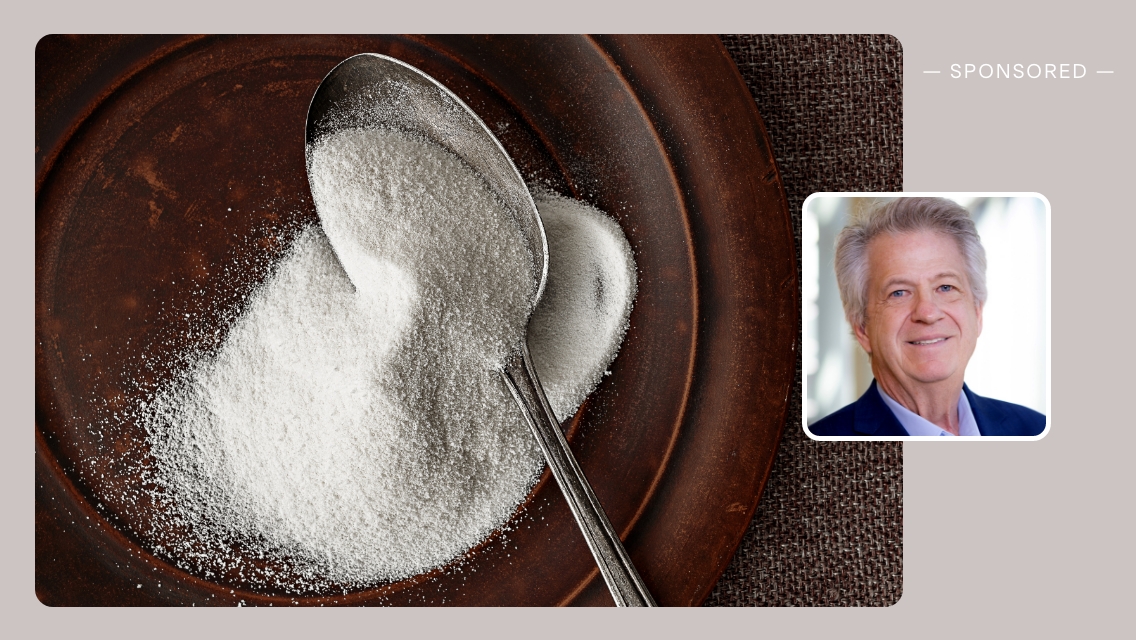


Sugar alternatives have become more widely available and used in recent years as awareness of the negative health effects of sugar has grown. In this episode, we’re digging specifically into one of these substitute options: allulose.
Our guest, Dr. Richard J. Johnson, shares insights into why fructose is harmful, how sugar affects cravings and metabolism, and why allulose stands out as a promising sugar alternative.
This episode of Life Time Talks is sponsored by RX Sugar.
Richard J. Johnson, MD, is an emeritus professor at the University of Colorado. He is well known for his research on sugar and has published hundreds of papers on how sugar causes obesity. He is the author of the book, Nature Wants Us to Be Fat.
In this episode, Dr. Johnson shares several key takeaways about the harmful effects of sugar and what to know about sugar alternatives, including the following:
- Sugar activates dopamine — the pleasure chemical — in the brain, which can cause us to want more of this substance that makes us feel good. However, excessive sugar consumption can lead to a number of health issues, including metabolic issues, insulin resistance, and high blood pressure. Reducing the intake of sugary drinks, processed foods, and refined sugar is crucial for health.
- Fructose, found in table sugar and high-fructose corn syrup, can drive overeating, fat storage, and metabolic issues. Historically, fructose helped humans and animals store fat for survival during food scarcity, but modern lifestyles make this mechanism problematic.
- Many processed foods contain hidden sugars under various names, making it easy to unknowingly consume excessive amounts.
- Whole fruits, despite naturally containing fructose, are beneficial due to the fiber, vitamins, and antioxidants they provide. These can also help counteract some of the negative effects of fructose.
- While artificial sweeteners like saccharin and aspartame don’t cause obesity like natural sugars, they may have side effects and reinforce cravings for sweetness.
- Allulose is a natural sugar alternative that is believed to be a promising option because it metabolizes differently from fructose; it can also help reduce blood glucose spikes and may aid in weight management without significant side effects.
- Excessive sugar consumption can alter taste preferences, making natural foods seem less appealing. You can retrain your taste buds by reducing sugar intake.
Transcript: All About Allulose (Sponsored)
Jamie Martin
Hey everyone and welcome to Life Time Talks. This episode is sponsored and brought to you by RX Sugar. RX Sugar is the creator of blood sugar friendly snacks, sugars, syrups and mixes, which are made with non-GMO, project verified, real rare zero calorie allulose sugar. And that actually brings us to today’s topic. We’re gonna be talking a lot about allulose, but we’re also gonna be talking about the effects of sugar and artificial sugars on our health and why some of these sugar alternatives like allulose might be a good option for you.
I’m really excited to have our guest today. I have Dr. Richard J. Johnson, who goes by Dr. Rick with me today. He is an emeritus professor at the University of Colorado and he is well known for his research on sugar and has published hundreds of papers on how sugar causes obesity. He is the author of the book, Nature Wants Us to be Fat, which we’ll talk about in a little bit here.
He is also a consultant for RX Sugar, who again, as I mentioned, is a sponsor of today’s episode. Dr. Rick, thanks so much for joining me. How are you?
Dr. Richard Johnson
Thank you, Jamie. It’s wonderful to be on your show.
Jamie Martin
Well, I’m excited for this conversation. mean, you know, sugar is always a topic that’s out there in the world being discussed, right? We know a lot of us are always hearing about the effects of sugar on our health, especially excess sugar, the potential risks of artificial sugars. So we really want to emphasize to start like, let’s talk about the role that sugar does play in our health. And how does that let’s just start there as a foundation.
Dr. Richard Johnson
Sure, so we’ve known for, seems like forever that we have these sweet taste buds in our tongue and we have this desire to eat something sweet. And when we do eat something sweet, those little taste buds send a little circuit to the brain that stimulates the thing called dopamine and this gives us pleasure. Some people will, love to seek sugar. Not everyone has the same craving for sugar, but almost everybody has some liking for sugar because we’re basically wired that way. So a long time ago, you know, probably 40, 50 years ago, it was largely thought that sugar was an empty calorie. And what I mean by that is it wasn’t really nutritious.
Everyone kind of knew sugar wasn’t nutritious. wasn’t like providing any protein. It’s a carbohydrate. It doesn’t really have a special role in driving metabolism, In terms of, you know, at least in terms of health issues, at least at the time that was sought that. And so it was thought that it was pretty much just an extra calorie. And so for years, people would say, well, sugar doesn’t cause obesity. Sugar is just a calorie. It’s like all calories. And the only problem is it tastes good. So you tend to eat a lot, but if you’re strong and you can, you know, not, not eat sugar, you’re, you’re going to be fine. You don’t have to eat all the sugar. It’s not, not a problem with the sugar. It’s the fact that, you know, it tastes good and that’s why you eat more. that’s possibly why you get fat. That was the kind of thinking.
And when I was beginning my research, that’s what everyone thought. And then we had two big discoveries. well, we had more than that, but we had two kind of significant ones. One of the ones which we weren’t the only ones doing, there were other people involved in this is we investigated the role of taste in driving sugar intake. And we found that if you had a laboratory animal, you know, like mice, they love sugar too. They also have those sweet taste buds. But if you knock out the sweet taste so that the animals can’t taste sweet, or if you knock out all the taste, animals will quit liking artificial sugars, but they’ll still seek regular sugar.
Somehow they’re getting excited, you know, they’re getting that dopamine response even when they can’t taste it. And if you put two bottles of water with one that has sugar and one that doesn’t, they will figure out which one is pleasurable for them, which one has the sugar, even if they can’t taste it. Now they did show, you know, when we did these studies, we found that sweet taste encouraged more intake. So it’s not like the sweet taste doesn’t have a role. When you have a, when you taste something sweet, it’s a reinforcement and you go back to eat something sweet. But there’s a difference between an artificial sugar that’s sweet and real sugar. And what we found was that animals would still get fat. They get fat when they eat sugar, even if they can’t taste it.
Jamie Martin
And is that the sugar? I just want to make sure I’m clear. Artificial sugars are harder to taste in many cases. Is that right?
Dr. Richard Johnson (06:32)
Artificial sugars still taste sweet, but there’s something besides the sweet taste that stimulates dopamine. And regular sugar has something besides the sweetness that makes it drive intake. And what we thought to ourselves, well, what is that? And we discovered that, you know, table sugar contains two sugars, actually, glucose and fructose, and these two sugars are bound together.
And glucose, you know about, right? Blood glucose is, if it’s low, you get hypoglycemic and can’t think well, and if your glucose is high, it’s a sign of diabetes. We know everything about blood glucose. It’s the main sugar in our blood. And people monitor it with continuous glucose monitoring, but there’s another sugar, and that’s fructose and that is in table sugar. It’s in the table sugars got another name. It’s called sucrose, sucrose, but that’s basically a double sugar of glucose and fructose. And then there’s a sweetener called high fructose corn syrup. And that’s a mixture of fructose and glucose. And it turns out that fructose in our studies seems to be a particularly bad guy. Glucose does stimulate insulin.
And insulin helps encourage putting fat in our body. glucose is not innocent. But fructose is really the secret weapon. And what fructose does is it activates a process in the body to make you eat more, to become insulin resistant, to raise the fats in your blood and in your liver, to raise blood pressure. And all these things that fructose does, it does it through its metabolism.
And when you knock out the metabolism of fructose, and you can do that, the metabolism just means how fructose is broken down. When fructose is broken down, we call it the metabolism and there’s some enzymes that do it. And if you block those enzymes so fructose cannot be metabolized, then you get this really interesting thing. You block the ability of sugar to drive obesity. At least dramatically. not completely because the glucose pathway’s in there.
But it really knocks it down and blocks insulin resistance, blocks the rise in blood pressure and everything. Turns out that fructose is the evil one of the pair. And it turns out that potatoes and rice are made of glucose. Starch is really glucose. So when you eat starchy foods, you’re loading up with glucose. But what we discovered was that when the glucose goes up in your body, it gets converted to fructose in the body and it goes back to fructose. So when you have a high glucose, like if you’re diabetic, you’re actually making fructose and that fructose, you know, is really what drives the obesity and all these problems.
So as we started studying this, we began to realize that fructose was the culprit behind a lot of things and that it was making us eat more, was stimulating obesity and all these things. And it isn’t that fructose itself drives all these things, because what one of the things it does is it makes you hungry. And then when you’re hungry, everything you eat too much of everything, right. And fats are high in calories. So if you give fructose to make someone hungry and then you give them fat, fatty you know, then it’s a whammy, it’s a double whammy because the fructose makes you hungry. And then the fats give you this huge amount of calories.
So you get really fat with a with a sugar fat combination. Got it. But if you if you carb free, if you’re on a keto diet, and you’re not getting carbs, you’re not going to get glucose or fructose and you won’t make fructose when there’s no when you’re on a low carb diet. And then you can eat a high fat diet. So the keto diets are high in fat. But you don’t get fat because you control your appetite. Right? Yeah. you eat, if you eat more calories than you need, your brain signals to stop eating and you won’t gain weight.
So low, low carb diet. You can be on a high fat, but, it’s not going to get you. So our work found that fructose was, a principal driver. And interesting, we found that there was an evolutionary basis to it that actually animals tend to eat large amounts of fruit to help them store fat. Right. And so I wrote this book, actually, I’ll put it right here. Nature wants us to be fat.
But I wrote that book because our work found out that fructose was actually used by a lot of animals to help them store fat. They become a little insulin resistant. They drop their metabolism. They raise, get fat in their liver and all these things to help them survive. Because when you, there’s no food around, you can use fat as a source of calories and even as a water. you, they break the fat down for calories and water.
Jamie Martin
Right. Just to kind of go on that, so kind of thinking back to like before our modern lifestyles, more of our ancestors who are living on, whether it’s the savannas or in the forest where, you know, there was winter, right, where food was more scarce. You know, it is a survival mechanism in many ways, right? I mean, that’s how I’ve understood it.
Dr. Richard Johnson
You know, if honey, which is rich in fructose, was always viewed as a survival nutrient and Muhammad wrote about it. Many people wrote about it. Ancient Greeks wrote about it. Honey and figs and things like that were very rich in fructose and they could help animals. and humans as well to survive during times of stress. So there is this thought that if you’re really in a starved state or if you’re at risk, and there are some studies that show that people will tend to gain a little weight in the fall, the winter. And there’s probably aspects of evolution that carry over to us for sure.
Jamie Martin
Right, even despite all of our modern lifestyles and all the conveniences and the fact that we really don’t have, we’ve got warm homes to go home to, right, most of the time, right?
Dr. Richard Johnson
Exactly. So anyway, so we did a ton of work on fructose and we linked it with not only gaining weight and all these other things, high blood pressure and so forth, but we also linked it with diseases like Alzheimer’s and cancer and behavioral disorders.
You know, so it’s really a major pathway. again, although I spent my career at this, you’re right, I’ve been involved in hundreds of papers on this, there are many, many other people who made major contributions on this as well. So it’s been a collective effort. one of the key things we learned is that you can even become fat on a calorie restricted diet. if I put you on, Jamie, you’re not overweight at all, imagine if you were and I put you on a severe caloric restriction. 1500 calories a day when you’re normally eating 2000. If you drop it really low, you know, it doesn’t work. But if I drop you like 500 calories of what you normally eat, but I put a high sugar diet, you you will can get fatty liver. You can get hypertension. You can get all those things you may not. You may not gain weight because you’re on a caloric restriction, but inside your body, the fat composition is going up.
You know, you’re accumulating fat your your liver is getting sick all these things if you’re on a hike high sugar diet and the reason I tell you this before your clientele is I’ve been involved with some bodybuilders and you know, they love going to the gym and They don’t have much fat at all. They’re they look very you know, impressive characters. They’re very impressive. And both men and women. And I had a couple who were, you know, trying to lose weight a little bit to just refine their, their muscles and all that so they could look really good. And some of them were eating high carbs.
And this probably doesn’t occur anymore. Everyone kind of knows that protein rich diets are better for, but this was truly 20 years ago. And, and, I had at least one of them got hospitalized. It was a, champion, a regional body weight champion, but developed a liver failure from just eating sugar. Even though it’s, you know, calorically restricted and, and yeah, had to be hospitalized and yes.
Jamie Martin
So that’s an extreme example of something that could happen.
Dr. Richard Johnson
Yeah. Yeah. I I think that’s gotta be super, yeah. Super rare. But the point of the matter is, that if you take, like we did a study with rats, laboratory rats, and we put them on a caloric restricted diet and, but high sugar and they all develop diabetes and fatty liver, even though they were calorically restricted. So that just shows you the power of sugar. The power of sugar is you don’t even have to gain weight to get some of the effects of sugar and it turns out that a lot of that is from the fruit dose.
Jamie Martin
That makes sense. Let’s talk about that for a second, because you mentioned like the fruits, like we’re all talking about, we need to eat fruits and veggies, right? And so I mean, what’s your take on that? Right? Like, I mean, the name of your book is Nature Wants Us to be Fat, right? Like, I mean, how much how much we need to worry about the fructose from sugar, I always think about there’s yes, there’s fructose in those. But there’s also a lot of other bioavailable things that help to balance it.
Dr. Richard Johnson
Yeah. So let’s begin. So it’s a little bit complicated, but it’s so important. So the very first thing is exactly what you said. Fruits contain so many good things, natural fruits. There’s vitamin C. We can show that vitamin C helps counter some of the effects of fructose. Right. Okay. It’s an antioxidant. It’s good for the mitochondria.
Vitamin C help can lower blood pressure a little bit. mean vitamin C is wonderful Everyone should take 500 milligrams of vitamin C, but you can get your vitamin C from fruit and the best fruit for vitamin C is kiwi Yeah, there’s very low sugar and high vitamin C Fruits also contain things called flavonols and some of the most powerful flavonols That are fantastic for health are in fruits. There’s you know
Green tea has some called, you know, there’s this thing called epigallocatechin and then there’s chocolate, dark chocolate has some, but fruit, fruit really has a lot of these things called flavonols and they are really good for your body. They’re also rich in potassium and believe it or not, potassium, unless you’ve got kidney problems where you’re retaining potassium, potassium tends to be really good for, it soothes the blood vessels, it dilates blood vessels, it blocks oxidants, it actually counters some of the effects of fructose. Also it’s got fiber. And so when you have fiber, you don’t absorb the fructose so quickly.
If you drink a soft drink, you get the slug of fructose and you absorb it all at once. But when there’s fiber or so forth, and especially if it’s in a meal and you’ve got other things in the stomach, the fructose doesn’t get absorbed very fast. Right. And the way the fructose works is from the concentration. So when it’s the concentration that gets to the liver, that triggers everything. So if I sip this soft drink as opposed to guzzle that there’s a huge difference in biology. You can drink the same amount of sugar, but it’s not the same amount of effect.
And that’s because if you eat it fast and wrap it on an empty stomach, it’s much worse. Right. And this is also a trick with the glucose, you know, and so people will put avocado and other kinds of spreads on bread to block the rise in glucose. it’s and, you know, that blocks the shift to fructose in the body, too. so anyway, there fruits have all these good things.
Right? Natural fruits, whole fruits. juices though, you get rid of a lot of that fiber. You concentrate the fructose in one glass and you drink it fast. And you can, you can understand you’ve got good things in there. Drinking quite a bit of fructose rapidly and apple juice is really the same as soft drinks. mean, it’s just as bad. Right. So, and then there’s another trick.
The other trick was work done by the Rabinowitz lab at Princeton, they’re really a top gun group. They published this in Nature. And what they discovered was that there is an intestinal shield is what they called it. The intestinal shield is pretty cool name. What they basically say is that the body deactivates the first five or six grams of fructose you eat. So the intestine kind of sees the food we eat first and it removes, safely removes the first five or six grams of fructose. And then the, it’s only when you eat more than that, that you actually really get an effective fructose to the liver. So like if you take vegetables that have fructose in it, you’ll, don’t panic, you know? If you eat a sweet potato, yes, there’s some.
Jamie Martin
Super interesting.
Dr. Richard Johnson
There is some fructose in there, or carrots. They have some sweet, you know, there’s a sweetness to carrots. You do get a little bit, but it’s not enough to do anything.
Jamie Martin
Well, and I think that brings us really to, you we talk about one of the things we talk about at least at Life Time and with Experience Life magazine, which I also oversee is, you know, we want people to be eating mostly whole foods and like closest to nature form as they can be. so much of what we’re eating is processed food, ultra processed food. mean, sugar is in everything. Artificial sugars are in everything. You hear about ultra processed highly. What’s the other word? I can’t think of it right now. But like these foods where sugar is that goes by like, like 60 some different names for sugar. And so we don’t even realize we’re ingesting it a lot of the time.
Dr. Richard Johnson
Exactly. And the worst is sugar sugary sweetened beverages. These are the ones that really do it. And you know, the way animals get fat is they do eat honey and fructose in fruit. And there are some fruits that are really, really, really rich in fructose. And the worst ones are figs and dates, but especially figs and almost all primates search for figs because it’s like the most fattening of the of the fruits. And also, you know, like if you’re a bear and you want to put on fat in the fall, you don’t eat five grapes, you eat 10,000 grapes. And so there’s this this just the amount makes a difference. Well, you get in front of a TV and you eat it, you’re eating fruit after fruit. It’s going to trigger, you know, the craving for food and the desire to eat more food and that.
Jamie Martin
Absolutely. So let’s talk for a second. You know, we just talked about the naturally occurring sugars in fruits and veggies, but then there’s been this rise of artificial sugars since you’ve been doing this research, right? Like that was probably what 80s, 90s artificial sugars starting to make a comeback. And then, you know, we started learning like, okay, those aren’t necessarily great replacements. They’re not fixing the problem that we’re having here. So tell us about that.
Dr. Richard Johnson
So the artificial sugars and the sugar substitutes. Yeah. So let’s just do a briefing on this. So this is one of the most controversial areas in the nutritional science field. And a lot of these artificial sugars where you like, some chemists get stuff on his thumb or something or then take, you know, smoking a cigarette and taste a little bit of the chemical and goes, that’s sweet, you know? And that, you know, that’s how a lot of these things were discovered. And some of them are kind of bad, you know, like they’re chlorinated hydrocarbons and, you know, but they all have these like beautiful names, know, Splenda, you know, but and so, you know, there’s a natural aversion when you, you know, if you like natural foods and you like that, you know, some of these artificial sugars are a big turnoff.
You know, the internet is filled with reports about how a lot of these sugars, you know, may have side effects or weren’t tested adequately. And there are these reports that saccharin, for example, can cause bladder tumors and saccharin can cause insulin resistance even though it. So there are all these reports and aspartame is one that in particular, the one that diet cokes and diet and aspartame is associated with confusion and, and trouble with memories and you know, that’s in the internet. And there are some publications that suggest this as well that if you drink a huge amount of this stuff, and you know, there’s some thoughts that you can maybe even make small amounts of formaldehyde when it’s metabolized. So all these things, you know, get everyone going.
And yet, you know, it’s not been as definitive as the internet suggests so that they haven’t been banned, but everyone’s kind of worried about them. And so why even take them, right? The trouble is, know, so if you are wanting something sweet, what do you do? I would say, first thing is, try a fruit. But like, let’s say you want a cake or something real desirable, then the question is, would an artificial sugar or a sugar substitute be okay? And some people really like sweets. And so they’ll go to natural fruits not enough for them. And so there is this big market of providing these sugar substitutes.
And I think all of us have sat and had to diet coke sometime or whatever when we’re, you know, if you really want something sweet, it’s not uncommon to go to that. And so they’re here. And one could argue that what the data suggests is that if you do drink something sweet, it’s reinforcing to like sweets. So if you’re trying to get off sugar completely, know, artificial sugars will still kind of be reinforcing the desire for sweet. Right. But they do not cause obesity and everything kind of like a natural sugar does. Saccharin may cause some insulin resistance and we’ve documented that as well. But most of the artificial sugars do not, but they are reinforcing for sweetness. Then the question comes to, well, if you are going to pick an artificial sweetener, are they all equal?
Jamie Martin
Exactly. That was where I was headed next.
Dr. Richard Johnson
Tell me some thoughts you have on this. It doesn’t have to be just one way. What have you learned about selecting the different kinds of sugar substitutes?
Jamie Martin
Well, really, it’s more I think the thing that I am always thinking about is, again, when can you start with whole foods and then understanding like, what are the various substitutes and what are they? And that’s part of the reason I love having conversations like this, because, know, allulose, which is like the sugar that we’re kind of here to talk about. I don’t have a very clear understanding of that yet. But what I do know is that like there are certain artificial sugars that I personally want to avoid. Some have more impact than others.
The other thought that always occurs to me when it comes to sugar in general is like, how is it affecting our taste buds? Do we need to retrain our taste buds? Do sugar substitutes help that or hinder that of the retraining with a sweet craving? So I’ve got lots of questions in that regard, but I would love to focus a little bit on allulose if we can.
Dr. Richard Johnson (31:02)
Yeah, so let’s move to allulose. But just, you know, briefly, if you look at that big long list of sugar substitutes, there’s usually something negative about everyone. And some people will say, well, stevia is natural. And so use that, but it tends to be a little bitter. And some people use blended because there’s not quite as much data that’s negative about it, but it’s not great. It’s sort of chlorinated.
Jamie Martin
Well, it’s funny you say that because one thing that I did write down as you were speaking is, know, at first blush with some of those alternatives, you don’t it tastes like it’s sweet. But then I feel like it the longer you sit there, it’s like, there’s something different about that. It’s not the naturally occurring stuff that you’re used to. And you can kind of you could tell the difference if you really pay attention to it.
Dr. Richard Johnson
That’s right. So what happened is in my work is I was studying fructose and I was going, gosh, this really is the driver. And then I learned about a rare natural sugar, one that’s actually normally present in the I mean, there’s those small amounts of it in food. Yeah. And it looks like fructose. You know, if you put the chemical formula up, it’s the same.
And if you look at its shape, you know, what we call the stoichiometry, it’s the same. It’s just that it has a one little hydroxyl group going up instead of down, you know, I mean, it is like, as close to fructose as you can imagine. And, and it’s natural. But what’s interesting about it is it doesn’t get metabolized, like fructose.
So there’s, I think I told you that it’s the metabolism or when fructose is broken down that triggers all these effects and it’s triggered by certain enzymes and those enzymes don’t recognize allulose even though it looks just like fructose. And so this got me interested. I was approached by Steve Hanley from RX Sugar and he was making allulose, you know, he was selling allulose, but he also, was making candies and chocolates with it. And I was very intrigued and I ended up consulting with him and, got on his board at one point. And I’ve become quite knowledgeable about allulose, since then. And, and what I can tell you is, you know, it looks much safer and healthier than the other ones. It’s not artificial. It’s very low calorie. It looks like fructose. It’s not quite as sweet as fructose. So there is a difference in sweetness. But it’s still pretty sweet. And it can be mixed with the glucose and so forth.
And it blocks some of the glucose effects. It has a biology that is kind of unique because most of these sugar substitutes, their benefit is that they don’t contain fructose and they’re low calorie. That’s their benefit, but they have all these kind of worries about them and so forth. Well, allulose doesn’t have any, has not shot up any red flags yet. And, and rather, it seems to have some beneficial effects. Yeah, opposed to not being negative is one thing, but it actually looks like it has some beneficial effects. And the one that is the most remarkable is that it tends to block the rise in blood, blood glucose from a meal.
So like if you, you know, have a little allulose bar right before a meal or right after it, it can actually reduce the rise in blood glucose that occurs with the meal. This is fantastic for people who are insulin resistant or diabetic. So like if you’re diabetic and you’re taking insulin to keep your glucose down, we’ve actually had some people that we’ve worked with who they can use allulose instead of insulin to help dampen the glucose response. I mean, you still have to take some insulin. It’s really like reducing the dosage. But it’s very helpful. I’ve got some evidence that high blood glucose following meals may predispose to forming fructose in the brain. And fructose in the brain seems to be involved in Alzheimer’s. And if you have allulose, you can dampen that glucose spike. It’s probably better not to eat the donut, right? They always say the best part of the donut is the whole.
But if you’re going to eat bread or, you you’ve got some potatoes and rice or something and you know you shouldn’t eat a lot of it, but we’re all humans and it’s sometimes it’s hard not to. Everybody has different levels of self-control. The allulose is really beneficial at dampening the glucose response. To me, this is the greatest thing about allulose. It’s reliable. It really seems to dampen that. Now, there are other benefits too.
Jamie Martin
Keep going, I wanna hear them.
Dr. Richard Johnson
Yeah. So what is, it stimulates GLP-1. The natural GLP-1 in our body. Now there are other things that stimulate GLP-1 and allulose looks like it’s a little stronger than most foods at stimulating it. But there are other things that stimulate it too. But nevertheless, it stimulates it more than normal.
What’s been shown is that when the GLP-1 goes up, it’s associated with some satiety. It’s associated with slowing of the gut. And it’s associated with some decreased food intake, for example. And so there is some evidence that allulose can dampen the hunger response and that it can stimulate satiety. There are studies where allulose has been given and it blocks weight gain to some extent. There are even some studies that are being done where a combination of allulose and other things that are trying to simulate what an Ozempic or these GLP-1 agonists can do. So it’s pretty cool because this is a natural sugar. And there could be benefits. Now, my. And we’ve we had one person on the board who was taking allulose bars and lost like 40 or 50 pounds. But you know, they were doing other things too. You know, it wasn’t completely a controlled, study. I think that there’s likely something there.
Jamie Martin
Well, that was going to be my question just in terms of like, obviously, anything tied to nutrition is kind of hard to study because there’s so many factors. Like you’ve heard, I’ve heard that historically over the years. It’s just like studying like the effect of a singular nutrient on something is pretty difficult in this because of how all the various factors and co-factors.
Dr. Richard Johnson
You’re 100% right. But allulose keeps falling in the good category. it also, there’s some data that it might improve exercise, stamina and so forth. We’re actually doing some studies in people on this, and I haven’t seen the full results. There is some. There’s some stuff to, some evidence to support it.
Jamie Martin
But research is being done.
Dr. Richard Johnson
But the hard data is the effects on blood glucose. I mean, that is just seen pretty much every time. And so if you have someone who’s got really labeled blood sugars, your hemoglobin A1C comes back and they say, you know what, you are pre-diabetic, then allulose is a very good sugar for you to eat. And I don’t mean to eat it continuously and things like that. Probably there’s a limit. If you eat more than about 25 grams a day, you could get a little diarrhea because it’s, you know, you’re not metabolizing it. And so you do have to, you know, it’s not limitless. You shouldn’t be eating tons of it. But you know, like a little bar with the meals to dampen the blood glucose response is a great move.
Jamie Martin
Well, I’m assuming for people, mean, I’m just thinking about this, I tend to be somebody who has a sweet tooth, like I can go into stages, but like, you know, it’s like I finish a meal, I’m like, I just want a little taste of something sweet. And you know, is that a good option? have, you know, I will, I hope my mom doesn’t care. She has, she’s technically pre-diabetic and she’s always, she’s been looking for all sorts of alternatives, a way to like, just to fulfill that craving. And I think one thing that’s really important for people to understand is a lot of time, like there’s this whole idea of willpower in a lot of this, but a lot of times, body’s chemistry is off somewhere, right? So that’s what’s, it’s not necessarily about willpower here.
Dr. Richard Johnson
You’re exactly right. So it also turns out that when you eat fructose, and this has been shown in people, it activates the back of in the occiput, your visual centers to look for sweet foods. Get a study and you know, like for you eat fructose, you’re going to see that you’ll see the chocolate cake in the room before everybody else does.
Jamie Martin
And that’s the one thing you want, right? Like I need to have a slice of that chocolate cake, even though I see all this other good nutritious stuff over here. Thanksgiving, you know, Thanksgiving meals.
Dr. Richard Johnson
True. That is the problem is that sugar triggers these centers. And then over time you develop leptin resistance, where your leptin is this hormone that kind of controls appetite, right, you become resistant to it. And then the that makes you know, that’s associated with liking fatty foods and that fried chicken and, you know, we don’t have taste receptors for fat, but we do have taste receptors for sugar and salt. But when you become left and resistant, you’ll seek fatty foods because it’s evolutionary there. You want to get that weight gain to help store the fat for the winter. Yeah. So yeah, it’s it’s an amazing system. Allulose does. Now, allulose actually does sort of black cravings. So one thing I’ve noticed is if I eat a allulose chocolate, you know, don’t have the big, although it’s sweet and satisfying, I don’t have the big desire to go back and eat another one.
So you can look at it from one way and say, well, you know, it doesn’t give me the same kick that a chocolate cake does. And it’s not meant to because if it did, you’d be you become an allulose addict. I you don’t want to use allulose to help block sugar addiction rather than to create a new addiction of its own.
Jamie Martin
Well, and to that point, I think it’s important. Like there are a lot of people, I mean, and I don’t have the exact statistics in front of me, but like just the significant number of people who are, you know, pre-diabetic, insulin resistant, in addition to people who have been diagnosed and so many more who may not even realize it or may be on the path towards it. So this might be an option to think about if you start getting, you know, lab work or blood work done, that’s indicating you’re on that path, right? This is an alternative to help you making maybe a shift towards the healthier for yourself, maybe before you get to that point.
Dr. Richard Johnson
So what I would recommend in general is try to cut back on sweet foods and especially soft drinks and apple juices and things like that. sugar is bad, okay? So that’s number one, try not to eat yogurts that have sugary syrups in them. That’s the first step is cut back on sugar.
The second thing is, you know, there are some very good principles, you know, low carb diets can really help. Drinking more water actually can help. We didn’t go into that, hydration matters. It’s unbelievable. So do all those kinds of things. And then if you have a desire for something sweet, you know, try a fruit initially, you know, try a fruit. But if you really have that craving for chocolate cake and you want to have a chocolate, pick a chocolate like allulose and you’ll still get the sweetness and the flavor. It may not trigger, it will help block the addiction but it won’t create the same dopamine response that sugar does, but it will help. It’s part of the armamentarium to take on the evils of processed and sugary foods.
Jamie Martin
Refined and all of the things that are out there and available, right? Goodness. Well, Dr. Rick, we have covered a lot of ground here. I want to be really mindful of your time. Is there anything else you want to make sure we add before we close out our episode?
Dr. Richard Johnson
Well, if you’re more, if you’re interested, you know, pick up this book, Nature Wants Us to Be Fat. It goes through the whole science of it and represents a lot of the research that our group has done. But, you know, I think we did hit the key things about healthy diet and exercise and exercise is also incredible. So Life Time does, you know, really emphasizes, you know, staying in shape and you know, and this is so good for our bodies and our mitochondria and our health. So that’s like part of it. But when it comes to sweets, not all sweets are equal. Yeah.
Jamie Martin
Well, thank you. It’s a great way to end this episode. If people want to learn more, they can visit your website, drrichardjohnson.com, or they can follow you on Instagram at drrichardjjohnson. And make sure you get that extra J in there, and you’ll find him on there and you can learn more. So Dr. Rick, thank you so much for coming on with me.
Dr. Richard Johnson
Yeah, thank you.
More like this
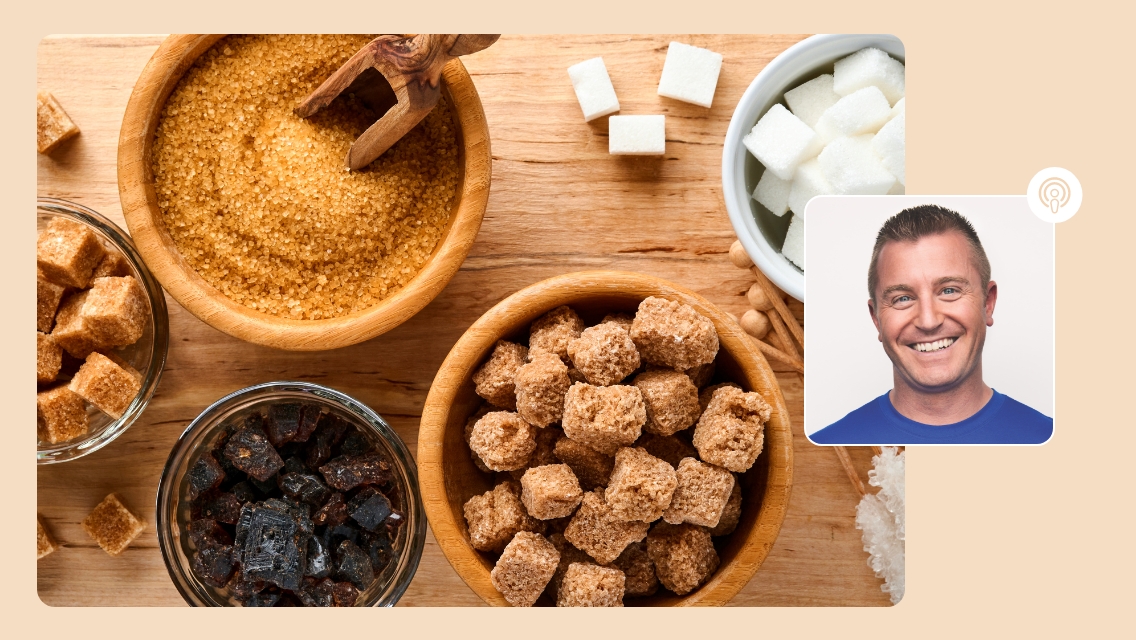
Talks — S7, EP12 / The Downsides of the Sweet Stuff: All About Sugar and Sugar Alternatives
Sugar is everywhere, and — as with so many things — too much of it is detrimental to our health and well-being. While this is common knowledge for many, most of us are still consuming well more than is recommended, and the topic has gotten even more confusing in recent years with the proliferation of artificial and natural sweeteners. Paul Kriegler, RD, CPT, explains the body-wide health effects of sugar, the pros and cons of the various types of sweet sources, and how we can be more mindful about sugar’s place in our diets.


We’d Love to Hear From You
Have thoughts you’d like to share or topic ideas for future episodes? Email us at lttalks@lt.life.
The information in this podcast is intended to provide broad understanding and knowledge of healthcare topics. This information is for educational purposes only and should not be considered complete and should not be used in place of advice from your physician or healthcare provider. We recommend you consult your physician or healthcare professional before beginning or altering your personal exercise, diet or supplementation program.
Life Time provides administrative, non-clinical support to MIORA as well as services and amenities related to general wellness and fitness; Life Time does not provide medical advice, diagnosis, treatment or care.
Advertisement