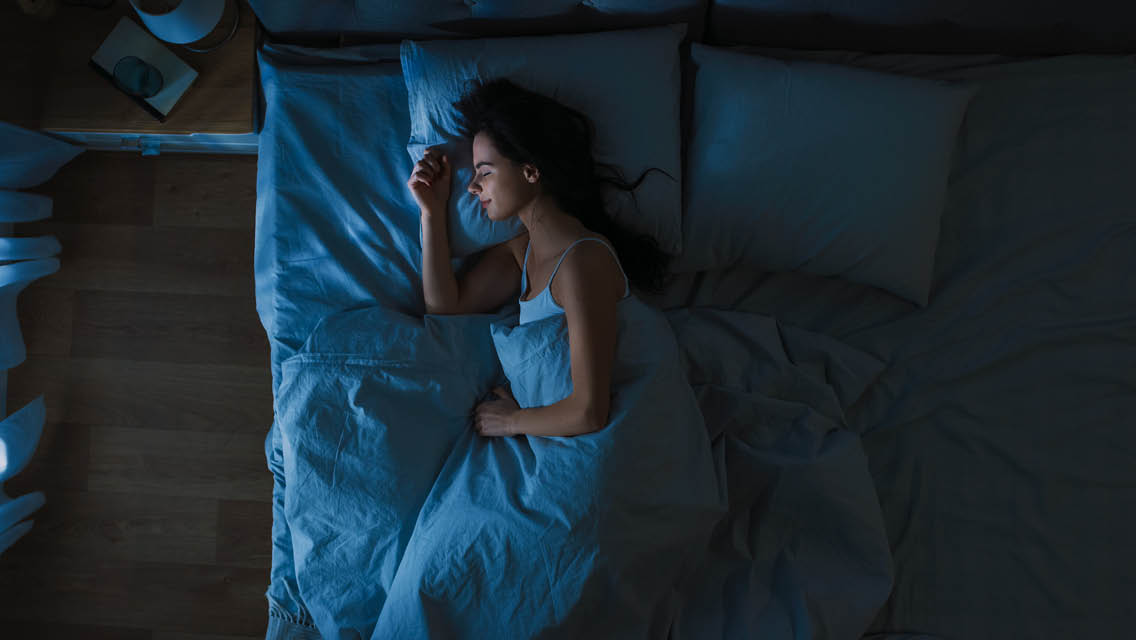




Your body relies on getting plenty of quality sleep to function properly. You can feel it the next day: Good sleep leaves you feeling rested and like you have a boost of strength and energy for the day ahead.
But the opposite is also true: Poor sleep can leave you feeling tired and drained — and like the tasks of the day are insurmountable.
While there are plenty of ways to set yourself up for a good night’s sleep (think sticking to a regular bedtime, turning off your devices at least 30 minutes before, or taking a warm bath), sometimes you don’t have time for those wind-down measures. And sometimes, even despite your best efforts, your sleep is still compromised or disrupted.
“I do love me some sleep, and there are some nights when you just can’t control how much you’re going to get,” says Barbara Powell, MA, a holistic performance coach for Life Time Mind. “For example, I was recently in a car crash, and I had a bad night’s rest the night following my accident. My resting heart rate went up, my heart-rate variability went down, my deep sleep was compromised and lessened, and I woke up wide-eyed and dysregulated.
“I wear a device that tracks my sleep activity and I practice journaling every morning, typically taking note of how I’m feeling and how my rest was,” she continues. “And after a bad night’s sleep, I experience drastic changes from my normal sleep patterns. It influences my energy levels, of course, but more so puts me on edge, decreases my problem-solving abilities, and impacts my resilience. It’s important for me to understand that my body was under duress and ‘bad’ sleep was a physiological sign that I needed to care for myself even more deeply.”
Powell, along with three other experts, share some of their go-to strategies for dealing with a not-so-restful night of sleep.
1. Go outside into the sunlight.
“Your internal clock, or circadian rhythm, needs morning light to stay calibrated,” says integrative psychiatrist Henry Emmons, MD. “Step outside for 10 to 15 minutes within an hour or two of waking, even if it’s cloudy. If you can’t get outside, sit near a bright window. This helps signal to your body that it’s daytime, which makes it easier to fall asleep at the proper time in the evening. The light also naturally suppresses melatonin, helping you feel more alert despite your fatigue.”
2. Don’t over-rely on caffeine.
“The average half-life of caffeine is about five hours, so you want to be mindful in the morning to stop caffeine about 10 to 12 hours before you want to be sleeping again, even if you have the urge to grab another cup later in the day than usual,” says Samantha McKinney, RD, director of Life Time Health.
As an alternative to other caffeinated beverages, McKinney suggests drinking a pre-workout supplement like LTH Pump Pre-Workout — it mixes easily with water and offers a dose of caffeine alongside other energy-supporting ingredients. “LTH Pump contains vitamins B6 and B12 and RedNite® beet juice powder to support stamina, citicoline choline for focus, and DMAE bitartrate for cognitive function support.”
3. Take a nap — or don’t.
“A short nap — 20 minutes max — can restore some alertness without making it harder to sleep that night,” says Emmons. “Set an alarm and keep it brief.”
If you struggle with falling asleep at night, or if naps tend to leave you feel groggy rather than refreshed, skip it. “Instead,” Emmons suggests, “try doing something like yoga nidra, savasana, or a guided relaxation where you’re lying down and resting deeply, but you’re not fully asleep. This can be remarkably restorative without disrupting your sleep cycle.”
4. Eat regularly and strategically.
“Sleep deprivation affects your hunger hormones, making you crave quick energy from sugary or starchy foods,” explains Emmons. “Your body is trying to compensate for low energy reserves, which makes sense, but those foods will send you on a blood-sugar rollercoaster that makes fatigue worse.
Eating regular meals with plenty of protein and healthy fats is key for maintaining steady blood sugar. “Think eggs with avocado, nuts with fruit, or a salad with chicken or fish,” he says. “You’ll avoid the crashes that come from grabbing a muffin or doughnut, tempting as they may be.”
5. Move your body as usual — with some support.
“For acute low sleep, such as one night of poor rest, most people are still best off performing their normal workout for the day,” says Danny King, Master Trainer and director of performance and recovery at Life Time. “I don’t start modifying workouts for clients until the issue becomes chronic, which means exceeding three or more days.”
Emmons adds, “The addition of some gentle movement can help dissipate lingering stress hormones and get your blood flowing. A 15- to 20-minute walk, simple stretching, or even standing and moving around every hour can make a noticeable difference in how you feel. Movement is one of the best ways we have to work through the stress response, and poor sleep is a form of stress on the body.”
6. Consider incorporating some creatine.
“I would recommend taking LTH Power Creatine Monohydrate on the mornings of low sleep,” says King. “During sleep deprivation, our body’s phosphocreatine stores can decline, and not having full tanks of that quick energy can impair our recovery and recharging capabilities. Research shows that even a single dose of creatine can improve cognitive performance and induce changes in cerebral high-energy phosphate. Creatine can also lessen the negative effects of sleep deprivation such as mood state and cognitive performance.”
7. Get essential vitamins and minerals.
“I recommend taking LTH Nourish Multi + Greens with the first meal of the day for activated B vitamins, which help with energy and cognition,” says McKinney. She also stresses prioritizing water intake with electrolytes for natural hydration. “Even slight dehydration can worsen daytime fatigue.”
8. Practice self-compassion and enlist support from those around you.
“When we’re tired, we’re harder on ourselves,” says Emmons. “We berate ourselves for not being productive enough, sharp enough, patient enough. But sleep deprivation genuinely impairs cognitive function — it’s not a moral failing. Give yourself permission to do less today. Lower the bar. Focus on what’s truly essential and let the rest go. Treat yourself the way you’d treat a good friend who told you they’d been up all night — with kindness and understanding, not harsh judgment.”
Powell adds: “After a rough night’s sleep, I connect with people who love me — friends both in and out of state, my partner, my colleagues) — and ask for help and hugs. I notice my needs and speak up as best I can. We’re wired to connect, so doing this can be a real energy booster.”
9. Protect tonight’s sleep starting now.
“The best thing you can do for tomorrow is to prioritize sleep tonight,” says Emmons. “Don’t do intense exercise late in the day, eat dinner at least two to three hours before bed, and resist the urge to stay up late ‘catching up’ on things. Stick to your regular bedtime or even go a little earlier. Your body needs the repair time that only sleep provides. And remember, one bad night doesn’t doom you. What matters most is the pattern over time.”