



 Bark Up the Right Tree
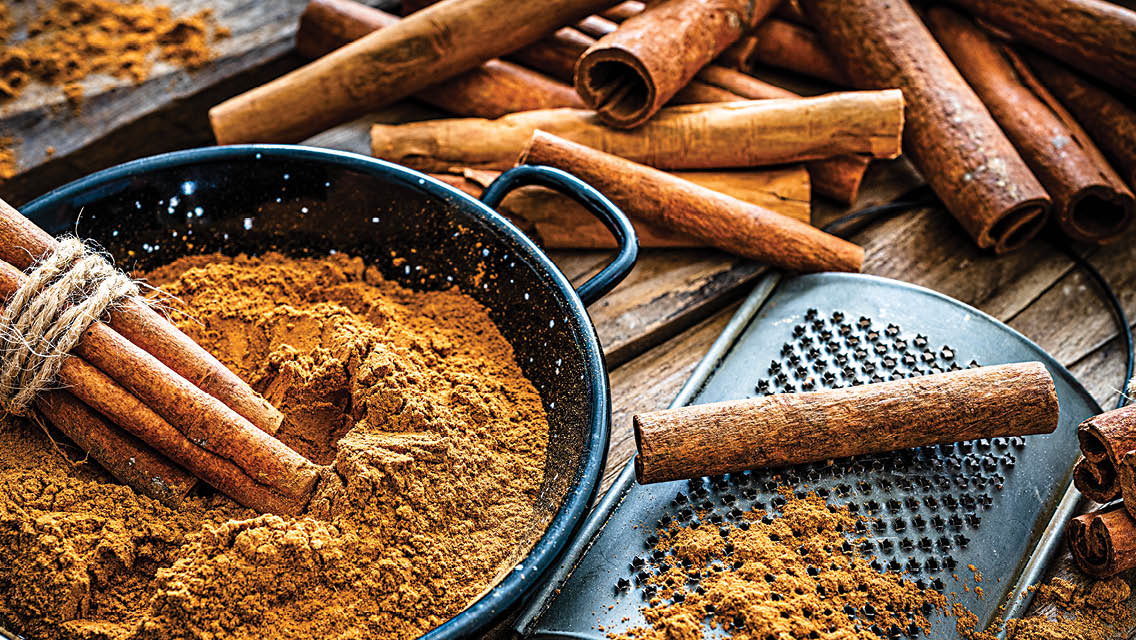
This warming spice has been prized for centuries for its distinct flavor as well as its anti-inflammatory, antioxidant, antimicrobial, and other medicinal properties. An inherently sustainable crop, it’s made from the ground bark of cinnamon trees, which grow well without pesticides and regenerate quickly after harvest. Choose fair-trade cinnamon to ensure that the workers who harvested the spice are paid a fair wage.
 Pick and Choose
There may be lots of cinnamon options in the spice aisle, but they all fall into two main categories. The most common type in the United States is cassia cinnamon, which includes Indonesian, Chinese, and Saigon varieties. Its potent, piquant flavor is ideal for bringing balance to savory dishes. Ceylon cinnamon (named for its native Sri Lanka, which was once called Ceylon) is slightly sweeter and more subtle, making it a good fit for desserts.
 Less Sugar, More Spice
Some research suggests that the plant compounds in cinnamon can help control blood-glucose levels and improve insulin sensitivity, which can also reduce sugar cravings. Try adding cinnamon to a smoothie or a bowl of oatmeal in lieu of honey or maple syrup — because the spice has a sweet flavor, you might not even miss the sugar. Or try roasting root vegetables with a sprinkle of cinnamon to bring out their natural sweetness.
 Stick With It
Ground cinnamon is the better choice for dishes that are cooked briefly or not at all, like smoothies, meat marinades, and baked goods. Cinnamon sticks, on the other hand, need to spend time immersed in liquid to release their flavor. Try them in recipes that call for at least an hour of steeping or cooking time, like our Winter Sangria or our Yellow Split Pea Dal.
This article originally appeared as “Cinnamon” in the September 2021 issue of Experience Life.



Comments (0)