


After decades of structured schedules, work responsibilities, and family routines, retirement often comes with a surprising question: “What do I do with my days now?”
For many older adults, the answer lies not just in activity, but in connection, movement, and purpose. At Life Time, every class, lap, stretch, or conversation over coffee can become part of building a healthy, happy rhythm in this next chapter.
That’s what motivated Maria Carla Da Silva, 56, to sign up for a Life Time membership nearly the same week she retired in August 2024. Her career as a financial controller had been very demanding and consumed at least 10 hours of her day.
“I knew when I retired, I would need something that would keep me physically, mentally, and socially busy,” she says. “With my job, I was doing the same routine for more than 20 years. As I was preparing to retire, the fear of waking up the next day and not knowing how I was going to keep myself busy didn’t feel good.”
Only 53 percent of retirees have an active social life, according to the 24th Annual Transamerica Retirement Survey, which examines the health and well-being of U.S. residents who are retired and no longer working. Simultaneously, 27 percent of retirees report feeling unmotivated and overwhelmed, while 24 percent report feeling anxious and depressed, and 17 percent feel isolated and lonely.
Although ARORA at Life Time is a community for older adults, not specifically retirees, its benefits are multidimensional, providing opportunities for physical activity, health and longevity support, and social connection.
Here, Carla Da Silva, along with Roz Frydberg, ARORA lead and group fitness coach at Life Time Woodbridge in Toronto, Canada, and Annie Kragness, senior director of Healthy Aging and cofounder of ARORA at Life Time, share some inspiration and tips for making the most of your days during retirement.
1. Anchor a new routine.
Carla Da Silva emphasizes the importance of being intentional and creative when it comes to filling her time, especially first thing in the morning. She starts every day at Life Time Woodbridge in Toronto, Canada, getting there between 7 and 8 a.m. and staying until noon, depending on the day. “I spend probably an average of two to three hours there in the morning,” she says. “I choose to attend the club daily as this helps me to get the day started and brings some routine.”
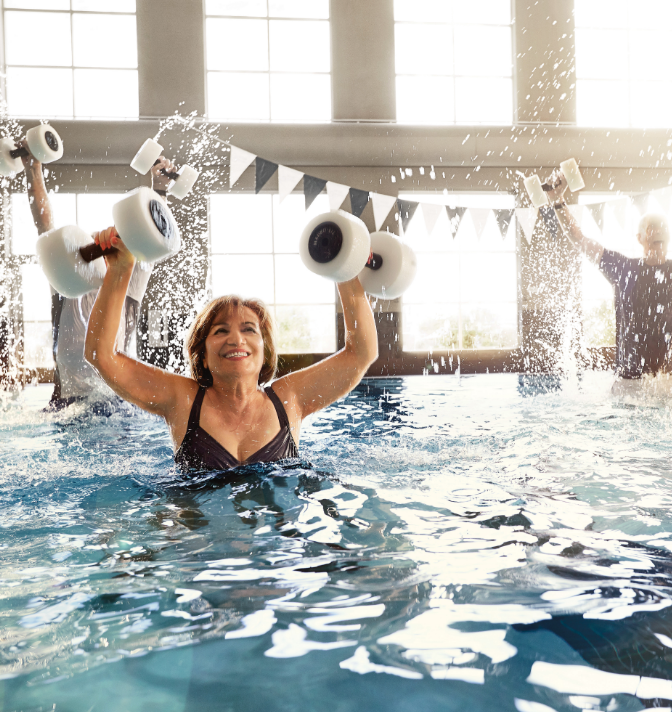
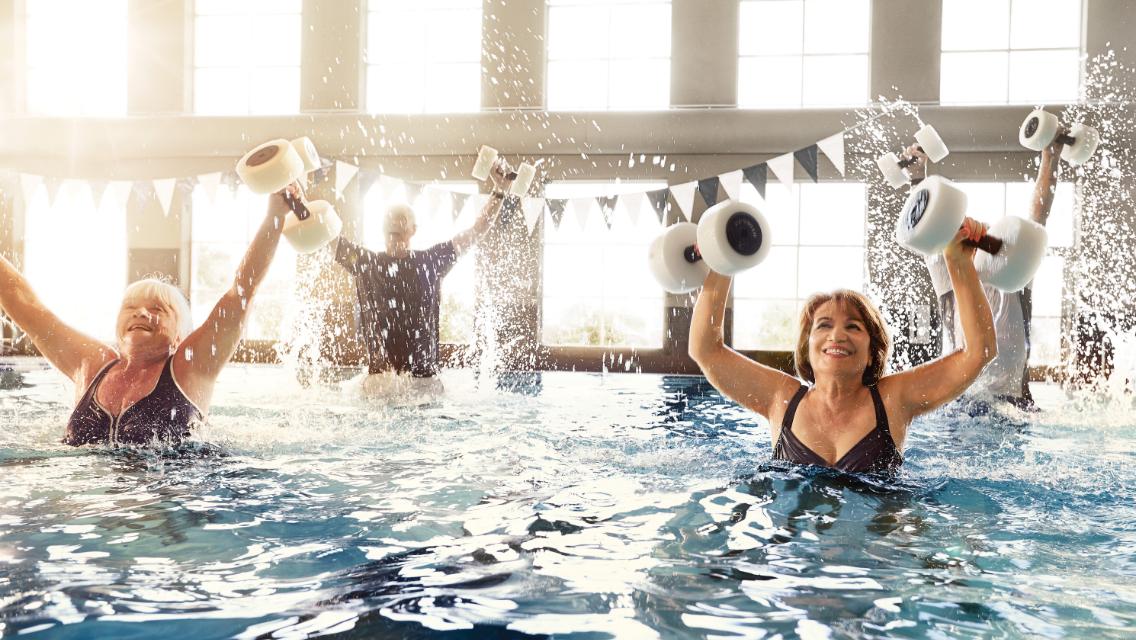
Her itinerary rotates every day to keep thing interesting, but she usually starts with hitting the pickleball courts, followed by attending an ARORA class, and ending with time in the water with either an ARORA Aqua class or a soak in the whirlpool.
“I’m still struggling a little bit with not having to go to work and having a full day, but I’ve tried to get creative and do certain things that I’ve previously not had the chance to do,” she says. “The variety keeps me motivated.”
2. Reinvest in your health.
Often in retirement years, health and wellness come racing to the forefront as an objective. “Many people tend to postpone doctor appointments and tests until they have more time for them in retirement,” Frydberg says. “This sometimes leads to suddenly finding out things are askew in your body, which can become very stressful, especially during a life transition like retirement.”
Frydberg often sees retirees come into the club armed with doctor’s orders to be more proactive with their health, whether it’s incorporating intentional movement to help with back, knee, or hip problems, getting their stamina up before a surgery, prioritizing proper nutrition with chronic disease, or something else.
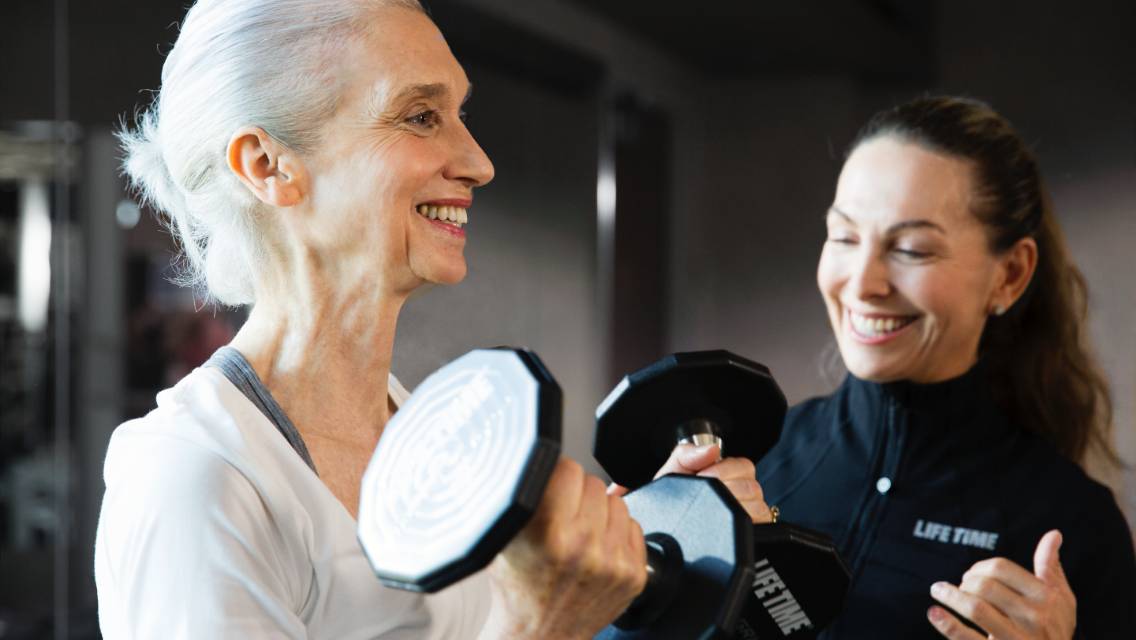
This is where Life Time experts can help, she says. “Our Dynamic Personal Trainers, the specialists at LifeClinic, our recovery experts, and our nutrition specialists are all available to cater to the full spectrum of health and wellness needs of our members,” adds Frydberg. “The ARORA program also has something for everyone, from chair fitness to educational workshops and social gatherings — all designed to enrich life.”
3. Rediscover your favorite activities.
When working with older adults, Frydberg usually starts off with a goal-setting session to get a better understanding of their needs. This session entails reviewing the club’s schedule, navigating the Life Time app, touring the club and its amenities, and more.
She particularly likes to ask about their childhood. “It helps bring back some immediate connection to movement and joy,” she says. “When it comes to building a healthy habit, people often stick with something that they feel comfortable with, rather than trying to introduce too many new things at once.”
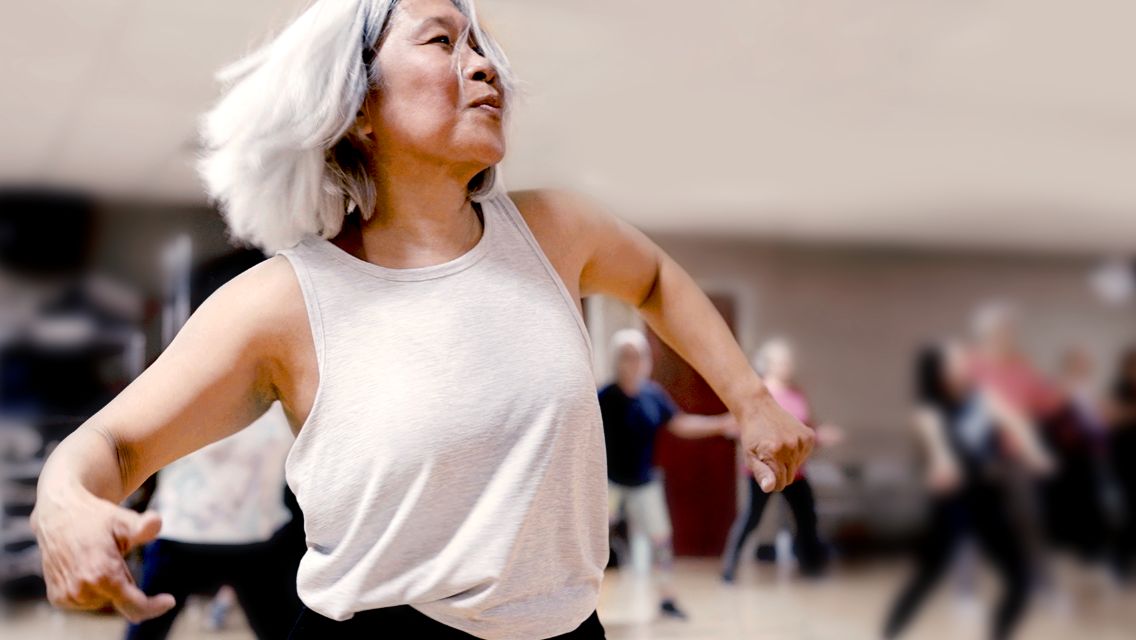
For instance, if a member used to be a swimmer in their youth, Frydberg might suggest they take an ARORA Aqua class or join the ARORA swim club. If they were a dancer, then ARORA Dance can be a good choice. If they loved tennis, then picking up a pickleball paddle can offer a fun alternative. (Learn more: “Which ARORA Class Is Right for You?”)
Although there isn’t pressure to do anything you’re not ready for or uncomfortable with, Frydberg suggests at least sticking around at a new experience to observe. “If you only stay for five or 10 minutes, that’s totally fine — the door’s not locked. But let yourself be driven by curiosity in this new chapter.”
4. Lean on those navigating similar experiences.
Carla Da Silva has found a like-minded community at Life Time, and she has leaned on her fellow ARORA members for connection and camaraderie during this major life transition.
“I’m in the same boat as a lot of others in the ARORA community,” she explains. “As I started getting to know people socially, it helped encourage me to keep coming and take full advantage of all the club has to offer.”
ARORA offers ample opportunities for members to connect outside of fitness, including a coffee club, new member meet-and-greets, game club, and monthly social events.
“Physical activity is usually the stepping stone into Life Time, but the social component is often why ARORA members keep coming back,” says Kragness. “We all just want to be happy and healthy, while living the lives we love as long as we can. Our ARORA community is finding support for that amongst one another.”
5. Learn something new.
Exercising your brain is just as important as exercising your muscles, and learning something new is one of the best ways to strengthen cognitive functioning, according to Kragness.
This can look like attending puzzle clubs, trying a new activity, building new relationships, or learning about a new topic — all of which can help improve neuroplasticity, or the creation of new neural pathways in your brain that help you adapt to different circumstances. (Learn more: “Healthy Aging and the Brain: 5 Ways to Improve Neuroplasticity.”)
“At Life Time, our ARORA programming includes educational workshops taught by experts,” shares Kragness. “The sessions focus on various healthy-living topics, including overviews on how to use exercise equipment, the health benefits of certain fitness activities, and what and how to eat for health as an ‘active-ager.’
“For example, we might host an ‘All About Sugar’ workshop where we sit down and teach members how to read labels when they’re grocery shopping,” she explains. “The workshops are grounded in helping members take action when it comes to their health.”
Workshop topics also expand into other areas of wellness. “We’ve had workshops in which we’ve talked about grief,” adds Frydberg. “We’ve also hosted creative art workshops like painting to help encourage new hobbies and different forms of socialization.”
Additionally, these learning opportunities are important to Kragness from an accessibility standpoint. “We don’t want any member to feel held back from ARORA programming if they’re limited physically due to an injury, surgery, or doctor’s orders,” she says. “Our educational workshops offer an opportunity for all to connect with the community.”
6. Never stop making progress.
Life doesn’t stop in retirement — and neither does growth. “There’s more to life than work,” says Carla Da Silva. When she entered her new chapter, she had to evolve her mindset beyond meeting deadlines and accomplishing career goals.
“During retirement, you’re no longer up against deadlines and days filled with meetings and work tasks,” adds Frydberg. “Your definition of productivity has to shift so you don’t get stuck in your tracks.”
This could look like doing one more rep during an ARORA class; lifting a heavier weight on the workout floor; reaching a protein or fiber goal in your nutrition; or even meeting a new friend.
That’s why ARORA continues to add to its gamut of offerings — so there are consistently new activities to try and methods for improving your well-being. “The door is always open for you,” says Frydberg. “You’re going to find people who you can have wonderful conversations with, you’re going to learn, and you’ll find the athlete within you. I get overwhelmed when I witness how Life Time is changing the landscape for active-aging adults. It makes me joyful.”