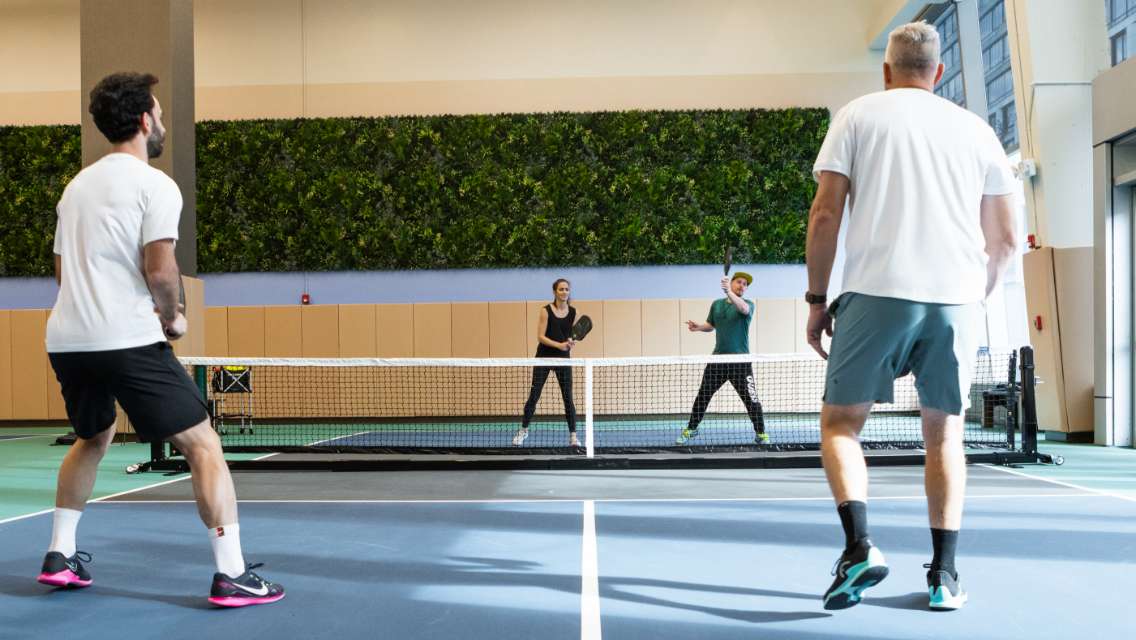




Pickleball can be addictive for many reasons: It’s athletic, it’s social, it’s competitive, and it’s fun, to name a few. For many people, it only takes picking up a paddle once to get hooked on the game and want to play it day after day. However, if your body isn’t ready to handle the demand of the sport, frequent play can take its toll.
“Pickleball is one of the most enjoyable sports you can play, but longevity in the game comes from taking care of your body off the court,” says Betty Casas, pickleball lead at Life Time in Flower Mound, Texas. “The players who prioritize supportive lifestyle habits like building strength, staying hydrated, recovering well, and properly fueling are the ones who continue to play their best week after week and for years to come.”
With long-term play in mind, Casas and Arcot Naresh, pickleball lead at Life Time in Warrenville, Ill., offer six habits to help keep your body healthy and in the game.
1. Warm up before playing.
Why it’s important: Skipping a warm-up can be tempting, especially if you’re running late or underestimate its importance. But neglecting this step could result in injury.
“Pickleball requires quick, lateral movements, sudden stops, and explosive reactions, says Casas. “It’s key for the body to be prepared to move in this way. I recommend taking five to 10 minutes before play for a dynamic warm-up.”
Naresh agrees. “A proper warm-up reduces the risk of strains to the calf, Achilles, and hamstring, which are very common pickleball injuries.”
How to take action: Before every pickleball session, spend five to 10 minutes warming up. Opt for a dynamic warm-up rather than static stretching, which might look like this:
- Leg swings, hip openers, and arm circles
- Light lunges with rotation
- Short, lateral shuffles and split-step timing
2. Incorporate strength training into your exercise regimen.
Why it’s important: Strength training is beneficial for overall health for numerous reasons: It helps build muscle tone, regulates blood sugar, improves hormonal balance, and more. The muscle-building results are particularly important for improving your pickleball game.
“On-court power and injury prevention come from having strength,” says Naresh. “If you strengthen your glutes and core, for example, you’ll reap better balance, quicker recovery between points, and less knee and ankle stress on your body.”
How to take action: Complete two to three strength-training sessions per week. Consider working with a Dynamic Personal Trainer for one or two of those sessions; they can guide you with moves that can help prevent injuries like tennis elbow, knee strain, and lower back pain. You could also try a GTX class, as the 50/50 blend of cardio and strength helps build both endurance and muscle.
In your strength sessions, Naresh suggests focusing on the following:
- Squats or goblet squats
- Lunges (forward and lateral)
- Deadlifts or hip hinges
- Core rotation (Russian twists, cable chops)
3. Perform prehab for your shoulders and elbows.
Why it’s important: Pickleball involves constant use of the shoulders and elbows, and repetitive paddle swings can put strain on these joints. “Players often ignore elbow and shoulder care until pain shows up,” says Naresh. “Repetitive paddle swings can lead to issues like tennis elbow. A little prehab goes a long way in helping to keep you pain-free.”
How to take action: Naresh recommends using a resistance band before or after play to perform external shoulder rotations; he also suggests stretching the wrist flexors.
4. Stay hydrated.
Why it’s important: Hydration is all the more important when you’re engaging in sports or exercising. During both, your core temperature increases, causing you to sweat — and it’s important to replace the fluids that are lost.
“Because pickleball is social and fun, players sometimes underestimate how physically demanding it can be,” says Casas. “Staying hydrated is an essential part of a proper fueling strategy for maintaining energy and recovering well after play.”
How to take action: Casas advises hydrating before, during, and after matches. “Consider adding electrolytes for longer pickleball sessions,” she adds. “I personally love LTH Hydrate electrolytes in the blood-orange flavor.”
5. Make protein a priority.
Why it’s important: It’s no secret that sufficient protein is an important pillar of health — it influences many of our body’s functions, including muscle repair, immune function, blood-sugar balance, hormone health, and more.
“Proper protein intake helps with the repair of microtears that happen from all of the stop-and-go movements required in pickleball,” says Naresh. “Rebuilding these muscle fibers is especially important for your quads, glutes, and calves, as your legs are constantly being stressed in pickleball. Protein won’t eliminate soreness, but it can help noticeably reduce it.
“Protein is necessary for preserving lean muscle, and muscle loss equates to slower reactions, worsened balance, and increased risk of injury,” he adds. “It helps you maintain muscle strength and power in play to avoid a mid-session lull, and it supports neuromuscular function so your brain stays sharper.”
If you start experiencing poor balance, taking awkward steps, or reaching for balls, it could indicate weak or underrecovered muscles and may be a sign to look at your fueling strategy, according to Naresh. “Although protein is not an immediate energy source, it is a critical fuel source, and a lack of proper fuel can lead to sloppy footwork, which can lead to injury,” he adds.
How to take action: The general recommendation is to aim to consume at least 30 grams of protein at every meal. “I frequently order the Body Builder shake from the LifeCafe around play to get 40 grams of protein in one delicious serving,” says Casas. “I also recommend taking LTH Amino Rally Recovery after playing, which features all nine essential amino acids.”
6. Focus on recovery.
Why it’s important: Pickleball involves a lot of movement and endurance, as you’re often running, jumping, twisting, or lunging to chase down the ball. As with other sports or workouts, recovering from those efforts is essential for being ready to play as soon and often as you want.
“Many players are on the pickleball court several days a week, sometimes for hours at a time,” explains Casas. “Without proper recovery, the body can become worn down quickly.”
How to take action: Simple recovery methods like stretching or foam rolling after play, scheduling an assisted-stretch session with a Dynamic Stretch specialist, or getting a massage can make a big difference, according to Casas. “Doing these things consistently helps keep muscles loose and helps players stay pain-free and consistent with play,” she says. (Learn more: “Go-To Recovery Methods for Pickleball Players.”)