




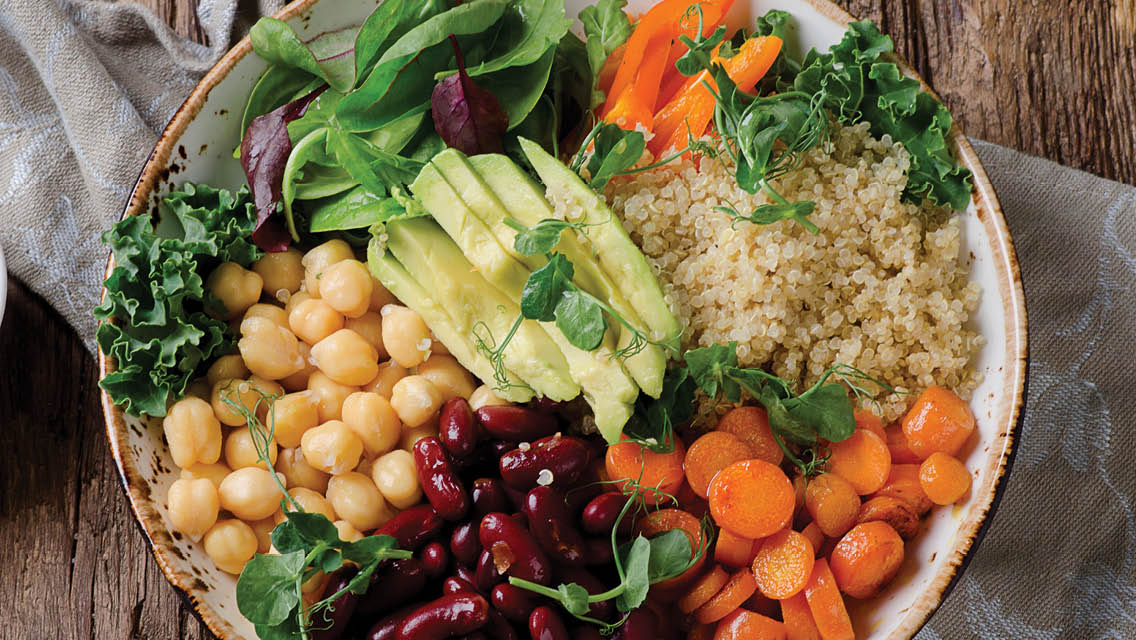
If you’ve got the will to focus on only one nutrient, make it fiber. Fiber feeds healthy gut bacteria, aids in the regulation of blood sugar and cholesterol, and helps keep you full longer. A fiber-rich diet also lowers your risk of heart disease, type 2 diabetes, and colon cancer.
“Fiber is one of my favorite things,” says Amber Hanson, LN, CNS, a functional nutritionist in Minneapolis. “No nutrient by itself is magical, but fiber is as close to magic for the body as you can get.”
Most people miss out on the magic. Some estimates suggest that upward of 90 percent of Americans fall short of the U.S. Department of Agriculture’s daily fiber recommendation of 28 to 34 grams, which varies by sex and age. With stats like those, says Hanson, any fiber is a welcome addition, so try some of the following tips.
Toss a handful of veggies into almost any stovetop dish as it cooks. For instance, throw spinach, cherry tomatoes, or red peppers into a skillet of scrambled or fried eggs; stir a cup of diced mushrooms into meat sauce; or add a half-cup of frozen corn, frozen green beans, or frozen bell peppers into a pot of chili as it simmers.
Replace salad croutons with crispy roasted beans. Lewin likes to rinse and dry a cup of canned chickpeas or edamame, then toss them with avocado oil and teriyaki sauce and roast them on a sheet pan at 400 degrees Fahrenheit for 30 minutes, giving the tray a gentle shake every 10 minutes or so.
“You want them to be crisp and crunchy,” she says, which is why the drying step is key. “They are delicious on salads, but you’ll probably want to eat them straight out of the oven.”
Stir puréed beans into soups and stews as a thickener and to “gently bump up the nutritional density of a meal,” says Hanson. Beans are a fiber powerhouse: Depending on the type of bean, you’re looking at 8 to 16 grams of fiber per cup.
Hanson likes to swap puréed white beans for the cream in tomato soup. “The soup still has a creamy texture, but the fiber from the beans leaves me feeling more satisfied.”
Keep the peel on vegetables and fruits: These outer layers contain a healthy portion of fiber. This is an especially good idea with organic fruits and veggies. “Just give them a good scrub before chopping, slicing, or dicing and adding them to your dish,” Hanson advises.
Toss whole grains into soup. “Instantly add fiber to a meal by stirring in a quick-cooking whole grain toward the end of a favorite soup recipe,” she says.
Quick-cooking versions of grains like farro, bulgur, and barley can be ready to eat in 10 to 20 minutes. Because each has its own flavor and texture, the key is to find one you enjoy. “Don’t try to convince yourself you love quinoa when you don’t,” she adds. “There is probably a whole grain you’ll like if you just keep sampling.”
Power Up Your Plate
You don’t need to overhaul your diet in order to eat well. Try these easy ways to get you more of the nutrients that matter at “How to Add More Fiber, Protein, and Antioxidants to Your Plate,” from which this article was excerpted.

This Post Has 0 Comments