


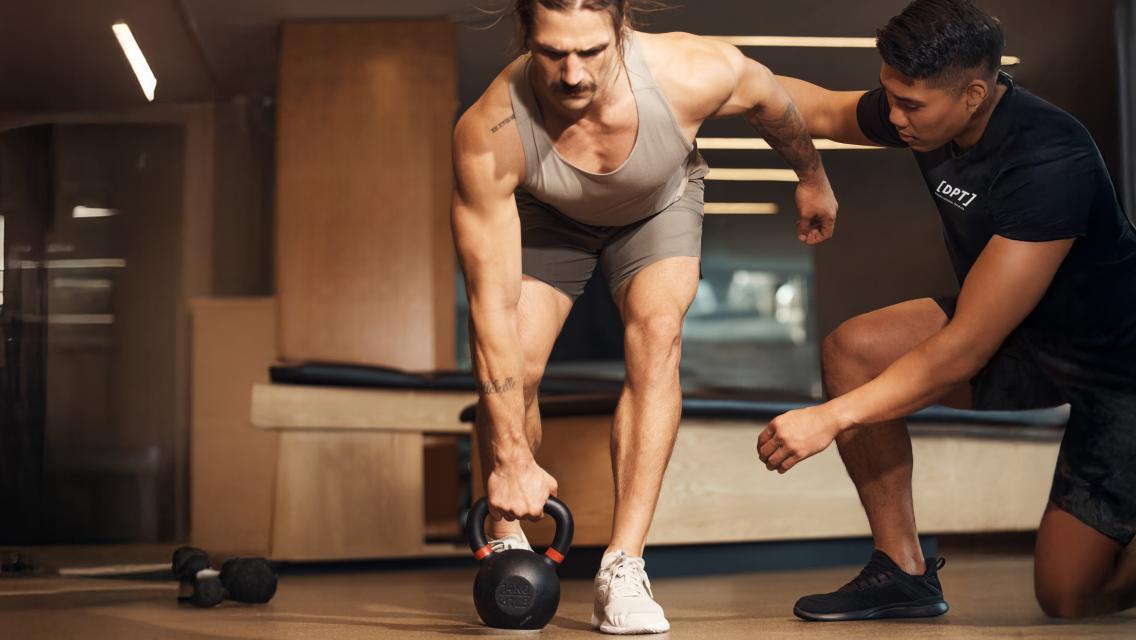
If you’re looking for an efficient full-body workout, unilateral exercises may not be what first comes to mind. After all, if you’re performing movements that predominately focus on one side of the body at a time, how can that be productive? What experts emphasize, however, is that one-sided exercises serve dual purposes.
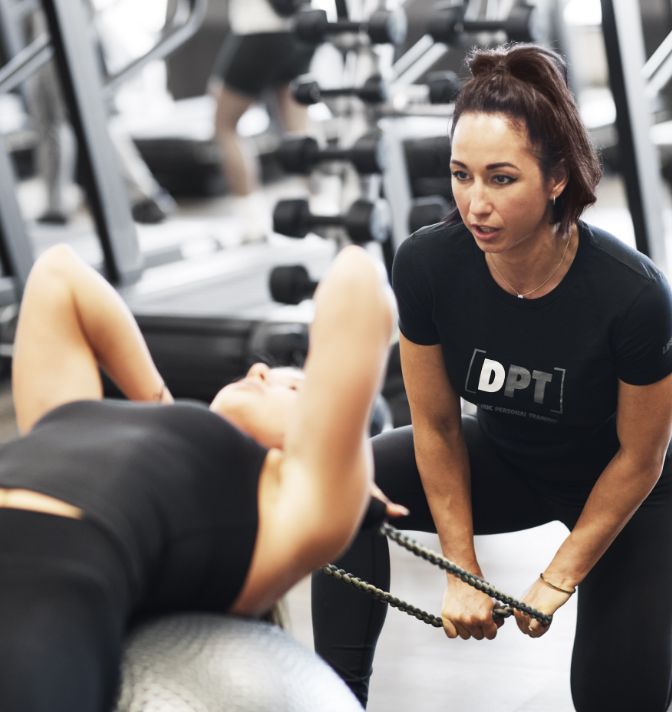
“Unlike traditional bilateral movements, unilateral exercises work one side of the body at a time, which forces your stabilizer muscles to engage, your core to fire up, and your body to move with greater control and awareness,” explains Kelly Hegarty, CPT, Dynamic Personal Trainer at Life Time in St. Paul, Minn. “So even if the primary focus of a movement is around a single arm or a single leg, for example, the benefits are not isolated to that limb.”
Unilateral exercises can even build core strength. “Many people think of ‘core training’ as simply crunches and planks, but true core stability goes far beyond that,” says Hegarty. “The muscles that stabilize your spine and pelvis work constantly during just about any movement — especially when your body is challenged by an uneven or single-sided load. That’s where unilateral training comes in.”
Why Unilateral Training?
If you’re trying to build real-world strength and core stability, training one side of the body at a time is a game-changer.
“Unilateral training improves functional strength, reduces injury risk, and enhances performance by mimicking everyday and athletic movements — where one side of the body often leads,” explains Hegarty. “By working each side of the body separately, these types of exercises can build balance, coordination, and muscular symmetry as they help prevent the stronger side from compensating for the weaker side and allow for more targeted strengthening.”
These one-sided moves make similar demands on your core. “Unilateral loading also creates an asymmetrical force that your core must counteract,” she continues. “This forces the obliques, transverse abdominis, erector spinae, and deep stabilizers to work harder than they would in bilateral lifts. Over time, this strengthens not only the working muscles but also the spine-supporting system that keeps you steady and powerful.”
A 7-Move Unilateral Workout
We asked Hegarty to create a full-body workout using these “dual purpose” exercises. “Each of these exercises build strength in the primary movers (like the shoulders, chest, or back),” she says. “And they also engage the core deeply to stabilize the torso and improve posture, balance, and movement efficiency.”
1. One-Arm Cable Fly
“Here, we’re strengthening the chest while also working on anti-rotation core strength,” says Hegarty.
- On a cable machine, set the cable pulley to shoulder height or slightly above.
- Stand sideways to the machine with your working arm closest to the pulley.
- Grab the handle with a neutral grip (palm facing inward/thumb up).
- Take a small step forward to create tension in the cable. Stagger your stance (one foot slightly in front of the other) for balance.
- Start with your arm extended out to the side, in line with your shoulder.
- Engage your chest muscles and bring your arm across your body, in a wide arc motion. Keep a slight bend in your elbow throughout the movement. Stop when your hand reaches the front of your chest (not across midline).
- Squeeze your chest at the peak of the movement for one to two seconds before slowly returning to the starting position, resisting the pull of the cable.
- Repeat for two to three sets of eight to 12 reps on each arm.
2. One-Arm Cable Row
“This one-arm cable exercise works the lats, biceps, and rhomboids while also helping to improve midline stability and posture by forcing your core muscles to resist against rotation,” says Hegarty.
- Stand facing a cable machine with the cable anchored at or slightly above chest height.
- Grab the handle with a neutral grip (palm facing inward/thumb up).
- Step back slightly and stagger your stance (opposite foot forward as working arm) keeping a neutral spine and knees slightly bent.
- Pull the handle toward your torso by driving your elbow back and squeezing your shoulder blade.
- Pause briefly at the top of the movement before slowly bringing your arm back to the starting position.
- Repeat for two to three sets of eight to 12 reps on each arm.
3. One-Arm Overhead Dumbbell Press
“While this is primarily a shoulder exercise, it also challenges your spinal stabilizers as your obliques and transverse abdominis fire to resist lateral and forward movement while you press your arm overhead,” says Hegarty.
- Choose a dumbbell weight that feels challenging and hold it just above your shoulder on one side with your elbow under your wrist.
- Engage your core and glutes as you press the dumbbell straight up, fully extending your elbow. Stand upright and avoid leaning back or sideways away from the working arm.
- Pause briefly with your arm fully extended, keeping your shoulders down and back before slowly bringing the dumbbell back to the starting position.
- Repeat for two to three sets of eight to 12 reps on each arm.
4. One-Arm Chest Press on a Stability Ball
“Here, we’re strengthening the chest and triceps while also challenging our pelvic stability by using the stability ball in this position,” says Hegarty.
- Choose a dumbbell weight that feels challenging and sit on a stability ball while holding the dumbbell in one hand.
- Slowly walk your feet forward and roll down the ball until your upper back, head, and shoulders are resting on it.
- Form a tabletop position with your knees bent at 90 degrees, glutes engaged, and hips lifted.
- Hold the dumbbell at chest level with your palm facing forward.
- Press the dumbbell upward, pushing it straight up over your chest and extending your elbow fully. At full extension, keep your wrist, elbow, and shoulder aligned. Avoid rotating or letting your hips drop.
- Slowly lower the dumbbell to the starting position at chest level.
- Repeat for two to three sets of eight to 12 reps on each arm.
5. One-Arm Farmer’s Carry
“By carrying only one dumbbell during this exercise, we’re using an uneven load,” explains Hegarty. “As the weight tries to pull you to one side, you’re using core and spinal stability to keep yourself upright.”
- Stand tall with your feet hip width apart, holding a heavy dumbbell in one hand.
- With your arm hanging at your side, walk slowly and deliberately, keeping your torso upright and level. Use your core to resist letting the weight pull you down or force you sideways. Keep your shoulders level and avoid tilting or twisting.
- Take 10 to 20 steps then switch hands and repeat for two to three sets on each side.
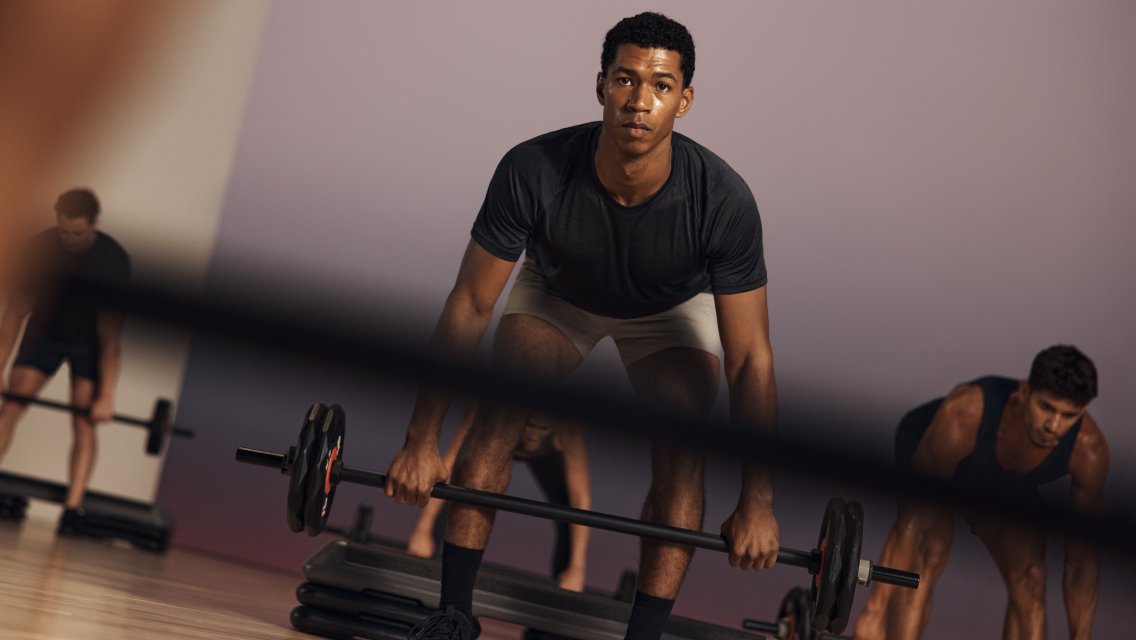
6. Single-Leg Dumbbell Romanian Deadlift
“You’ll feel this exercise mostly in your glutes and hamstrings, but by using one leg, we’re also working on stability and balance,” says Hegarty.
- Stand tall, holding a dumbbell (at a weight that feels challenging yet still allows you to balance on one leg) in each hand in front of your thighs, palms facing toward you. Then shift your weight onto your right leg.
- With a gentle bend in your right leg, lift your left foot a few inches off the floor behind you.
- Keeping your back flat, hinge forward to slowly lower the weights toward the floor. As you lower the weights, allow your elevated left foot to lift toward the ceiling. Stop when you feel a slight pull in your hamstrings.
- Slowly return to the starting position.
- Repeat for two to three sets of eight to 12 reps on each leg.
7. Dumbbell Bulgarian Split Squat
“In a Bulgarian split squat, we’re working on lower-body strength, but the split stance helps improve trunk control and stability,” says Hegarty.
- Stand two to three feet in front of a knee-high bench or box, holding a dumbbell (at a weight that feels challenging) in each hand. Extend your right leg behind you and rest your toes on the bench. Square your hips and shoulders.
- Keeping your torso upright, slowly lower your right knee toward the floor. Your front knee will form approximately a 90-degree angle (it may go farther, depending on your mobility; just make sure your knee doesn’t cave inward).
- Rise back up to return to the starting position.
- Repeat for two to three sets of eight to 12 reps on each leg.