




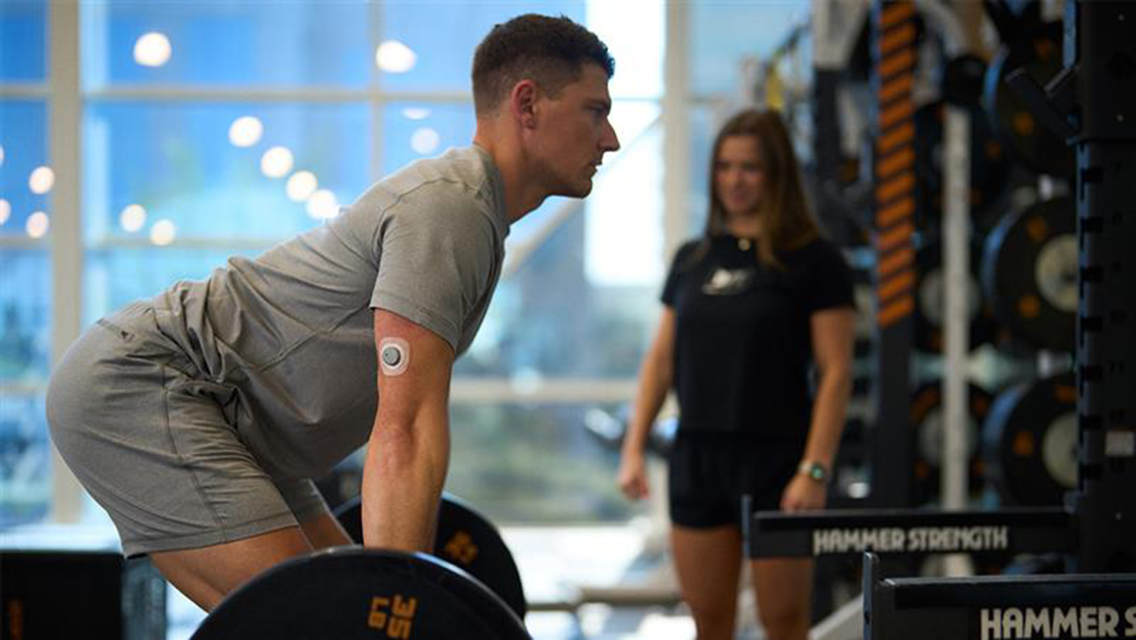
Whether you’re a seasoned athlete, a group fitness regular, or someone at Life Time who simply loves training hard, you’ve probably heard the phrase “glucose spike.” With more people using tools like glucose biosensors to track their glucose, it’s easy to wonder: Are spikes normal? What if I don’t have any spikes?
What is a glucose spike?
A glucose spike is when your glucose levels rise sharply and then fall just as quickly. The duration and intensity can differ from person to person, from meal to meal, and even vary across different types of exercise.
Instead of looking at every spike as a “problem,” it’s more useful to understand why it’s happening and what your body is trying to do.
Here are the three key concepts we’ll explore:
- Why certain spikes during training might not be surprising and might actually be functional
- Why other spikes, especially around fueling, may affect performance or recovery depending on timing and context
How to use Stelo data mindfully so you can learn your patterns without judgment and fuel your different types of training and recovery with more intention
When Spikes are Normal: The Physiology Behind Training-Induced Glucose Rises
During intense or high-adrenaline exercise, glucose can rise even when you haven’t eaten. This is especially common with:
- HIIT
- Heavy strength training
- Sprint intervals
- Competition settings
This can happen because adrenaline, cortisol, and glucagon tell your liver to release stored glucose into your bloodstream. Remember, glucose = energy. Your muscles want that extra fuel available immediately. For many people, this spike is not harmful, rather it’s a normal, functional part of the body’s system adapting to performance needs.
Even after the workout, glucose may stay elevated briefly as your body continues clearing lactate and restoring those glycogen stores that you used up during the workout. The key is what happens after that—most people naturally return to baseline without any intervention.
Something to notice might be how long it takes, if different recovery methods speed up or slow down the process, or if any other factors (such as sleep, hydration, or pre-workout fueling, timing, etc.) impact the glucose graph and spikes.
*Smart device sold separately.
Fueling Before or During a Workout: “Isn’t the Spike the Point?”
If you take a gel, banana, or “quick” carb source before training and see a spike, it’s easy to shrug and think, Well, that’s what I wanted. And partially, yes, you’re giving your body glucose for fast energy.
But there’s a nuance worth understanding. A large, rapid glucose spike can naturally trigger a strong insulin response. Pair that with active muscle contractions (activity which independently increases glucose uptake) and the body may experience a faster-than-expected drop. Some endurance athletes call this phenomenon the “double dip” or informally “double death,” because you burn through the incoming glucose and your muscle glycogen more aggressively.
This isn’t “bad,” but it can affect:
- Early fatigue
- Mid-workout bonking
- Mood or irritability
- Post-workout hunger swings / recovery
Seeing this pattern on Stelo can help you adjust timing, carb type, and/or pairing to create a smoother curve for more efficient fueling and overall performance.
Post-Workout Spikes: Why They Happen Even If You Didn’t Fuel
Some people see their highest readings after the workout ends or just toward the end. This is common for:
- HIIT
- Bootcamp
- Spin or MetCon classes
- Long endurance sessions that included anaerobic intervals
This spike reflects hormonal fluctuations and recovery, rather than nutrition or fueling choices. Your body is clearing lactate, replenishing glycogen (stored glucose), and managing elevated stress hormones. For most people, this post-exercise rise settles on its own.
Stelo can help you identify patterns like:
- Which workouts tend to cause it
- Whether certain formats spike you more than others and specific times of day
- How intensity influences your curve
- Whether refueling sooner or differently helps stabilize the post-workout rebound
The spike itself can provide more information behind how the body is adjusting. Even elite Olympic athletes can experience glucose intolerance—personalized monitoring matters.1
When You Rarely Spike at All: What a “Flat Line” Can Still Tell You
A steady glucose curve can feel reassuring, and for many people it reflects great metabolic flexibility and stable fueling patterns. But even without spikes, there are things worth noticing:
- Are you fueling enough for your training?
- Do you focus on fats or proteins and avoid carbs during workouts?
- Are you recovering well between sessions?
- Do you feel strong and energized, or depleted and flat?
A flat line doesn’t automatically mean your body is stressed or deprived, but it also doesn’t mean that your body isn’t working to adjust for the 42 factors, including the scenarios above, that influence glucose. It’s simply a starting point for reflection. Stelo can help you notice where steady glucose aligns with great performance and where it might reflect under-fueling, high cortisol, or slow recovery.
Other common fitness scenarios that can shift glucose:
- Sleep deprivation: Raises cortisol and can lead to higher readings during normal workouts.
- Fasted training: May cause a spike from adrenaline or a drop from lower glycogen stores. Responses vary widely.
- Caffeine before workouts: Can cause a small rise from cortisol release.
- Stressful workdays before the gym: Emotional stress can mimic the same hormonal glucose rise as physical stress.
- Dehydration: Can make glucose appear higher because the blood is more concentrated.
None of these are inherently negative; they simply help explain what you’re seeing in your data.
Experiment with Stelo:
- Use Stelo to compare fueling timing, carb types, or pre-workout meals.
- Track how you feel during and after different types of workouts alongside glucose trends.
- Look for patterns over time rather than reacting to a single data point.
- Experiment, adjust, and use the data to support your performance.
The most important thing to remember is that glucose fluctuations are expected and responses during training are context-dependent, not “good” or “bad.” Athletes and active individuals naturally experience rises around intensity, fueling, or stress. The goal is to understand them.
A flat glucose curve doesn’t mean that the entire system isn’t working. It’s simply another pattern to explore with curiosity, not judgment. Glucose tracking has demonstrated benefits for individuals without diabetes, offering actionable insights for lifestyle and performance optimization. 2,3
*For Stelo app compatibility information, visit stelo.com/compatibility.
STELO IMPORTANT INFORMATION: Consult your healthcare provider before making any medication adjustments based on your sensor readings and do not take any other medical action based on your sensor readings without consulting your healthcare provider. Do not use if you have problematic hypoglycemia. Failure to use Stelo and its components according to the instructions for use provided and to properly consider all indications, contraindications, warnings, and cautions in those instructions for use may result in you missing a severe hypoglycemia (low blood glucose) or hyperglycemia (high blood glucose) occurrence. If your sensor readings are not consistent with your symptoms, a blood glucose meter may be an option as needed and consult your healthcare provider. Seek medical advice and attention when appropriate, including before making any medication adjustments and/or for any medical emergency.
INDICATIONS FOR USE: The Stelo Glucose Biosensor System is an over-the-counter (OTC) integrated Continuous Glucose Monitor (iCGM) intended to continuously measure, record, analyze, and display glucose values in people 18 years and older not on insulin. The Stelo Glucose Biosensor System helps to detect normal (euglycemic) and low or high (dysglycemic) glucose levels. The Stelo Glucose Biosensor System may also help the user better understand how lifestyle and behavior modification, including diet and exercise, impact glucose excursion. The user is not intended to take medical action based on the device output without consultation with a qualified healthcare professional.
Dexcom, Dexcom Clarity, Dexcom Follow, Dexcom One, Dexcom Share, Stelo, any related logos and design marks are either registered trademarks or trademarks of Dexcom, Inc. in the United States and/or other countries. ©2025 Dexcom, Inc. All rights reserved
1 Ferrera, Armando et al. (2025) Blood test findings in a large cohort of Olympic athletes: a cross-sectional study. Journal of Science and Medicine in Sport, Volume 28, Issue 12, 964 – 968. https://www.jsams.org/article/S1440-2440(25)00192-6/abstract
2 Klonoff, D. C. (2023). Continuous Glucose Monitoring for Non-Diabetic Populations: Emerging Applications and Evidence. Journal of Diabetes Science and Technology, 17(6), 1686–1697. https://doi.org/10.1177/19322968231123456
3 Jarvis, J. (2024). The Efficacy of Using Continuous Glucose Monitoring as a Behavior Change Tool in Populations With and Without Diabetes: A Systematic Review and Meta-Analysis of Randomized Controlled Trials. International Journal of Behavioral Nutrition and Physical Activity, 21(1), 16. https://doi.org/10.1186/s12966-024-01456-7