




How to Change Behaviors, Plus the Rule of 17 Seconds
With Jessie Syfko



Season 12, Episode 4 | January 27, 2026
Are your behaviors supporting you — or holding you back? In this episode, Jessie Syfko dives into the intricacies of behavior change, focusing on the concept of the “17 seconds rule.” She discusses how subconscious programming affects our actions and how we can work to reprogram our brains, plus the importance of emotional awareness in changing behaviors. She also offers practical steps for creating new routines that allow us to unlock new capabilities and get more fulfillment out of life.
Jessie Syfko is the senior vice president of digital innovation and strategy at Life Time and is the creator of the MB360 program at Life Time. She is a doctor of traditional naturopathy.
In this episode, Syfko shares a number of insights around behavior change, including the following:
- Ultimately, we’re the accumulation of the things we do most often — and the majority of the time, we’re acting subconsciously rather than with intentionality. We often need to stop and think, Why am I doing this? How did I get here?
- If we’re looking to achieve, feel, or experience change, we need to be able to say, without judgement or shame, “I need to do something differently.”
- In order to create sustainable change, you have to change your programming. In learning this, you can begin to move through the seasons of your life and with your ideas and goals in a much more partnered way.
- We only use about 10 percent of our brains, meaning we’re leveraging a very small percentage of our potential capabilities. Research around breaking that threshold shows it takes anywhere between 15 and 20 seconds of building strength to do that, which is where the 17 seconds rule comes into play.
- Change is tied to the mind-body connection. It involves programming in the brain but also physical sensations. What the brain thinks the body must feel, and when you can sustain that though and feeling for at least a 17-second window, there’s a greater chance of setting yourself up for success.
- In practice, this effort starts with a cue, and then a routine around it, followed by a reward. How often you need to do it may depend on how emotionally rooted you are in the old pattern. The more emotion that’s attached to the behavior, the more work you typically need to do to release it and learn the new behavior or thought.
- Our “inside world” shines outward, and then the outside world shines back in as a reflection of that environment. If you look out into the world with the mentality that you’re enough, you’re ageless, you’re abundant, for example, the world then offers you opportunities to see that. It’s the same way if you focus on the negative, which is why programming for the positive is important.
ADVERTISEMENT
More Like This

How the Little Things Can Create Meaningful Change
With Jessie Syfko
How focusing on the little things we can do every day can add up to meaningful change and help us stay on track with our health and wellness goals.
Listen >
What Does It Mean to Live a High-Performance Lifestyle?
With Brian Mazza and Jessie Syfko
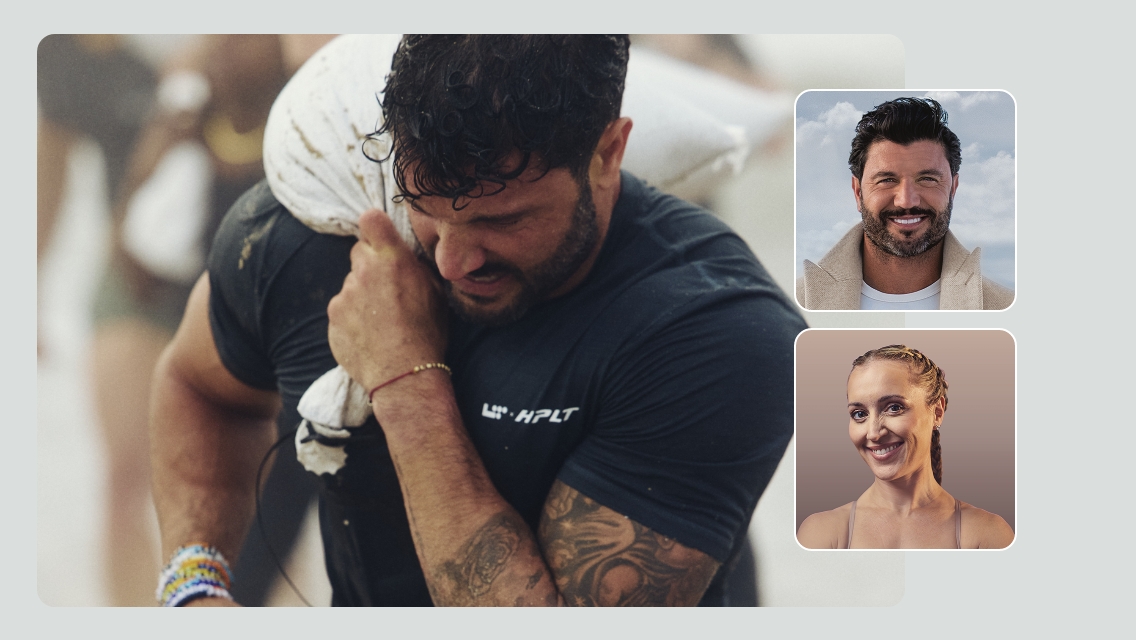
Two experts delve into their interpretations of a “high-performance lifestyle,” highlighting its core principles of continuous effort, improvement, and growth.
Listen >

Goal-Setting Inspiration: What’s Possible for You in 2026?
Advice for pushing your boundaries on possibilities, plus insights behind the goals that several healthy-living experts are setting for the new year.
Transcript: How to Change Behaviors, Plus the Rule of 17 Seconds
Season 12, Episode 4 | January 27, 2026
Jamie Martin
Welcome to Life Time Talks, I’m Jamie Martin. And in this episode, we are talking about behavior change and the rule of 17 seconds. I’m here with my friend and colleague, Jessie Syfko She is the SVP of digital innovation and strategy with Life Time She’s the creator of the MB360 program, and she is a doctor of natural, or of traditional naturopathy. Jessie, thanks for coming back with me.
Jessie Syfko
Thanks for having me.
Jamie Martin
All right, so we’re gonna talk about behavior change. know this is at the foundation of a lot of what we’re working on at Life Time We really wanna help people embrace healthy way of life, but it’s not easy. It’s a challenging thing to do. So let’s talk a little bit about behavior change, why it’s something that we have to kind of start with when we’re beginning this move towards health and wellness.
Jessie Syfko
Well, I think ultimately we’re the culmination of all the things that we do most often. And I think sometimes we don’t stop to say, why am I doing this or how did I get here? And 99 % of what we’re doing is subconscious. It’s not something we’re thinking about. It’s not something we’re intentional about. And so we’ve got to start there. How did we get programmed? Do we need to understand that programming? Or can we start in our present moment?
Look forward as to what we want to achieve or feel or experience or change, which is different than what we — If we aren’t already there, right, then we can, you know, without any judgment or shame say, I need to do something differently, right? Like if nothing changes, nothing changes. But I also think it’s knowing that in order to create sustainable change, you have to change your programming, right? Like people get a new phone, an updated, you know, on the computer, everybody hates that wheel of death when you’re trying to get an upgrade in your computer, but it’s the same thing that happens in our brain and our bodies. So if we can start learning how to program ourselves, shift the program, evolve, we can move with the seasons of our life or our ideas and our goals, I think in a much more partnered way.
Jamie Martin
So let’s talk about this idea of kind of the 17 seconds, because this is something you and I have had a lot of conversations about this. We were working on a couple projects at Life Time that we’re excited about, but the science of 17 seconds is kind of based on the work of Abraham Hicks and the law of attraction. Tell us about that a little bit.
Jessie Syfko
Well, I mean, there’s a lot of cognitive research around how do we break these thresholds, right? So, you know, we don’t use the majority of our brain, right? So we live in a box about 10 % of our brain. So you think about, even in these high performers, right? Like, they’re only leveraging a very, very small percentage of what the capabilities could be. And so, what is the threshold to get out of that box? Well, it’s anywhere between 15 and 20 seconds. And when we can get out of that box of time, just like doing a rep, right? Like I do a squat or a pushup. I’m gonna build strength in my ability to do that. My brain’s ability to fire neurons in a pathway, in a pattern, right? Create meaning in that, which is gonna create a memory, which is eventually gonna now anchor into my subconscious programming and be part of just who I am and how I think about things, right? So when you think about change management or you think about elevation, it’s always a mind-body connection. So the mind of a thought or an idea, programming in the brain, neural pathways, but it’s also then a physical sensation. And so what the brain thinks the body must feel and when we can partner that and sustain that for that 17 second plus window and then repeat, we are going to set ourselves up for success, right? So it’s in more optimal way versus like, well, let’s see what happens. Let’s give it a try. Well, let’s hack ourselves. There’s science that proves that we can do this without working so hard.
Jamie Martin
What might this look like in practice?
Jessie Syfko
Yeah, so it starts with a cue, okay? So cue, then a routine, right? Because nothing happens without consistency. And then a reward, all right? So if I can help cue myself with a prompt, right? So if you think about the world of AI, like we prompt for a response. So that could be a written affirmation, right? So the way in which we program our brain is yes thinking, but writing, reading, speaking, okay? So it’s like rhythms.
I think of it like music, right? There’s harmony, there are chords. If we can find a rhythm in our cue, so I write it down, right? I read it. My voice is my best medicine. My voice to my body about what I want to hear, feel, experience is a very powerful tool for programming my brain. Well, now I got to do it regularly, right? So our brains are the most fertile for change and for intentionality and for anchoring, right? Creating depth.
In the morning and then evening, right? Because we’re just out of bed, we’re not all chaotic. You nervous system is still hopefully relatively calm. And it’s in that way, right? Well, let’s hope it was good sleep. And then before we go to bed. So we have this fertile ground to then go to sleep, heal, evolve, shift with this programming that kind of baked in. And so if we can start building routines around that. Now, some people might need more, right?
There’s laws of doing it three times a day, six times a day, nine times a day. I think it depends on, for me and my personal experience, how emotionally rooted I am into the old pattern. Yeah.
Jamie Martin
How much work you have to do to kind of dig that up and really kind of move beyond it.
Jessie Syfko
Yeah, some of these things are simple and I think people want to, they’ll get a routine and it’s because they want to change and they’re not really emotionally attached. Maybe they were uneducated, right? Maybe they were just unaware, right? So the more emotion that’s attached to the past or the thing or the behavior, the more work we got to do to release it out of the body so that we can start fresh, right? But eventually we have to reward ourselves. So that’s another big piece of this, you know, of this wheel is being able to create these markers of progress and another thing that I think is humans, we don’t celebrate because we stop before we get there, or we put a mountain too high and it’s never enough. And then we live in a culture where perfectionistic, overwork, overwhelm is just sort of our societal norm. Well, did you overwork today? Well, how many emails did you have? So if we can simplify, start with a cue, a prompt. Write it down in a way that feels honest to us, with powerful words that feel good to us. Feel like the desired outcome.
Powerful, right? We were talking about this where some people’s word of discipline might be a trigger for them, where I’d say then change the word. Is it consistency? Is it rhythm? Is it ritual? Like what’s the word? Then use words that matter to you that also evoke a feeling. Speak it. Speak life into your body. Speak life into your brain. Speak life into your world. Speak life every day into it. Let your brain and your body catch up. Feel as if it’s already there, right?
It’s not a fake it till you make it. It’s an own it and attract it energy.
Jamie Martin
I think that’s why it goes back to that law of attraction, kind of what we think and do and kind of we attract those things to us versus, you know, when we’re got another mindset out there, right? That’s not as productive for us, right? Where does the reticular activating system fit into this? I know we’ve talked about that. It’s like this area of the brain. Like once you’re exposed to something, you start to kind of notice it. And if you repeat it, again, that goes back to the repetition piece.
Jessie Syfko
Well, it becomes familiar, right? So here would be my example. I bought a gray car, okay? I’ve always driven black cars, right? And I saw this great color and I was like, that’s really great. It’s close to black, but I buy the car. And then all of a sudden in the awareness in my brain, guess how many other cars I’m seeing on the road that are
Jamie Martin
A ton of them, right? All of a sudden, that’s the car you see everywhere.
Jessie Syfko
So when you program your brain like that, your brain then starts to look for it, right? It starts to see it, seek it, you start to be more familiar to it, and you start to aware it. So it’s like this inside out world shines into the out, and then the outside world shines back in as a reflection of that environment. And so being able to get your brain, I mean, it’s look for good and the good gets better, right? When you look out into the world with I am worthy, I am enough,
I’m ageless, I’m abundant. The world offers you opportunities to see it because it’s like the program is queued up already, right? Now, on the other side, it’s the exact same way, right?
Jamie Martin
It can be for good or bad, right? Or for positive or negative, whatever that looks like.
Jessie Syfko
Well, and I’ll give a little personal tutorial on that. So, I’m a violent crime victor. And as educated as I thought I was, or as schooled as I thought I was in how you get out of fear, when you have a real trauma experience in your body and everybody’s is different and it’s all different sizes, I went from probably not being afraid in my awareness like almost ever. Just in my natural programming, in my life, in my personal development, in my belief systems.
And then that happened and it got stripped. And so now I’m afraid all the time, right? So after that, now I’m afraid in the middle of the day. Now I’m afraid in regular places, right? And so I, knowing all of this, and then having some trauma therapy, and then having a little more education, I had to unwind that. Because then again, all of the little things that out in the world that really weren’t threatening, felt threatened.
And that’s the part that we’re trying to get over. And that’s a self-healing, but ultimately, I think behavior change is all about healing. It’s a process of finding harmony, of finding safety, of finding peace, ultimately getting your body back to stillness and calm so that you are at your essence, what you are most natural at being, which is amazing, right? Fear is not our natural response.
But it has a beautiful program to keep you alert when it’s time to be alert, right? But it shouldn’t be your all day every day. And that’s where these types of things become destructive. So if we can go back to 17 seconds, if we can interrupt these moments, neutralize the emotion, we actually break the emotional bondage we have. I mean, even there’s doctors like Dr. Joe Dispenza that will teach change.
Like right in that moment, right? So I had to do that to myself. And sometimes I had to do it 100 times a day. Over time, again, subconscious programming, the brain was able to release, I was able to move through it, my body was able to move through it, but it took that consistency. It took that cue routine and the reward, I think, is the acknowledgement of the progress. The acknowledgement that I engaged in the behavior. That would lead me forward, even if forward was like a millimeter.
Jamie Martin
Right, it’s something, it’s something and that matters in the grand scheme of all of this, right?
Jessie Syfko
And it’s everything, right? If we can make everyday simple things magical and we can feel alive because we’re participating and we can reflect back on ourselves with great appreciation with the little things, it’s all simple.
Jamie Martin
Well I think that goes back to some of the ideas of like ideas of glimmers like we don’t like we talk about the idea of a lot and being like I’m going to see something natural in or big and beautiful in nature or whatever but when you really pause and you start to shift your thinking right and hold an idea like there is beauty everywhere and where can we find those little glimmers instead of always watching for maybe the negative thing like where’s the positive or what’s the good thing and the beauty in this and as you were speaking just now I was thinking about the you know what what’s one thing a lot of us are dealing with every single day that we could break the habit of, right?
And I mean, we’re living in a society where it’s high productivity. A lot of us are operating in a space of chronic stress, right? And so how do we, to your point, neutralize that? How can we learn in our day-to-day life to, you know, change the way we think about this? It goes back to like, yes, stress is a natural part of being human. We had to run away from the tiger. You know what I mean? Like when you’re in the Savannah or wherever you had to escape from that, right? You needed it. But when we’re living in that chronic state and we don’t learn how to break that cycle, we’re just, it’s so hard on our bodies and our minds, right? So how do we use like, you know, if I can pause and start having that awareness that I’m in this state, even for 17 seconds, that can begin to shift things for us.
Jessie Syfko
Well, I think you just answered your own question. Right. Pause. Yeah.
You don’t change a behavior with an emotion that binds you to the pattern. So you have to go above that. And there are emotional scales and people can read all about it. But at the very bottom, you have shame. And it’s the harshest part on the body. It’s the most contracted. And you go all the way up and you can get through neutrality. You gotta be willing first, right? You get into acceptance. the field of your emotional world, which is your physical world, starts to open. And you can get up into peace and joy and enlightenment.
Which my favorite definition of is, is it’s an immediate and synchronistic shift of perspective, okay? So if our stress lives become our norm, our body’s always in fight or flight. So just think, like you just said, right? We’re running from the tiger, but we’re sitting at a table in a contained room, in a safe room, right? But the body doesn’t know the difference. And so we need to restore our nervous system. We need to breathe.
Jamie Martin
All the time.
Jessie Syfko
We need to use our diaphragm and our transverse abdominis, which starts to cue into the vagal system and the vagus nerve and anchor and restore and calm down. I mean, ultimately we’re alive today, which means that we are a product of fight or flight, right? We won, we then, we bred and then they won and then they bred and stress is an awesome way to adapt, but it’s not your chronic constant state of living. And for a lot of us —
And I’ll say the past version of me, I had no idea that was my 24-7. That was my, and and in probably my late 20s, kind of post becoming a doctor, I was like, I started talking about this world about stress tolerance. So I had asked my clients, what do you think your stress tolerance is? And they would kind of reflect back, like, but I got it. What do you mean? I’m fine.
Jamie Martin
Yeah, and it’s the common response, I’m good. Right? It becomes the baseline.
Jessie Syfko
You normalize it. And I think especially, you know, type A or ambitious or you are an athlete or you’re an academic, like you’ve had success. You’ve learned that the only way through is willpower, condensing timelines by working more, okay? Doing more, whatever it is. What I’ve learned is you lose a huge percentage of your right brain, which is your creativity, which is your collaboration, which is your —
you know, the beauty, the art, like you talked about, seeing the beauty in every day when you’re stressed. Okay, so now you want to create. You want to go into a meeting. You want to have a crucial conversation with your partner. You want your body to build muscles. But your body doesn’t have the space or the recovery or the nutrition or the rest to rebuild. And I think that’s the thing that we need to do. We need to teach people to pause. We need to teach people to breathe. We need to teach people to feel again.
And if you feel into your body, you will be guided. You will be able to have more access to intentional nourishment when you’re dehydrated, when somebody’s in the room that isn’t gonna add value to your life because it’s like that off feeling or even straight up creepy feeling, right? That feel intelligence is something that I think a lot of people overlook because they think their brain is actually the more important driver versus their heart. And the more I’ve researched about resonance and energy and coherence, the more you can borrow and you have to build trust there into your own guidance all day.
Jamie Martin
It’s that kind of knowing, right? That intuitive knowing that kind of is within us when we are willing to pause, to slow down and kind of feel into it all.
Jessie Syfko
Also, for me, one of my powerful lessons was, am I really in a rush? Does it really matter to go that fast?
Jamie Martin
Perspective shift, you have to start to change your perspective, right? Like, is it necessary to rush right now?
Jessie Syfko
You know do you have to have this by this date and have achieved this by the end? No, I think once you can kind of get off the treadmill of everybody else’s expectations or what everybody else thinks about your path or your goals or your behavior You can just honor your own timing. Yes. I think as a parent, you know, we’re both parents It’s a really beautiful re-learning about we all have our own timelines and we all have our own development and we all have our own way of doing it. And so if we can hold space for each other, including ourselves, to be more graceful in those processes, in those changes, in those seasons, it’s not gonna hurt so bad. But it’s like, the human suffering is just this badge of honor that so many people need to wear, and I’ve learned that I would rather flow.
Jamie Martin
Right? Well, and with flow, there tends to come more joy, right? And like that joy that we all deserve, right? And should be, hopefully can be feeling more of. We deserve to feel that.
Jessie Syfko
We deserve it. And it’s human. Right? flow. If you look back, even if you made the choice or like if you think the world made the choice for you, there was still a path. And a lot of that path wasn’t in your plan. Right. You know, it’s structured to a point. You know, like when we talk about building neural pathways, there’s a structure to a point. And people that lack the fluidity, the flexibility to know that, I was doing the best I could, but there’s information that I should be doing it a little different, and they do, it’s the exact same path of business. If you are only structure without flow, without flexibility, without the art of pivot, you’re really temporary, especially today.
Jamie Martin
Yeah, exactly. Okay, Jesse, we’ve covered a lot of ground here. What else did we miss anything? You want to make sure that people are aware of about like this idea of behavior change, 17 seconds, like how we can even start small. 17 seconds doesn’t feel like a whole lot, but it is a place to start, right?
Jessie Syfko
Yeah, I think, I mean, if we recap what we talked about, start with the pause. Start with feeling your body get comfortable in feeling safe and grounded in stillness. So breathing practices, right? It’s not weird, it’s not out there, it’s actually ancient and it’s free and it’s available any moment, right? Start simple, build a relationship to your breath. Build a relationship to when stress happens.
And instead of speaking or doing something, breathe first, breathe through it first. Then if you’re really focused in your pause and you can pace back, then start the field of intention. What are you hoping for? What do you dream of? In a perfect environment where failure wasn’t an option, what do you actually want in your life? What do wanna feel? There is where we start. And I think that’s the imagination versus the prison. If you can get out of the prison of rules, of reality, of logical, and you can help go into what is possible if I let myself believe in everything, and then you start just building a relationship to that. If you don’t know what’s next, guess what? I believe if it’s not clear, it isn’t time, and I don’t think every season of our life is about progress. There’s activation moments, there’s restraint.
And then there’s this reconciliation moment where things go to your point of, aha, where it’ll click. But you have to put yourself in the right position with the right perspective, with the right presence in order to move forward.
Jamie Martin
And not every moment is meant for that, but when the time is there.
Jessie Syfko
Build the skill to do it.
Jamie Martin
Right, and those doors open up right there. So, all right, Jessie. Well, thank you for joining me once again. If anybody wants to follow Jessie and hear more from her, she’s doing amazing stuff at Life Time and also on Instagram at jessie.mindbodylife. Anywhere else?
Jessie Syfko
No, thank you so much for having me.
Jamie Martin
Always happy to have you. Come back again.
We’d Love to Hear From You
Have thoughts you’d like to share or topic ideas for future episodes? Email us at lttalks@lt.life.
The information in this podcast is intended to provide broad understanding and knowledge of healthcare topics. This information is for educational purposes only and should not be considered complete and should not be used in place of advice from your physician or healthcare provider. We recommend you consult your physician or healthcare professional before beginning or altering your personal exercise, diet or supplementation program.