


You just walked onto the workout floor, ready to crush your strength-training session, only to find the machine or equipment you want to use is occupied. As frustrating as this can be, it doesn’t have to derail your workout — having a solid backup plan can help you stay flexible and consistent, which are keys to long-term results.
“The workout floor at Life Time has several types of equipment that target the same muscle group,” says Joe Meier, CSCS, personal-training leader at Life Time in Eden Prairie, Minn. “While it’s perfectly acceptable to ask someone to ‘work in,’ if your equipment-of-choice isn’t available, you have many options to choose from without having to wait. There are multiple ways to perform nearly every exercise out there, so having the experience to switch an exercise when needed can keep your workout running without a hitch.”
Meier also points out that there are fitness benefits to switching up your routine in the moment. “Slight variations of exercises and techniques can work slightly different parts of the muscles and stabilizers you’re targeting,” he explains. “When you try something new or switch it up a bit, it can contribute to more well-rounded strength and functional ability.”
We asked Meier to create a “backup plan” for several popular exercises that you can interchange based on the equipment available to you.
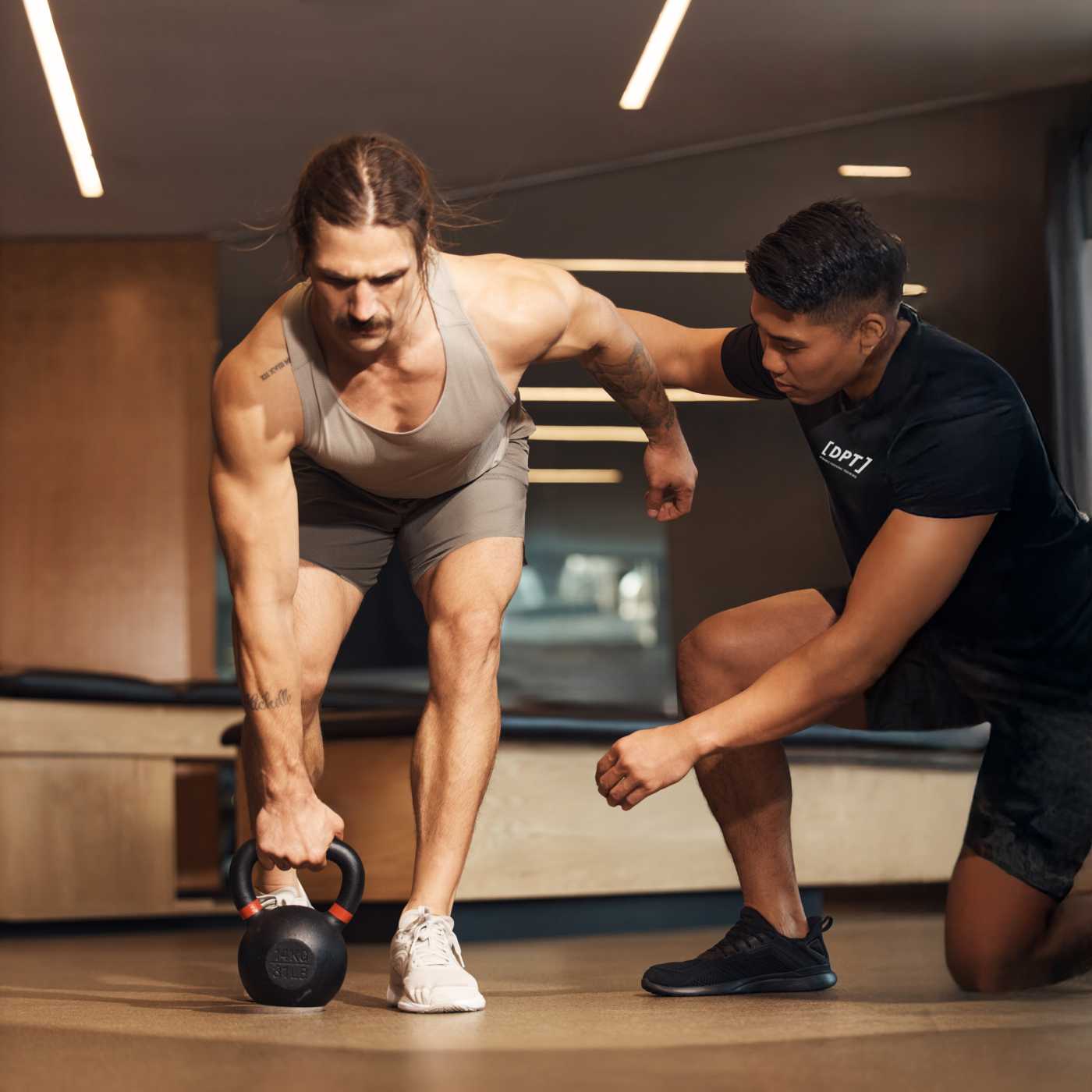
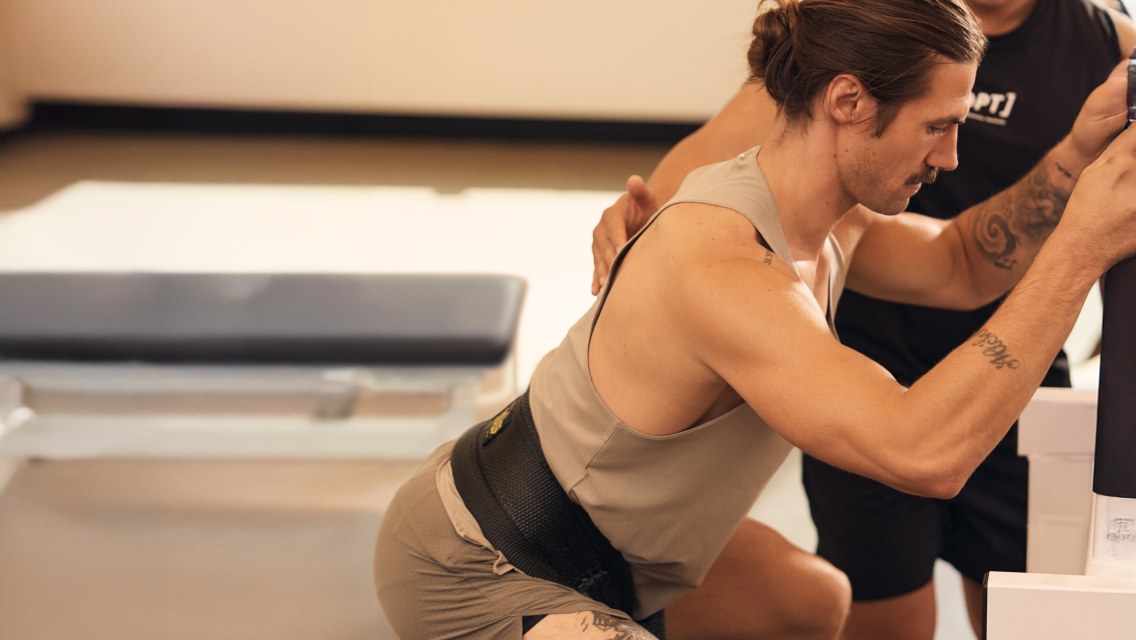
“If you’re feeling stuck, don’t be afraid to ask a Dynamic Personal Trainer for an idea on a different exercise to work your targeted muscle group,” he adds. “They’re there to help!”
Jump to:
-
- Leg Press Backup Plan: Goblet Squat or Split Squat
- Bench Press Backup Plan: Machine Chest Press or Resistance-Band Pushup
- Seated Row Backup Plan: Bent-Over Row or Single-Arm Row
- Deadlift Backup Plan: Single-leg RDL or Cable RDL
- Lat Pulldown Backup Plan: Dumbbell Pullover or Cable Straight-Arm Pulldown
- Leg Extension Machine Backup Plan: Wall Sit or Heel-Elevated Squat
- Leg Curl Machine Backup Plan: Stability Ball or Gliding Disc Hamstring Curl
1. Leg Press Backup Plan: Goblet Squat or Split Squat
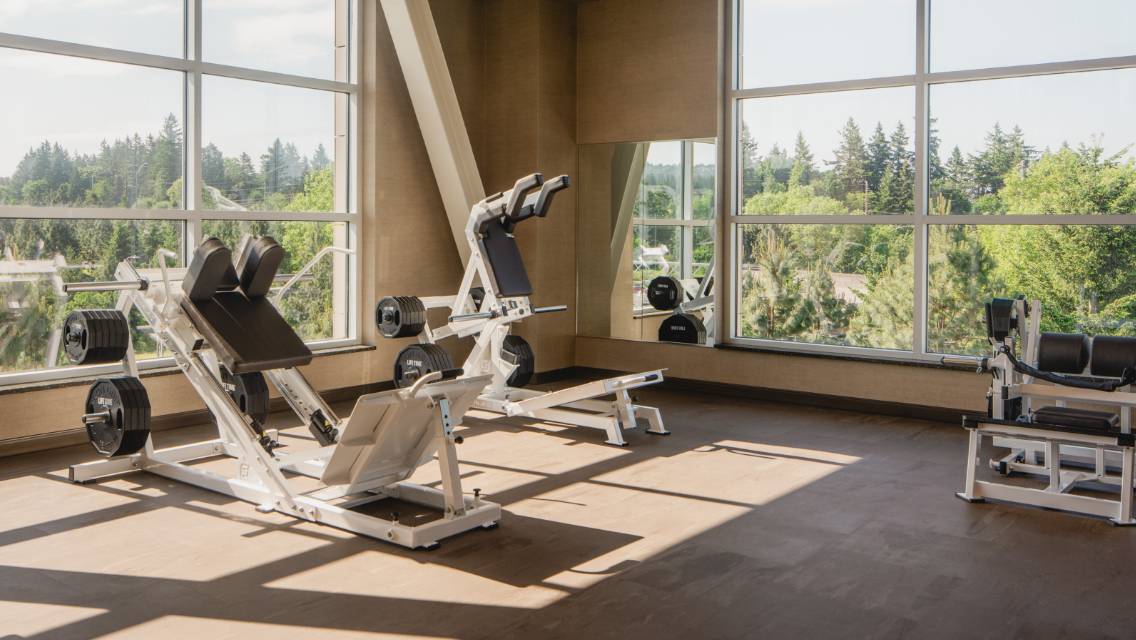
“Some workout floors only have two to three leg press machines, and this is a popular one during busy times of day,” says Meier. “If you’re looking for an alternative, the goblet squat works the same movement pattern while also challenging the core. For those who are stronger in the lower body but can’t hold a heavy enough weight to sufficiently challenge the legs with a goblet squat, a split squat is another squat-pattern exercise that poses an increased challenge to those target muscle groups.”
Goblet Squat
- Stand with your feet about shoulder width apart and hold a dumbbell or kettlebell that is a challenging weight for you at your chest.
- Push your hips backward and bend your knees to squat down as far as you comfortably can. Keep your torso upright, shoulders tucked, eyes on the horizon, and knees in line with your toes.
- Reverse the movement to return to standing.
- Repeat for three sets of 10 reps or as directed by your workout program.
Split Squat
- Holding a dumbbell that is a challenging weight for you in each hand, extend your right leg behind you about two to three feet. Square your hips and shoulders.
- Keeping your torso upright, slowly lower your right knee toward the floor. Your front knee will form about a 90-degree angle (it may go farther, depending on your mobility; just make sure your knee doesn’t cave inward).
- Rise back up to return to the starting position.
- Repeat on both sides for three sets of 10 reps or as directed by your workout program.
2. Bench Press Backup Plan: Machine Chest Press or Resistance-Band Pushup
“Bench presses can be notoriously difficult to grab during peak hours,” says Meier. “A machine chest press works the same main muscle groups. Similarly, a resistance band pushup works the chest while also challenging your core. Increase the intensity with the resistance band of your choice.”
Machine Chest Press
- Sitting at the machine with your feet flat on the floor, adjust the weight to one that is challenging for you. Be sure to match the same intensity and rep range you would be attempting when using a barbell.
- Set the handle height, when applicable, so it feels comfortable on your shoulders (for many people, this is often right at chest height).
- Grip the handles on either side of you and then press out in front of you; pushing your hands toward each other can help you feel the chest muscles more than just pushing straight forward.
- Pause briefly before slowly returning your arms to the starting position.
- Repeat for three sets of 10 reps or as directed by your workout program.
Resistance-Band Pushup
- Hold the band in both hands and wrap it across your upper back, just below your shoulder blades.
- Keep each end of the band securely under your palms in a pushup position
- With hands slightly wider than shoulder-width, keep your body in a straight line with core engaged and glutes tight. Lower down slowly by bending your elbows, keeping them at about a 45-degree angle to your body.
- Press through your palms to push your body back up. As you rise, the band adds resistance, making the top of the movement harder.
3. Seated Row Backup Plan: Bent-Over Row or Single-Arm Row
“The seated row works the horizontal pull movement pattern,” says Meier. “Another exercise that has the arms pulling in the same plane could include a bent-over row or a single-arm row.”
Bent-Over Row
- Holding dumbbells or kettlebells that are a challenging weight for you in each hand, hinge forward from the hips to a point where you can keep a neutral spine (somewhere between 15 and 45 degrees) while keeping your chest up and open. (You can also use a barbell.)
- Row the weights up toward your rib cage, keeping your elbows no more than 30 degrees out from your body.
- Keep your shoulders down and away from your ears.
- Lower the weights to the starting position with control.
- Repeat for three sets of 10 reps or as directed by your workout program.
Single-Arm Row
- Holding a dumbbell, kettlebell, or landmine that is a challenging weight for you in one hand, place your other hand on a bench for stability. (This can also be set up without something stable to put the nonrowing hand on.)
- Stagger your stance so the leg on your working arm side is slightly back.
- Pull the weight toward your hip, keeping your elbow close to your body. Focus on squeezing your shoulder blade toward your spine at the top.
- Pause briefly at the top of the movement to feel the contraction in your back.
- Slowly lower the weight back to the starting position.
- Repeat for three sets of 10 reps or as directed by your workout program.
4. Deadlift Backup Plan: Single-leg RDL or Cable RDL
“Deadlifts work the posterior chain — hamstrings, glutes, and back — but if there are no available barbells or trap bars to use for a deadlift, you can get creative by doing a single-leg RDL or cable RDL. These exercises work the backside of the body just as sufficiently,” says Meier.
Single-leg RDL
- Holding a dumbbell or kettlebell that is a challenging weight for you in one hand, shift your weight into the leg on the opposite side as the weight.
- Hinge at your hips as you lower your torso forward and extend your free leg straight behind you. Keep your back flat and your hips square to the floor.
- Lower the weight until your torso is nearly parallel to the ground or you feel a stretch in your hamstring.
- Drive through your big toe to return to the upright position, bringing your hips forward and your back leg down.
- Repeat on both sides for three sets of 10 reps or as directed by your workout plan.
Cable RDL
- Set the cable to its lowest setting and attach a straight bar or rope handle.
- Stand facing the machine, feet about hip width apart, holding the bar with both hands (palms facing down).
- Step back a foot or two so there’s light tension on the cable when your arms are extended in front of your thighs.
- Hinge at your hips and push them backward while keeping a slight bend in your knees.
- Lower until you feel a stretch in your hamstrings — usually when your torso is almost parallel to the floor.
- Drive your hips forward to return to the starting position, squeezing your glutes at the top.
- Repeat for three sets of 10 reps or as directed by your workout program.
5. Lat Pulldown Backup Plan: Dumbbell Pullover or Cable Straight-Arm Pulldown
“Using the lat pulldown machine can be substituted with another lat-focused movement, including a dumbbell pullover or straight-arm pulldown,” says Meier. “Focus on pulling your shoulder blades down and together to engage the lats and mid-traps just as you would when using the lat pulldown machine.”
Dumbbell Pullover
- With both hands, hold a single dumbbell that is a challenging weight for you; lie face up on a bench.
- Extend your arms over your chest. Engage your core.
- With control, extend your arms at the shoulders to lower the weight overhead.
- Reverse the movement to pull the weight back up to the starting position over your chest.
- Repeat for three sets of 10 reps or as directed by your workout program.
Cable Straight-Arm Pulldown
- Attach a straight bar or rope handle to a high pulley on a cable machine.
- Stand facing the machine with feet shoulder width apart and grip the bar with your palms facing down.
- Step back slightly so there’s tension on the cable and hinge forward slightly at your hips.
- Pull the bar down in a smooth arc, keeping your arms straight and focusing on the movement from your lats.
- Pause briefly at the bottom and squeeze your shoulder blades together.
- Slowly return to the starting position with control, feeling the stretch in your lats.
- Repeat for three sets of 10 reps or as directed by your workout plan.
6. Leg Extension Machine Backup Plan: Wall Sit or Heel-Elevated Squat
“The leg extension focuses on the quads, so substituting a wall sit or heel-elevated squat is a great choice to still place the emphasis on that muscle group, but these can be done anywhere,” says Meier.
Wall Sit
- Stand with your back to the wall, palms resting on your thighs. Bend at your hips and knees to lower into a squat.
- Maintain a neutral spine and keep your head pressed against the wall.
- Breathe and hold this position for as long as you can with good form.
Heel-Elevated Squat
- Stand with your heels elevated on a wedge board and hold a kettlebell or dumbbell that is a challenging weight for you.
- Keeping an upright posture, bend your knees and lower your body into a squat.
- Allow your knees to travel in front of your toes as you lower your hips to below knee height. This allows you to further work your quads.
- At the bottom of the movement, pause for a moment before reversing the motion with control to stand up fully.
- Repeat for three sets of 10 reps or as directed by your workout plan.
7. Leg Curl Machine Backup Plan: Stability Ball or Gliding Disc Hamstring Curl
“The leg curl machine focuses on the hamstrings, so if you can’t use the machine, two hamstring variations you can swap include using a stability ball or gliding disc or towel.”
Stability Ball Hamstring Curls
- Lie on your back with your legs extended and feet on top of a stability ball.
- Engage your core as you lift your hips up off the ground.
- Draw your heels in toward your hips while your feet continue to rest on the towel, sliders, or stability ball.
- Moving quickly, extend your legs back to the starting position.
- Repeat for three sets of 10 reps or as directed by your workout plan.
Gliding Disc or Towel Hamstring Curls
- Lie on your back with your legs bent and feet on top of glider discs or a towel.
- Engage your core as you lift your hips up off the ground.
- Extend your legs outward while your feet continue to rest on the sliders or towel.
- Using your core and moving quickly, bring your legs back to a bent position.
- Repeat for three sets of 10 reps or as directed by your workout program.